Roll Middle Back Lying On Floor
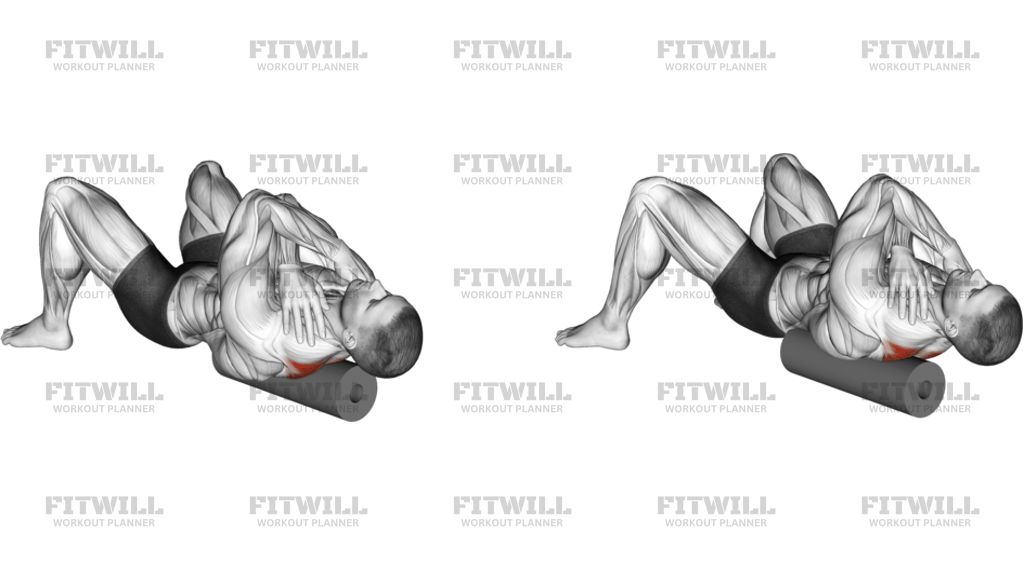
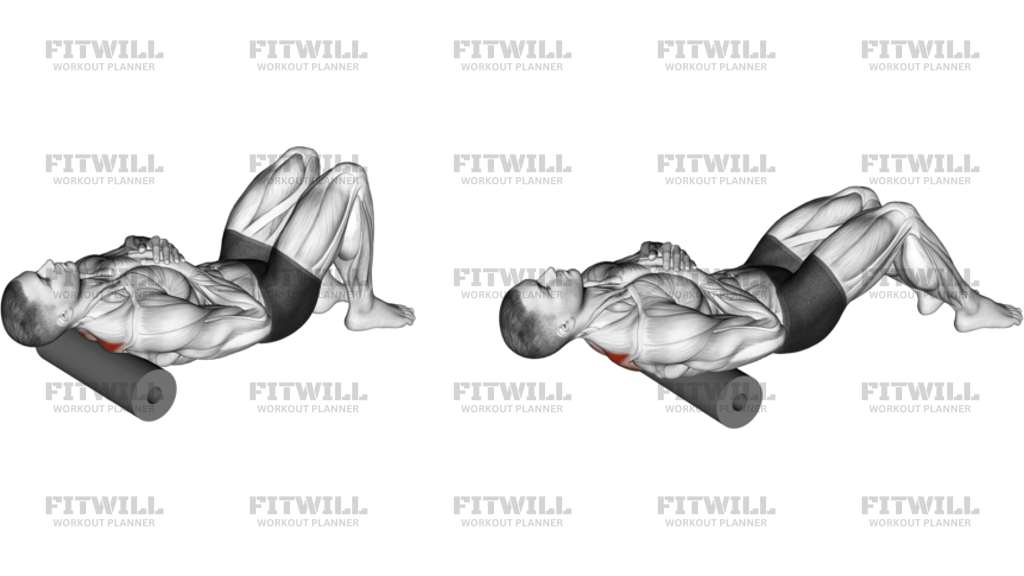
Roll Middle Back Lying On Floor is a floor-based thoracic mobility drill done with a foam roller under the middle of the back. The aim is not to grind through a big range or force a deep backbend. Instead, the exercise helps open the upper and mid thoracic spine while the ribs, neck, and shoulders stay organized against the floor. It is most useful when the middle back feels stiff from sitting, pressing, or other upper-body training.
The setup matters because the roller should sit across the area between the bottom of the shoulder blades and the mid-thoracic spine. Lie on your back with the knees bent and the feet flat so the hips can stay relaxed and stable. Cross the arms over the chest or lightly support the head with the hands. From that position, make small shifts so the roller works a few inches at a time instead of sliding through the whole torso.
As you move, keep the neck long and the chin gently tucked so the head does not lead the motion. A slow exhale helps the rib cage drop over the roller and makes the extension feel smoother through the middle back. If the rep is done well, the pressure stays on the thoracic area while the lower back remains quiet. A slight hip lift is fine if it helps the roller travel, but the movement should still feel controlled and deliberate.
This drill is commonly used in warmups, recovery blocks, and mobility sessions before rowing, pressing, or overhead work. It can also be useful after long periods of desk work or travel when the upper back feels locked up. Because it is a self-mobilization movement, the goal is comfort and control, not intensity. Sharp pain, numbness, or a pinching sensation in the neck or lower back means the setup needs to change or the exercise should stop.
Use small, repeatable passes and breathe through the tight spots instead of rushing for more range. The best result comes from consistent pressure, a calm neck, and a stable rib cage rather than from forcing the roller farther up or down the spine.
[ Workout Log & Planner ]
Put your next workout in Fitwill
Keep your plan and training log ready when you are.


Instructions
- Lie on your back on the floor with a foam roller positioned across the middle of your back, knees bent, and feet flat for support.
- Place the roller between the bottom of the shoulder blades and the mid-thoracic spine, not at the neck or down on the low back.
- Cross your arms over your chest or support your head lightly with your hands, then keep your chin gently tucked.
- Brace your midsection lightly and keep your ribs from flaring before you start to roll.
- Exhale slowly and lift your hips just enough to let the roller press into the mid back.
- Shift your body a few inches at a time so the roller moves slowly through the stiff segment of the thoracic spine.
- Pause on the tightest area for one or two calm breaths without forcing a bigger arch.
- Lower your hips to reset, then repeat the pass for the planned number of repetitions or breaths.
Tips & Tricks
- Keep the roller centered on the thoracic spine; if it slides toward the neck or low back, reset before continuing.
- Support your head with your hands if the neck starts to take over the movement.
- Use slow exhales to let the ribs drop over the roller instead of forcing a hard back extension.
- Small shifts work better than big rolls for this drill; a few inches is usually enough.
- If the pressure feels sharp on the bony ridge of the spine, move the roller slightly higher or lower on the back.
- Keep the feet planted so the hips stay stable and the motion does not turn into a full bridge.
- Do not chase a huge range of motion; the goal is smooth thoracic opening, not a dramatic arch.
- Stop immediately if you feel pinching, numbness, or neck strain instead of normal mid-back pressure.
Frequently Asked Questions
What does Roll Middle Back Lying On Floor work?
It mainly targets thoracic mobility in the middle of the back and can also ease tension through the rib cage, shoulders, and surrounding upper-back muscles.
Where should the foam roller sit for this exercise?
Place it across the middle back, usually between the bottom of the shoulder blades and the mid-thoracic spine. It should not sit on the neck or directly on the low back.
Do my hips need to stay on the floor the whole time?
Not necessarily. A small hip lift is fine if it helps the roller move, but the exercise should still feel like a controlled thoracic mobilization rather than a full bridge.
Is this more of a strength exercise or a mobility drill?
It is primarily a mobility and recovery drill. It is meant to improve how the middle back moves, not to load the muscles with resistance.
Can beginners do Roll Middle Back Lying On Floor?
Yes. Beginners usually do well with short, slow passes and gentle breathing, as long as the pressure stays comfortable and the neck remains relaxed.
When should I use this in a workout?
It works well in a warmup before pressing, rowing, or overhead work, and it can also be used in a recovery or mobility session after long periods of sitting.
What should I do if I feel the pressure in my neck or low back?
Adjust the roller placement, support your head with your hands, and reduce the range. If the pressure still feels sharp or pinchy, stop the set.
How many passes or breaths should I use?
Most people only need a few slow passes or 20 to 40 seconds of gentle work on the tight area. Quality matters more than volume.