Roll Erector Spinae Lying On Floor
Roll Erector Spinae Lying On Floor is a floor-based foam-rolling drill for the muscles that run along either side of the spine. It is used to ease stiffness, improve awareness of the upper and mid-back, and give the erector spinae slow, controlled pressure without needing a bench or machine. The purpose is not to rush through the movement, but to find tight spots, breathe, and let the tissue release under steady bodyweight pressure.
The setup matters because the roller placement determines which part of the back receives the work. In the image, the body is supported on the floor with the knees bent, feet planted, and the arms relaxed out to the sides so the torso can stay calm while the roller sits under the mid-back. That position helps keep the rib cage open and the neck relaxed while you control how much pressure you put into the roller.
A good rep is small and deliberate. Let the upper back settle onto the roller, then shift the body just a few inches at a time so the roller travels along the erector spinae instead of bouncing across the spine. Pause on dense or tender spots long enough to breathe into them, then continue with slow, even pressure. The low back should never be jammed into a hard arch or crunched out of position.
This drill fits well before lifting, after long sitting, or after pulling sessions when the back feels stiff and overworked. It is beginner-friendly because the floor and the roller do most of the support, but it still needs care: keep the pressure tolerable, avoid rolling directly on the vertebrae, and stop if the sensation becomes sharp, pinchy, or travels down the leg. The best result comes from calm breathing, small movements, and a setup that lets the back relax instead of bracing hard against the roller.
[ Workout Log & Planner ]
Put your next workout in Fitwill
Keep your plan and training log ready when you are.


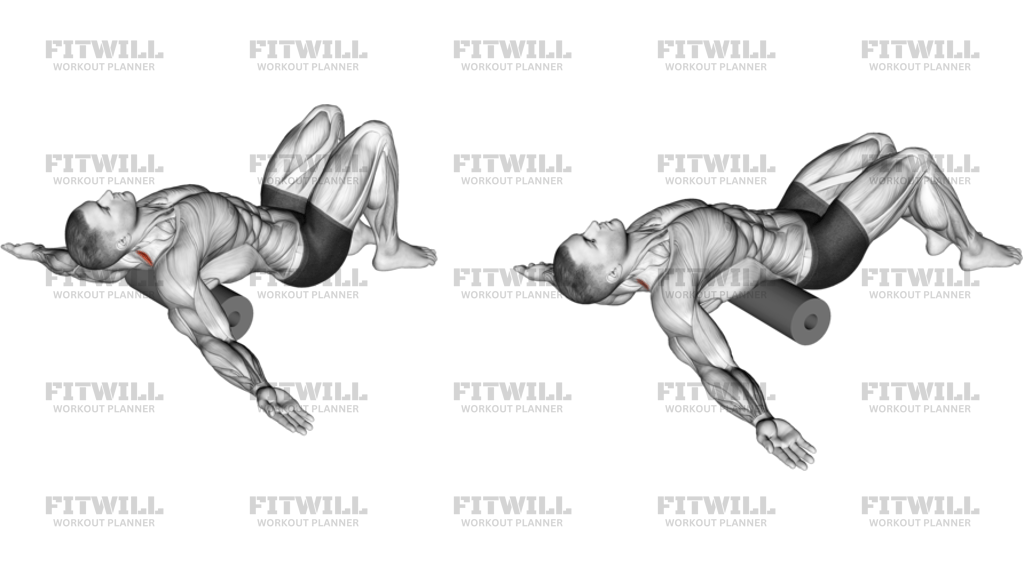
Instructions
- Place a foam roller on the floor and sit with it across your mid-back, knees bent, feet flat, and your hips supported by the floor.
- Lie back so the roller sits beside the spine muscles, not directly on the vertebrae, and let your arms rest out to the sides for balance.
- Keep your chin slightly tucked and your ribs relaxed so your neck and lower back do not overwork.
- Breathe in slowly, then use your feet to create a small rocking motion that shifts pressure into the erector spinae.
- Move only a few inches at a time so the roller travels along the muscle bellies rather than bouncing across the back.
- Pause on tight or tender spots for a breath or two while keeping the pressure comfortable and steady.
- Roll back to the starting point under control, then repeat along the same line or a slightly different spot on the back.
- Finish the set by easing off the roller and sitting up slowly if the back starts to feel irritated or over-compressed.
Tips & Tricks
- Keep most of your pressure on the back muscles, not by sinking hard into the roller with a big hip lift.
- A softer foam roller is usually better than a very hard one when the erector spinae feels sensitive.
- Small rolls are enough here; a few inches of travel usually works better than sweeping from ribs to hips.
- Do not arch the lower back to chase more pressure, because that usually turns the drill into an uncomfortable lumbar extension.
- Let the arms stay relaxed and wide so they do not brace the chest or shrug the shoulders.
- Stop the roller on a tight area beside the spine, but never settle directly on the bony vertebrae.
- Exhale when you sink onto a tender spot and inhale as you roll off it to keep the back from guarding.
- If the pressure causes tingling, sharp pain, or symptoms that move into the leg, stop the set right away.
Frequently Asked Questions
What does Roll Erector Spinae Lying On Floor work?
It mainly targets the erector spinae muscles along the spine, with the core and glutes helping keep the body steady on the floor.
Is this a strength exercise or a mobility drill?
It is mostly a mobility and self-release drill, not a strength movement. The goal is to reduce stiffness and improve tissue quality.
Where should the foam roller sit on my back?
Place it under the muscle bellies beside the spine, usually in the mid-back area, not directly on the vertebrae or lower ribs.
Should my feet stay planted during the roll?
Yes. Bent knees and planted feet let you control how much bodyweight you place on the roller and keep the motion small.
How hard should the pressure feel?
It should feel intense enough to notice tight tissue, but not sharp or painful. If you have to hold your breath, the pressure is too much.
Can beginners use this exercise?
Yes, beginners can use it if they keep the pressure light, move slowly, and avoid rolling directly over the spine bones.
When is this most useful?
It works well before training, after long sitting, or after heavy pulling work when the back feels stiff and compressed.
What should I do if I feel it in my low back?
Reduce the pressure, keep the ribs down, and roll a little higher on the back. If the low back feels pinchy, stop and reset your position.