Single Leg Extension On Stability Ball
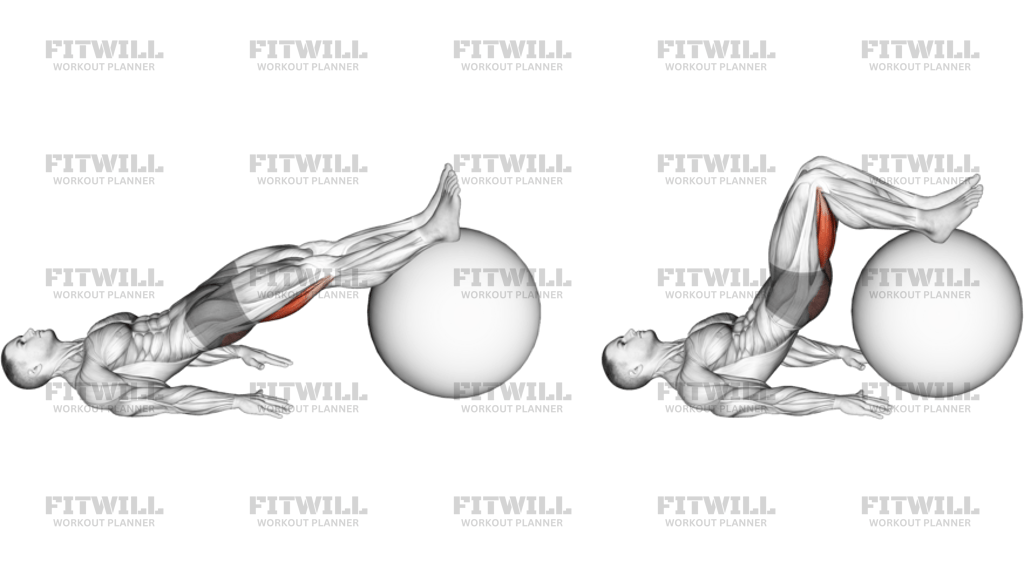
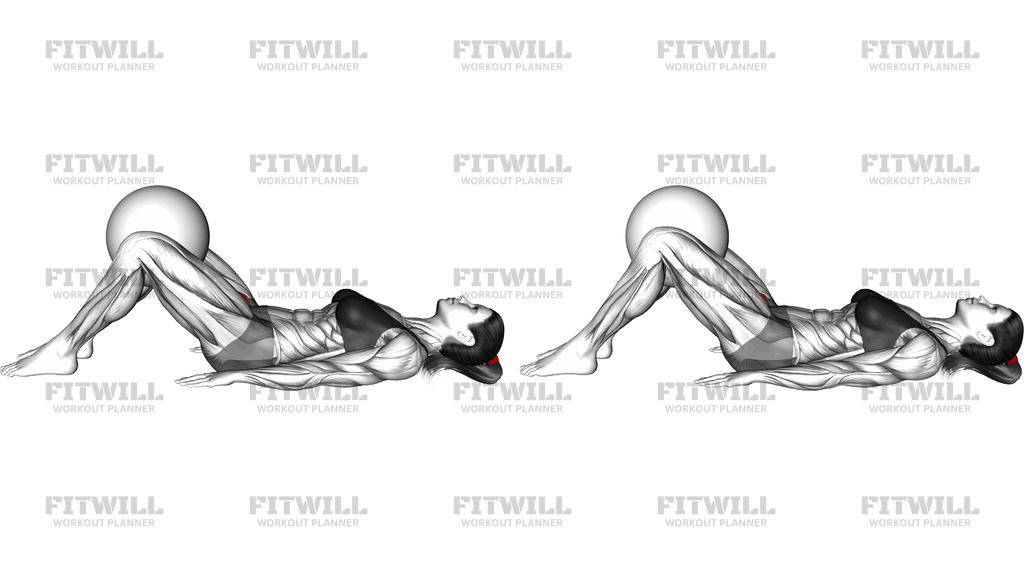
Single Leg Extension On Stability Ball is a floor-based hamstring exercise built around one heel anchored on an unstable ball while the other leg stays lifted. The movement starts from a bridged position and asks you to keep the pelvis steady as the working knee extends and the ball rolls away, then returns with control. That small change in leverage makes setup quality important: if the hips sag or the ball drifts, the set quickly turns into a lower-back or balance drill instead of a hamstring-focused repetition.
The main target is the hamstrings on the working side, with the glutes and core helping keep the hips elevated and square. Because the free leg is held up, the trunk has to resist twisting and the supporting shoulder line has to stay calm on the floor. In practice, the exercise rewards slow tempo, even pressure through the heel, and a clean bridge position more than raw force.
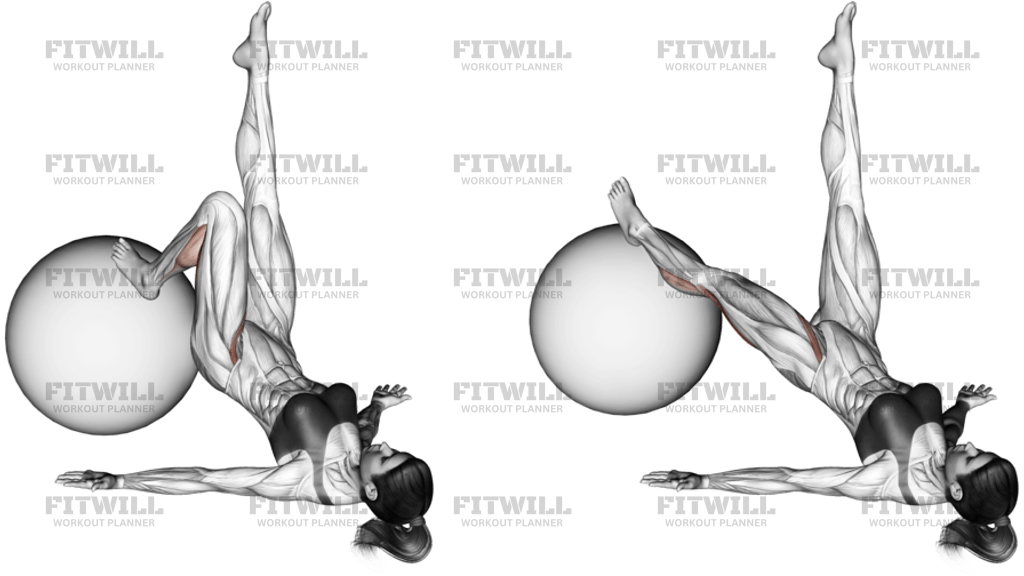
A good rep begins with your heel or low heel resting on top of the ball, arms spread for balance, and the opposite leg reaching toward the ceiling. From there, lift the hips to create a straight line from shoulders through the pelvis, then keep that line while you straighten the working knee and let the ball roll away. If the hips drop, shorten the range and reset rather than chasing a bigger finish position.
On the way back, pull the ball in by bending the same knee and dragging the heel toward you under control. The return phase should feel like a deliberate hamstring contraction, not a bounce off the ball. Exhale as you extend or curl, inhale while you reset, and stop the set if you lose pelvic control, cramp, or start arching through the lower back.
This variation is useful when you want unilateral hamstring work without a machine, but it is not the easiest version to learn. A two-leg stability-ball bridge or two-leg curl is a better starting point if the single-leg version feels shaky. Once the setup is stable, it becomes a very precise accessory movement for posterior-chain strength, pelvic control, and body awareness.
[ Workout Log & Planner ]
Put your next workout in Fitwill
Keep your plan and training log ready when you are.


Instructions
- Lie on your back with one heel on top of the stability ball and the other leg lifted straight toward the ceiling.
- Spread your arms on the floor for balance, then place the working heel in the center of the ball and relax the toes.
- Press the heel into the ball and lift your hips until your shoulders, hips, and working knee form one line.
- Keep the raised leg vertical or only slightly bent so your pelvis stays square to the ceiling.
- From the bridge, straighten the working knee as the ball rolls away, keeping pressure through the heel.
- Stop when the leg is nearly straight and your hips are still level, not when your lower back starts to arch.
- Reverse the rep by bending the working knee and pulling the ball back under your heel with control.
- Exhale through the extension or curl, inhale as you reset, and fully regain balance before the next rep.
Tips & Tricks
- Drive the ball with the heel, not the toes, so the hamstrings keep the work instead of the calf.
- If the ball slips, shorten the range and keep the bridge higher rather than chasing a longer extension.
- Keep the free leg pointed straight up; letting it drift across the body usually makes the pelvis rotate.
- A slightly smaller bridge is better than a high arch through the lower back.
- Move slowly on the way back in, because the hamstrings have to control both the knee bend and the rolling ball.
- If you feel cramping behind the thigh, reduce range and pause a second at the top before the next rep.
- Keep your ribs down and your chin relaxed so the neck and low back do not take over the set.
- Use a smooth floor and a ball with enough grip to let you control the rollout instead of reacting to it.
Frequently Asked Questions
What does Single Leg Extension On Stability Ball work most?
It primarily targets the hamstrings on the working leg, with the glutes and core helping keep the hips lifted and stable.
Where should my heel sit on the stability ball?
Place the heel or low heel area on the top-middle of the ball so you can press straight through it without slipping into the toes.
Should my hips stay up the whole time?
Yes. Keep the hips lifted and level while the knee extends and returns; if the pelvis drops, the set is usually too hard or too long.
Is this more like a curl or a leg extension?
On the ball it behaves like a hamstring curl pattern with a long lever: you extend the working knee as the ball rolls away, then curl it back under control.
Can I keep the non-working leg bent instead of straight up?
You can, but a straighter lifted leg makes the pelvis work harder to stay square. If balance is limiting you, bend it slightly until control improves.
What should I do if the ball rolls too fast?
Use a shorter range, slow the lowering phase, and keep more pressure through the heel so the rollout stays deliberate.
Is this a good beginner exercise?
It can be, but only if you start with a stable two-leg bridge or two-leg curl first. The single-leg version is much more balance-intensive.
What is the most common form error?
The most common mistake is letting the hips sag or twist while chasing the rollout, which shifts work away from the hamstrings and into the lower back.