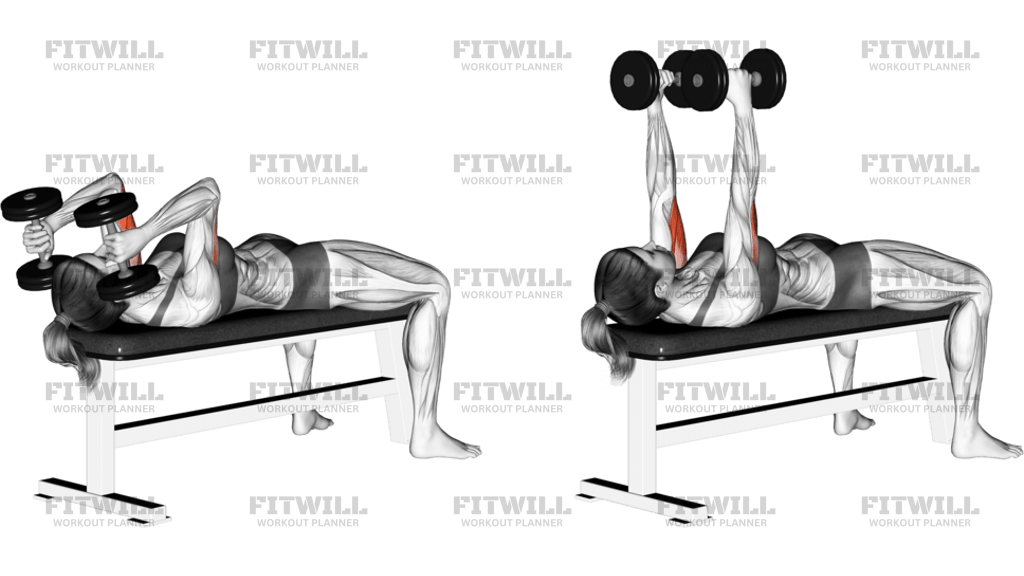
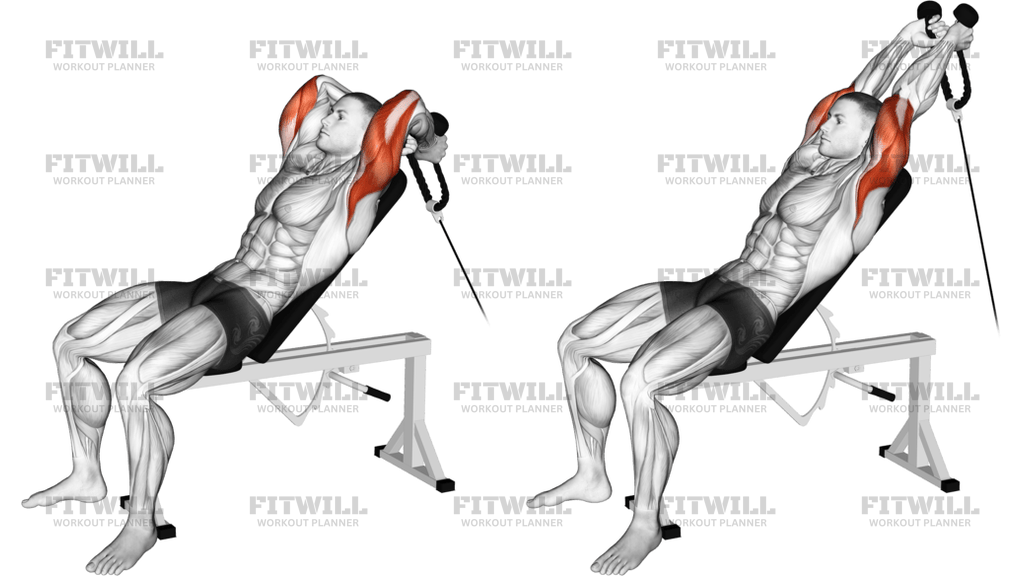
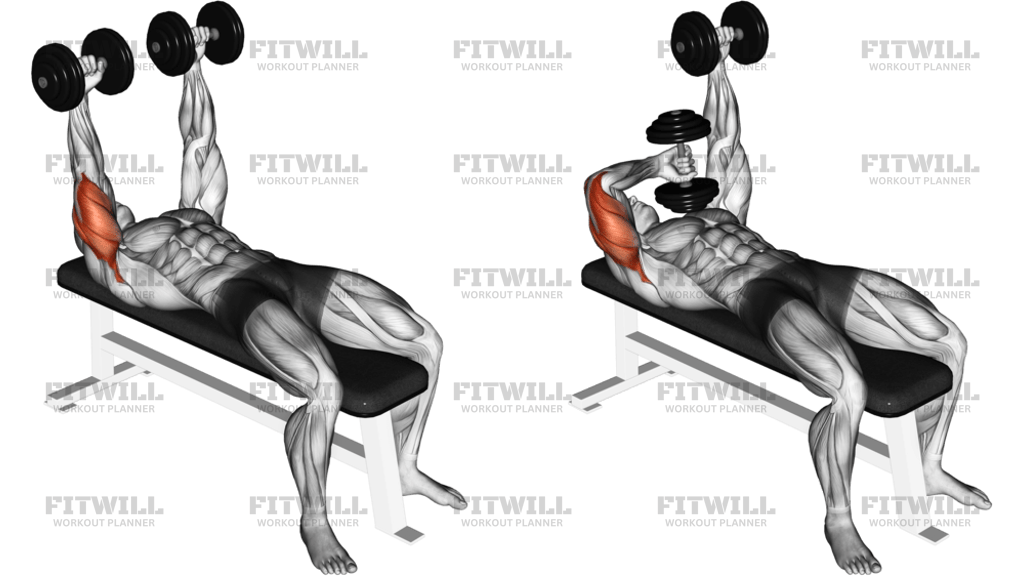
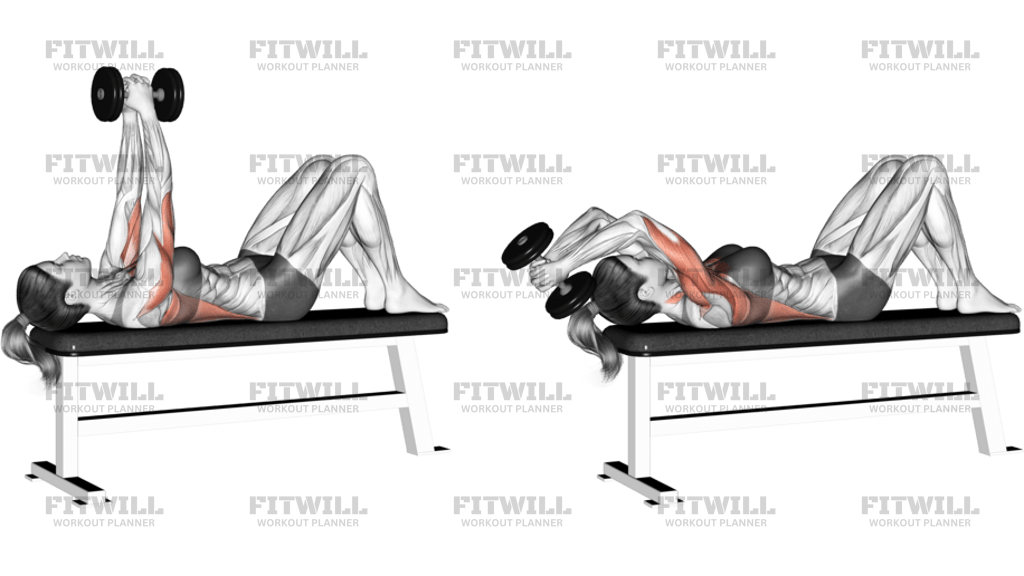
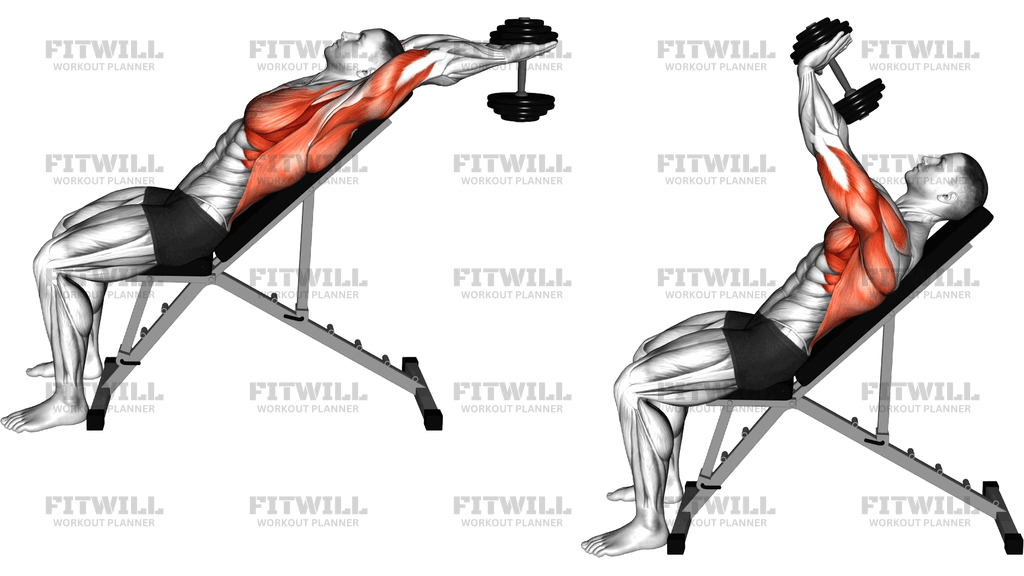
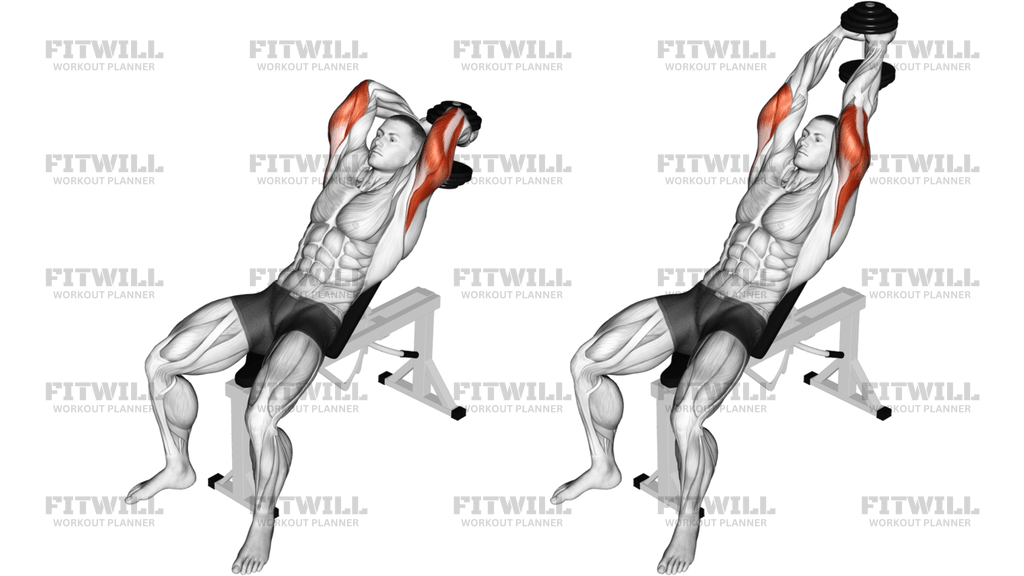
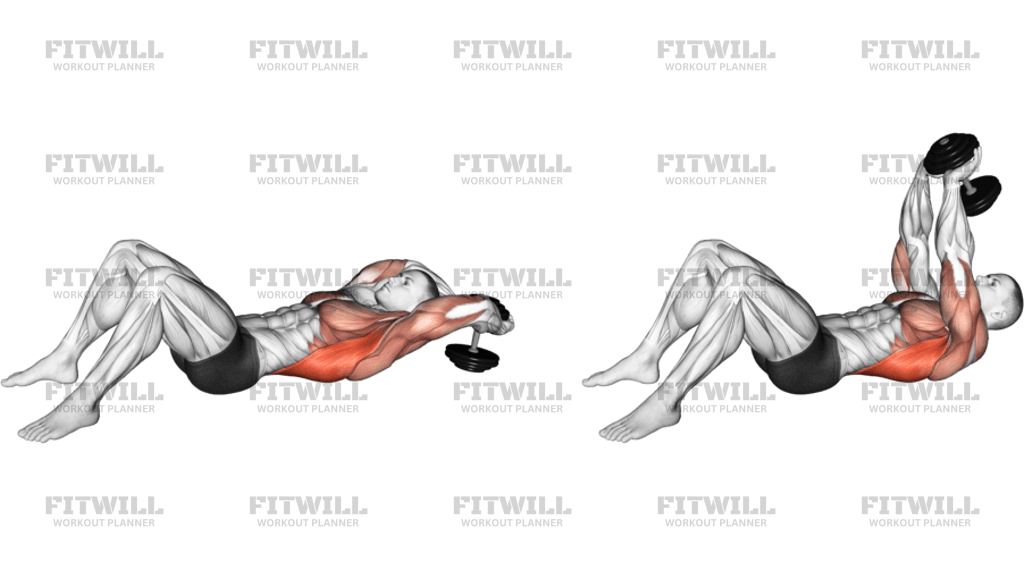
Dumbbell Incline Hammer Press On Exercise Ball
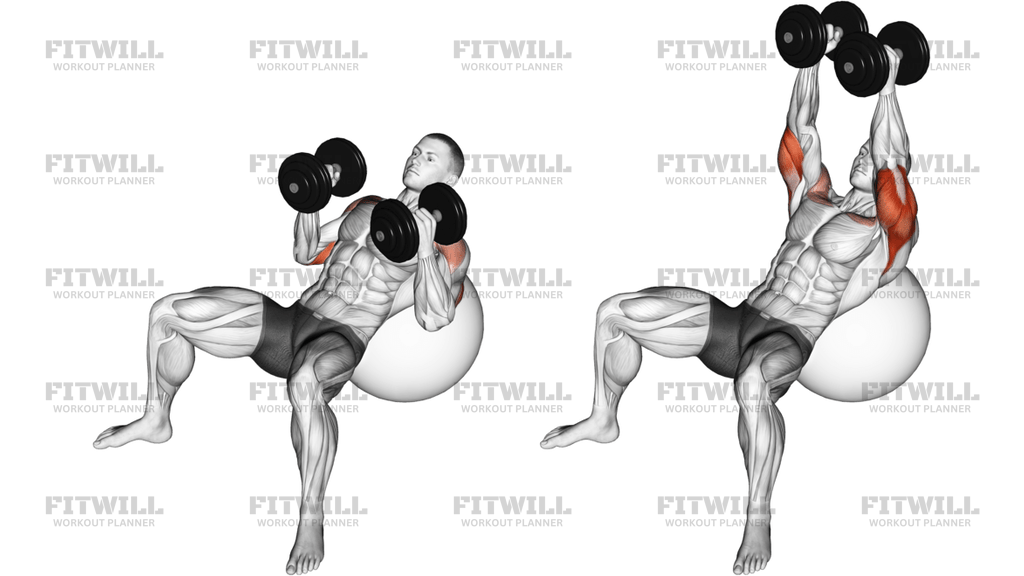
Dumbbell Incline Hammer Press On Exercise Ball is a stability-ball pressing exercise that uses a neutral, hammer-style dumbbell grip to load the triceps heavily while the shoulders and chest help guide the press. The ball changes the feel of the movement immediately: your upper back is supported, but your torso still has to stay organized, so the setup and foot placement matter as much as the press itself.
The exercise is usually used to build pressing strength, arm drive, and upper-body control without the fixed path of a bench or machine. Because the hands stay in a neutral grip, the elbows tend to track closer to the body than in a wide-grip press, which shifts more of the work toward the triceps while still involving the front delts and upper chest. The exercise is not about moving the heaviest possible dumbbells; it is about keeping the dumbbells stacked, the wrists straight, and the ball stable enough that every rep looks the same.
Set up by sitting on the ball with the dumbbells resting on your thighs, then walk your feet forward until your upper back and shoulders are supported on the ball. Keep your feet flat and wide enough to feel balanced. From there, bring the dumbbells to the upper chest line with palms facing each other and elbows bent, then press them up in a smooth arc until the arms are straight but not slammed into lockout.
At the top, the dumbbells should finish over the shoulder line with the wrists stacked over the elbows and shoulders, not drifting backward. Lower them under control to the same chest-height start position and keep the ribcage from flaring as the weights descend. If the ball rolls, the hips twist, or the elbows fly wide, the load is too heavy or the setup is too loose for the intended pattern.
This variation fits well in accessory strength work, upper-body push sessions, or programs that want a slightly less stable press than a flat bench. It rewards clean reps, controlled tempo, and a neutral grip that stays comfortable for many lifters. The safest version is the one where your back stays settled on the ball, your feet stay planted, and the dumbbells travel in a controlled line from the upper chest to a strong overhead finish.
[ Workout Log & Planner ]
Put your next workout in Fitwill
Keep your plan and training log ready when you are.


Instructions
- Sit on the exercise ball with a dumbbell on each thigh, then walk your feet forward until your upper back and shoulders are supported on the ball.
- Plant both feet flat and keep them far enough apart to stop the ball from rolling as you press.
- Use your thighs to help bring the dumbbells to the upper chest line, palms facing each other and elbows bent.
- Set the wrists over the elbows and keep the elbows slightly in front of the torso rather than flaring them straight out.
- Brace your torso and drive the dumbbells upward in a smooth arc until the arms are straight over the shoulder line.
- Finish with the dumbbells stacked above the shoulders, not drifting behind the head or collapsing inward.
- Lower the dumbbells slowly back to the upper chest line along the same path, keeping the ball and hips steady.
- Inhale as the dumbbells come down and exhale as you press up.
- Reset the shoulders and feet before the next repetition if the ball shifts or your back slides on the ball.
Tips & Tricks
- Keep the grip neutral the whole time; if the palms start turning forward, the movement stops being a true hammer press.
- Choose a ball position that lets your shoulders rest on the top half of the ball without your head hanging far back.
- If the ball rolls when you start the press, widen your feet or lower the load before adding more weight.
- Stop the descent when the dumbbells reach upper-chest height and the upper arms can still stay under control.
- Keep the ribs down as the dumbbells rise so the press comes from the arms and shoulders instead of an exaggerated back arch.
- Use a load that allows both dumbbells to move together; one side lagging behind usually means the weight is too heavy.
- A slight pause at the top helps you feel the triceps finish the rep without bouncing off the bottom.
- Keep your neck long and your chin relaxed so the ball does not push your head into an awkward angle.
- If your wrists bend back under load, lighten the dumbbells and stack the knuckles over the forearms more directly.
Frequently Asked Questions
What muscles does Dumbbell Incline Hammer Press On Exercise Ball target most?
The triceps are the main drivers, with the front delts and upper chest helping finish the press.
Why use an exercise ball instead of a bench for this press?
The ball adds an unstable support surface, so your torso and shoulder position have to stay organized while you press.
What does the hammer grip change on this press?
A neutral grip keeps the elbows closer to the body and usually shifts more of the work toward the triceps.
How should my body be positioned on the ball?
Your upper back and shoulders should be supported, your feet should stay flat, and your hips should stay quiet enough to keep the ball from rolling.
Where should the dumbbells start and finish?
They should start near the upper chest line with neutral palms and finish stacked over the shoulder line without drifting behind the head.
What usually goes wrong with this exercise?
The most common problems are a rolling ball, flared elbows, bent wrists, and pressing so heavy that the dumbbells lose their shared path.
Can a beginner use this exercise?
Yes, but it should be done with light dumbbells and a very stable setup before the load increases.
How can I make the set harder without just loading more weight?
Slow the lowering phase, pause briefly at the top, or use cleaner reps from a steadier ball position before adding weight.