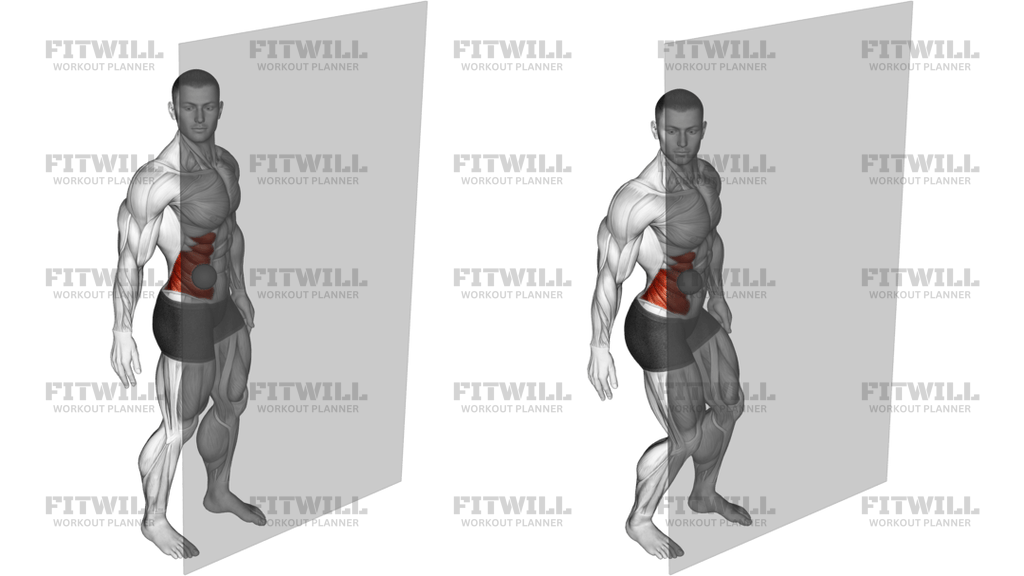
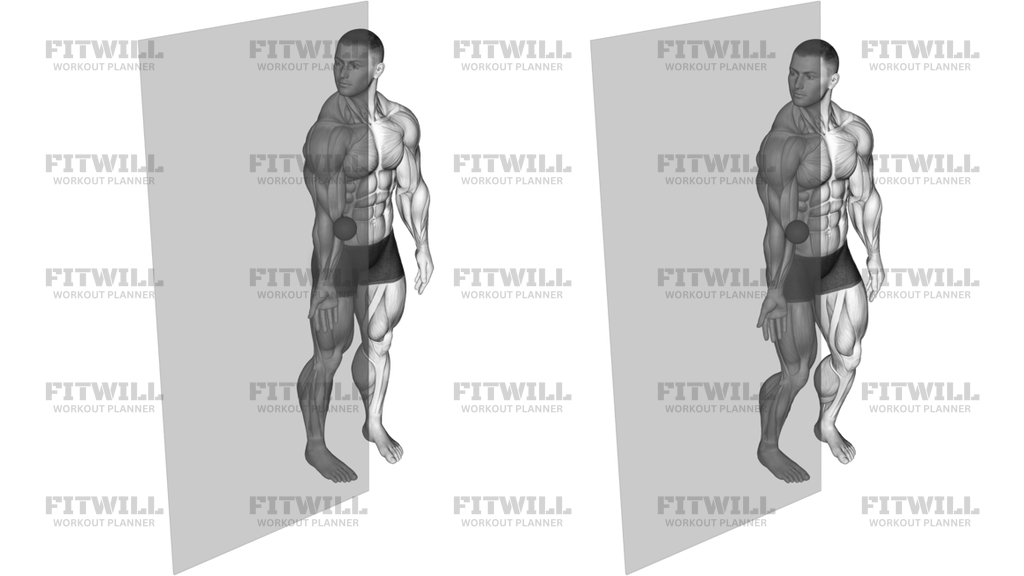
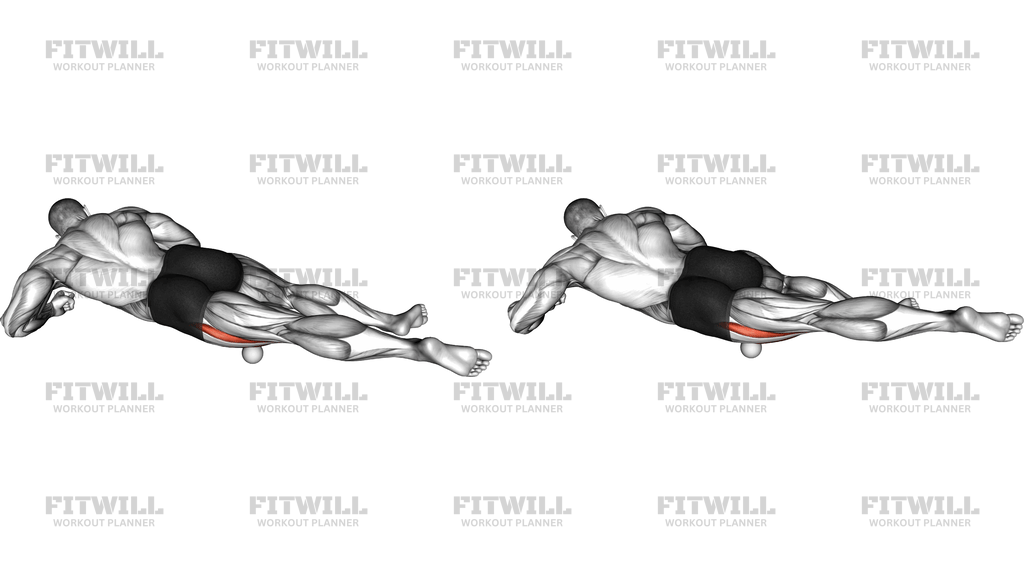
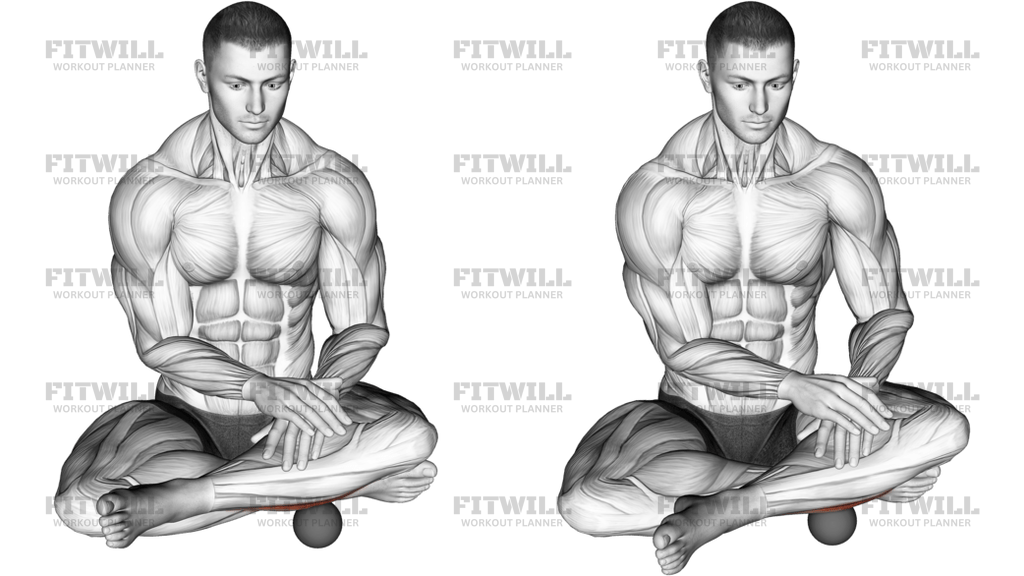
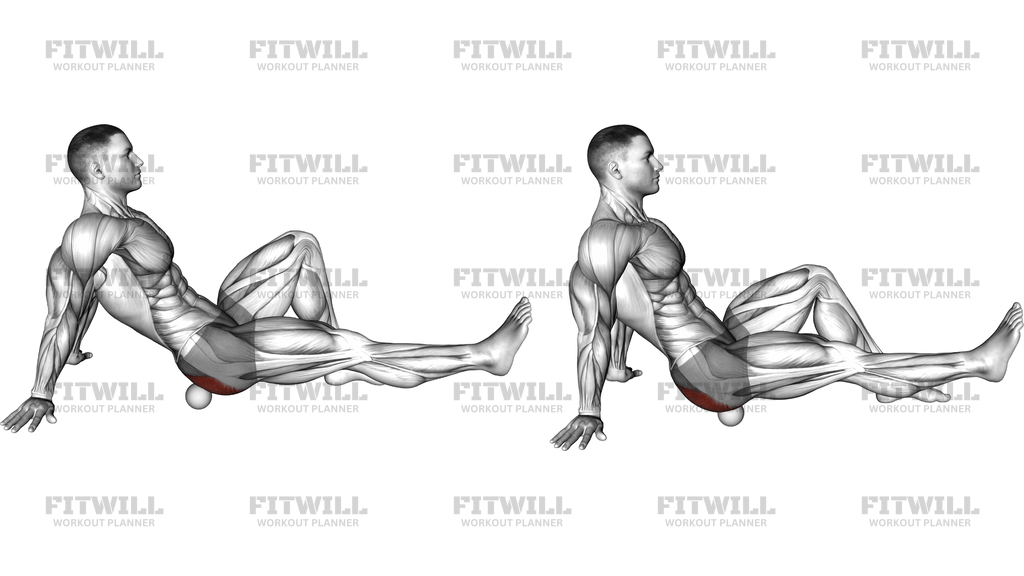
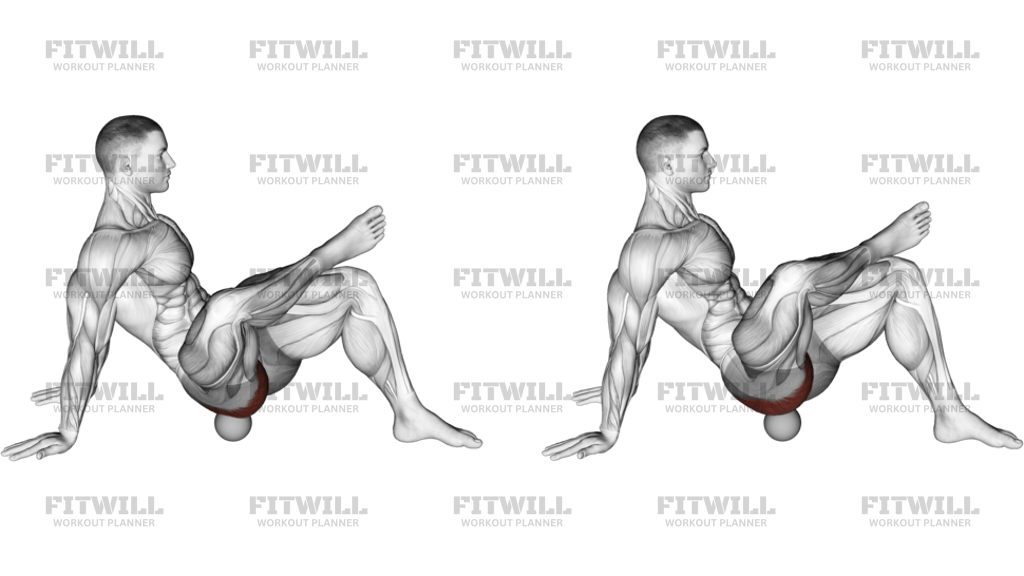
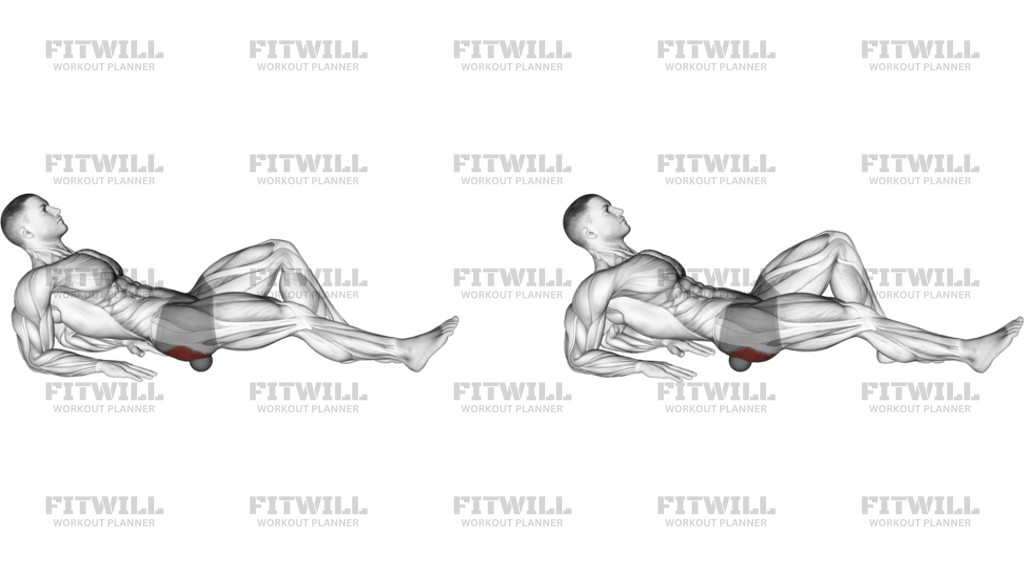
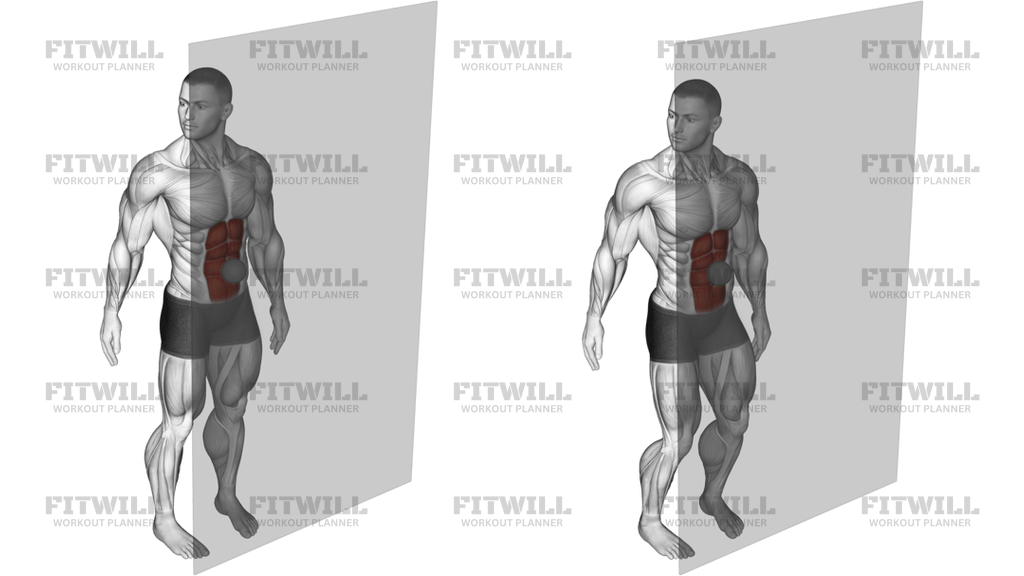
Roll Ball Rectus Femoris
Roll Ball Rectus Femoris is a targeted self-release exercise for the front of the thigh, using a rollball to apply steady pressure to the rectus femoris as you move slowly over the tissue. It is less about lifting or strengthening and more about improving how the thigh and front-of-hip area feel before training, after a hard leg session, or any time the quads feel tight and overworked.
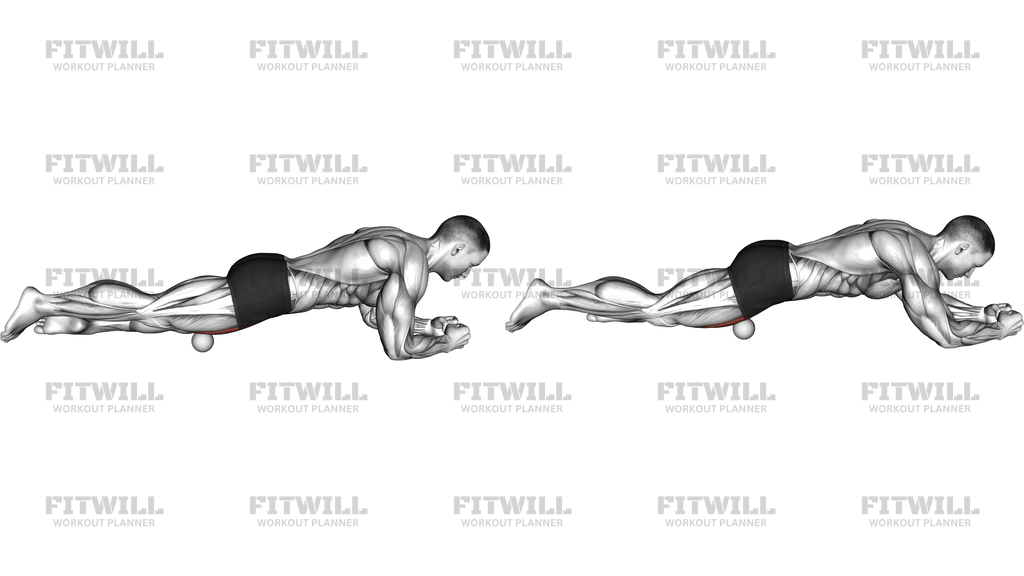
Because the rectus femoris crosses both the hip and the knee, the setup matters more than the range. Lying face down with the forearms on the floor keeps the torso supported while the ball works into the belly of the muscle instead of drifting onto the kneecap or the outside of the thigh. The goal is a controlled amount of pressure that feels specific and useful, not a painful grind.
As you roll, keep the pelvis square and move only a few inches at a time so the ball travels from just above the knee toward the upper quad and front hip. That small, deliberate movement helps you find tight bands or tender spots without turning the drill into a back extension or a full-body shuffle. When you find a stubborn area, pause, breathe, and let the tissue soften around the ball before continuing.
Roll Ball Rectus Femoris fits well in a warm-up before squats, lunges, sprint work, or cycling, and it can also be used after training to downshift the front thighs. Light pressure is usually enough for beginners, while stronger lifters and runners may need slower passes near the hip end of the muscle. Keep the pressure tolerable, avoid sharp knee or hip pinching, and treat the movement as precise tissue work rather than a test of how much discomfort you can tolerate.
Fitwill
Log Workouts, Track Progress & Build Strength.
Achieve more with Fitwill: explore over 9600 exercises with images and videos, access built-in and custom workouts, perfect for both gym and home sessions, and see real results.
Start your journey. Download today!




Instructions
- Lie face down on the floor and place the rollball under the front of one thigh, starting a few inches above the knee or at mid-thigh.
- Prop yourself on your forearms with your elbows under your shoulders and keep the opposite leg relaxed so you can control how much body weight presses into the ball.
- Square both hip bones to the floor and lightly brace your glutes so the pressure stays on the front of the thigh instead of the lower back.
- Shift your body slowly forward and back so the ball rolls along the rectus femoris from just above the knee toward the front of the hip.
- Keep the passes short and controlled, using only a few inches of travel before changing direction.
- When you find a tender spot, stop there for 10 to 20 seconds and breathe until the pressure begins to ease.
- Turn the working foot slightly in or out only if needed to find the straightest line on the front of the thigh.
- Lift some weight off the ball and reset if the pressure moves onto the kneecap, groin crease, or outside of the thigh.
- Finish by easing all pressure off the ball, lowering your chest, and switching sides if you are working both legs.
Tips & Tricks
- Aim the ball at the middle of the quad, not directly on the kneecap or high into the hip crease.
- If the pressure feels too intense, keep more weight on the opposite leg and use your forearms to unload the working side.
- Short, slow passes usually work better here than long sweeps because the rectus femoris is a narrow, straight muscle.
- Keep the ribs down and the pelvis square so you do not twist onto the outside edge of the thigh.
- Breathe out while you settle onto a tight point; holding your breath usually makes the front of the hip tighten more.
- If you feel a sharp pinch near the front of the hip, move the ball lower on the thigh and reduce body weight on the ball.
- Do not chase pain by rocking faster; sustained pressure on one spot is usually more effective than fast rolling.
- Relax the foot and lower leg so the thigh can receive the pressure instead of bracing against it.
Frequently Asked Questions
What does Roll Ball Rectus Femoris target most?
It targets the rectus femoris, the front quad muscle that also helps flex the hip.
Is Roll Ball Rectus Femoris a stretch or a massage drill?
It is closer to self-massage or soft-tissue work than a true stretch. The ball applies pressure while you slowly roll through the muscle.
Where should the rollball sit on the thigh?
Start under the belly of the front thigh, a little above the knee or around mid-thigh, then roll toward the front of the hip without sitting on the kneecap.
Can beginners do Roll Ball Rectus Femoris safely?
Yes, as long as they use light pressure and keep the passes small. The drill should feel like firm tissue work, not a pain tolerance contest.
Why am I feeling it more near the front of my hip than mid-thigh?
The rectus femoris crosses the hip, so the upper end of the muscle can be the tightest area. Slow down there, but avoid pressing into a sharp hip pinch.
How long should I stay on a tender spot?
About 10 to 20 seconds is usually enough. Stay until the pressure softens, then roll a little farther instead of grinding on the same point.
When is Roll Ball Rectus Femoris most useful?
It works well before squats, lunges, running, or cycling, and it can also help the front thighs unwind after a hard lower-body session.
What should I do if the ball hits my kneecap or groin crease?
Shift the ball back into the center of the thigh and reduce pressure. Those areas are too bony or too sensitive for this drill.