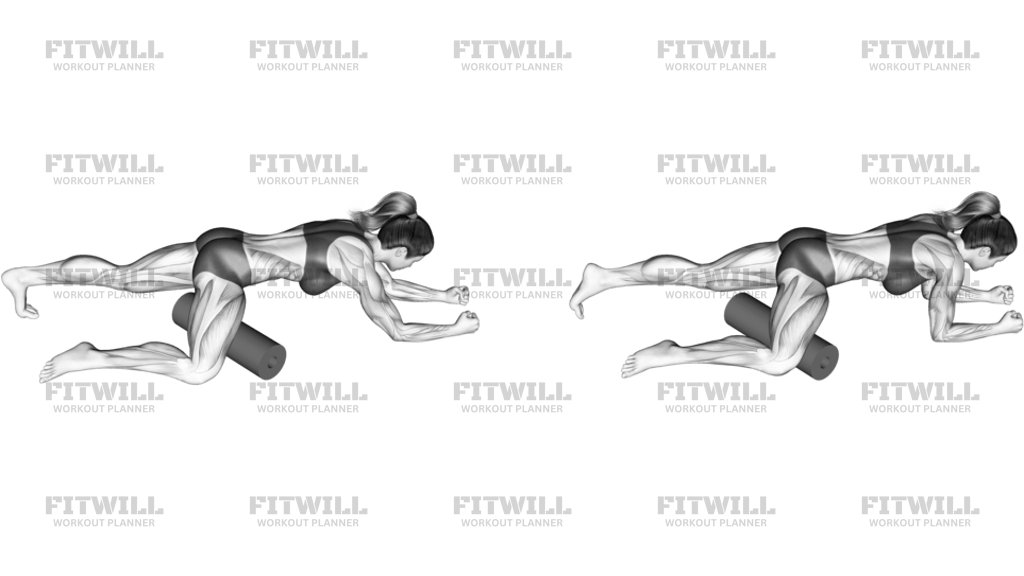
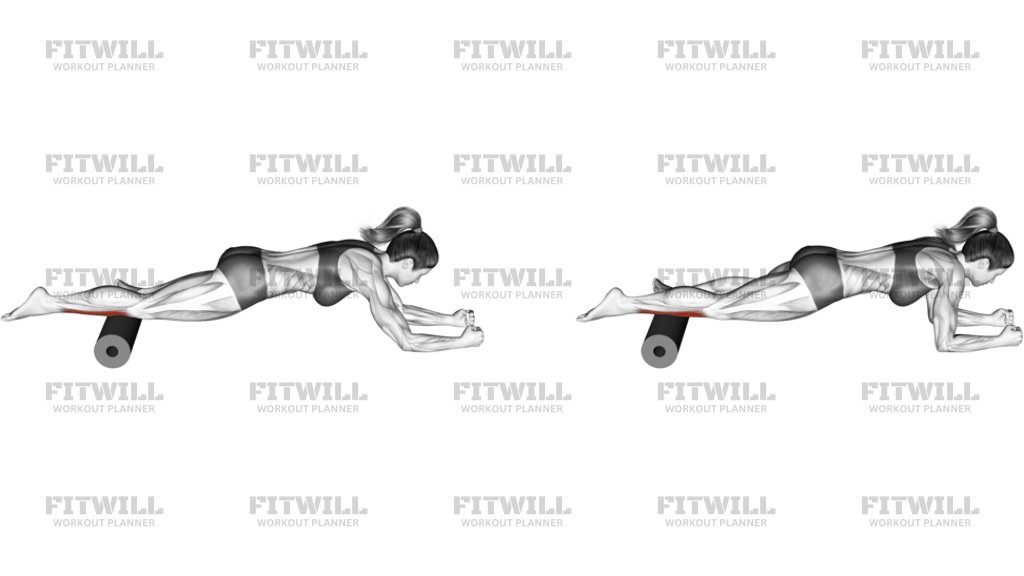
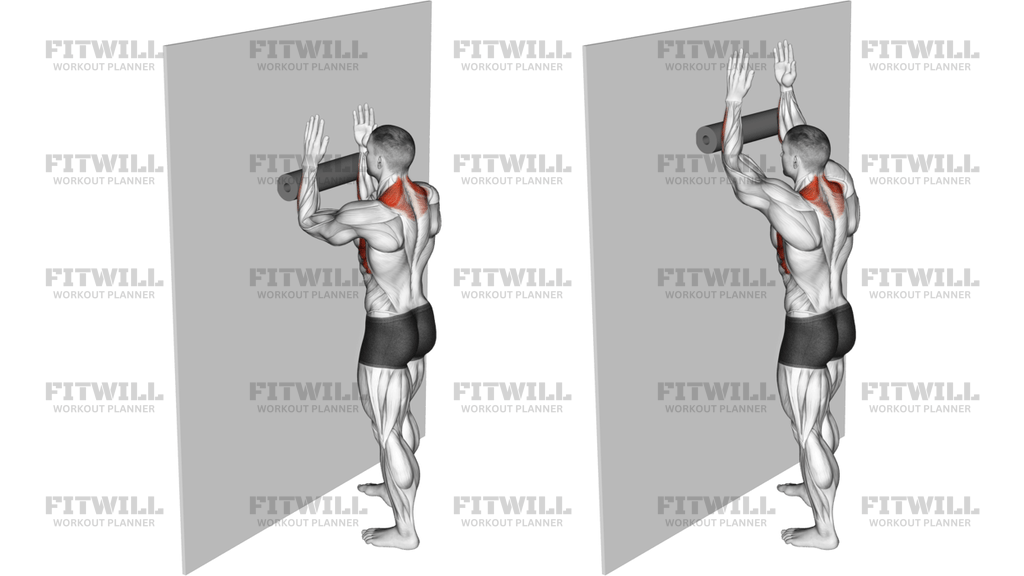
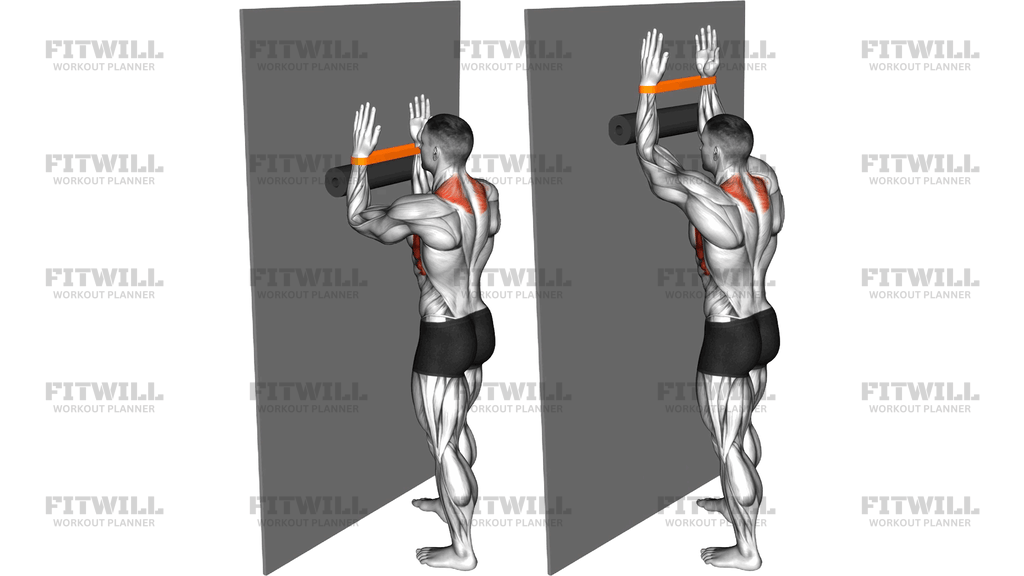
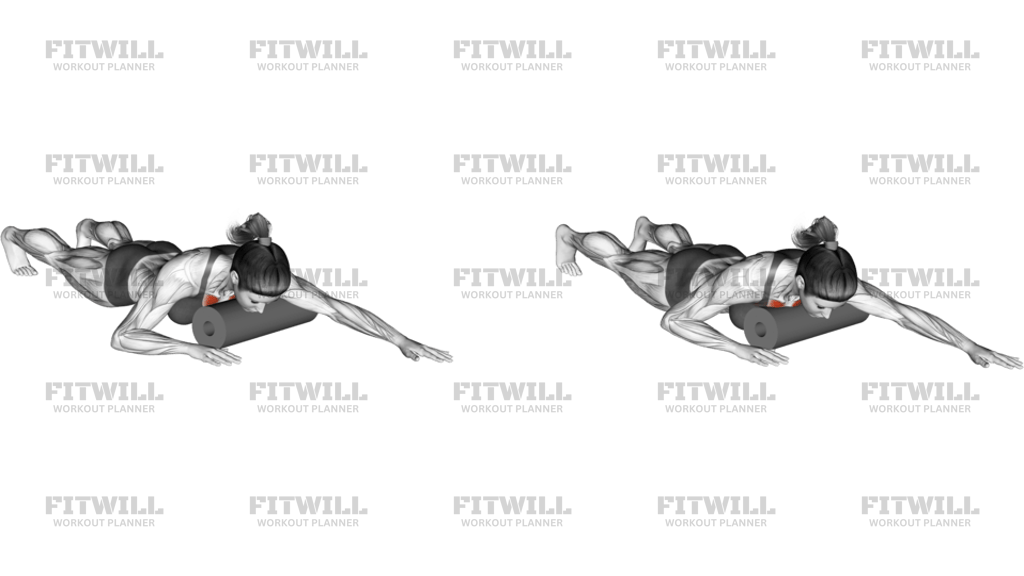
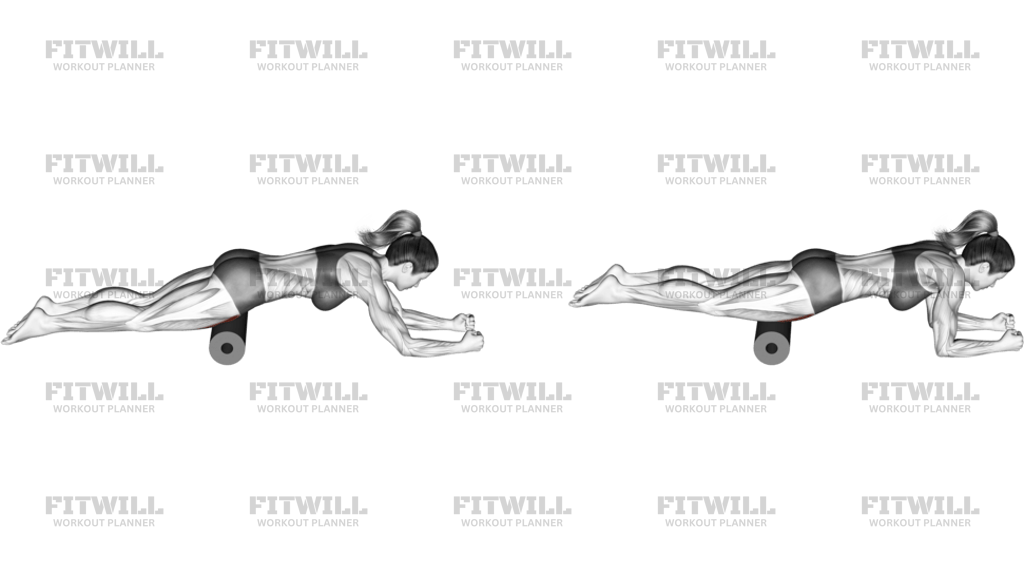
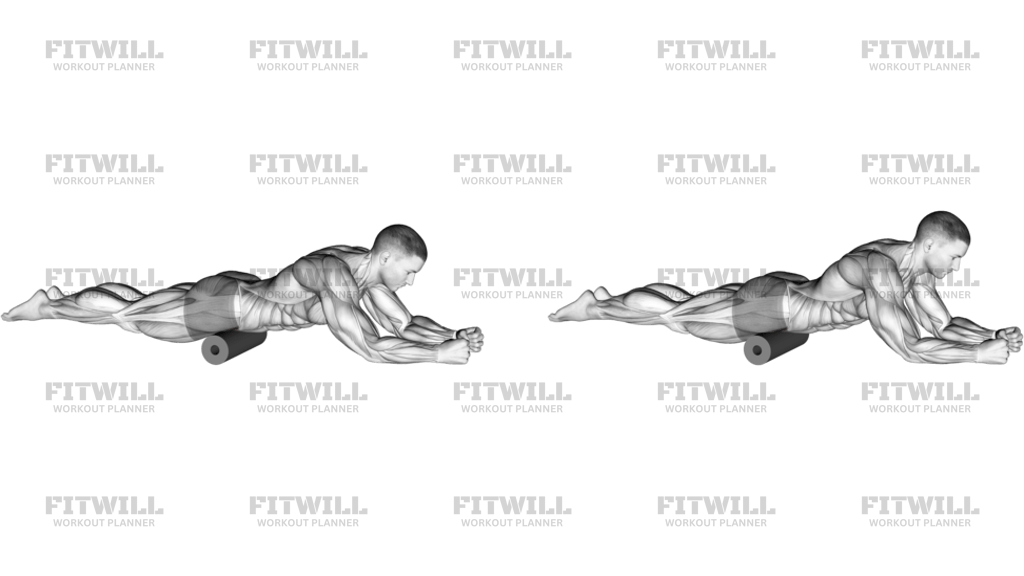
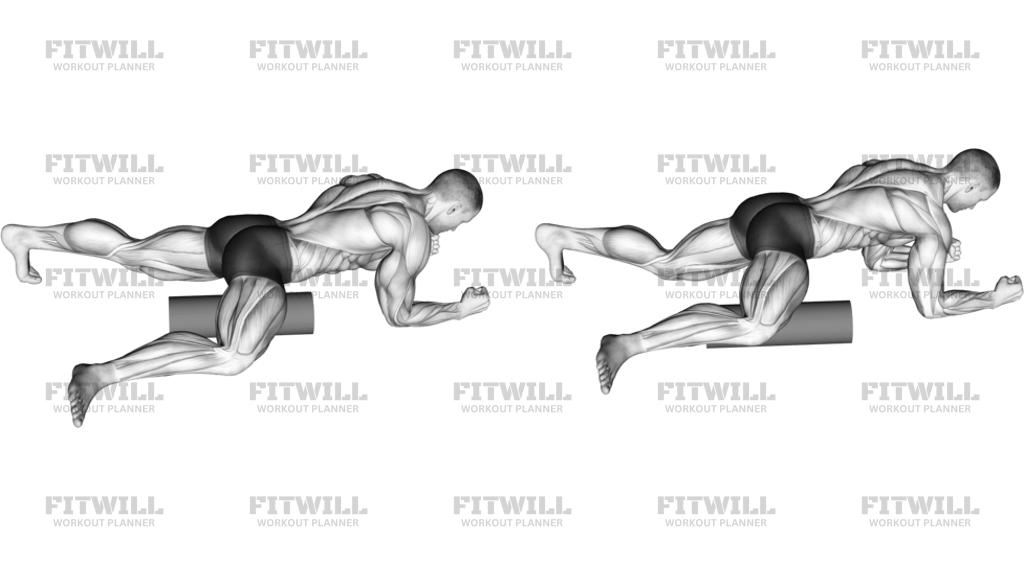
Roll Forearms Standing Against Wall
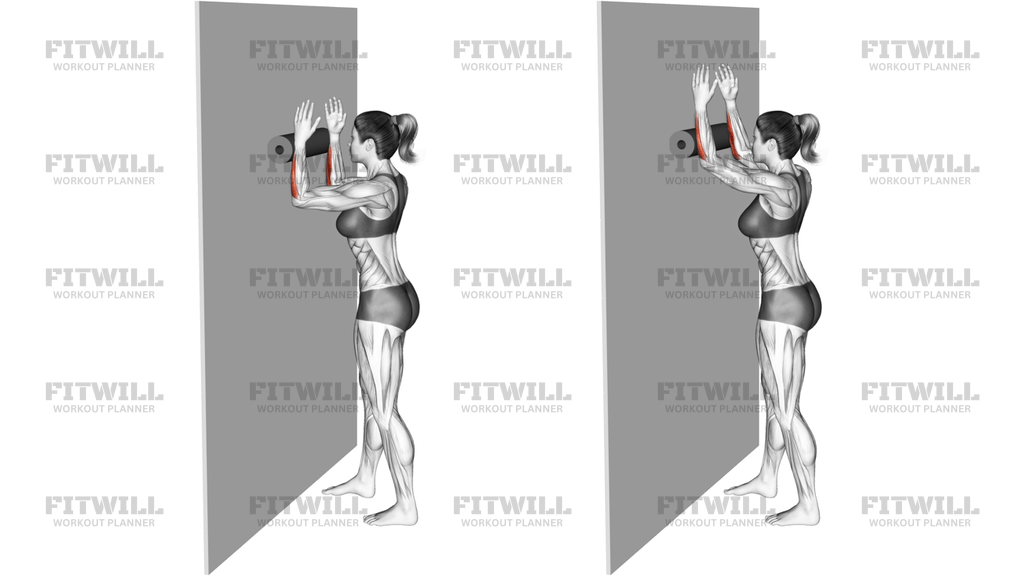
Roll Forearms Standing Against Wall is a standing forearm release drill that uses a foam roller and a wall to create steady, easy-to-control pressure through the front and outer sides of the forearm. It is useful before or after sessions that depend on gripping, wrist extension, or repeated hand work, including rows, deadlifts, climbing, racket sports, and desk-heavy days. The goal is not to crush the tissue; it is to make the forearm feel less guarded and easier to load.
The wall keeps the roller stable and lets you control pressure by changing how far you lean in. Start with the roller against the wall at about lower-chest height, elbows bent, and forearms pressing evenly into the cylinder. Keep your feet far enough back that you can breathe and stay relaxed, because if you crowd the wall the movement turns into a shrugging contest instead of a forearm release.
Roll slowly along the length of the forearms, working from just below the elbows toward the wrists and then back again. Pause on dense spots for a few breaths, then continue with small, deliberate passes rather than large, fast swings. Keep the shoulders down, ribs stacked over the pelvis, and the wrists quiet so the pressure stays on the forearm tissue instead of dumping into the hands or shoulder joints.
This drill is especially helpful when the forearms feel pumped, tight, or stiff before pressing, pulling, or overhead work. It can also be used between sets when grip fatigue is becoming the limiter, because a brief reset often lets you return to the lift with cleaner wrist position and less tension in the elbows. If the pressure becomes sharp, numb, or pinchy at the elbow, back off immediately and work a slightly lower or softer line.
Treat it as a controlled recovery tool: slow, repeatable passes, moderate pressure, and calm breathing. Used that way, Roll Forearms Standing Against Wall can make the forearms feel more mobile without irritating the wrists or elbows, which is exactly what you want before you go back to training.
[ Workout Log & Planner ]
Put your next workout in Fitwill
Keep your plan and training log ready when you are.


Instructions
- Stand facing a wall with your feet hip-width apart and place a foam roller horizontally between your forearms and the wall at about lower-chest height.
- Bend your elbows to roughly 90 degrees, open your hands, and press both forearms evenly into the roller without locking your elbows.
- Step your feet back until the roller stays pinned to the wall with steady, comfortable pressure.
- Keep your ribs stacked over your pelvis, your neck long, and your shoulders relaxed away from your ears.
- Slowly glide the roller from just below the elbows toward the wrists, using your feet to help guide the pressure.
- Reverse and roll back toward the elbows, pausing for one or two breaths on any tight or tender spot.
- Keep your wrists neutral and your forearms tracking straight rather than twisting in or out as you move.
- Release the pressure, lower the roller away from the wall, and shake out your arms before repeating for the planned time.
Tips & Tricks
- Use only enough bodyweight to feel the forearm tissue, not enough to grind into the elbow joint.
- Keep the roller just below the elbow crease; if it rides onto the bony point, move it lower.
- Short passes around the wrist extensors usually feel better than long aggressive sweeps after typing or gripping work.
- Let your feet do the work: stepping back increases pressure, stepping in reduces it.
- Keep your fingers relaxed and open; clenching turns the drill into a wrist strain.
- If you feel it in the front of the shoulder, soften the lean so the forearms stay the contact point.
- Spend extra time on the outer forearm after rows, deadlifts, or pull-ups, and on the inner forearm after pressing or desk work.
- Stop short of numbness or tingling; this should feel like dull pressure, not nerve irritation.
Frequently Asked Questions
What does Roll Forearms Standing Against Wall work?
It mainly targets the forearm flexors and extensors while the shoulders and core stabilize you against the wall.
Is Roll Forearms Standing Against Wall a stretching exercise or a massage drill?
It is more of a self-massage and mobility drill than a strength exercise. You are using pressure and slow movement to reduce forearm stiffness.
How hard should I press into the wall?
Use enough pressure to feel the forearm tissue compress, but not so much that the elbows or wrists feel jammed. If your breathing tightens up, back off a little.
Should I move up toward the wrist or down toward the elbow?
Work both directions. A controlled pass from just below the elbow toward the wrist and back again matches the movement shown here.
Can beginners do Roll Forearms Standing Against Wall?
Yes. Start with light wall pressure and short passes, especially if your forearms are sensitive or you have not used a roller on them before.
Where should I feel it most?
You should feel it through the meaty parts of the forearm, not on the bony elbow point or directly in the wrist joint.
When should I use Roll Forearms Standing Against Wall?
It works well in a warm-up before grip-heavy training or as a recovery drill after rows, deadlifts, climbing, or long computer sessions.
What if I feel tingling in my hand?
Stop and reduce pressure immediately. Tingling is a sign to back off, shift the roller away from the elbow, or skip the drill that day.