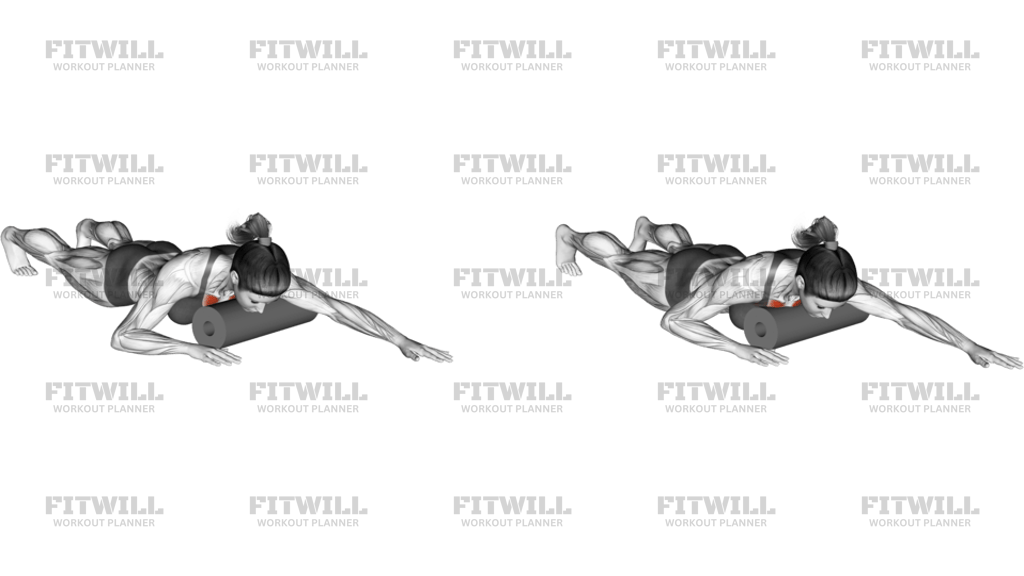
Roll Front Shoulder And Chest Lying On Floor
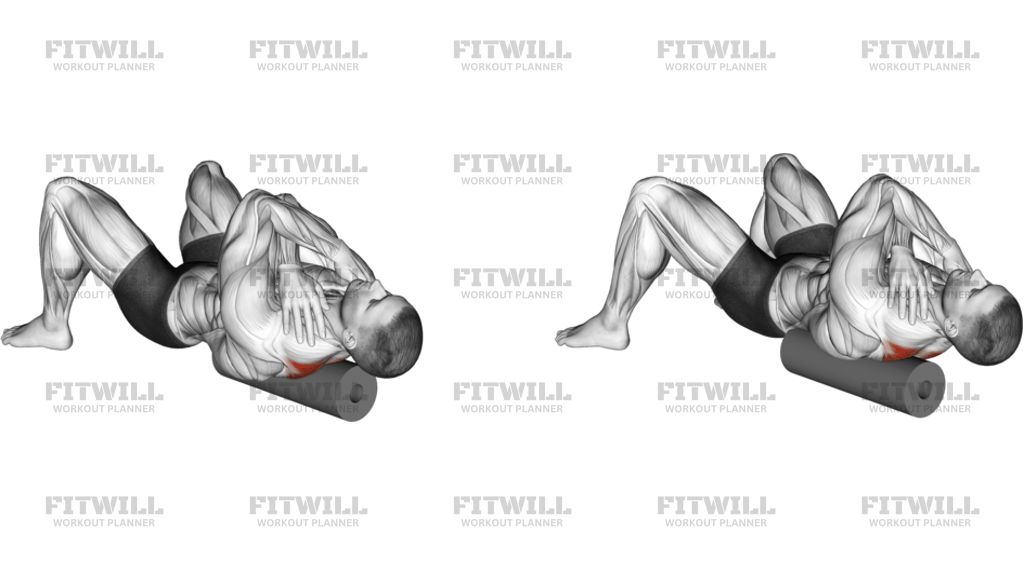
Roll Front Shoulder And Chest Lying On Floor is a floor-based soft-tissue drill for the front of the shoulder and upper chest using a foam roller. It is useful after pressing, pushing, or overhead work when the pecs and front delts feel tight, shortened, or stuck in a forward position. The goal is not to force a dramatic stretch. The goal is to settle on the tissue, breathe, and let steady pressure do the work.
The setup matters because the roller needs to sit on the muscle belly rather than the collarbone or the shoulder joint. When your chest is supported and the arm is angled out to the side, the pressure lands on the pec major and front shoulder instead of pinching the joint. Small changes in arm angle and body weight make a big difference, so this movement works best when it is precise and patient.
A good rep starts with a quiet body and a controlled amount of pressure. Lie face down, place the roller under the upper chest or front of one shoulder, and make short slow passes across the tight area. Keep the ribs down, the neck long, and the lower back relaxed so the pressure stays local instead of turning into an awkward back arch.
If you find a tender point, pause there for a few breaths and let the shoulder soften around the roller. That pause is often more useful than traveling farther across the muscle. The movement should feel like focused pressure and release, not like grinding on a painful spot or scraping over bone.
Roll Front Shoulder And Chest Lying On Floor fits well before benching, push-ups, dips, or overhead pressing, and it also works as a cooldown when the front of the shoulder feels locked up from sitting or repetitive training. Used regularly, it can help the chest open a little more easily and make the shoulder feel less crowded without forcing a stretch that the joint is not ready for.
[ Workout Log & Planner ]
Put your next workout in Fitwill
Keep your plan and training log ready when you are.


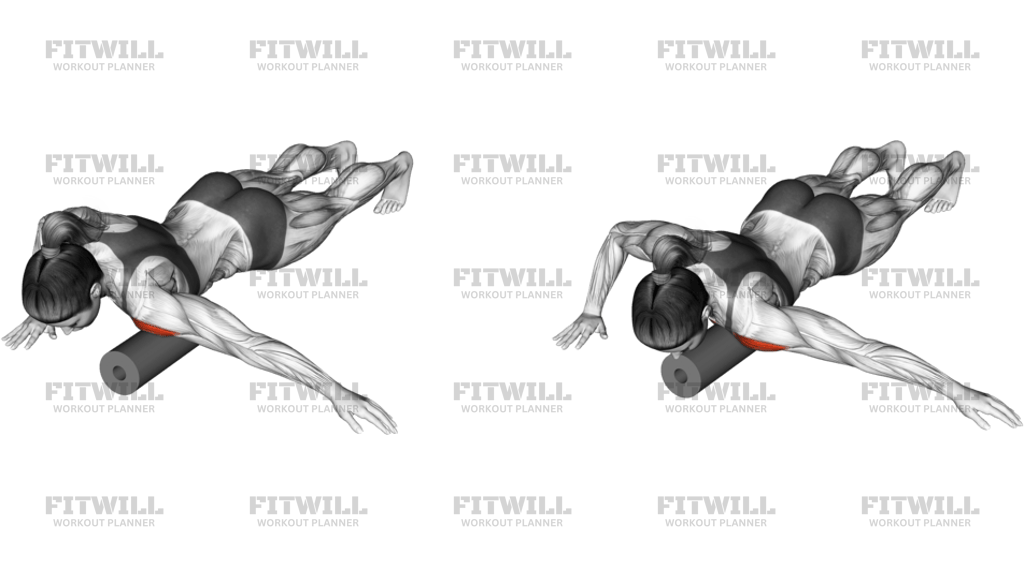
Instructions
- Lie face down and place the foam roller under the upper chest or front of one shoulder, just below the collarbone.
- Reach the same-side arm out to the side at about shoulder height and let the opposite hand or forearm rest on the floor for light support.
- Shift your weight until the roller presses into the pec and front delt, not into the shoulder joint or bone.
- Make short, slow rolls an inch or two forward and back across the tight area.
- Adjust the arm angle slightly up or down to find the spot that feels most restricted.
- Pause on a tender point for 2 to 4 slow breaths and let the chest soften around the roller.
- Keep your ribs down, neck relaxed, and lower back quiet while you breathe steadily.
- Ease off the pressure, reset your body, and repeat on the other side if needed.
Tips & Tricks
- Keep the roller on the soft tissue below the collarbone, not on the point of the shoulder.
- Use less body weight if the pressure jumps straight into the front of the shoulder joint.
- A small arm shift is usually enough; big rolling changes turn this into sliding instead of release work.
- Turn the palm a little up or down to bias the front delt or the outer pec.
- Exhale slowly when you settle onto a tight spot so the chest can relax around the roller.
- If your lower back starts to arch, move the roller a little lower and keep the ribs heavier on the floor.
- Bending the elbow slightly can make the pressure feel cleaner if the arm is fully straight and tense.
- Stop immediately if you get numbness, tingling, or a sharp pinch in the shoulder.
Frequently Asked Questions
What does Roll Front Shoulder And Chest Lying On Floor target?
It mainly targets the pec major and the front of the shoulder, with the exact emphasis depending on where you place the roller and arm.
Is Roll Front Shoulder And Chest Lying On Floor a stretch or a massage drill?
It is closer to a self-massage or release drill than a strength exercise. The intent is to reduce stiffness and improve comfort, not to chase fatigue.
Where should the foam roller sit for Roll Front Shoulder And Chest Lying On Floor?
Place it under the upper chest or front shoulder, just below the collarbone. Avoid parking it directly on the collarbone or the top of the shoulder joint.
Why does Roll Front Shoulder And Chest Lying On Floor sometimes feel pinchy?
That usually means the roller is too close to the joint or your arm angle is too aggressive. Back off the pressure and move the roller slightly onto the muscle belly.
Can I use Roll Front Shoulder And Chest Lying On Floor before pressing exercises?
Yes, it is often useful before bench press, push-ups, dips, or overhead pressing because it can help the chest and front delts feel less tight.
How long should I stay on one spot?
Two to four slow breaths is usually enough before you shift a little or change the arm angle. Longer is only helpful if the pressure stays comfortable and local.
Should my arm stay straight during Roll Front Shoulder And Chest Lying On Floor?
A mostly straight arm works well, but a slight bend is fine if it reduces shoulder pinching or helps you relax into the pressure.
Can beginners do Roll Front Shoulder And Chest Lying On Floor?
Yes. Beginners should start with very light bodyweight pressure and short pauses so the chest and shoulder can adapt without irritation.