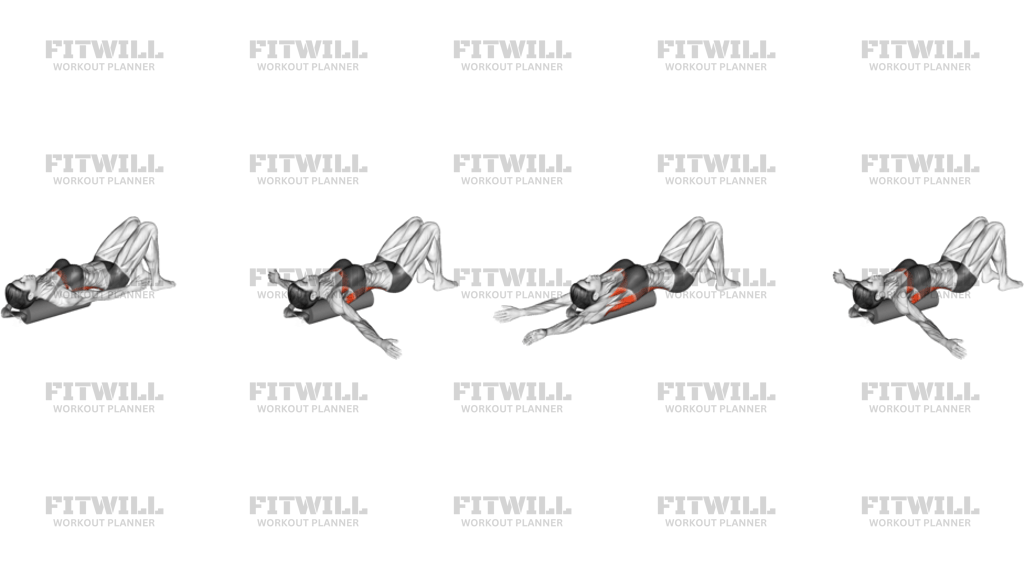
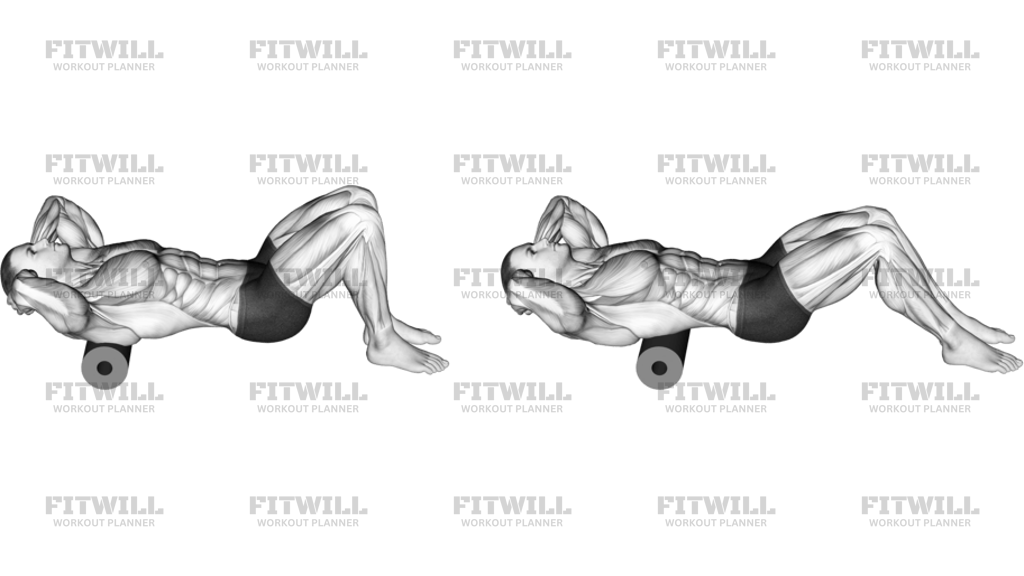
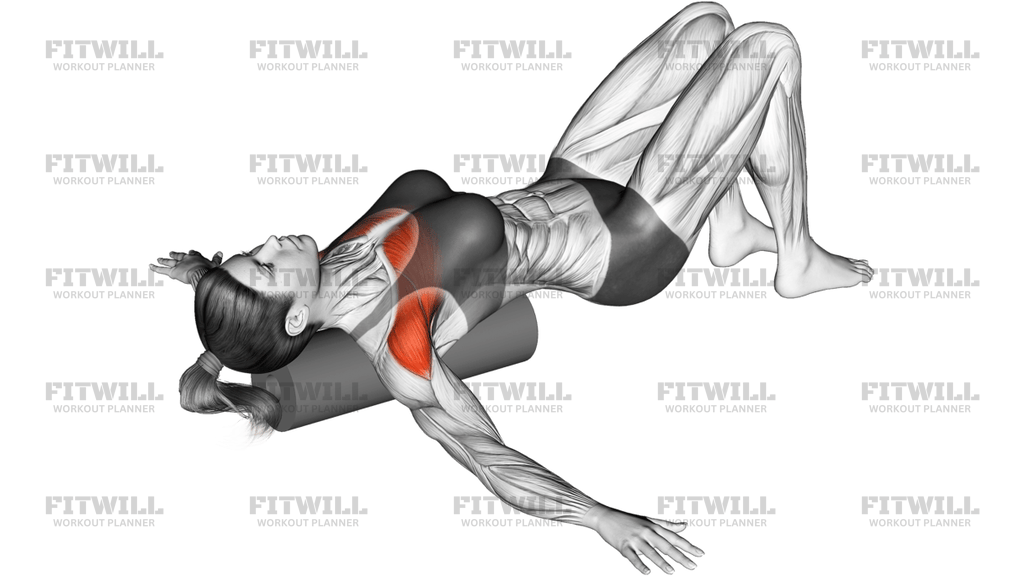
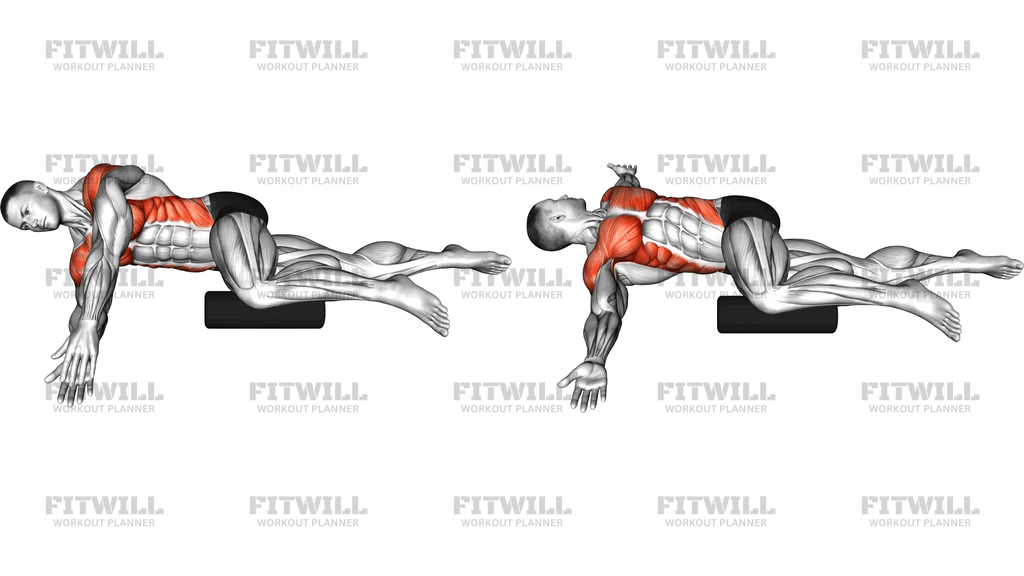
Roll Middle Back Lying On Floor
Roll Middle Back Lying On Floor is a foam-roller mobility drill for the thoracic spine and the tissues around the shoulder blades. By placing the roller under the middle back and gently shifting body weight over it, you create controlled pressure through the upper trunk and a small amount of extension in the rib cage. The movement is most useful when the mid-back feels stiff after sitting, pressing, rowing, or overhead work.
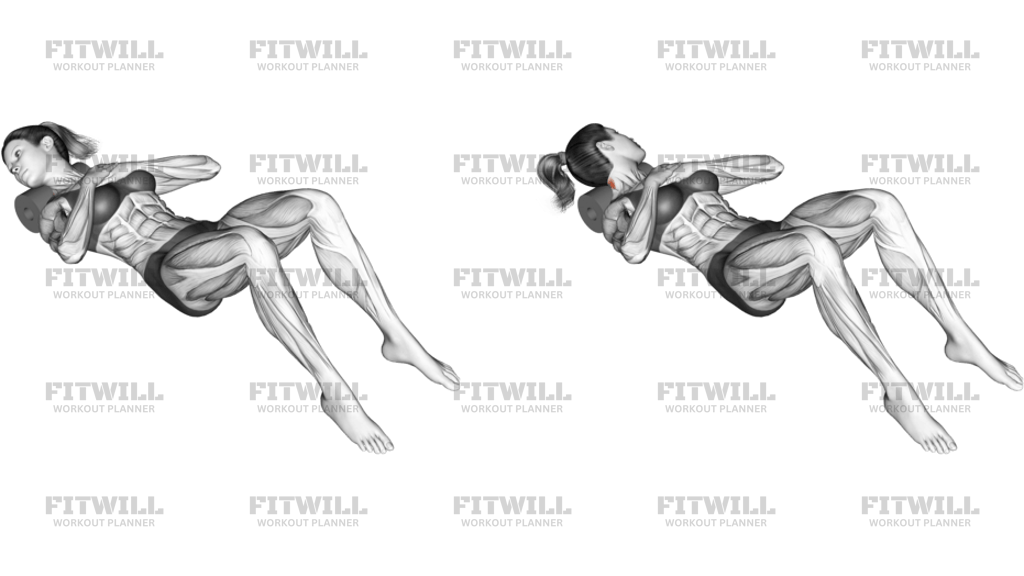
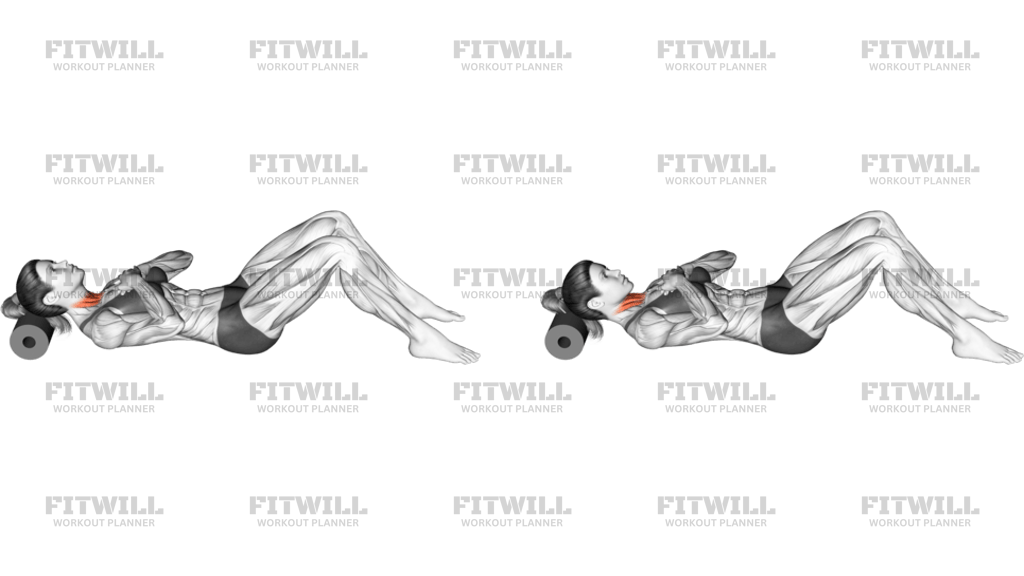
The setup matters more than the range. The roller should sit across the middle of the back, not under the neck and not down in the low back. With the knees bent and feet planted, the pelvis stays quiet while the rib cage moves over the roller. Keeping the hands crossed over the chest, as shown, helps the shoulders stay relaxed and keeps the neck from doing extra work.
Each rep should be slow and deliberate. Roll a few inches at a time, pause on a tight segment, and let the ribs soften as you breathe. The goal is not to force a huge arch or grind through pain; it is to find the stiff spot, apply steady pressure, and let the thoracic spine open gradually. That is why small adjustments usually work better than aggressive rocking.
This drill fits well in warm-ups, recovery sessions, and mobility circuits before pressing or pulling work. A smoother upper back can make overhead positions, posture, and rotation feel easier without needing heavy loading. It is especially helpful on days when the middle back feels locked up and the chest or shoulders are compensating for it.
Keep the pressure comfortable and specific. If the roller drifts into the lumbar spine, if the neck starts to compress, or if the pressure feels sharp instead of muscular, shorten the range and reset the position. Controlled breathing, steady feet, and small body shifts usually make the movement productive without overdoing it.
[ Workout Log & Planner ]
Put your next workout in Fitwill
Keep your plan and training log ready when you are.


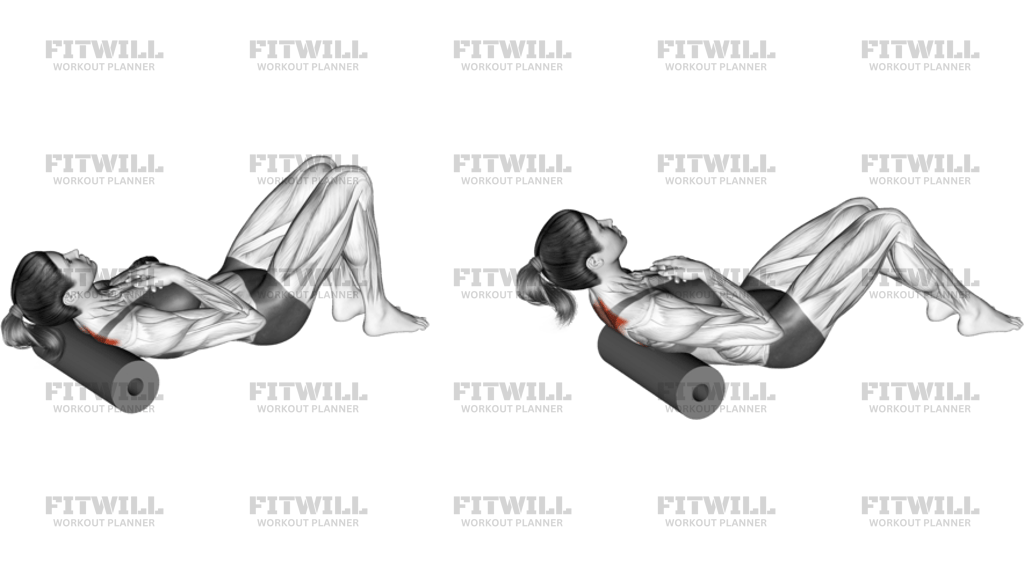
Instructions
- Place a foam roller on the floor and lie back with it across the middle of your back, just below the shoulder blades.
- Bend your knees, plant your feet hip-width apart, and keep your head and neck relaxed on the floor.
- Cross your arms over your chest or rest your hands lightly on your shoulders so the rib cage stays contained.
- Lift your hips just enough to let your body move over the roller without dumping into the low back.
- Slowly shift a few inches up and down so the roller works through the tight area of the thoracic spine.
- Pause on a stiff spot for one to three calm breaths, letting the ribs soften as you exhale.
- Keep the pressure on the middle back and avoid rolling onto the neck, lower ribs, or lumbar spine.
- Lower your hips, step off the roller carefully, and stand up without twisting suddenly.
Tips & Tricks
- Keep the roller across the mid-thoracic spine; if it slides into the low back, the setup is too low.
- If the pressure feels too intense, press more through your feet and shorten the roll.
- Small passes work better than long sweeps when you are trying to open one stiff segment.
- Exhale into the tight spot instead of holding your breath so the ribs can settle over the roller.
- Crossed arms usually keep the shoulders quieter and reduce neck tension better than cranking the elbows back.
- Spend an extra breath on one stubborn segment, then move on instead of grinding the same spot.
- Use this drill before pressing, rowing, or overhead training when the upper back feels rigid.
- Stop if you feel sharp pain, numbness, or symptoms that travel into the chest or arms.
Frequently Asked Questions
What does Roll Middle Back Lying On Floor train?
It mainly trains thoracic mobility and pressure tolerance in the middle back, especially around the shoulder blades.
Is this a strength exercise or a mobility drill?
It is primarily a mobility and soft-tissue drill, not a strength movement.
Where should the foam roller sit?
It should sit across the middle of the back, roughly from the lower shoulder blades to the upper rib cage, not under the neck or low back.
Should my feet stay flat on the floor?
Yes. Flat feet let you control how much body weight you place on the roller and keep the roll smooth.
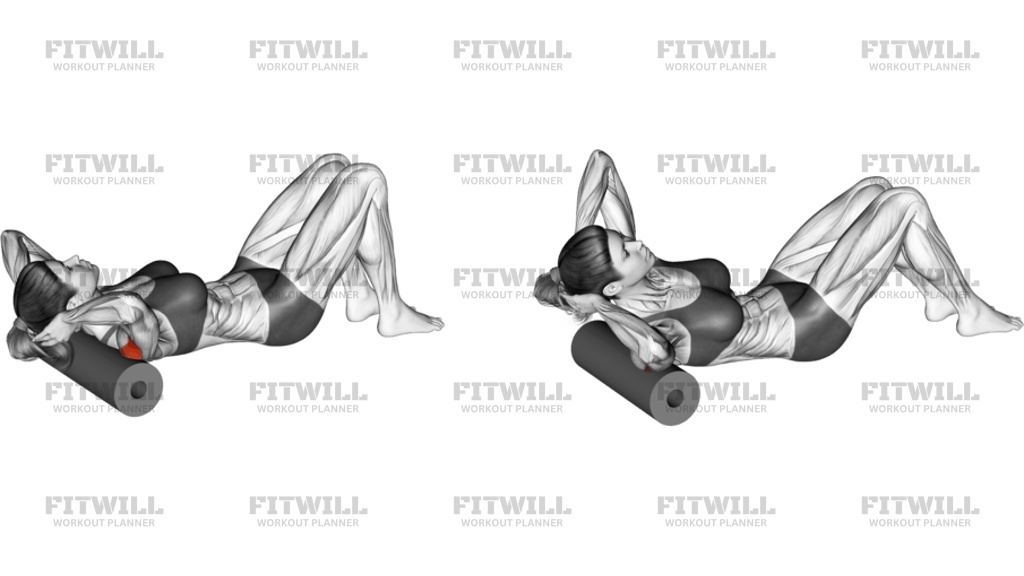
Can I keep my hands behind my head?
You can, but crossed arms usually keep the rib cage calmer and reduce the chance of pulling on the neck.
What if the pressure feels too strong?
Reduce the pressure by pushing more through your feet or use a smaller range of motion.
How long should I stay on one tight spot?
One to three slow breaths is usually enough before you move on.
When is this movement most useful?
It works well in a warm-up or recovery session before pressing, pulling, or overhead training.