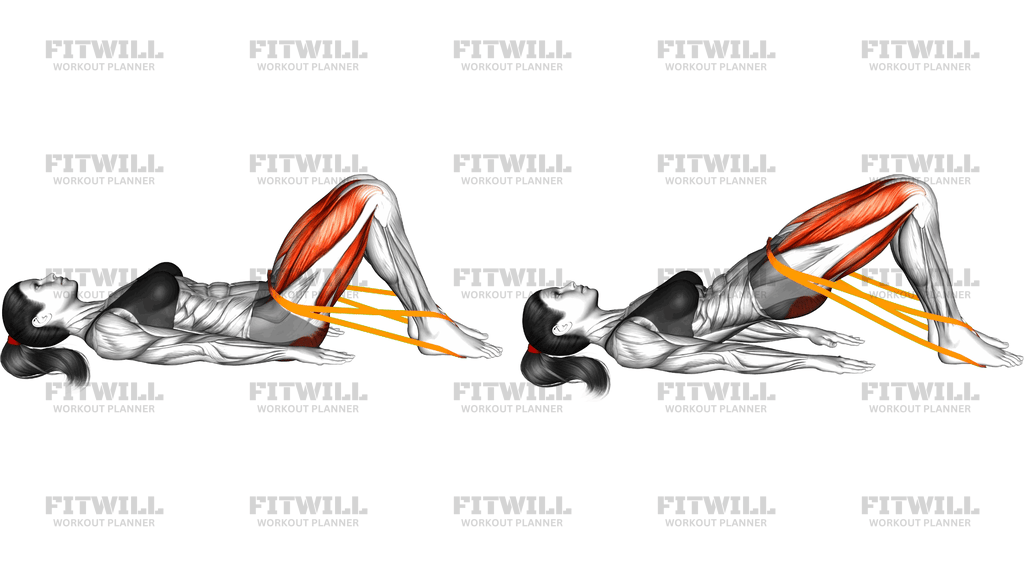
Barbell Staggered Stance Hip Thrust
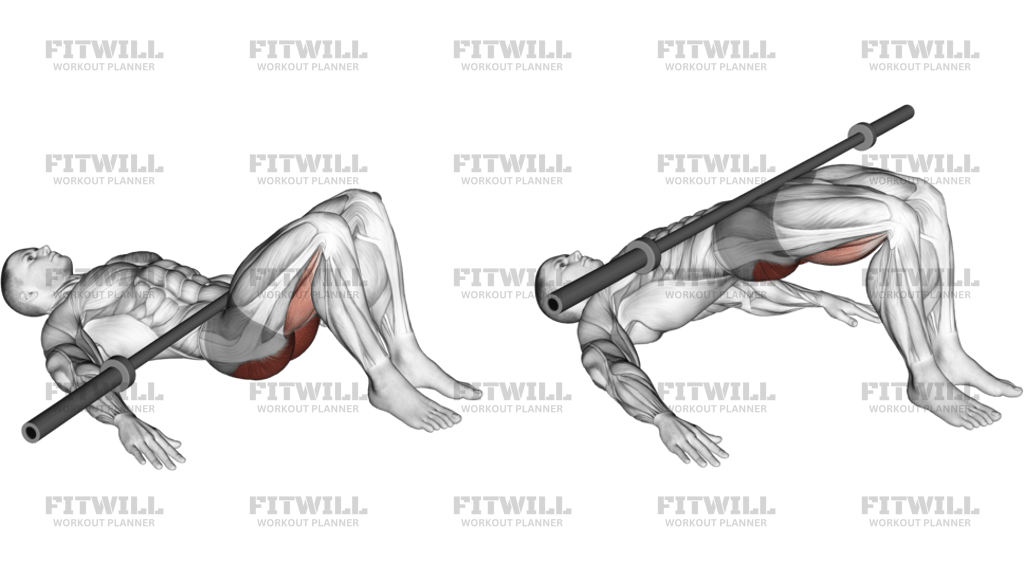
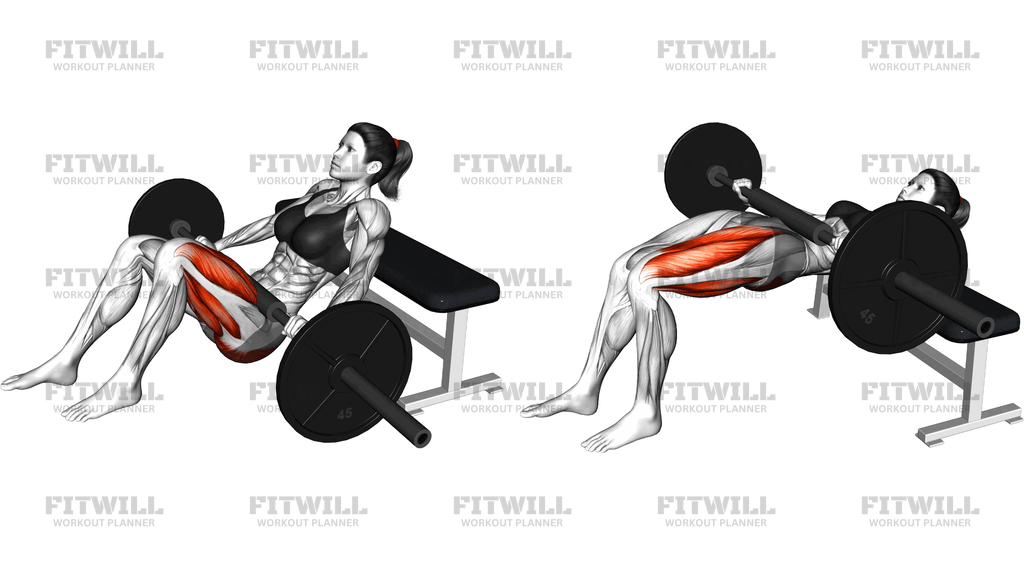
Barbell Staggered Stance Hip Thrust is a glute-focused hip extension exercise performed with your upper back supported on a bench and a barbell resting across the crease of the hips. The staggered stance gives you a small side-to-side shift in loading, which makes the working leg do most of the extension work while the trailing leg helps with balance and keeps the pelvis from drifting. It is a useful choice when you want the hip thrust pattern, but with a little less demand than a full single-leg version.
The exercise trains the glutes hardest at the top of the lift, with the hamstrings, adductors, and deep core helping to keep the torso and pelvis organized. Because the bar sits low on the hips and the torso pivots around the upper back support, the quality of the setup matters as much as the range of motion. If the bench is too high, the feet are too far away, or the ribs flare, the lift turns into a lower-back extension instead of a clean hip drive.
A good repetition starts with the shoulder blades anchored on the bench, feet planted so the front shin can stay close to vertical, and the bar held steady with the hands. From there, drive through the front heel and midfoot, raise the hips until the torso and front thigh line up, and finish by squeezing the glute rather than over-arching the spine. The trailing foot should stay light and positioned just enough to help you balance without taking over the rep.
Use a controlled lowering phase and reset the pelvis before each repetition. The movement should feel like a smooth thrust up, a brief squeeze at the top, and a controlled return to the start. That makes it a strong accessory lift for glute growth, hip strength, sprint carryover, and athletes or lifters who want unilateral loading without the instability of a full single-leg setup.
Keep the rep clean, not explosive. A shorter range with perfect pelvis control is better than a bigger lift that twists or shifts sideways. If the bar rolls, the knees cave, or the lower back takes over, the load is too heavy or the foot position needs adjustment. The best sets leave the glutes working hard and the spine feeling neutral.
[ Workout Log & Planner ]
Put your next workout in Fitwill
Keep your plan and training log ready when you are.


Instructions
- Set a bench behind you and sit on the floor with your upper back resting on the pad and the barbell positioned across the crease of your hips.
- Plant the front foot flat so the shin is close to vertical at the top, then place the trailing foot slightly back with only the toes or light forefoot support on the floor.
- Grip the bar to keep it centered, tuck your chin slightly, and brace your ribs down before the first rep.
- Press through the front heel and midfoot to drive the hips up until your torso and front thigh form one strong line.
- Keep the trailing leg quiet so it supports balance without pushing the lift or twisting the pelvis.
- Pause for a moment at the top and squeeze the working glute without arching your lower back.
- Lower the hips under control until the bar returns to the start and the front foot stays planted.
- Reset your breath and pelvis at the bottom, then repeat for the planned number of repetitions.
Tips & Tricks
- If the bar feels unstable, use a thick pad or towel and keep both hands on the sleeves to stop it from rolling.
- Front-foot placement changes the feel: too far away shifts the work into the hamstrings, while too close can jam the knees forward.
- Think about lifting the hips straight up, not pushing the torso back over the bench.
- Keep the ribs stacked over the pelvis at the top so the glutes finish the rep instead of the lower back.
- The trailing leg should stay light; if it starts driving the lift, shorten the stance and reduce the load.
- Pause long enough at the top to feel the working side, but do not turn the rep into a long isometric hold unless that is the goal.
- Use a controlled descent so the bar stays centered and the pelvis does not drop to one side.
- Stop the set when you can no longer keep the hips level, because that usually means the working side has started to lose tension.
Frequently Asked Questions
What does Barbell Staggered Stance Hip Thrust train most?
It primarily trains the glutes through hip extension, with the hamstrings and core helping to stabilize the movement.
Can beginners perform this exercise?
Yes, if they start with light load and learn how to keep the bar centered, ribs down, and pelvis level at the top.
Where should the bar sit during the lift?
The bar should rest across the crease of the hips, usually with a pad, so it can move straight up and down without sliding.
How do I know the front foot is in the right spot?
At the top of the rep, the front shin should be close to vertical and the front heel should stay planted.
Why use a staggered stance instead of a regular hip thrust?
The staggered setup shifts more of the effort to one side while still giving you enough support to stay stable and control the pelvis.
What should I avoid at the top of the rep?
Avoid over-arching the lower back or flaring the ribs; the lift should finish with a glute squeeze, not a spinal lean.
Should the back leg push hard?
No, the trailing leg should mainly help balance. Most of the drive should come from the front leg.
What are good substitutions if the barbell is uncomfortable?
A dumbbell hip thrust, Smith machine staggered stance hip thrust, or machine glute bridge can be easier to load and set up.