Cable Kneeling Single Lat Pulldown
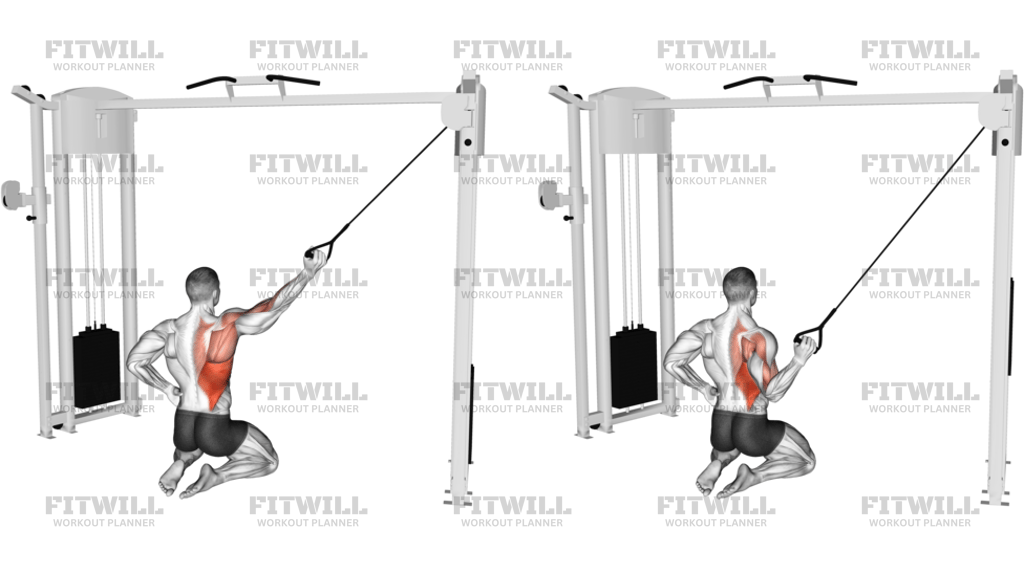
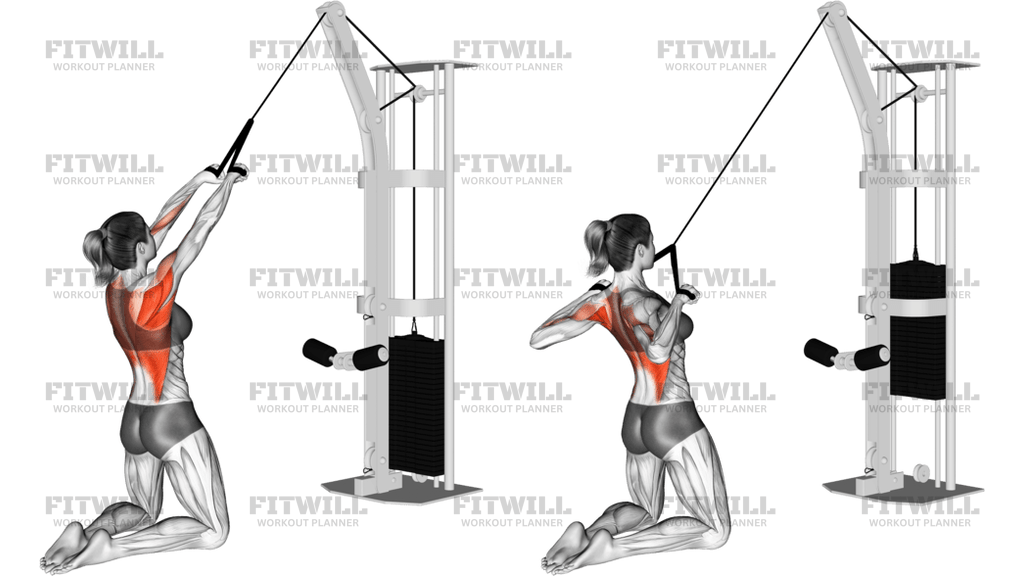
Cable Kneeling Single Lat Pulldown is a unilateral back exercise that uses a high cable and a single handle to train one lat while the torso stays tall and square. The kneeling setup removes most leg drive, so the repetition depends on the shoulder, upper back, and trunk staying organized as the handle travels from overhead down toward the ribs.
Because only one arm is working at a time, this movement is useful for building side-to-side balance, improving scapular control, and making it easier to feel the lat on the working side. The free hand usually rests on the hip or thigh so you can keep the ribs stacked and resist twisting, leaning, or arching as the cable gets heavier.
The best setup is simple but specific: kneel far enough from the stack that the working arm starts overhead with tension on the cable, then pack the shoulder down before the first pull. From there, drive the elbow down and slightly in toward the lower ribs or side waist. The hand is just the hook; the elbow and upper arm should be the parts that seem to move the load.
At the bottom, the handle should finish near the upper chest or lower rib area without turning the rep into a row or a big backward lean. Hold the squeezed position briefly, then return slowly until the arm reaches overhead again and the shoulder opens up under control. A good rep feels smooth, quiet, and repeatable, with the torso staying square to the machine.
Use this exercise as a lat-focused accessory, unilateral back builder, or activation drill before heavier pulling work. Light to moderate loading is usually enough to make the lats work hard without losing position. If the low back arches, the shoulder shrugs, or the torso starts rotating, the load is too heavy or the cable setup is too close.
[ Workout Log & Planner ]
Put your next workout in Fitwill
Keep your plan and training log ready when you are.


Instructions
- Set the cable to a high pulley, attach a single handle, and kneel a step or two back so your working arm starts overhead with tension.
- Kneel on both knees with your torso tall, hips square, and the free hand resting on your hip or thigh for balance.
- Grip the handle with a neutral wrist and let the working arm reach overhead without letting the shoulder creep up toward your ear.
- Brace your midsection and keep your ribs stacked over your pelvis before you begin the pull.
- Drive the elbow down and slightly in toward your lower ribs or side waist, keeping the hand as a hook rather than leading with the hand.
- Keep your chest tall and avoid twisting, rocking, or leaning back to finish the rep.
- Squeeze the lat at the bottom for a brief pause when the handle reaches the upper chest or lower rib line.
- Return the handle slowly until the arm is overhead again and the shoulder opens under control.
- Reset your shoulder position before the next rep and repeat for the planned set.
Tips & Tricks
- If the stack feels slack at the top, kneel farther from the machine so the first inch of the rep still loads the lat.
- Think about driving the elbow toward the hip, not pulling the handle to the shoulder.
- Keep the opposite hand on the hip or thigh so you can feel any torso rotation before it turns into momentum.
- A little trunk lean is fine, but a big backward swing turns the movement into a row and shifts stress away from the lat.
- Let the shoulder blade travel up on the way back up, but do not shrug into the neck at the top.
- A neutral wrist and relaxed grip usually help the lat do the work instead of the forearm and biceps taking over.
- Use a lighter load if your ribs flare, your low back arches, or your kneeling position keeps drifting forward.
- Pause only long enough to own the bottom position; long pauses are optional, but the return should always stay slow and controlled.
- If one side feels much weaker, match the same body position and cable distance on both sides instead of changing the setup mid-set.
Frequently Asked Questions
What muscles does Cable Kneeling Single Lat Pulldown train?
It mainly targets the lat on the working side, with help from the teres major, lower and mid traps, rhomboids, biceps, and trunk stabilizers.
Why kneel instead of standing for this pulldown?
Kneeling removes most leg drive and makes it easier to keep the torso still, so the lat has to do more of the work.
How low should the handle travel?
Pull it toward the upper chest or lower rib area on the working side, not behind the torso and not all the way to the hip.
Should my torso stay perfectly vertical?
Mostly yes. A small lean is fine, but the rep should not turn into a big swing or a twist through the ribs.
What is the most common mistake with this exercise?
Most people shrug the shoulder up, lean back too far, or twist the torso to help the handle move.
Is this a good beginner exercise?
Yes, if you keep the load light and focus on keeping the ribs stacked, the shoulder down, and the elbow driving toward the side.
How can I make the exercise harder without changing the weight?
Slow the return, pause briefly at the bottom, and make sure the cable starts under tension instead of from a slack setup.
Why do I feel this in my biceps more than my back?
That usually means the grip is doing too much of the work. Relax the hand, lead with the elbow, and keep the shoulder depressed as you pull.
Can I use this to fix side-to-side differences?
Yes. Unilateral cable work is useful for matching range, control, and strength on each side without the stronger side taking over.