Dumbbell Standing Bent Arm Lateral Raise
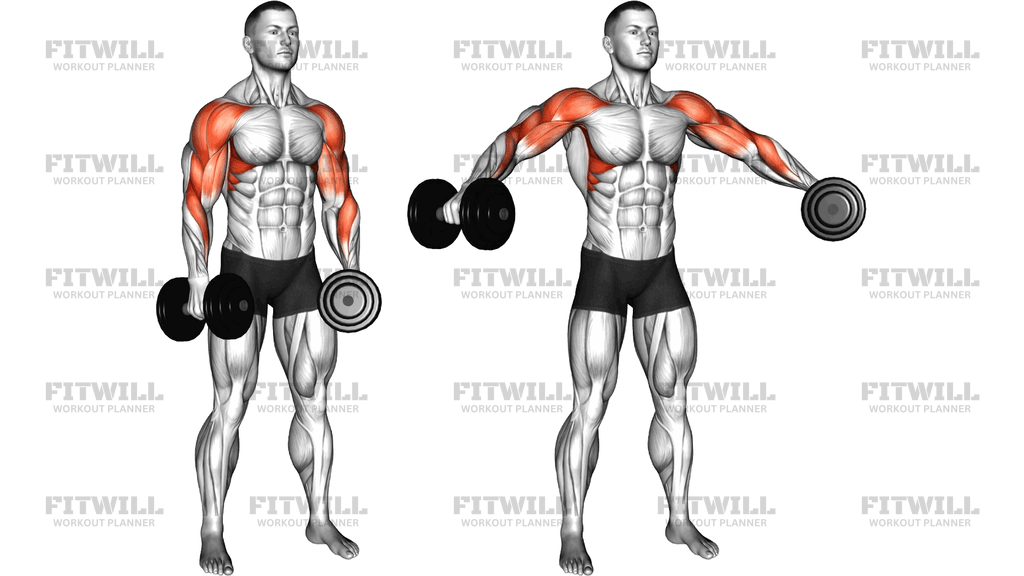
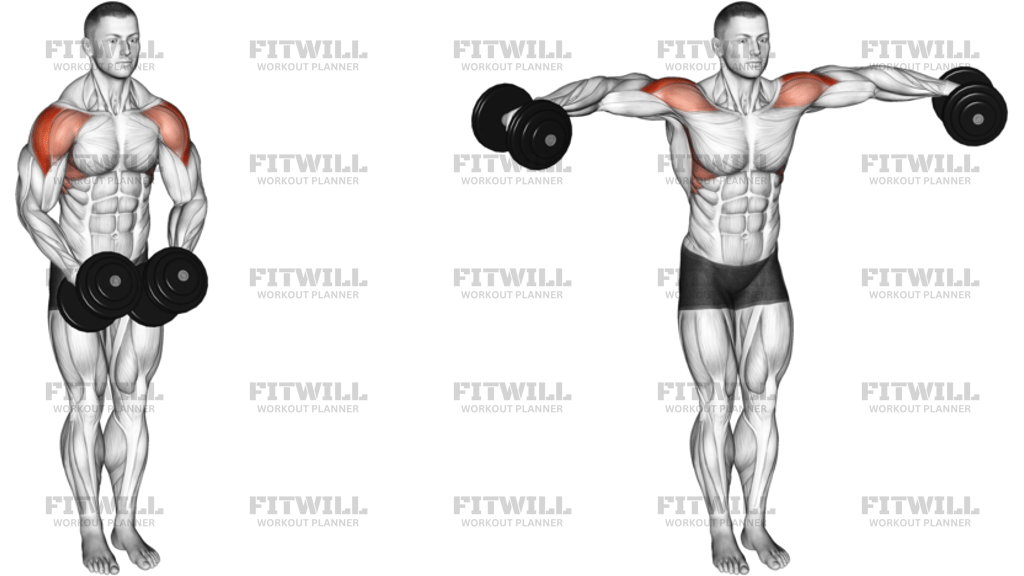
Dumbbell Standing Bent Arm Lateral Raise is a standing shoulder isolation movement that loads the side delts through a controlled arc rather than a straight press. The bent-arm position shortens the lever a little, which helps many lifters keep the weight honest and focus on shoulder abduction without turning the rep into a swing. It is useful when you want to build stronger, rounder shoulders while keeping the load moderate and the technique precise.
The main work comes from the delts, with the upper traps, rhomboids, and triceps helping stabilize the shoulder girdle and elbow position. Because both arms move at the same time, the exercise also exposes side-to-side differences quickly: if one shoulder hikes up, one elbow drops, or one dumbbell travels higher than the other, the set gets noisy fast. That makes this a good accessory lift for lifters who need shoulder control as much as shoulder size.
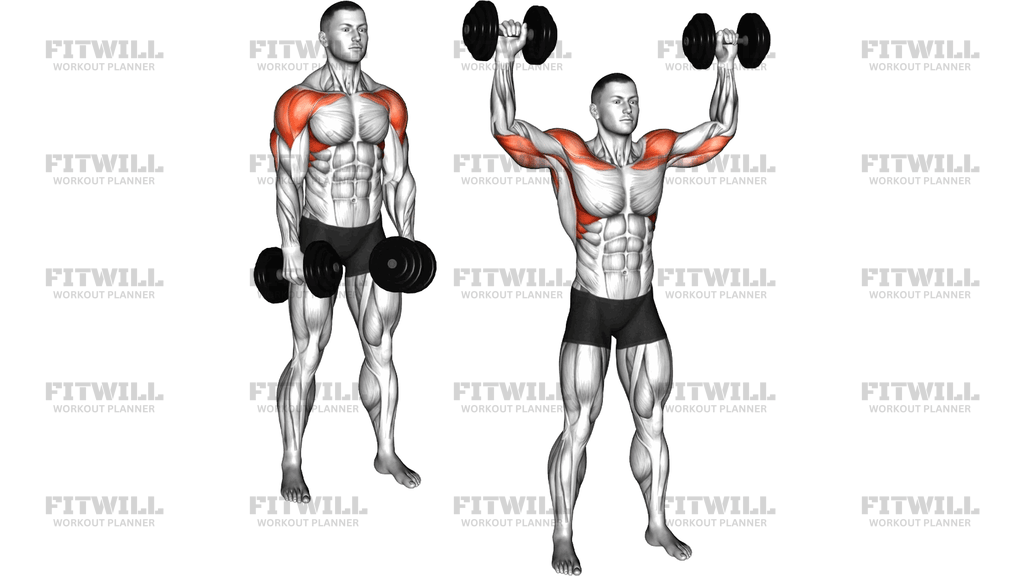
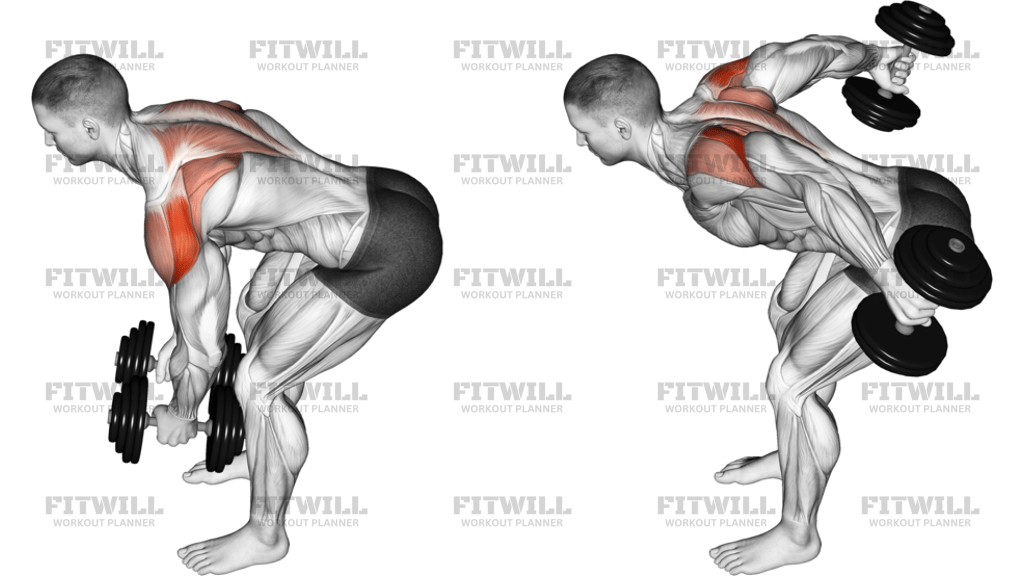
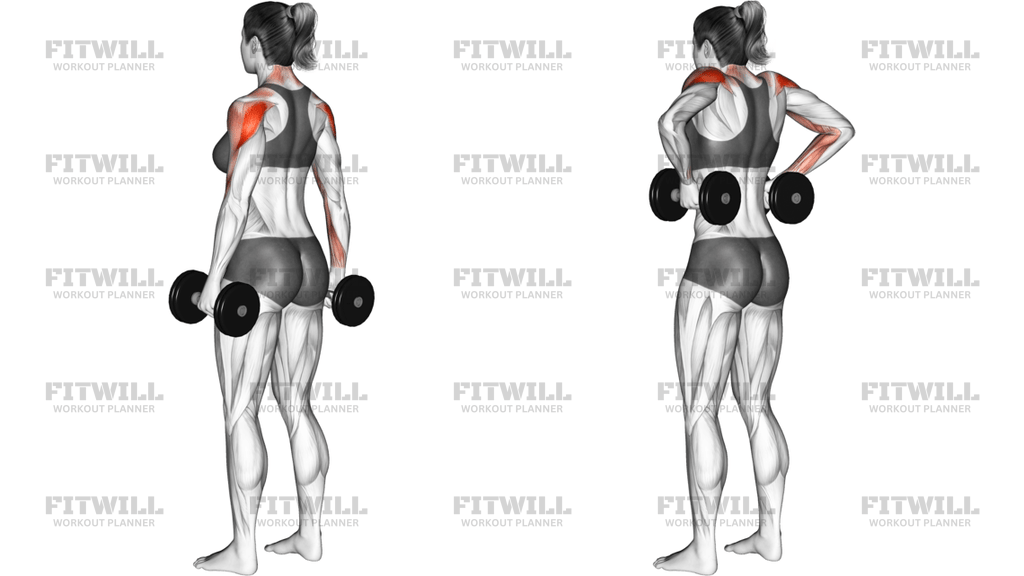
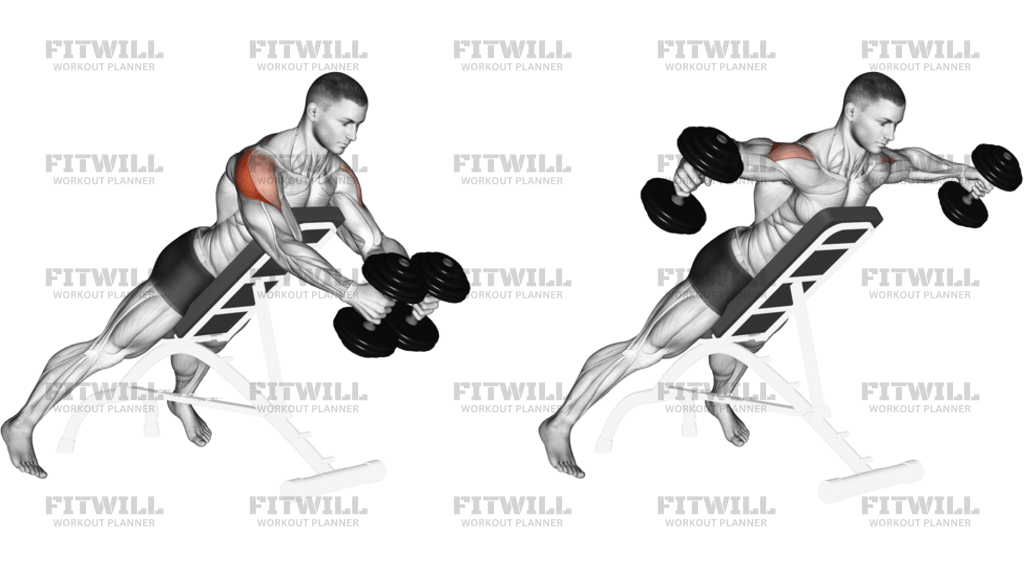
The setup matters more than it looks. Stand tall with the dumbbells hanging in front of your thighs, feet about hip-width, knees soft, chest lifted, and ribs stacked over the pelvis. Keep a small bend in the elbows and lock that angle in before the first rep. If you start with the shoulders already shrugged or the torso leaning back, the raise usually becomes a trap-dominant heave instead of a clean lateral raise.
On each repetition, sweep the dumbbells out and slightly up in a wide arc until the upper arms approach shoulder height. Lead with the elbows, keep the wrists under control, and avoid letting the dumbbells drift far above the elbows. A brief pause at the top helps you own the position without bouncing, then lower the weights slowly until they return to the front of the thighs. Breathe out as the arms rise and inhale on the way down.
Use this movement when you want direct shoulder work without a machine, cable, or heavy pressing pattern. It fits well near the end of an upper-body session, in a shoulder-focused accessory block, or as part of a controlled warm-up with very light dumbbells. Keep the reps clean enough that the shoulders do the work and the body stays quiet; once the torso starts swaying or the neck tightens, the set has gone past the point where the exercise is doing what it is meant to do.
[ Workout Log & Planner ]
Put your next workout in Fitwill
Keep your plan and training log ready when you are.


Instructions
- Stand with your feet about hip-width apart and hold a dumbbell in each hand in front of your thighs, palms facing your body.
- Set a slight bend in both elbows and keep that angle fixed before you start the first rep.
- Lift your chest, stack your ribs over your pelvis, and keep your shoulders down instead of shrugging.
- Brace your midsection and let the dumbbells hang still for a moment before you begin.
- Raise both arms out to the sides in a wide arc, leading with the elbows and keeping the wrists below or level with them.
- Continue lifting until your upper arms are about level with your shoulders and the dumbbells are roughly in line with or slightly above the elbows.
- Pause briefly at the top without leaning back or rolling the shoulders forward.
- Lower the dumbbells slowly along the same arc until they reach the front of your thighs.
- Exhale on the way up, inhale on the way down, and reset your posture before the next repetition.
Tips & Tricks
- Keep the elbow bend nearly the same from bottom to top so the movement stays on the delts instead of becoming a curling motion.
- Stop the raise around shoulder height; going higher usually adds shrugging more than useful shoulder tension.
- Hold the dumbbells a little in front of your hips rather than directly out to the sides at the start if your shoulders feel pinched.
- Use lighter dumbbells than you would for a press, because bent-arm lateral raises get sloppy fast when the load is too heavy.
- If your upper traps take over, think about widening the arms while keeping the neck long and the shoulders away from the ears.
- Keep the wrists neutral instead of bending them back, which helps the dumbbells stay stacked over the forearms.
- A one-second pause near the top makes it harder to bounce through the rep and easier to feel the side delts working.
- Let the lowering phase take longer than the lifting phase so the shoulders stay under tension instead of swinging the weight down.
Frequently Asked Questions
What muscles does Dumbbell Standing Bent Arm Lateral Raise work?
It mainly targets the side delts, with the upper traps, rhomboids, and triceps helping to stabilize the shoulders and elbows.
How bent should my arms be during Dumbbell Standing Bent Arm Lateral Raise?
Keep a small to moderate bend in the elbows and hold it nearly fixed through the whole rep. If the bend keeps changing, the movement usually turns into a swing or a curl.
Where should the dumbbells finish at the top?
Stop when your upper arms are around shoulder height and your shoulders are still down. You do not need to force the dumbbells much higher than that.
Why does Dumbbell Standing Bent Arm Lateral Raise feel harder than a side raise with straighter arms?
The bent-arm version still loads the side delts, but the elbow angle changes the lever slightly and makes it easier to lose strict control if the weight is too heavy. Most lifters need a lighter load than they expect.
Can beginners do this exercise?
Yes, as long as they keep the dumbbells light and move without shrugging or leaning back. It is a good shoulder accessory once the basic overhead press pattern is comfortable.
What is the most common mistake in Dumbbell Standing Bent Arm Lateral Raise?
The biggest mistake is turning the rep into a trap-heavy shrug by lifting too high or using too much body momentum. Keep the torso quiet and let the shoulders, not the hips, move the weights.
Should my palms face the floor or each other?
A neutral grip with the palms facing in is usually the cleanest starting position. As the arms rise, the hands can stay neutral instead of forcefully turning down.
What can I use instead if dumbbells bother my shoulders?
A single-arm cable lateral raise or a very light machine lateral raise can be easier to control. Those options let you adjust the line of pull if the dumbbell path feels uncomfortable.