Dumbbell Bent-Over Face Pull
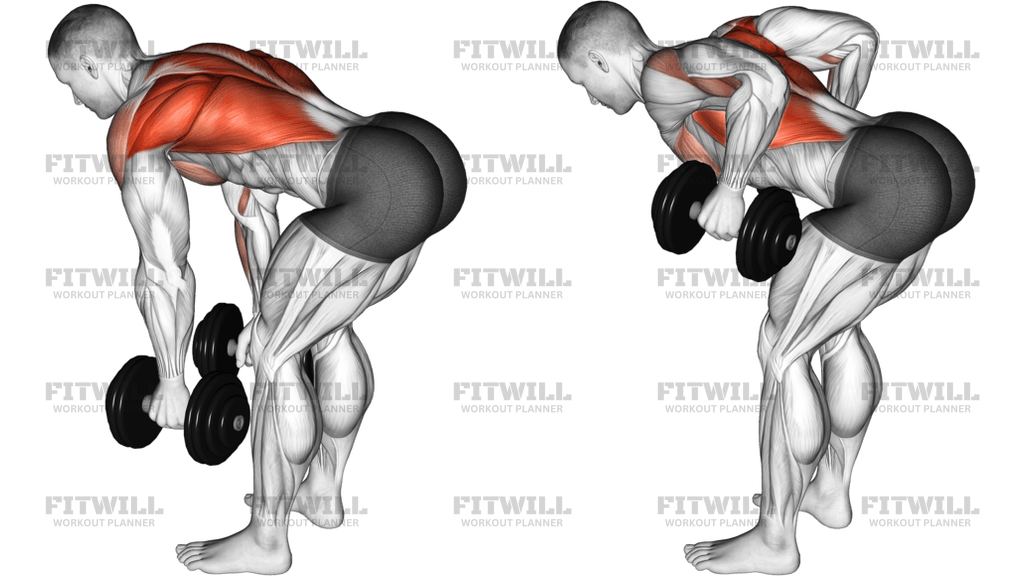
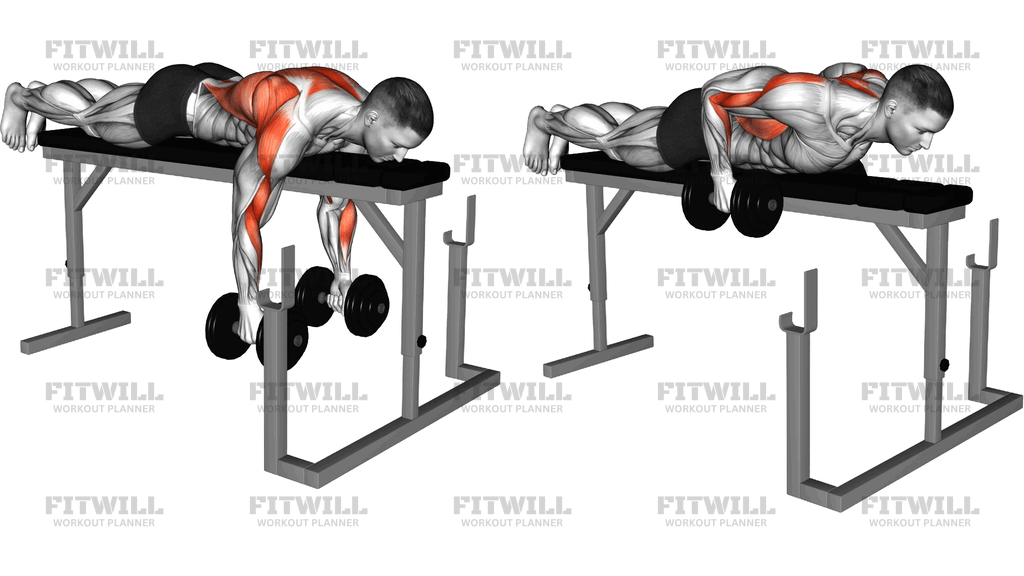
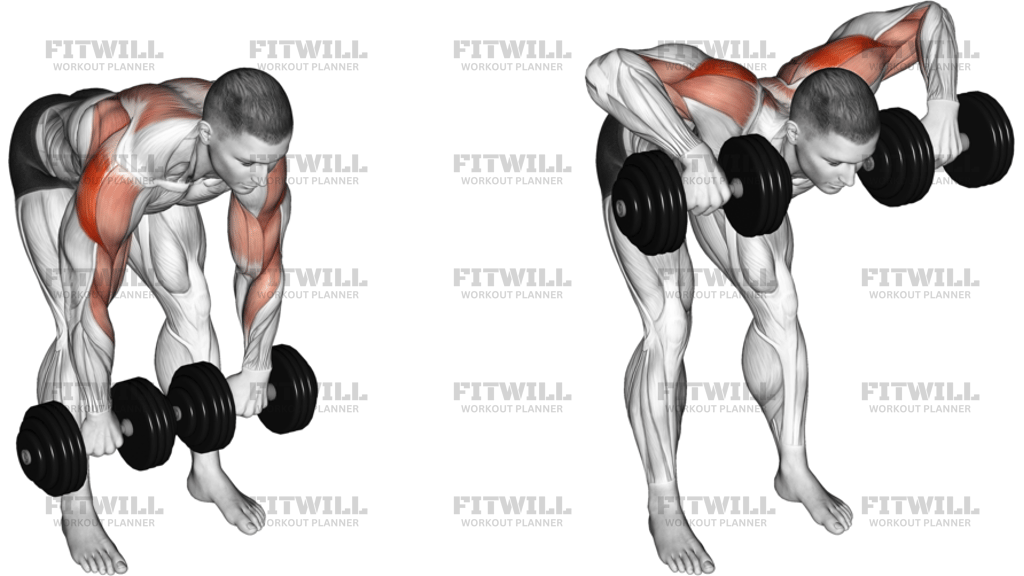
Dumbbell Bent-Over Face Pull is a bent-over rear-delt and upper-back exercise that combines a hip hinge with a wide elbow pull. It is useful when you want to train the back of the shoulders, the muscles between the shoulder blades, and the postural control needed to keep the torso fixed while the arms move. The version shown in the image uses two dumbbells, so the shoulders and upper back have to do the work without much help from leg drive or body swing.
The setup matters because the hinge position decides whether the movement stays in the shoulders or turns into a sloppy row. In Dumbbell Bent-Over Face Pull, the torso stays hinged forward with a long spine, soft knees, and the dumbbells hanging under the shoulders. From there, the elbows travel out and up instead of straight back, which shifts more of the work to the rear delts, rhomboids, and mid traps while still keeping the movement controlled and compact.
Each rep should feel like a precise pull rather than a heave. Lift the dumbbells toward the upper chest or the sides of the face, pause briefly when the elbows are highest, and lower the weights slowly until the arms are long again. Keep the neck neutral, the rib cage from flaring, and the shoulder blades moving smoothly instead of snapping together. If the lower back is taking over, the load is too heavy or the hinge is too deep.
Dumbbell Bent-Over Face Pull fits well in a shoulder-prep block, upper-body accessory day, or as a higher-rep corrective movement for lifters who need more rear-delt and upper-back work. It is especially useful when pressing volume is high and the shoulders need balanced pulling volume to stay organized. The goal is not maximum load; the goal is clean tension where the rear shoulder and upper back stay active throughout the whole set.
Keep the range of motion honest and stop the set when the torso starts rising, the elbows start dropping, or the dumbbells begin drifting behind the body. Beginners can use this movement, but only with a light load and a short, repeatable path. When executed well, Dumbbell Bent-Over Face Pull builds shoulder control, upper-back endurance, and the kind of pulling strength that supports better posture and more stable pressing mechanics.
[ Workout Log & Planner ]
Put your next workout in Fitwill
Keep your plan and training log ready when you are.


Instructions
- Stand with your feet about hip-width apart and hinge forward until your torso is close to parallel with the floor.
- Let the dumbbells hang below your shoulders with your palms facing in and a soft bend in your elbows.
- Keep your spine long, your neck neutral, and your knees slightly bent so the hinge stays fixed.
- Brace your midsection and pull your shoulders away from your ears before the first rep.
- Drive your elbows out and up as you pull the dumbbells toward the upper chest or sides of your face.
- Finish the pull with the dumbbells near shoulder height and a brief squeeze between the shoulder blades.
- Lower the dumbbells slowly until your arms are straight again and the weights are hanging under your shoulders.
- Keep your torso still, breathe out as you pull, and inhale as you lower for the next rep.
Tips & Tricks
- Think about driving the elbows wide, not dragging the dumbbells back with the hands.
- Keep the dumbbells in a high, short arc; if they drop toward your ribs, the movement turns into a row.
- Use a lighter load than you would for a bent-over row because the lever arm gets harsh quickly in this position.
- Keep your chin slightly tucked so you do not lift your head as the weights rise.
- Do not let the torso pop upward on the pull; the hinge should stay locked in place from rep to rep.
- A one-second squeeze at the top usually gives better rear-delt work than chasing extra weight.
- If your lower back tires before your shoulders, bend the knees a little more and shorten the set.
- Stop the set when the elbows start dropping or the shoulders shrug hard toward the ears.
Frequently Asked Questions
What muscles does Dumbbell Bent-Over Face Pull work?
It mainly trains the rear delts, rhomboids, and mid traps, with the upper back and rotator cuff helping to stabilize the pull.
Is Dumbbell Bent-Over Face Pull a good rear-delt exercise?
Yes. The wide elbow path and bent-over position make it a strong rear-delt and upper-back accessory when you keep the load light.
How far should the dumbbells travel in Dumbbell Bent-Over Face Pull?
Pull them to roughly shoulder height or the sides of the face, then lower until the arms are long again without losing the hinge.
Why does my lower back feel tired during Dumbbell Bent-Over Face Pull?
The hinge is likely too deep or the load is too heavy. Bend the knees slightly more, reduce the weight, and keep the torso fixed.
Should Dumbbell Bent-Over Face Pull feel like a row?
No. The elbows should travel out and up, not straight back, so the rear delts and upper back stay in charge.
Can beginners do Dumbbell Bent-Over Face Pull?
Yes, but start with very light dumbbells and a short, controlled range so the hinge and elbow path stay clean.
What is the most common mistake in Dumbbell Bent-Over Face Pull?
Turning it into a body-swinging row is the biggest issue. If the torso rises or the weights drift behind you, the set is too heavy.
Can I substitute Dumbbell Bent-Over Face Pull with a cable or band version?
Yes. A rope face pull or band pull-apart can do a similar job, but the dumbbell version adds more hinge and trunk control.