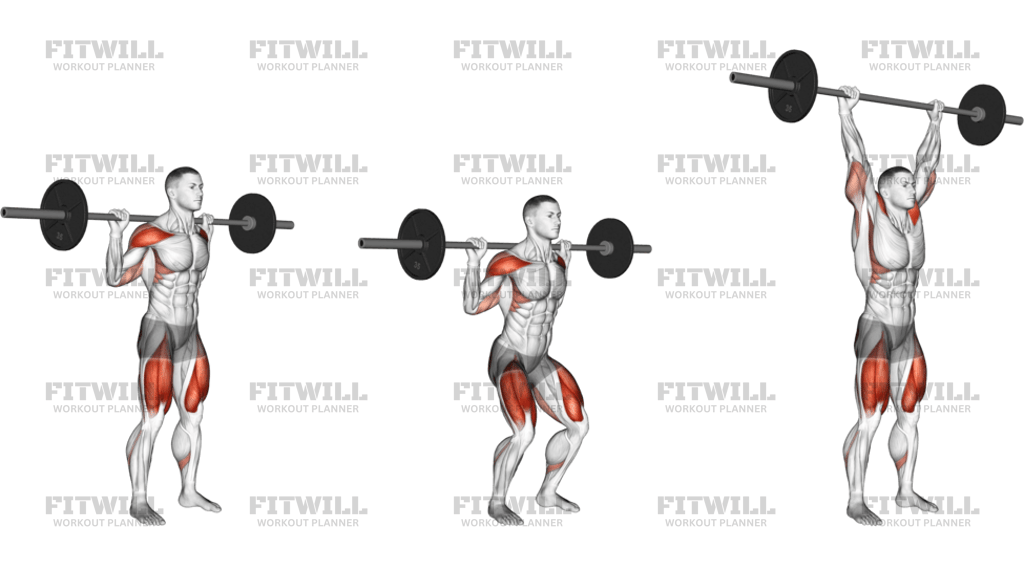
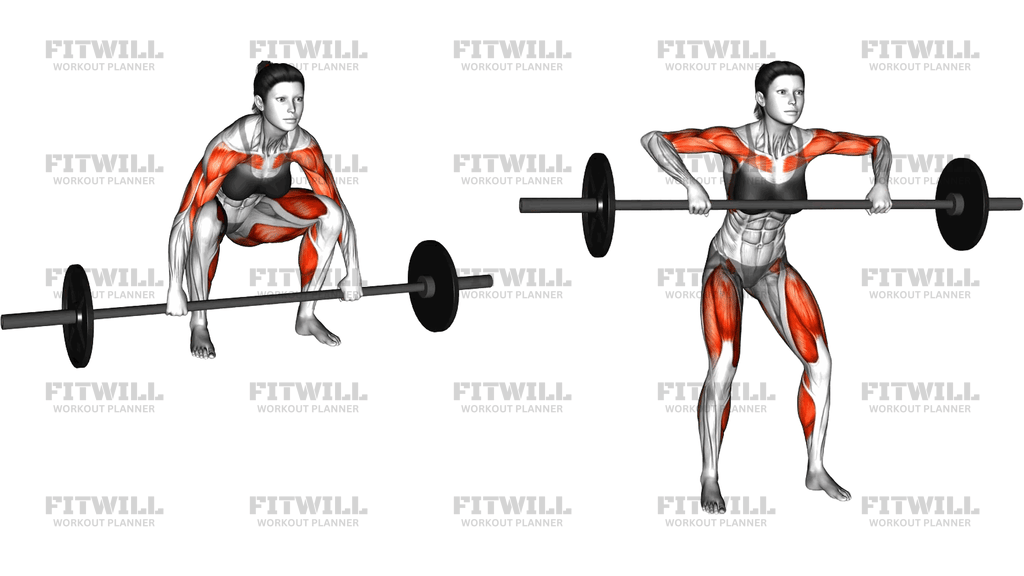
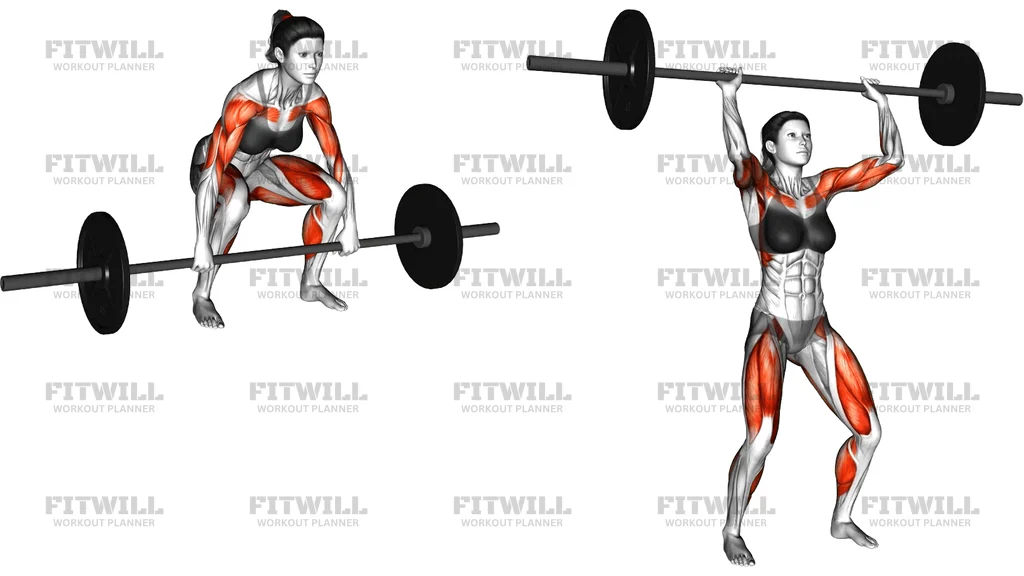
Barbell Standing Shoulder Pin Press
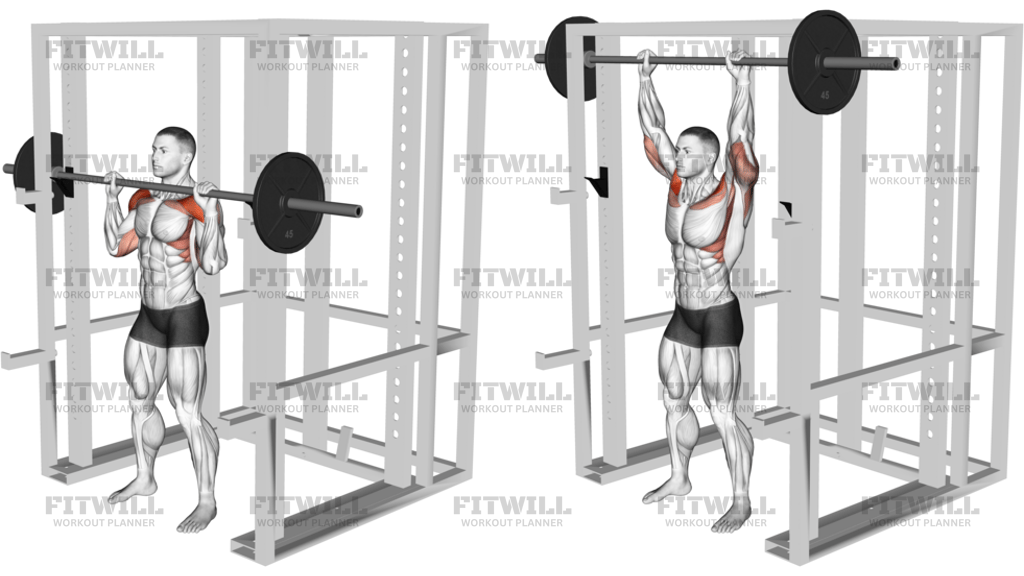
Barbell Standing Shoulder Pin Press is a dead-stop overhead press performed from a rack with the bar resting on pins at about upper-chest or chin height. Each rep starts from a clear pause on the pins, so the exercise removes leg drive and momentum and forces the shoulders, triceps, and upper back to do the work.
That dead-stop start is what makes the movement useful. Because the bar cannot rebound off the chest or use a dip, every rep has to be created from a stable torso, stacked wrists, and a clean bar path. The result is a stricter pressing pattern that exposes weak points in the start of the press, the transition past the face, and the final lockout overhead.
Set the bar so you can take it from the pins with your hands just outside shoulder width, the bar sitting across the front delts and upper chest, and your elbows slightly in front of the bar. Stand with your feet about hip width, squeeze your glutes, and keep your ribs down. The setup matters because a loose brace or a drifting stance will turn a pin press into a standing lean-back press.
Press the bar straight up from the pins, moving your head slightly back only long enough for the bar to clear the face, then bring the head through as the bar passes overhead. At the top, the bar should finish over the midfoot with the elbows locked and the shoulders active. Lower the bar under control back to the same pins, reset your breath, and let the bar settle fully before the next rep.
Use this exercise when you want strict overhead strength work, a pause-based press variation, or a way to train the sticking point of a shoulder press without the bounce of a full range lift. It also works well as an accessory movement after heavier pressing. Keep the load honest, stop the set if the torso starts to arch, and treat every repetition like a fresh dead stop rather than a continuous press.
Fitwill
Log Workouts, Track Progress & Build Strength.
Achieve more with Fitwill: explore over 9600 exercises with images and videos, access built-in and custom workouts, perfect for both gym and home sessions, and see real results.
Start your journey. Download today!




Instructions
- Set the bar on rack pins at about upper-chest to chin height and stand centered under it with your feet about hip-width apart.
- Take a grip just outside shoulder width and rest the bar across your front delts and upper chest with your elbows slightly in front of the bar.
- Unrack the bar only enough to clear the hooks or rack posts, then bring it back to a dead stop on the pins before each rep.
- Brace your abs and glutes, keep your ribs stacked over your pelvis, and hold your neck long instead of jutting your chin forward.
- Press the bar straight up from the pins, letting your head move slightly back only until the bar clears your face.
- As the bar passes eye level, drive your head through and finish with the bar stacked over your midfoot and your elbows locked out overhead.
- Lower the bar under control back to the same pins without bouncing it off the rack or letting your torso lean back.
- Let the bar settle fully on the pins, reset your breath and posture, and repeat for the planned number of reps.
Tips & Tricks
- Set the pins so every rep starts from the same dead stop; inconsistent pin height changes the exercise.
- Keep your wrists stacked over your forearms so the bar sits on the heel of the hand instead of drifting into the fingers.
- Press in a straight line around the face, not forward in front of you; the bar should finish over the midfoot.
- Do not use a knee dip or hip pop to get the bar moving, because that turns the lift into a push press.
- Squeeze your glutes before every rep to keep the rib cage from flaring and the lower back from taking over.
- If the bar hits your nose or forehead on the way up, the bar is drifting forward or the head is not moving back early enough.
- Lower slowly enough that the bar settles quietly on the pins instead of crashing and stealing tension from the next rep.
- Choose a load you can dead-stop for every rep; this variation gets sloppy fast when you chase weight too early.
Frequently Asked Questions
What muscles does the barbell standing shoulder pin press work?
It mainly hits the front and side delts and the triceps, with the upper chest, traps, and core helping to stabilize the bar.
Why start each rep on the pins instead of lowering from the top?
Starting on the pins removes the stretch reflex and leg drive, so you have to build every rep from a true dead stop.
Where should the bar and elbows be in the starting position?
The bar should sit across the front delts and upper chest, with the elbows slightly in front of the bar and the wrists stacked over the forearms.
Should I lean back to get the bar past my face?
A small head movement back is normal, but the torso should stay tall. If you need to lean back, the load is too heavy or the brace is loose.
Is this the same as a strict overhead press?
It is a strict overhead press variation, but the pins force each rep to begin from a dead stop instead of from a continuous lowering phase.
How high should the pins be set for this exercise?
Set them high enough that the bar starts around upper-chest or chin level, where you can press cleanly without a dip or bounce.
What is the most common mistake with the rack setup?
Setting the pins unevenly or too low is the biggest problem, because it changes the start position and can force the bar into an awkward path.
Can beginners use the barbell standing shoulder pin press?
Yes, but only with light loads and solid rack setup. It is best used after you already understand a basic standing overhead press.