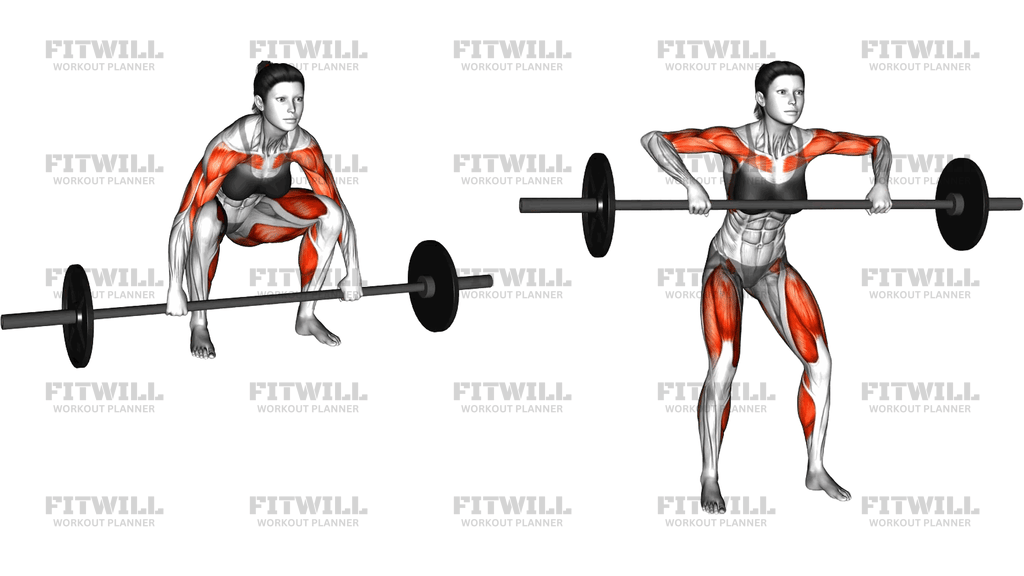
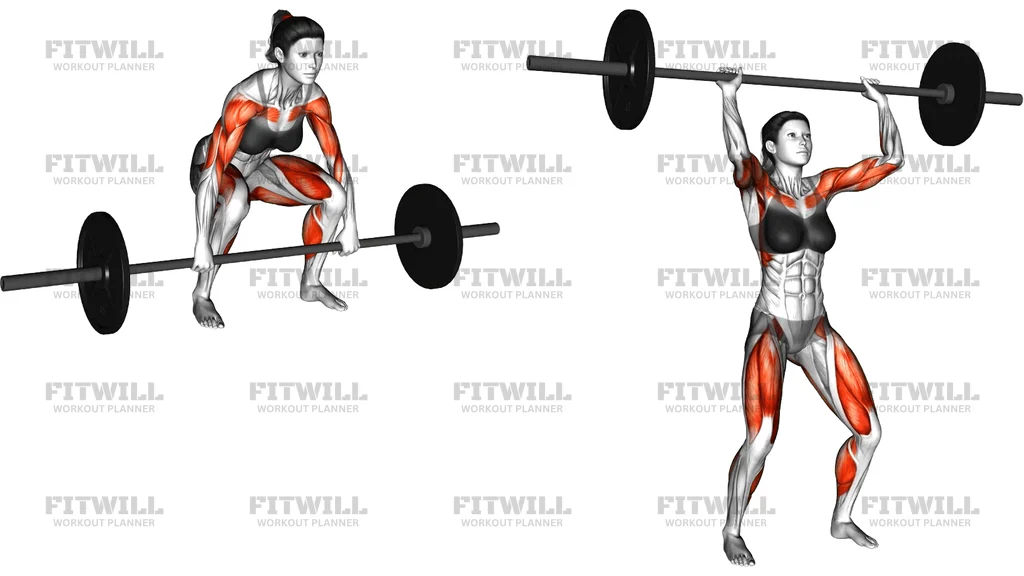
Barbell Deadlift From Deficit
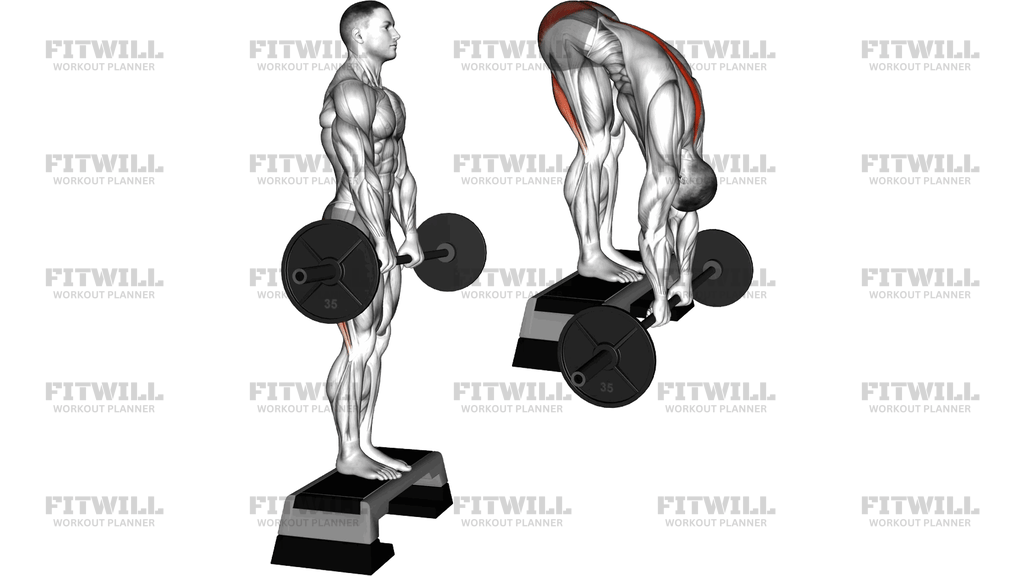
Barbell Deadlift From Deficit is a deadlift variation performed while standing on a low platform, plates, or box so the bar starts below the usual floor height. That extra range makes the first pull more demanding, especially off the floor, because the hips and knees have to produce force from a deeper starting position. It is a useful way to build starting strength, leg drive, hip extension, and trunk stiffness when you want a deadlift that feels longer and more technical than a standard repetition.
The setup matters more here than in a conventional pull. Because the bar begins lower, small errors in foot placement, bracing, or shoulder position get amplified before the bar leaves the ground. A good deficit deadlift keeps the bar close to the shins, the torso rigid, and the chest set without rounding the lower back. The goal is not to yank the bar from a deeper hole; the goal is to wedge into position and push the floor away while the bar stays on a straight, efficient path.
This version trains the posterior chain hard, but it also asks the quads, upper back, and core to stay organized through a longer range of motion. Lifters often use it to improve the start of their conventional deadlift, to add volume with lighter loads, or to strengthen positions that feel weak off the floor. The longer pull can reveal whether you lose tightness at the bottom, drift the bar forward, or rush the eccentric return.
Use a stable deficit that is only as high as your mobility and back position can handle, usually a small lift rather than an extreme one. If the platform is too tall, the hips shoot up, the back rounds, or the bar travels away from the body. Keep the repetition controlled, reset each rep if needed, and choose a load that lets you keep the same back angle and bar path from the first rep to the last. This is a strength builder, not a range-of-motion contest.
[ Workout Log & Planner ]
Put your next workout in Fitwill
Keep your plan and training log ready when you are.


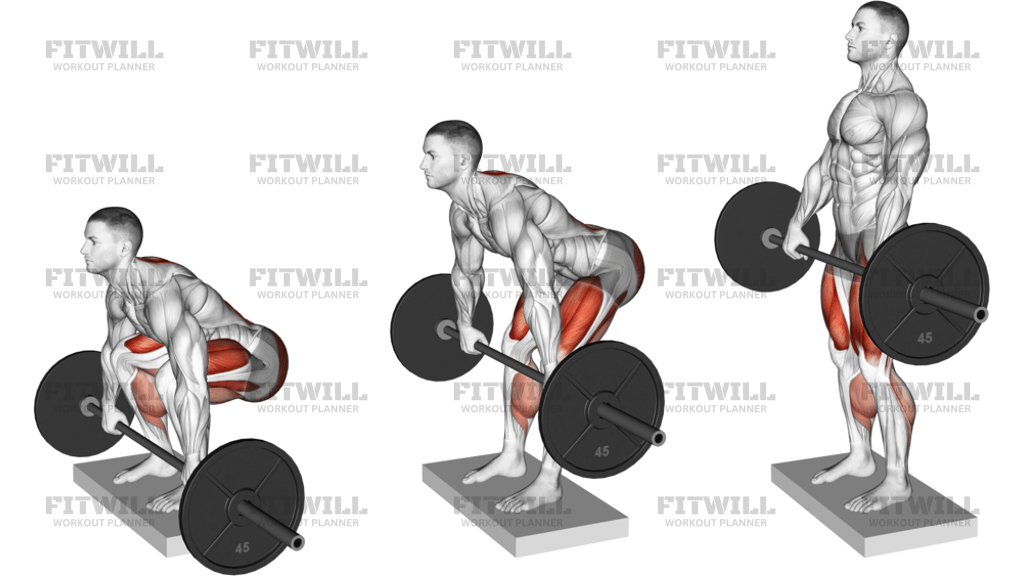
Instructions
- Stand on a stable low platform or plates with the bar centered over your mid-foot and close to your shins.
- Set your feet about hip-width apart, hinge down, and grip the bar just outside your legs.
- Lower your hips until your shins touch the bar, keep your chest proud, and set your spine neutral.
- Pull the slack out of the bar and brace your trunk before the plates leave the floor.
- Drive through the floor and let the knees and hips extend together as the bar rises straight up your legs.
- Keep the bar brushing close to the shins and thighs instead of letting it drift forward.
- Stand tall at the top with the glutes locked in and the ribs down, without leaning back.
- Lower the bar under control by hinging first, then bending the knees once the bar passes them.
- Reset your breath and position between reps, especially if you are pulling from a dead stop each time.
Tips & Tricks
- Use only enough deficit height to make the pull harder without forcing your lower back to round at the start.
- Keep the bar over the middle of your foot; if it starts forward, the first inch off the floor will feel much heavier.
- Think about pushing the floor away rather than jerking the bar up with your arms.
- Keep your lats tight so the bar stays connected to your shins and thighs instead of swinging away from you.
- If your hips shoot up before the bar moves, lower the load or reduce the deficit height.
- Do not finish by leaning back; stand tall with glutes squeezed and ribs stacked over the pelvis.
- A belt can help you brace harder on heavy sets, but it should not replace good setup and positioning.
- Use straps only if grip is limiting the lift before your back and legs are truly challenged.
Frequently Asked Questions
What does the deficit change in a barbell deadlift?
It starts the bar lower, which increases the range of motion and makes the first pull from the floor more demanding.
What muscles work hardest in this deadlift from a deficit?
The glutes, hamstrings, quads, upper back, and trunk all have to work hard, with extra demand on the legs and bracing because of the deeper start.
How high should the platform or deficit be?
Usually only a small rise is needed. If the height makes you lose spinal position or bar contact, it is too high.
Where should the bar be before I start the pull?
It should sit over the middle of your foot and stay close to your shins so the bar path stays vertical and efficient.
Is this harder on the lower back than a regular deadlift?
It can be if you use too much deficit or lose bracing, because the deeper start increases the demand on your torso position.
Can beginners use barbell deadlifts from a deficit?
Yes, but only with a very small deficit and light loads until they can keep a neutral spine and a tight bar path.
What is the most common mistake with this setup?
Standing on too much height and letting the hips rise before the bar leaves the floor are the most common problems.
Should I touch and reset each rep or use touch-and-go reps?
A reset on the floor or platform is usually better for this variation because it keeps the starting position honest and repeatable.