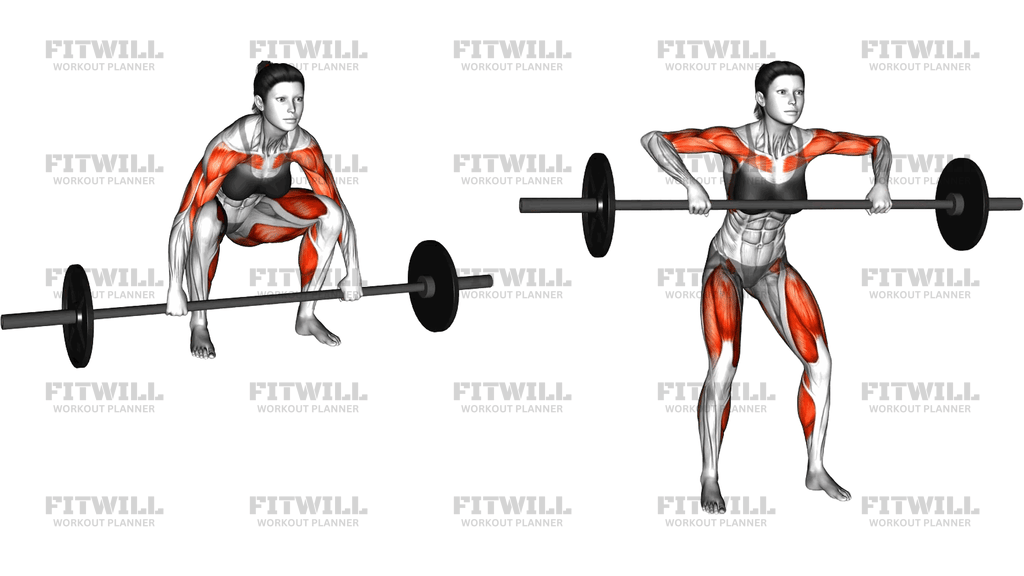
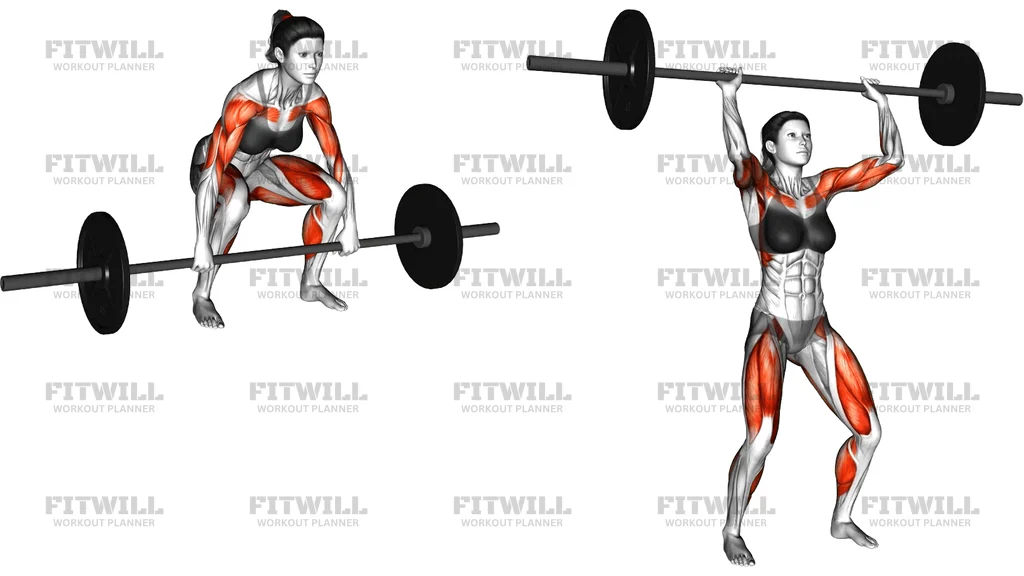
Barbell Jefferson Deadlift
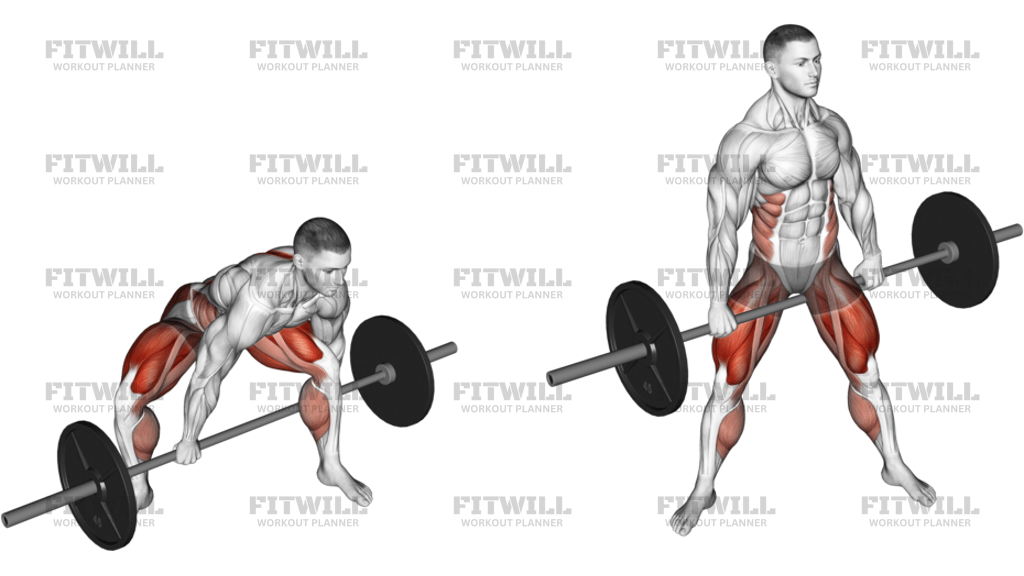
Barbell Jefferson Deadlift is a staggered-stance barbell hinge that places the bar between your legs and asks you to pull while resisting rotation. The setup is unusual, but that is the point: the asymmetrical stance makes you organize your hips, trunk, and grip before the bar leaves the floor. It is commonly used to build posterior-chain strength, hip drive, and body control without needing a machine or complex setup.
The exercise loads the glutes, hamstrings, adductors, spinal erectors, and core, with the obliques working hard to keep the torso from twisting as the bar rises. Because one foot is forward and the other is back, each rep also challenges balance and positioning more than a conventional deadlift. If the stance is too narrow or too long, the lift becomes awkward quickly, so the quality of the setup matters as much as the pull itself.
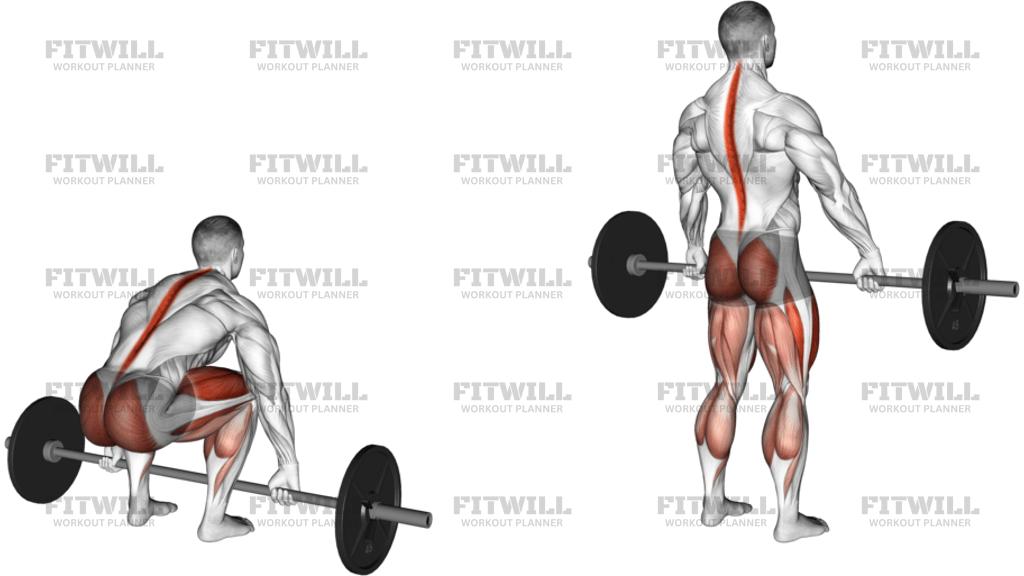
At the bottom, the bar should sit centered between your feet and close to your shins, with your chest angled forward, spine long, and hips low enough to keep tension in the legs. The first pull should feel like driving the floor away while the bar stays close to the body. If the torso rotates, the bar drifts forward, or the shoulders race ahead of the hips, the exercise stops being a clean Jefferson deadlift and becomes a sloppy twist-and-yank.
Use controlled tempo and a load you can keep square through the full range. This movement is especially useful for accessory strength work, unilateral hip and trunk training, or as a technique-driven hinge variation when you want to train the posterior chain from a different angle than a standard deadlift. It is not a place to chase maximal load if the stance, grip, or bar path start to break down.
The best reps finish with the hips and knees extended, the bar still close, and the body tall without leaning back or over-squeezing the low back. Lower the bar by hinging first, then bending the knees as the plates approach the floor, and reset both feet before each rep if needed. That deliberate reset keeps the lift safe and makes the asymmetrical setup work for you instead of against you.
[ Workout Log & Planner ]
Put your next workout in Fitwill
Keep your plan and training log ready when you are.


Instructions
- Place the barbell on the floor and stand over it in a staggered straddle so the bar sits between your legs.
- Set one foot slightly forward and the other slightly behind, then turn your feet out just enough to keep your knees tracking over them.
- Grip the bar with one hand in front of your body and the other behind it, keeping the bar centered under your hips.
- Sink into a strong hinge with your chest angled forward, spine long, and shoulders over the bar.
- Brace your trunk before the bar leaves the floor so your torso does not twist as you pull.
- Drive through both legs and stand up by extending the knees and hips together while keeping the bar close to your thighs.
- Finish tall without leaning back or letting the bar drift away from your body.
- Lower the bar under control by hinging first, then bending the knees as the plates approach the floor.
- Reset your stance and grip before the next rep if the bar path or torso angle changes.
Tips & Tricks
- Keep the bar centered between your feet; if it drifts forward, the lift turns into a back-dominant pull.
- The staggered stance should feel stable, not like a split squat; shorten or widen it until both hips can drive evenly.
- Keep your shoulders square as you rise so the torso does not unwind around the bar.
- Let the knees and hips extend together; shooting the hips up first usually pulls the bar away from the legs.
- Use a mixed or opposite-side grip only if it helps you keep the bar steady and the shoulders level.
- Lower the bar with the same control you use on the way up so each rep starts from a repeatable position.
- Choose a load that lets you keep the same foot pressure on every rep instead of rocking onto one leg.
- Stop the set if your low back starts doing the work that should come from the hips and legs.
Frequently Asked Questions
What does Barbell Jefferson Deadlift train?
It primarily trains the glutes, hamstrings, adductors, spinal erectors, and core while also challenging anti-rotation strength.
Is the staggered Jefferson stance supposed to feel balanced?
It should feel stable enough to hinge and stand without wobbling, but the asymmetry will still ask your trunk to resist twisting.
Where should the bar travel during each rep?
The bar should rise straight up between your legs and stay close to your shins and thighs instead of swinging forward.
Should my torso stay square to the floor?
It should stay as square as possible. A small amount of natural rotation can happen with the staggered stance, but visible twisting means the load is too heavy or the setup is off.
Can beginners use the Barbell Jefferson Deadlift?
Yes, if they start light and learn the staggered stance before adding load. The movement is technical, so control matters more than weight.
How do I know if my stance is too long or too narrow?
If you cannot hinge cleanly, keep the bar centered, or drive evenly through both legs, adjust the stance until the pull feels stable.
What are the most common mistakes with this deadlift?
The biggest mistakes are letting the bar drift away, twisting the torso, and yanking the weight instead of standing up under control.
What is a good reason to program this variation?
It is useful when you want a hinge that trains the posterior chain and trunk together while also challenging balance and anti-rotation.