Cable Low Seated Row With V-Bar
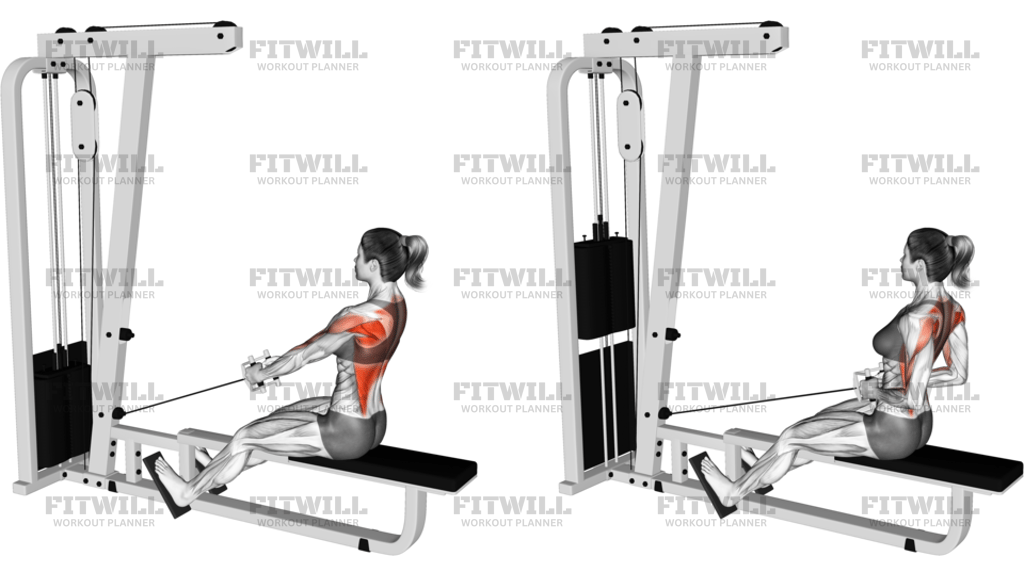
Cable Low Seated Row With V Bar is a seated horizontal pulling exercise that uses a low cable, a close neutral grip, and a fixed bench position to train the back through a controlled range of motion. With the feet braced on the platform and the torso held tall, the movement emphasizes pulling the handle toward the lower ribs or upper abdomen while keeping the chest open and the shoulders organized.
The V-bar changes the line of pull compared with a wide row. Because the hands stay close together, the elbows usually travel alongside the torso and the upper arms stay a little closer to the body. That makes the exercise useful for building mid-back strength, lat engagement, rear delt involvement, and arm contribution without needing a lot of torso motion.
Setup matters a lot in this row. If the bench is too close or too far from the stack, the cable will pull you out of position before the set even starts. A good setup lets the handle start with the arms extended, the spine neutral, the shoulders not shrugged, and the feet firmly planted so each repetition begins from a stable base instead of a tug-of-war with the weight stack.
During the pull, the goal is to move the handle toward the body by driving the elbows back and lightly squeezing the shoulder blades together and down. The return should be slower and quieter than the pull, with the arms reaching forward under control while the torso stays mostly still. That combination keeps the tension on the back instead of turning the row into a lean-back curl.
This exercise fits well in back-focused strength sessions, hypertrophy work, or as an accessory after heavier compound lifts. It is also a practical option for beginners because the path is guided, but only if the load is light enough to keep the bench contact, foot brace, and torso position consistent. Use a pain-free range, avoid yanking into the stack, and finish each rep with control rather than extra body swing.
Fitwill
Log Workouts, Track Progress & Build Strength.
Achieve more with Fitwill: explore over 9600 exercises with images and videos, access built-in and custom workouts, perfect for both gym and home sessions, and see real results.
Start your journey. Download today!




Instructions
- Sit on the bench facing the low pulley and place both feet on the foot platform with your knees softly bent.
- Hold the V-bar with a neutral grip, then slide back until the cable is taut and your arms are fully extended without rounding your lower back.
- Set your chest tall, ribs down, and shoulders away from your ears before the first pull.
- Pull the handle toward your lower ribs or upper abdomen by driving your elbows back along your sides.
- Keep the torso mostly still as the handle travels in a straight line toward your body.
- Squeeze your back briefly at the end of the pull without leaning far behind the bench.
- Lower the handle slowly until your arms are extended again and your shoulder blades can reach forward under control.
- Inhale on the return and exhale as you pull, then repeat for the planned reps.
- After the set, let the weight stack settle before releasing the handle.
Tips & Tricks
- If your shoulders rise toward your ears, reduce the load and start each rep with the shoulder blades set down.
- Aim the handle toward the lower ribs, not the chest, to keep the elbows tracking close to the body.
- Keep the chest tall but avoid turning the row into a big backward lean.
- Pause for a beat when the handle reaches your torso so the back does the work instead of momentum.
- Let the arms lengthen on the way forward, but do not let the low back round to chase extra range.
- A slightly slower return usually makes this row feel better on the lats and mid-back than a fast drop.
- Use the foot platform to stay anchored; if your feet slide, the stack is probably too heavy.
- If the handle hits your stomach before the elbows finish moving back, the bench is likely set too close to the cable.
- Stop the set when you can no longer keep the torso quiet and the pull path clean.
Frequently Asked Questions
What does Cable Low Seated Row With V-Bar work most?
It mainly trains the lats and mid-back, especially the rhomboids and middle trapezius, with help from the rear delts and biceps.
Where should the V-bar finish on each rep?
Most lifters should pull the handle to the lower ribs or upper abdomen while keeping the elbows close to the torso.
How far should I lean back on this seated row?
Only a small amount of torso movement is useful. If you need a big lean to move the handle, the weight is too heavy.
Should my shoulders move forward at the bottom?
Yes, but only under control. Let the shoulder blades protract slightly on the return without collapsing the chest or rounding the lower back.
Is this easier on the wrists than a straight-bar row?
Usually yes, because the V-bar lets the hands stay in a neutral grip that feels natural for many lifters.
Can beginners use this exercise safely?
Yes, as long as they keep the feet braced, use a light enough load, and avoid yanking the cable with the torso.
What is the most common form mistake?
The most common mistake is turning the row into a swing by leaning back hard and using momentum to finish the pull.
How should I breathe during the row?
Inhale as the handle returns forward and exhale as you pull the V-bar back to your torso.