Quick Feet Run
Quick Feet Run is a bodyweight running drill used to build foot speed, coordination, and conditioning without needing any equipment. The movement is performed in place with a short, quick stride, a slight forward lean, and constant lower-body turnover. It is less about covering distance and more about teaching the body to keep the feet lively, the trunk organized, and the arm swing efficient while breathing stays under control.
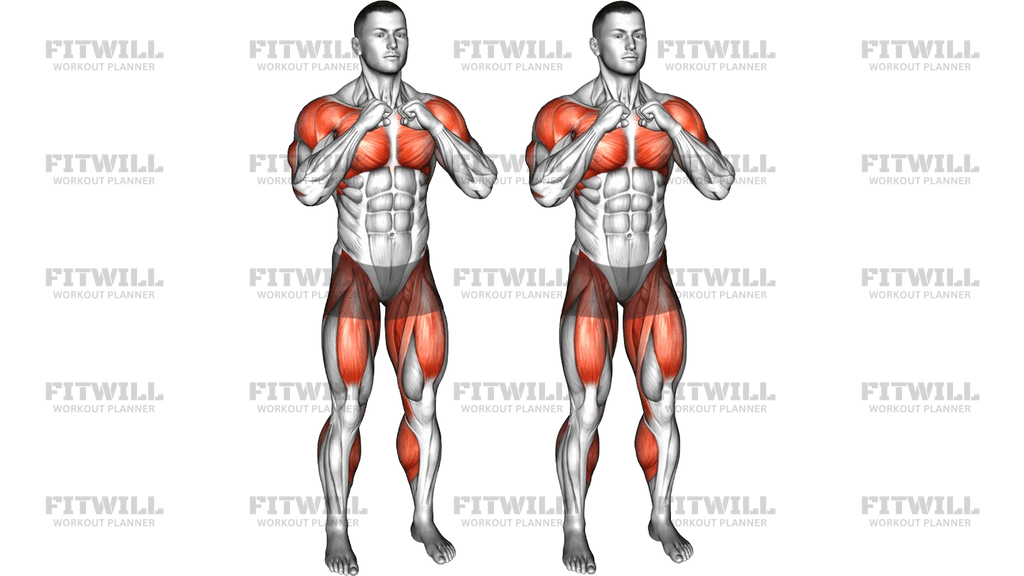
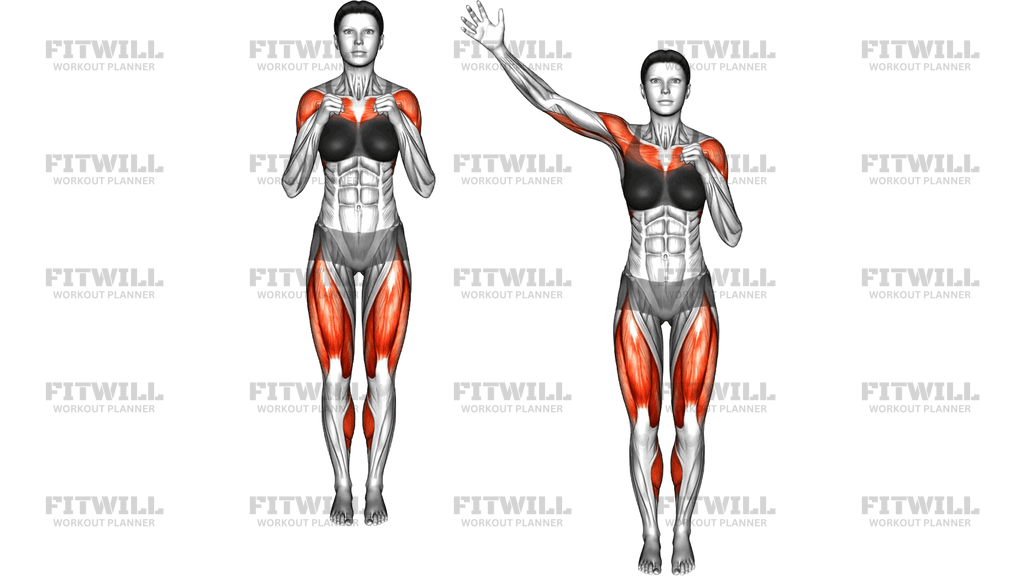
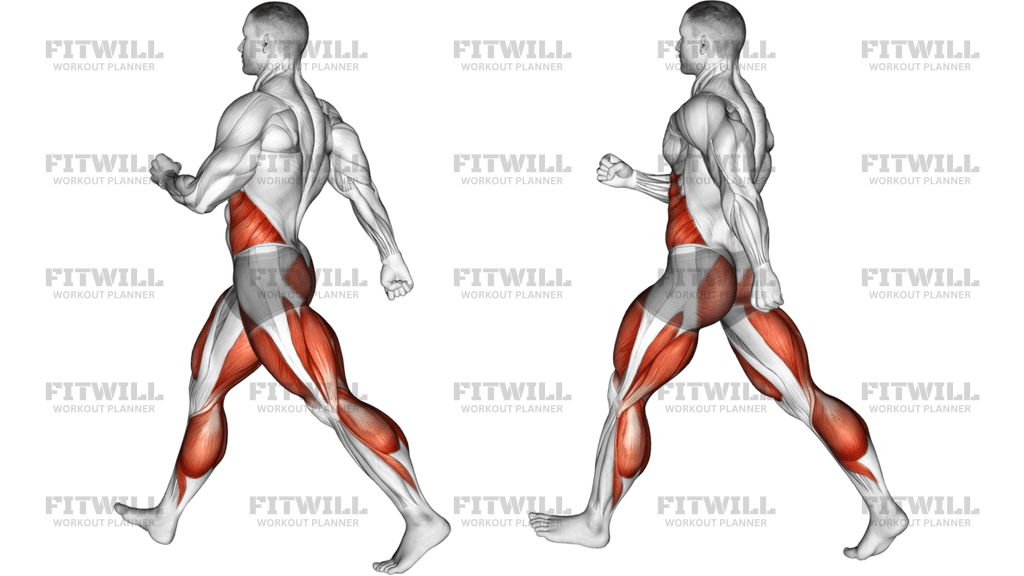
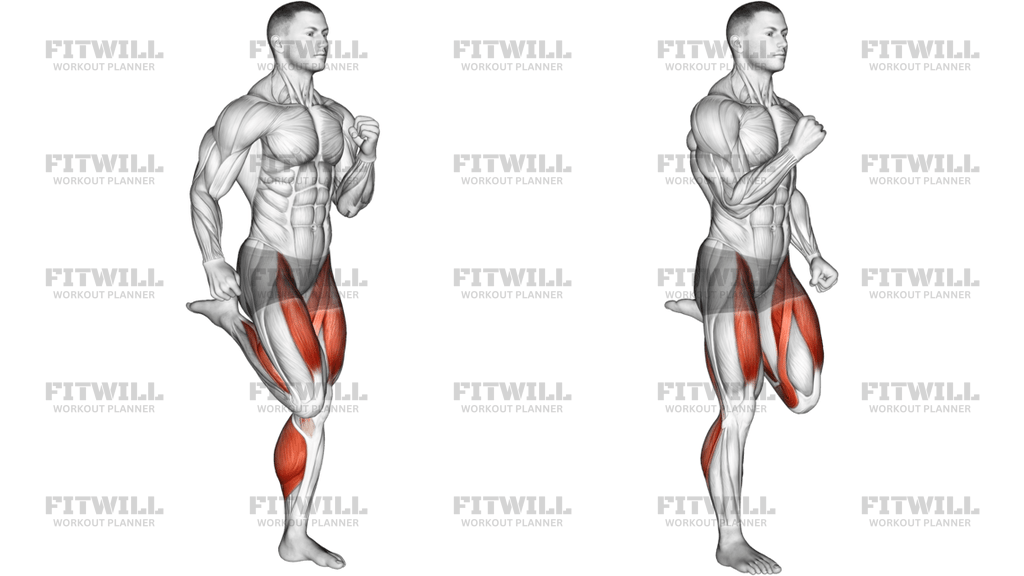
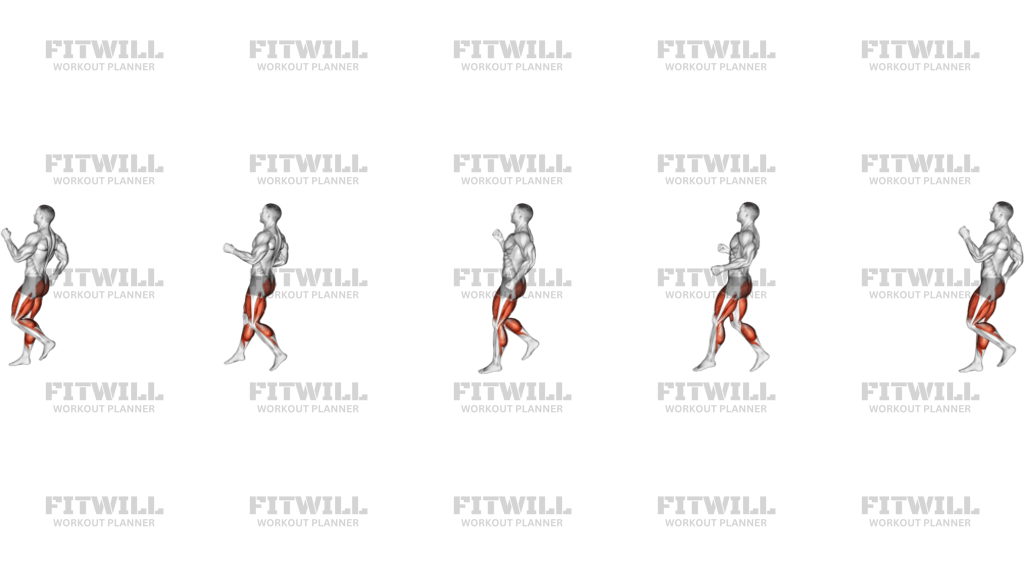
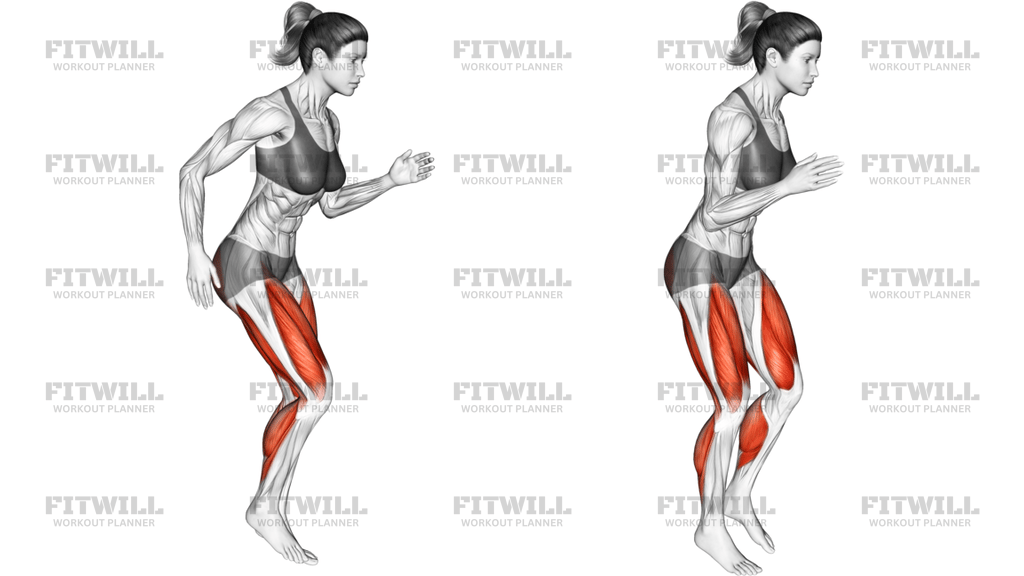
The image shows a runner on the balls of the feet with the knees bent and the hips held in a soft athletic position. That setup matters because quick feet are only useful if you can stay light, balanced, and repeatable. If the torso gets too upright or the stride gets too long, the drill turns into sloppy jogging. If the posture stays compact, the legs can cycle quickly and the ankles, calves, quads, and hip flexors all contribute to a crisp rhythm.
Quick Feet Run is commonly used as a warmup, speed primer, conditioning drill, or recovery-style high-tempo interval. It can also be paired with ladder work, shuffles, skaters, or sprint mechanics drills. The goal is to create rapid ground contacts while keeping the head steady, the core braced enough to prevent excessive sway, and the feet landing under the body instead of reaching out in front.
Because this is a fast cyclical drill, the quality of the repetition comes from rhythm rather than force. You should feel quick elastic contact through the forefoot, not heavy stomping through the heels. The arms should move naturally and help set the pace, but the shoulders should stay relaxed. If the pace gets too high and form breaks down, reduce the cadence before the drill turns into bouncing, tension, or overstriding.
Used well, Quick Feet Run helps develop a cleaner running pattern and better reactive lower-body control. It is useful for athletes, general conditioning, and warmups before lifting or field work, as long as the tempo stays sharp and the landing mechanics stay controlled. Start with short work intervals, recover fully, and prioritize quick, repeatable steps over raw speed.
Fitwill
Log Workouts, Track Progress & Build Strength.
Achieve more with Fitwill: explore over 9600 exercises with images and videos, access built-in and custom workouts, perfect for both gym and home sessions, and see real results.
Start your journey. Download today!




Instructions
- Stand tall in place with your feet about hip-width apart and your weight centered over the balls of your feet.
- Lean your torso slightly forward from the ankles, keep your chest open, and bend your elbows into a running arm position.
- Brace your midsection lightly so your trunk stays steady when the feet start moving.
- Begin with short, quick steps in place, lifting each foot only a few inches off the floor.
- Keep the foot contacts light and fast, landing under your hips instead of reaching forward.
- Drive the arms in a compact running pattern to match the pace of the feet.
- Stay on the forefoot or midfoot and avoid dropping your heels hard into the floor.
- Keep the knees softly bent and the hips low enough to stay athletic, but not so low that the cadence slows.
- Breathe rhythmically while you keep the cadence quick for the planned interval or rep count.
- Slow down and reset if the torso starts twisting, the steps get heavy, or the feet stop landing under control.
Tips & Tricks
- Think of the drill as quick contacts, not high knees; the feet should skim the floor instead of climbing.
- Keep your gaze level and your neck loose so the head does not bob with each step.
- Use a slight forward lean from the ankles, not a bend at the waist.
- Let the elbows stay close to the ribs; exaggerated arm swing usually throws off the cadence.
- Land under your center of mass so you do not brake with every step.
- Stay light through the ankles and calves instead of pushing off aggressively.
- Short intervals work best when you want speed quality; long intervals usually turn the drill into a shuffle.
- If the calves cramp or the feet slap loudly, shorten the stride and reduce the pace.
- Keep the hips level and avoid side-to-side sway as the pace increases.
Frequently Asked Questions
What is Quick Feet Run best for?
It is best for foot speed, coordination, and conditioning with a running-in-place pattern.
Do I need any equipment for Quick Feet Run?
No. It is a bodyweight drill done in place with fast, light steps.
Should my heels touch the floor during the drill?
Keep most of the work on the balls of the feet or midfoot. Light heel kisses can happen, but heavy heel striking usually means the cadence is too slow.
How far should my feet move?
Only a few inches per step. The drill is about quick turnover, not long strides.
Can beginners do Quick Feet Run?
Yes. Beginners should start with short intervals and focus on staying balanced and light on the floor.
What muscles work during Quick Feet Run?
The calves, quads, hip flexors, glutes, and core all help maintain the fast running pattern.
What is the most common mistake?
Overstriding and bouncing too high are the most common problems. Both slow the cadence and make the drill less effective.
How should my arms move?
Keep the arms in a compact running swing so they help rhythm without creating extra tension or twisting.
When should I use this in a workout?
It works well in the warmup, as a speed primer, or inside short conditioning intervals before your main work.