Dumbbell Seated Reverse Arnold Press
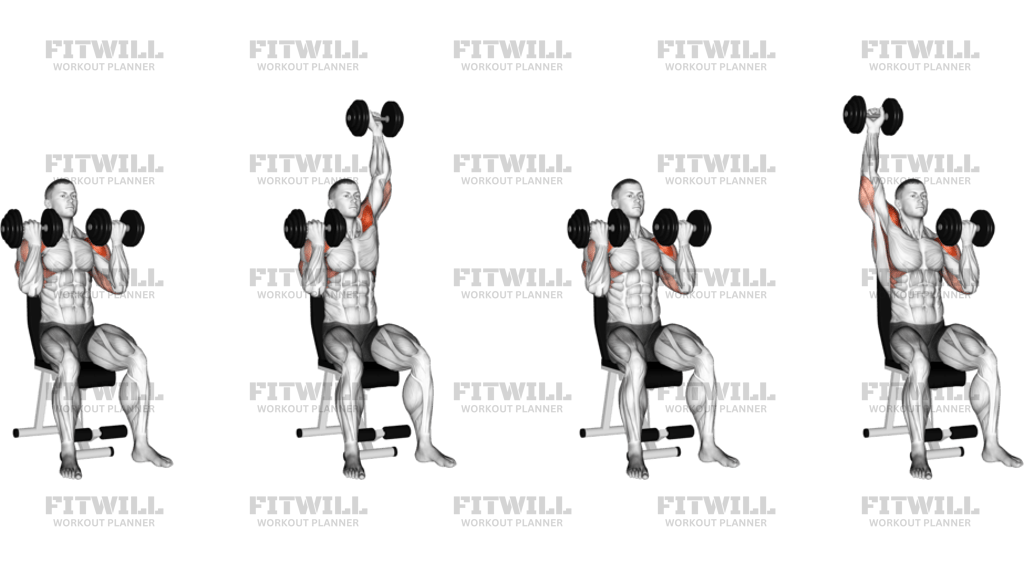
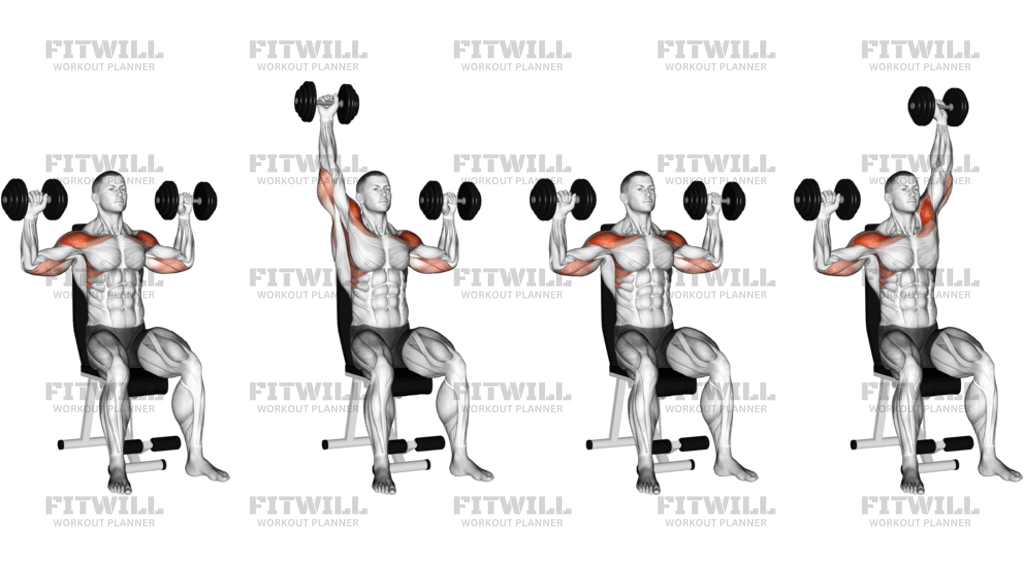
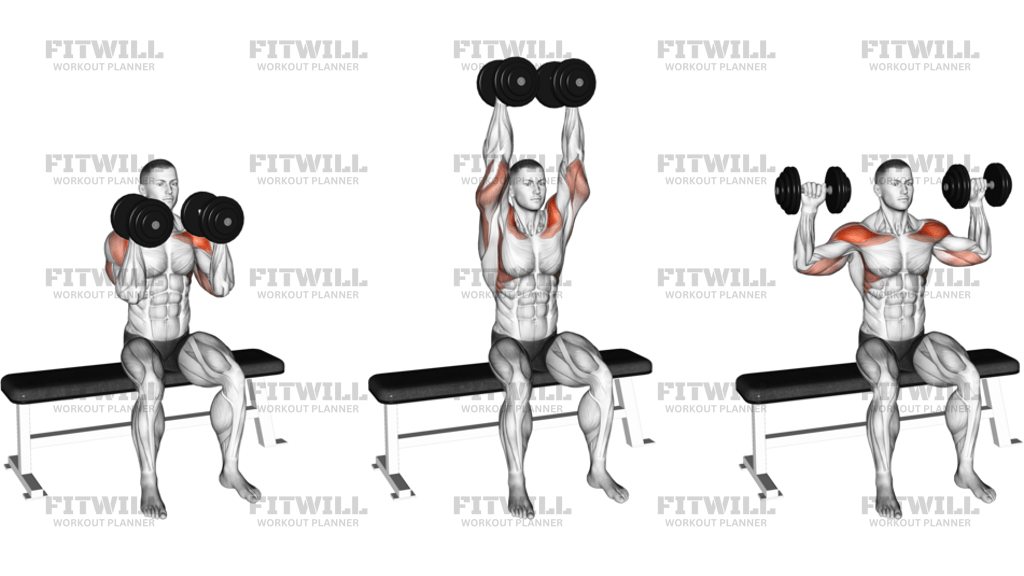
The Dumbbell Seated Reverse Arnold Press is a seated shoulder press variation that combines pressing with a controlled rotational path. It is usually done on a flat bench with both feet planted so the torso can stay tall while the dumbbells move overhead and back down in a clean arc.
This exercise is built to train the shoulders through a demanding range, with the front delts and side delts doing most of the work and the triceps, upper back, and rotator cuff helping to keep the path stable. The seated position reduces leg drive, so the quality of your setup matters more than in a standing press.
The reverse Arnold pattern is useful when you want shoulder work that feels smoother and more joint-friendly than a straight, rigid press. The rotation should stay controlled, not forced. Keep the elbows under the wrists, the ribs stacked over the pelvis, and the dumbbells moving together so one side does not drift ahead of the other.
Use a load that lets you press without leaning back or shrugging the shoulders. If the dumbbells wobble, the motion becomes more about surviving the rep than training the delts. A clean set should look steady from start to finish, with the same path on every repetition and no bounce at the bottom.
Fitwill
Log Workouts, Track Progress & Build Strength.
Achieve more with Fitwill: explore over 9600 exercises with images and videos, access built-in and custom workouts, perfect for both gym and home sessions, and see real results.
Start your journey. Download today!




Instructions
- Sit on a flat bench with both feet flat on the floor and the torso upright.
- Hold a dumbbell in each hand at shoulder height with the elbows bent and slightly in front of the body.
- Keep the chest tall, ribs stacked, and shoulders set down before you start the first rep.
- Press the dumbbells overhead while rotating the hands so the weights travel together in a smooth arc.
- Finish with the arms extended above the shoulders without letting the shoulders shrug up toward the ears.
- Lower the dumbbells slowly, reversing the rotation as they return to shoulder height.
- Keep the forearms nearly vertical and the wrists stacked over the elbows through the entire movement.
- Breathe out as you press up and breathe in as you lower back down.
- Pause briefly at the bottom to reset posture before beginning the next repetition.
Tips & Tricks
- Use lighter dumbbells than you would for a standard shoulder press because the rotation makes the lift harder to control.
- Keep the elbows a little in front of the torso instead of letting them drift straight out to the sides.
- Do not lean back to finish the press; the bench should support your posture, not become a substitute for shoulder strength.
- Stop the set if one dumbbell starts moving ahead of the other, since the motion should stay symmetrical.
- Keep the wrists neutral so the dumbbells sit directly over the forearms instead of bending backward.
- Lower under control for two to three seconds to keep tension on the delts and avoid dropping into the bottom.
- If the front of the shoulder feels pinched, shorten the range slightly and keep the elbows from flaring too wide.
- Let the shoulders rotate naturally, but do not force the twist with your hands or wrists.
Frequently Asked Questions
What muscles does the Dumbbell Seated Reverse Arnold Press work?
It mainly trains the front and side delts, with the triceps, rotator cuff, and upper back helping stabilize the movement.
How is this different from a regular seated dumbbell shoulder press?
The reverse Arnold press adds rotation through the press path, so the shoulders work through a longer and less linear range.
Should I sit against a backrest or on a flat bench?
A flat bench works well if you can keep your torso tall and still; a backrest is fine if it helps you avoid leaning back.
Where should the dumbbells start?
Start with the dumbbells at shoulder height, elbows bent, and the forearms stacked under the weights before the first press.
How low should I lower the dumbbells?
Lower only until the dumbbells return to shoulder height and your elbows stay under control; do not force a deeper stretch if it changes your posture.
Is this exercise suitable for beginners?
Yes, but beginners should use light weights and slow reps until they can keep the rotation smooth and symmetrical.
What is the most common mistake with this movement?
Leaning back, shrugging the shoulders, or rushing the rotation usually turns the exercise into a sloppy press instead of controlled shoulder work.
How can I make the exercise easier or harder?
Make it easier by using lighter dumbbells or a backrest; make it harder by slowing the lowering phase and increasing the load only when the path stays clean.