Dumbbell Sumo Deadlift
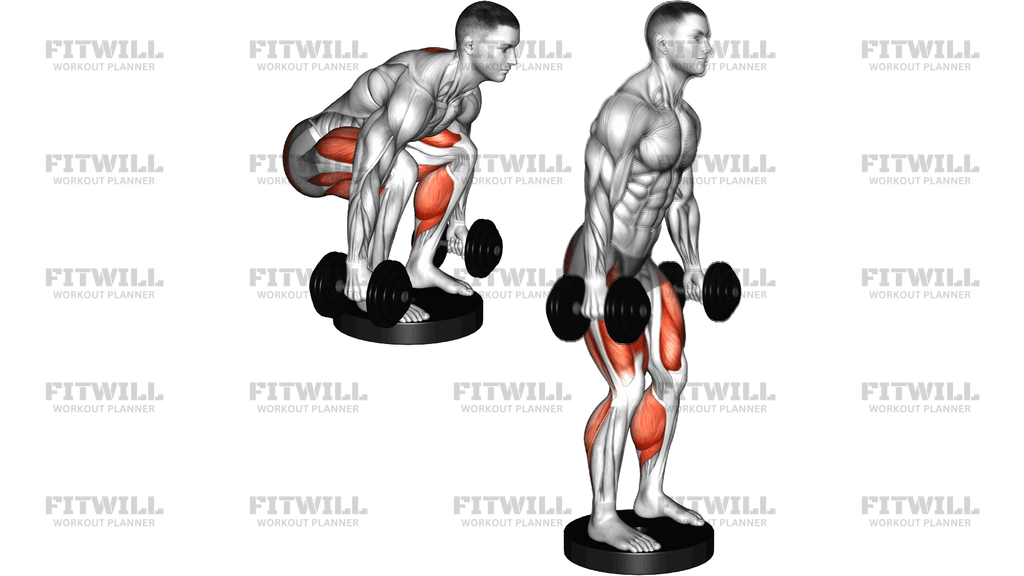
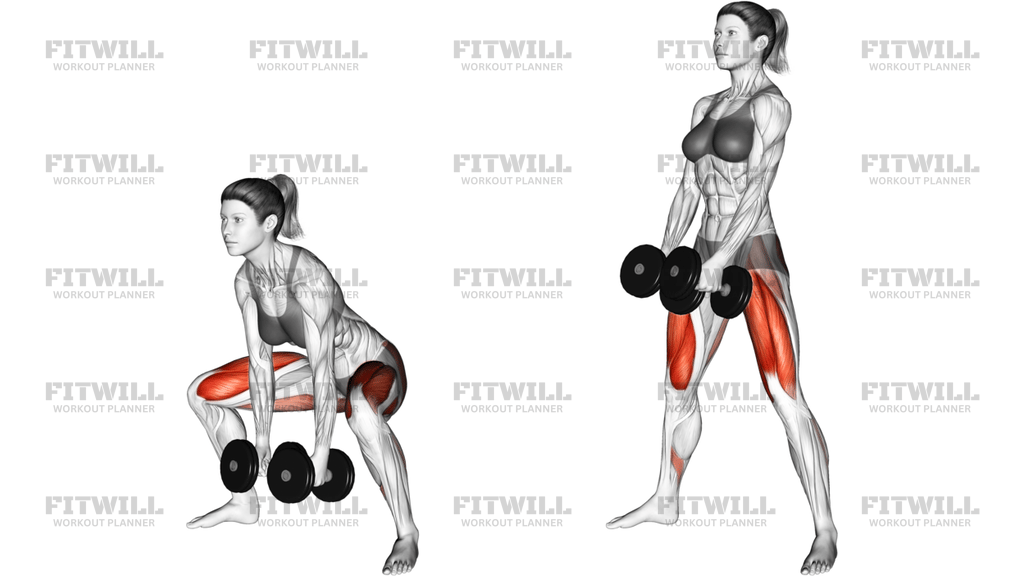
The Dumbbell Sumo Deadlift is a wide-stance hip hinge that loads the inner thighs, glutes, hamstrings, and spinal stabilizers while teaching you to keep the torso organized against a heavy pull from the floor. In this variation, the dumbbells travel between the feet instead of in front of the shins, so the setup matters: your stance, toe angle, and starting hip height all determine whether the rep feels powerful or awkward.
The sumo position changes the line of pull compared with a conventional deadlift. With the feet turned out and set wider than shoulder width, the knees track out over the toes and the torso can stay more upright. That makes the exercise useful for building lower-body strength with a strong emphasis on hip extension and adductor engagement, while still demanding brace, grip, and posture control.
A good rep starts with the dumbbells close to the midfoot, shoulders stacked slightly in front of the handles, and the spine held long rather than rounded. From there, drive the floor apart, let the knees open, and stand by extending the hips and knees together until you finish tall with the weights beside the thighs. The descent is just as important: push the hips back, bend the knees, and lower the dumbbells in a straight, controlled path between the legs.
Because the load hangs low and centered, this exercise rewards patience more than speed. If you rush the setup or let the knees collapse inward, the dumbbells drift forward and the low back takes over. Clean sumo deadlifts are often used for general strength, lower-body hypertrophy, and technique work when someone wants a squat-like leg stimulus without the same torso angle as a conventional deadlift.
Use a load that lets you keep the chest open, knees out, and heels grounded from the first rep to the last. Beginners can learn it well with light dumbbells and a short range, then progress by lowering under control and standing up with the same smooth path every time.
[ Workout Log & Planner ]
Put your next workout in Fitwill
Keep your plan and training log ready when you are.


Instructions
- Stand with your feet wider than shoulder width and turn your toes out about 20 to 40 degrees.
- Place a dumbbell in each hand and let them hang straight down between your thighs with your arms long.
- Set the dumbbells over the midfoot, then hinge at the hips and bend the knees until your chest is angled forward and your shins stay fairly vertical.
- Brace your trunk, keep your chest open, and point your knees out in the same direction as your toes before you start the pull.
- Drive through your heels and midfoot to stand up, letting the dumbbells travel close to the legs as your hips and knees extend together.
- Finish tall with the glutes squeezed, shoulders stacked over the hips, and the dumbbells resting beside the thighs.
- Lower the dumbbells by pushing the hips back first, then bending the knees so the weights move straight down between the legs.
- Keep the descent controlled until the dumbbells are near the floor, then reset your brace and stance for the next rep.
- Inhale on the way down, exhale as you drive to standing, and stop the set if your back rounds or the knees collapse inward.
Tips & Tricks
- If the dumbbells scrape your shins, start them a little farther forward so you can hinge without dumping your weight onto the toes.
- Keep the knees actively pushed out; if they cave in, the sumo stance loses its leverage and the adductors stop helping.
- Think about standing the floor up between your feet rather than yanking the handles upward.
- The chest should stay proud, but do not overextend the lower back to fake a taller lockout.
- Let the dumbbells hang vertically instead of swinging forward; a forward drift usually means the hips are shooting up first.
- Use chalk or a firmer grip if the wide stance and low handle position make the hands the first thing to fail.
- Shorter lifters often do best with a slightly narrower sumo stance; very wide stances can make the start position too compressed.
- Pause for a beat at the bottom only if you can keep your brace and back position unchanged.
- If your hips rise faster than your shoulders on the way up, lower the load and make the first pull smoother.
Frequently Asked Questions
What muscles do dumbbell sumo deadlifts work?
They emphasize the glutes, hamstrings, inner thighs, and trunk stabilizers, with the quads and grip helping through the pull.
How wide should my stance be for the dumbbell sumo deadlift?
Set your feet wider than shoulder width, then adjust until the dumbbells can hang between your legs without forcing your knees or hips into a cramped position.
Where should the dumbbells travel during each rep?
They should move straight up and down close to the body, starting between the feet and finishing beside the thighs without swinging forward.
Should my knees stay bent the whole time?
They stay soft at the top and bend more as you lower, but the key is to keep them tracking out over the toes instead of collapsing inward.
Is the dumbbell sumo deadlift beginner friendly?
Yes. Light dumbbells and a controlled range make it a good way to learn hip hinge mechanics and bracing before loading it more heavily.
What is the biggest mistake with this exercise?
Letting the knees cave in or the hips shoot up first usually shifts the load into the lower back and away from the hips.
Do I need to touch the floor with the dumbbells?
No. Lower them only as far as you can while keeping your spine neutral and your hips and knees in control.
How should I breathe during the set?
Take a breath and brace before the pull, exhale as you stand, then reset your breath before the next rep if needed.