Dumbbell Incline Twist Press
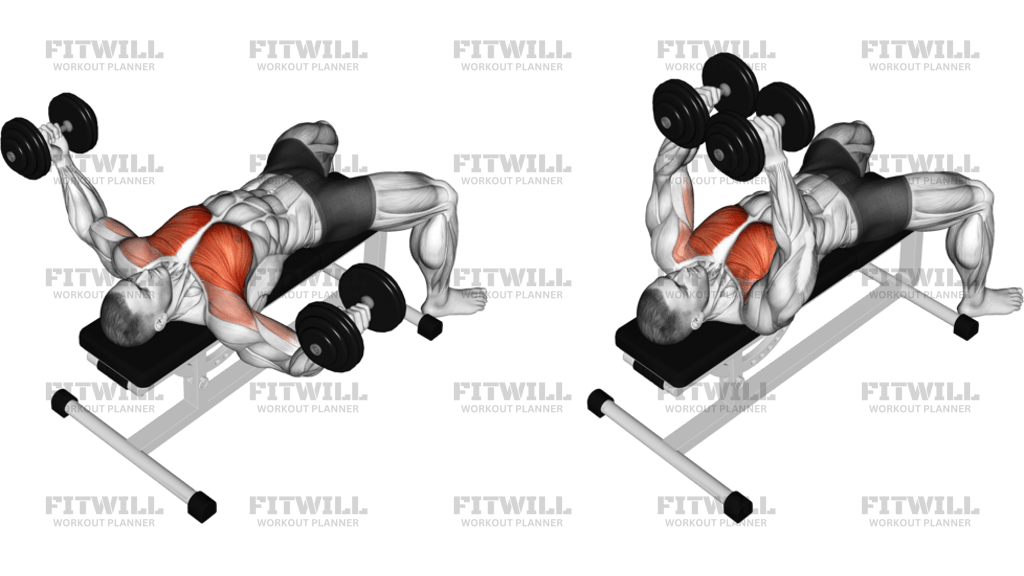
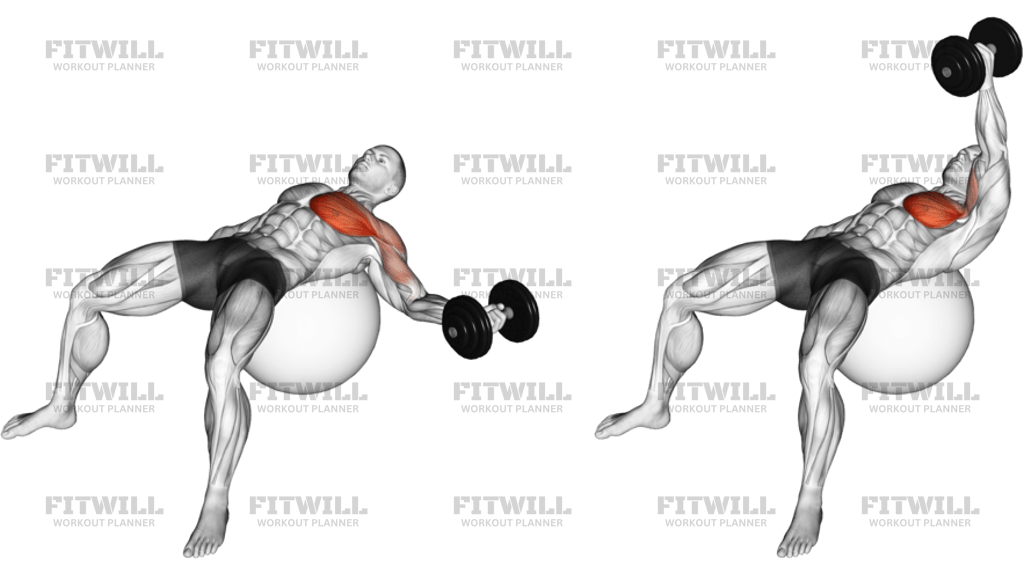
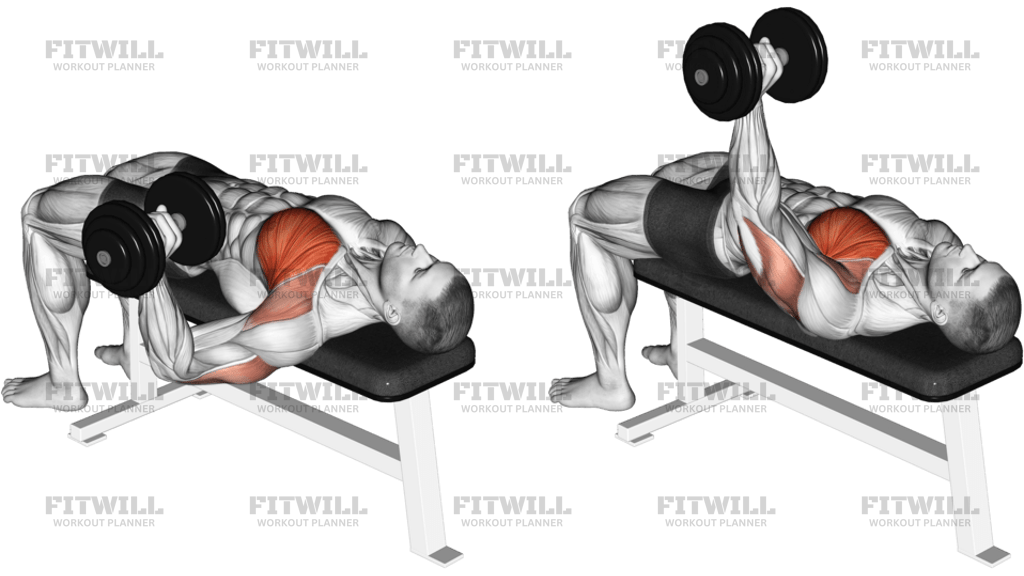
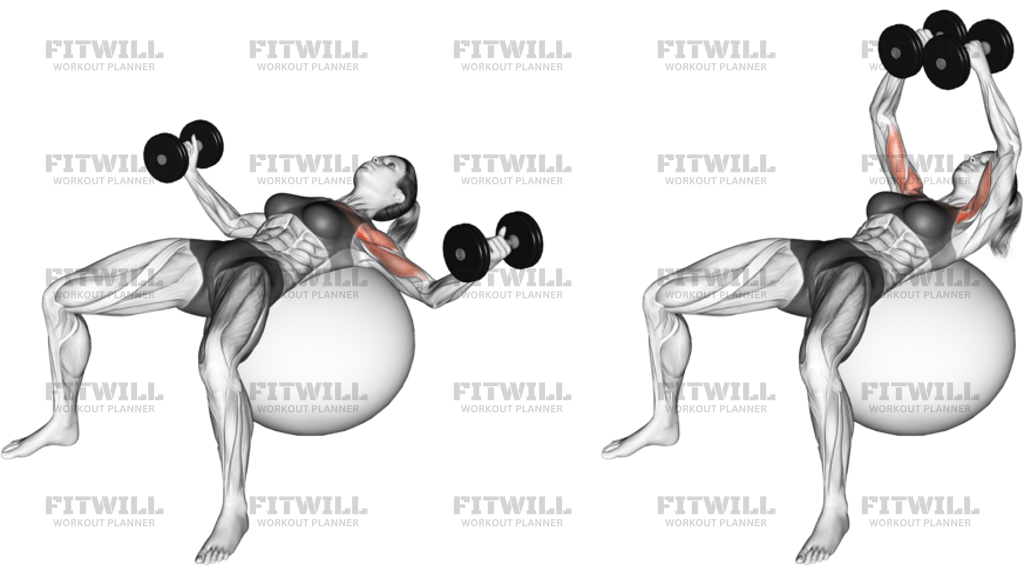
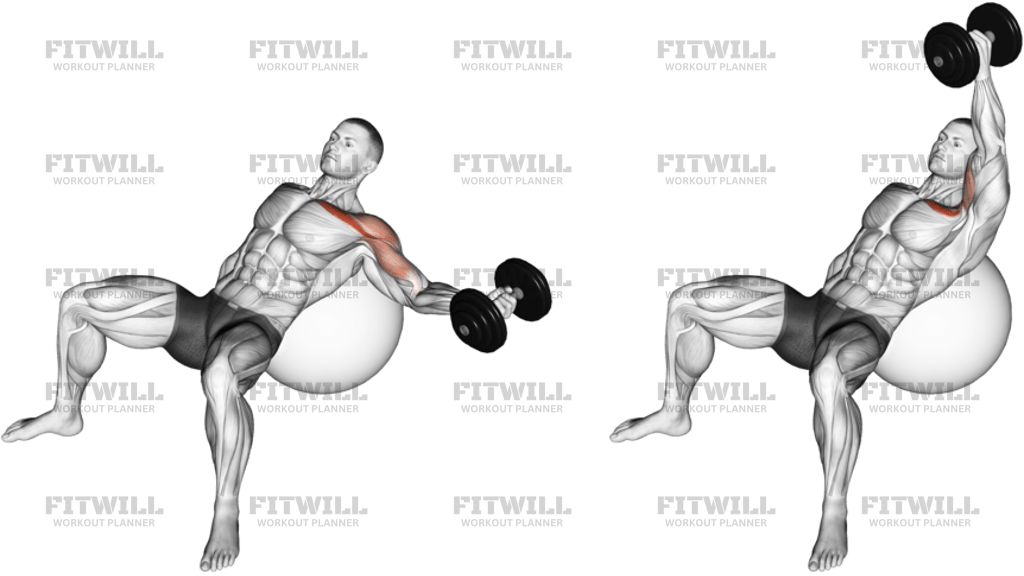
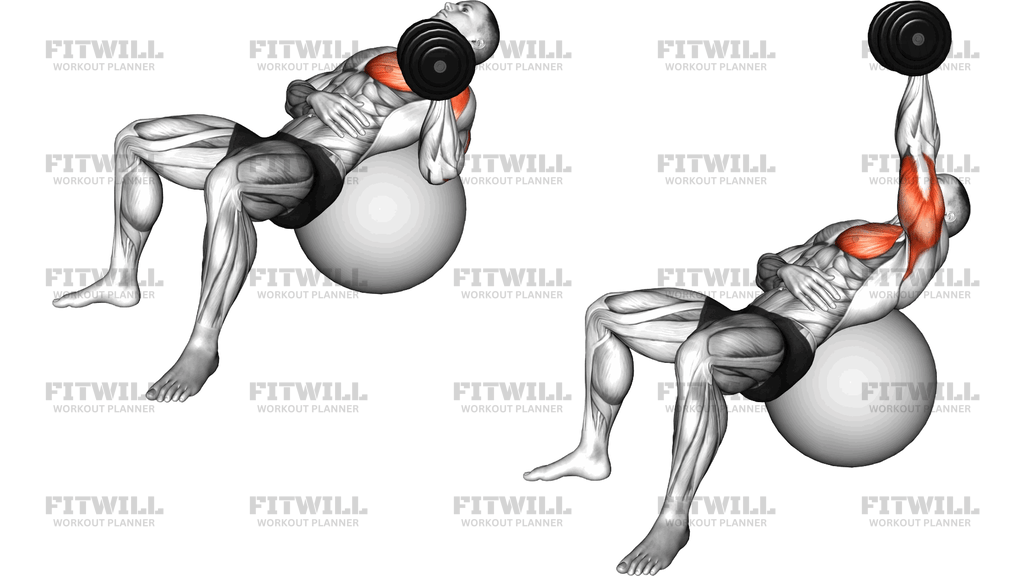
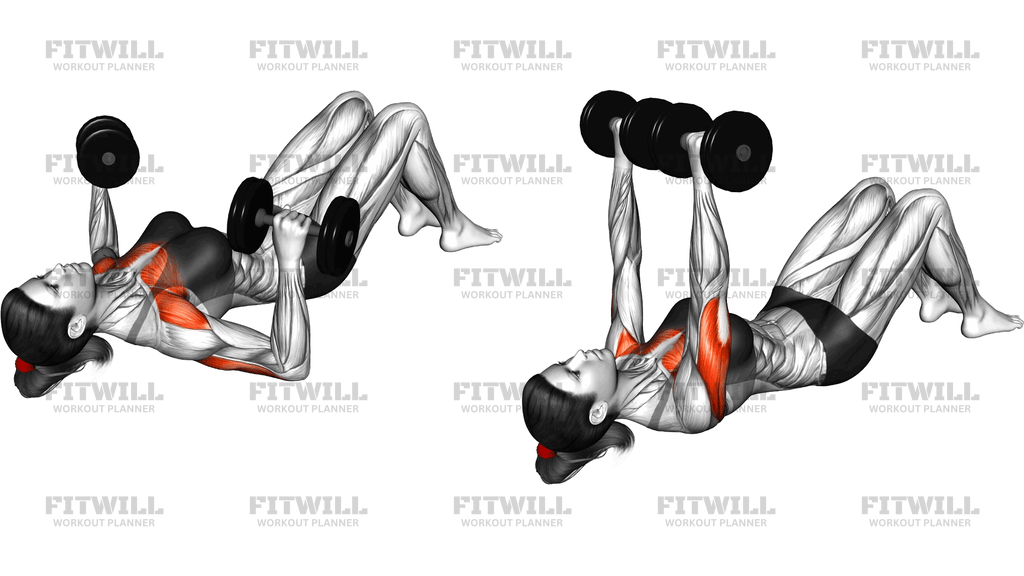
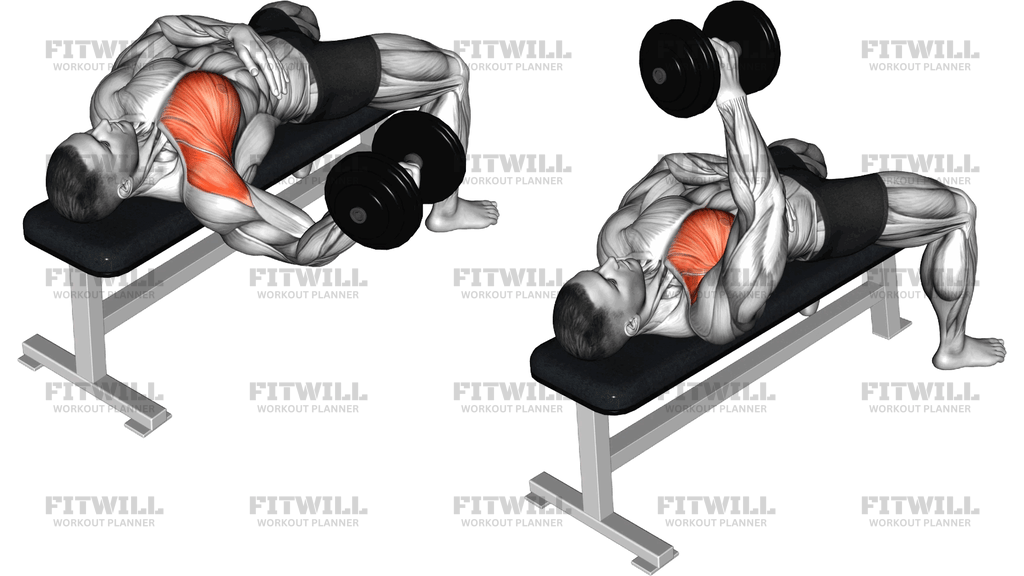
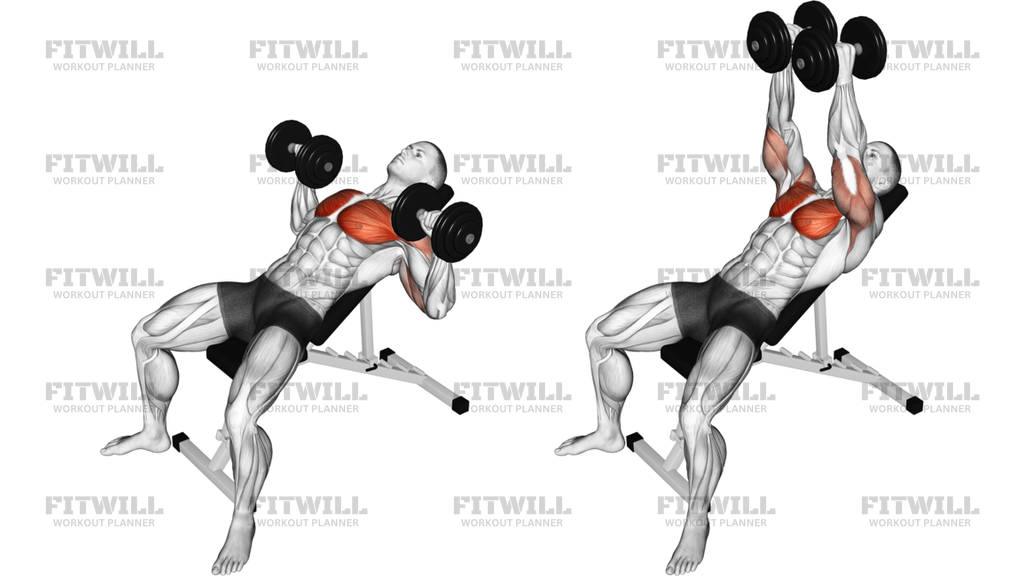
Dumbbell Incline Twist Press is an incline-bench pressing variation that pairs a dumbbell press with a controlled wrist and forearm rotation. The image shows the lifter reclined on a moderate incline with the dumbbells starting near the upper chest and finishing stacked over the shoulders, which makes the exercise a strong option for upper-chest work with extra front-delt and triceps involvement. The twist is not there for show; it helps guide the hands from a neutral start into a more forward-facing finish while the press travels upward.
Because the bench angle changes the line of force, the setup matters as much as the press itself. A moderate incline keeps the torso supported while shifting more work toward the upper fibers of the chest than a flat press would. Feet stay planted, the upper back stays anchored to the pad, and the ribcage should stay organized instead of flaring hard at the top. That position gives the dumbbells a clean path and keeps the shoulders from taking over the lift.
Each repetition should feel smooth from the bottom to the top. Start with the dumbbells close to the upper chest, elbows bent, and palms facing each other or slightly inward. Press the weights up and slightly inward while rotating the hands so the palms face more forward by the lockout. Reverse the rotation as you lower so the dumbbells return under control to the start position without dropping behind the chest or drifting too far toward the face.
This movement is useful when you want an incline press that feels a little more coordinated and shoulder-friendly than a very wide or aggressively flared dumbbell press. It fits well in chest or upper-body sessions as a hypertrophy accessory, a technique-focused press, or a lighter strength slot. Keep the load honest, because the twist adds complexity and the exercise stops being useful once the lifter starts bouncing, shrugging, or losing the bench position. If the front of the shoulder feels pinched, reduce the incline or shorten the range until the path stays clean and pain-free.
[ Workout Log & Planner ]
Put your next workout in Fitwill
Keep your plan and training log ready when you are.


Instructions
- Set a bench to a moderate incline and lie back with your upper back, shoulders, and head supported on the pad.
- Plant both feet flat on the floor and keep your hips in contact with the bench so you do not arch and slide.
- Hold a dumbbell in each hand near the upper chest with your elbows bent and your palms facing each other or slightly inward.
- Set your shoulder blades gently back and down, then brace your torso before the first press.
- Press the dumbbells up and slightly inward while the hands rotate so the palms turn forward as the weights rise.
- Finish with the bells stacked over the shoulders and upper chest without shrugging or banging the dumbbells together.
- Lower the weights along the same path under control, reversing the twist so the hands return to a neutral grip near the chest.
- Keep your breathing steady, exhaling through the press and inhaling on the way down.
- Reset the shoulders and repeat for the planned number of reps without letting the bench position change.
Tips & Tricks
- A 30- to 45-degree incline usually keeps the upper chest involved without turning the movement into a shoulder press.
- Let the rotation happen gradually as you press; forcing the twist early can irritate the wrists and elbows.
- Keep the dumbbells traveling over the upper chest and shoulders, not drifting toward your face or out over the ribs.
- Stop the descent when the upper arms are roughly in line with the torso if deeper range makes the front of the shoulder pinch.
- Keep the wrists stacked over the elbows instead of letting the dumbbells fold back toward the forearms at the bottom.
- Use a slightly lighter load than your regular incline dumbbell press because the twist makes the rep harder to control.
- Avoid flaring the ribs to finish the rep; the lockout should come from the press, not a big lumbar arch.
- Lower for a controlled two- to three-count so the rotation stays smooth and the shoulders do not bounce out of position.
Frequently Asked Questions
What muscles does Dumbbell Incline Twist Press train most?
It mainly targets the upper chest, with the front shoulders and triceps helping through the press and lockout.
How is the twist press different from a regular incline dumbbell press?
The twist press adds a controlled rotation from a neutral grip into a more forward-facing finish, so the rep demands more shoulder coordination and smoother control.
What bench angle works best for this exercise?
A moderate incline, usually around 30 to 45 degrees, keeps the path in the upper chest without turning the lift into an overhead press.
Should I start with my palms facing in or forward?
Start with the palms facing each other or slightly inward, then rotate as you press so the dumbbells finish more forward-facing at the top.
Can beginners do Dumbbell Incline Twist Press?
Yes, as long as the load is light enough to keep the rotation smooth and the bench position stable.
Where should I feel the exercise most?
You should feel the upper chest doing most of the work, with the front delts and triceps assisting during the press and finish.
What should I do if my shoulders feel pinched at the bottom?
Shorten the range slightly, lower the incline, and keep the elbows from dropping too far behind the torso.
What is the most common mistake with this movement?
The usual problem is rushing the twist and press so the shoulders shrug, the ribs flare, or the dumbbells lose their clean path.
Can I replace the twist press with a standard incline press?
Yes. A standard incline dumbbell press is the simplest substitute if the rotation bothers your wrists or shoulders.