Dumbbell Larsen Press
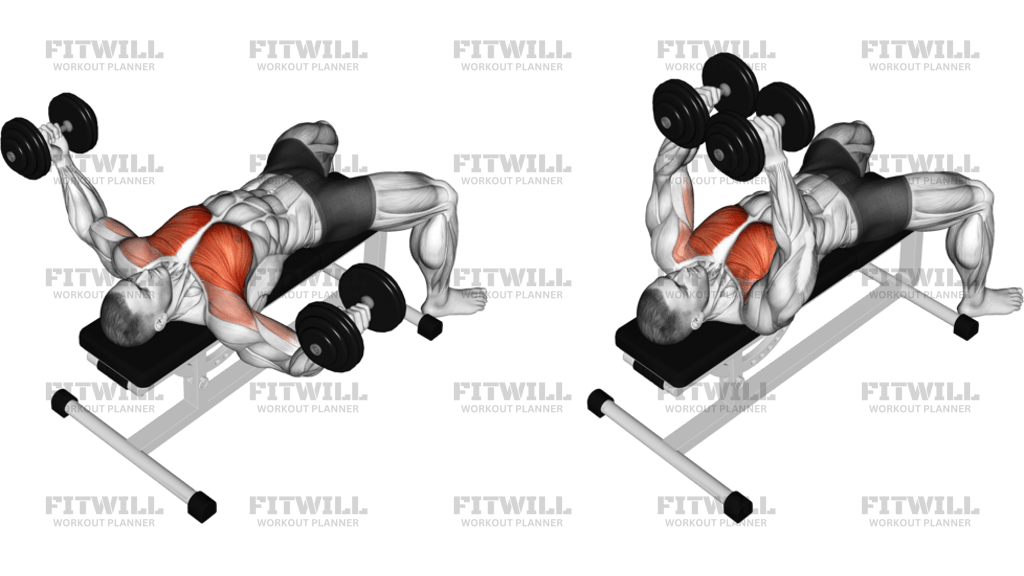
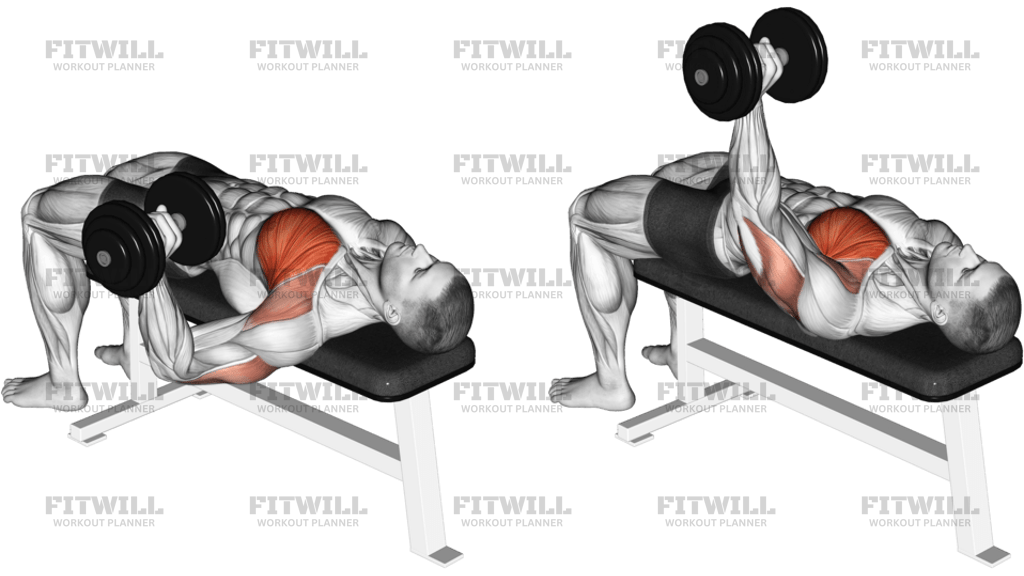
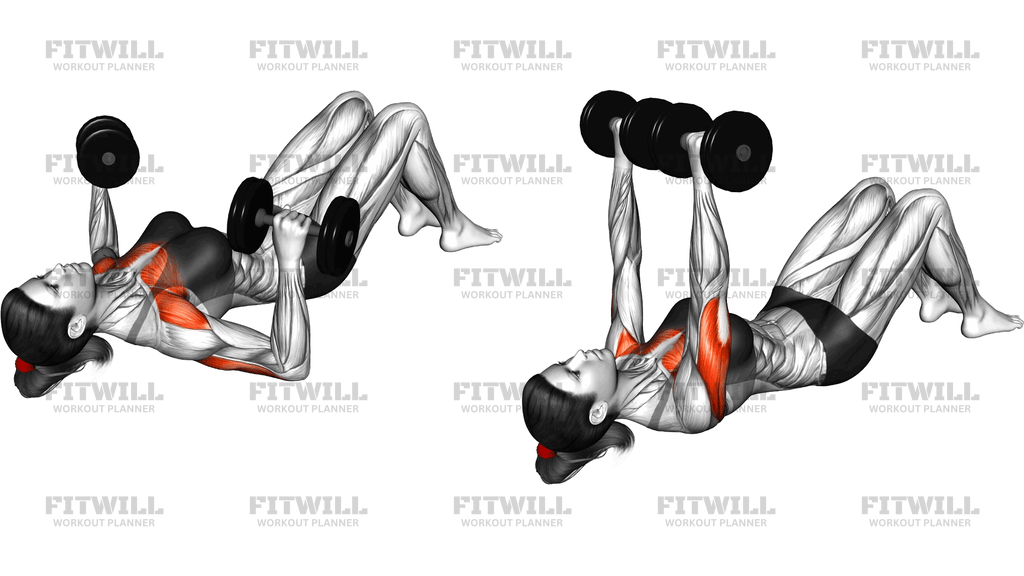
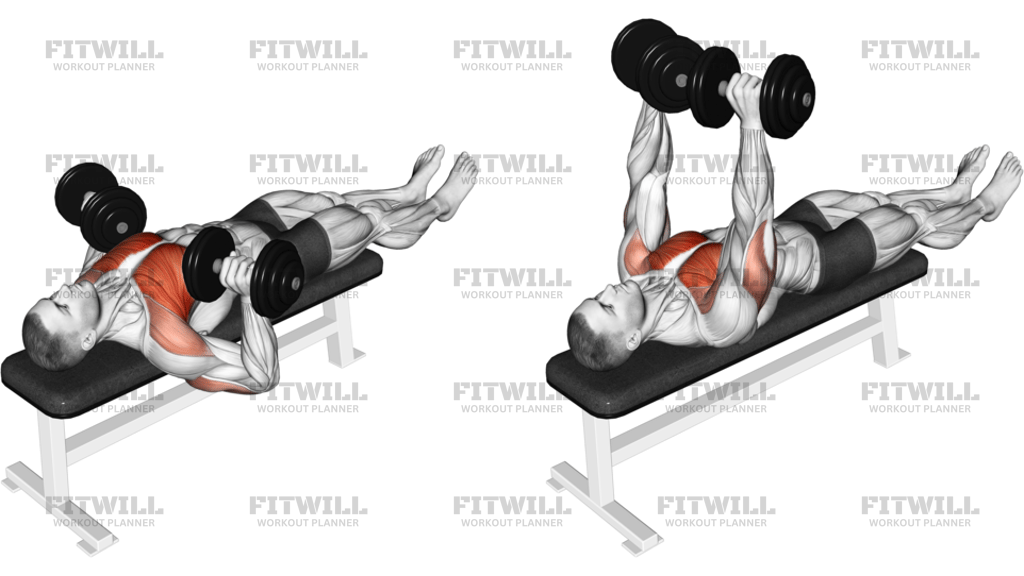
Dumbbell Larsen Press is a strict flat-bench dumbbell press variation performed with the feet resting on the bench instead of driving into the floor. Removing leg drive changes the exercise immediately: the chest, triceps, and front delts have to do more of the work, and the press becomes a cleaner test of upper-body force production and control. It is especially useful when you want pressing volume without the help of a big arch or aggressive leg drive.
The setup matters because the bench is not just support here, it is part of the challenge. With the head, upper back, and glutes anchored on the bench and the feet kept on the bench as well, your body stays quieter and the dumbbells have to move under your own upper-body control. That makes the exercise valuable for lifters who want to build pec strength, reinforce pressing mechanics, or expose weaknesses that can be hidden in a regular dumbbell bench press.
Each repetition should start with the shoulder blades set back and down, wrists stacked over the elbows, and the dumbbells lowered under control toward the outer chest or mid-chest. The elbows should travel at a moderate angle rather than flaring hard to the sides. Press the dumbbells up on a smooth path, finishing above the chest and shoulders without letting the bells crash together or letting the ribs and hips take over. A little natural arch is fine, but the lower body should stay quiet throughout the set.
Because the legs are taken out of the equation, this press usually needs less load than a standard dumbbell bench press. That is normal and desirable. The goal is not to compensate with momentum or a bigger range than your shoulders can own; the goal is to keep tension on the target muscles and repeat the same clean path rep after rep. For that reason, Larsen press fits well in hypertrophy blocks, accessory chest work, or strength sessions where you want stricter pressing practice.
Use the exercise with a range of motion your shoulders can handle comfortably and stop the set if you lose upper-back position, start kicking the dumbbells off the chest, or feel the feet trying to drive into the bench. Done well, Dumbbell Larsen Press is a straightforward but demanding way to train pressing strength, chest recruitment, and upper-body stability at the same time.
[ Workout Log & Planner ]
Put your next workout in Fitwill
Keep your plan and training log ready when you are.


Instructions
- Lie on a flat bench with your head, upper back, and glutes supported, and place both feet on the bench so the lower body stays quiet.
- Hold a dumbbell in each hand above the middle of your chest with your wrists stacked over your elbows and your palms facing forward or slightly inward.
- Set your shoulder blades back and down against the bench, then keep your ribs controlled instead of flaring them up.
- Inhale and lower the dumbbells in a controlled arc toward your outer chest or mid-chest.
- Keep your elbows at roughly a 30 to 45 degree angle from your torso as the dumbbells descend.
- Pause briefly when the dumbbells are just above the chest and your forearms are still close to vertical.
- Exhale and press the dumbbells up along the same path without pushing through your feet or bouncing the weights.
- Finish with the dumbbells over the chest and shoulders, then lower again smoothly for the next rep.
Tips & Tricks
- Keep both feet on the bench the whole set so you do not turn the press into a regular bench press with leg drive.
- Set your shoulder blades before every rep; if they slide forward, the dumbbells will drift and the chest loses tension.
- Use a slightly lighter load than your normal dumbbell bench press because the Larsen position is less stable.
- Let the dumbbells travel down toward the outer chest, not high toward the face, to keep the press line efficient.
- Do not flare the elbows straight out to the sides; a moderate tuck usually feels better on the shoulders.
- Keep the wrists stacked over the elbows so the dumbbells do not tip back toward the head at the bottom.
- Press smoothly without clanging the dumbbells together at the top, which often means you are losing control.
- If your hips start lifting or your feet press hard into the bench, the set is too heavy or too long.
Frequently Asked Questions
What does Dumbbell Larsen Press train most?
It mainly trains the chest, with strong help from the triceps and front delts.
How is the Larsen press different from a regular dumbbell bench press?
Your feet stay on the bench, so you cannot use leg drive or an exaggerated arch to help the rep.
Where should I lower the dumbbells?
Lower them toward the outer chest or mid-chest with the forearms close to vertical at the bottom.
Should my elbows flare out wide on the descent?
No. A moderate elbow angle is usually better than flaring straight out, especially for shoulder comfort.
Do I need a big arch in my lower back?
No. Keep a natural upper-back position on the bench, but do not turn the exercise into a powerlifting-style bridge.
Is Dumbbell Larsen Press good for beginners?
Yes, if the load is light enough to keep the dumbbells stable and the feet stay quiet on the bench.
What grip works best on the dumbbells?
A neutral or slightly turned-in grip is often shoulder-friendly, but a standard palms-forward grip also works well.
What should I do if my shoulders feel pinched?
Shorten the range a bit, keep the elbows less flared, or switch to a standard dumbbell bench press if needed.