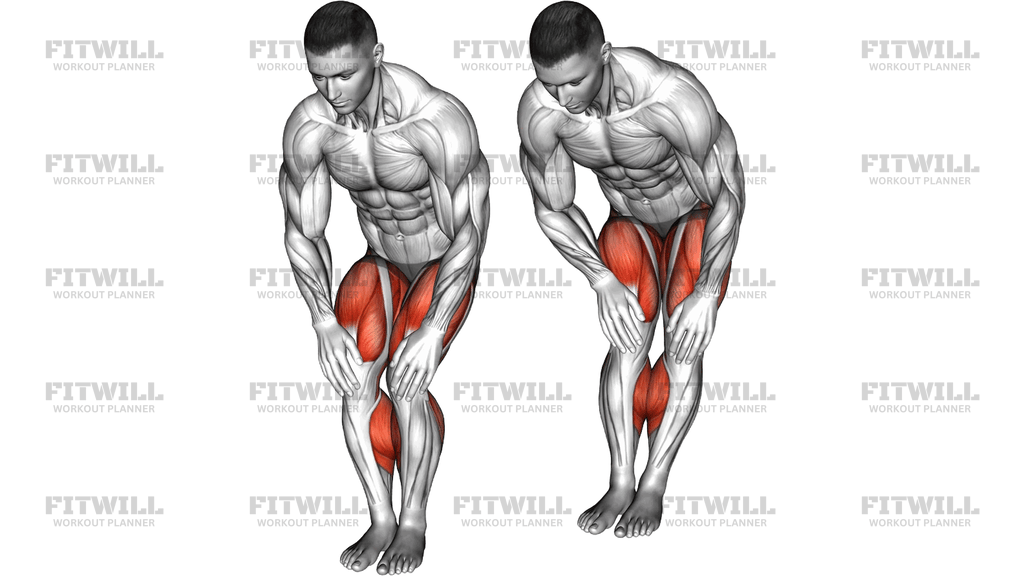
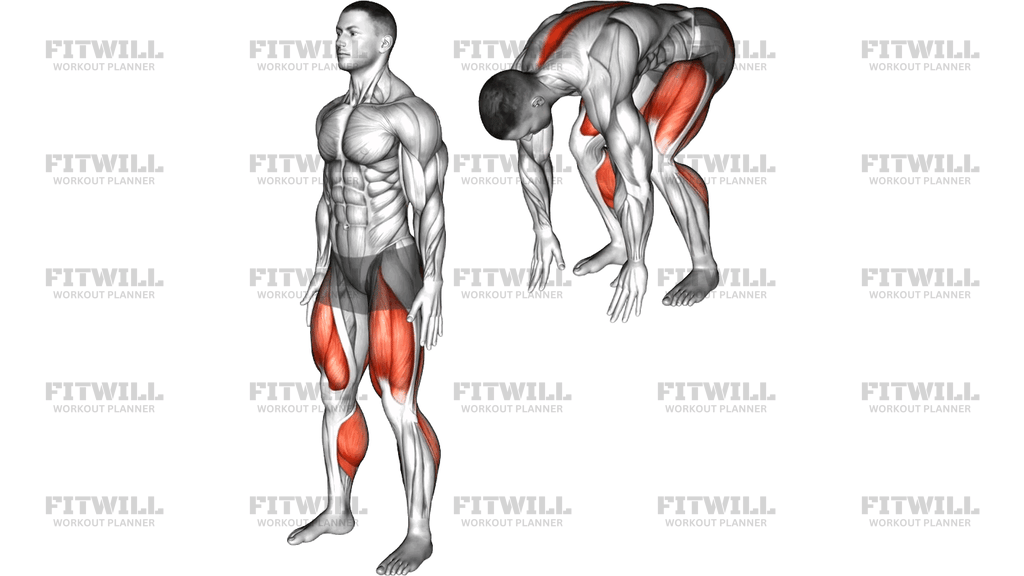
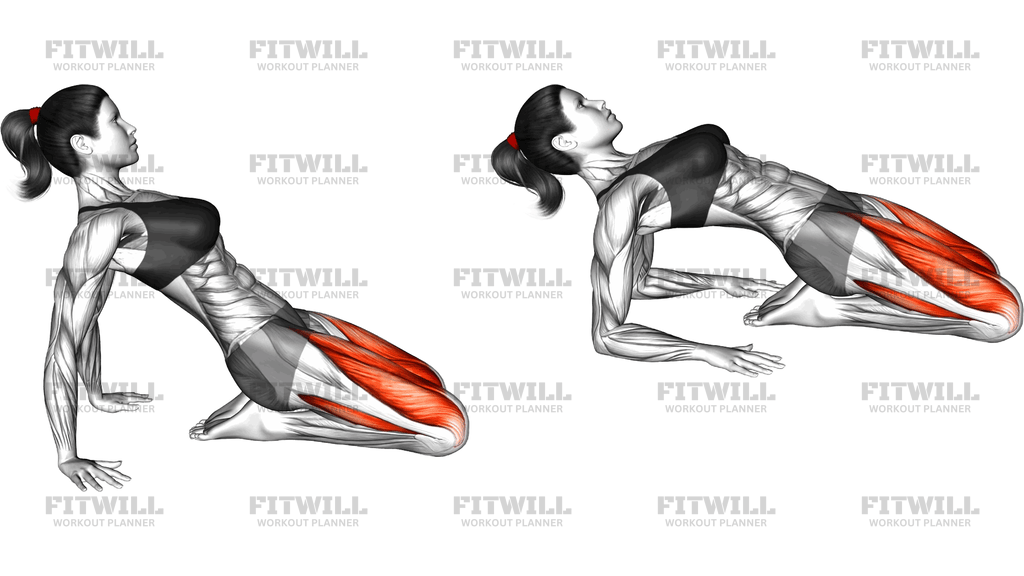
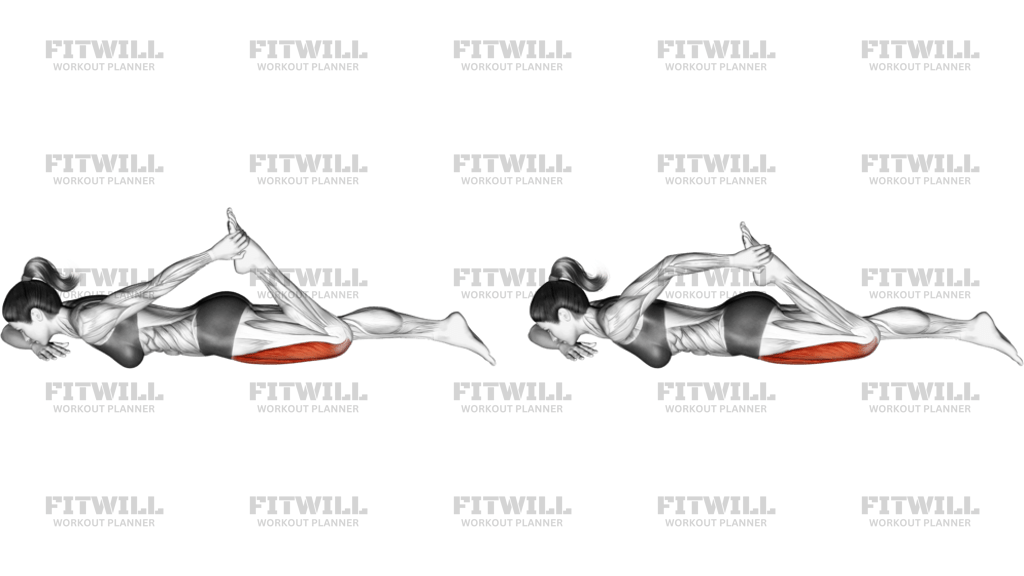
Runners Stretch (Version 2)
The Runners Stretch (Version 2) is a standing lunge-position stretch that lengthens the entire back line of the trailing leg while loading the front leg in a bent-knee position. You take a long split stance, bend the front knee over the ankle, keep the rear leg straight, and rest your hands on your front thigh for balance as you sink your hips forward and down. It gets its name because it reproduces the stride position a runner passes through with every step, making it one of the most practical lower-body stretches for anyone who logs miles or spends long hours sitting.
This version differs from the more upright runner's stretch variations by using a longer stance and a slight forward lean from the hips, which places a strong stretch through the hamstring and calf of the back leg rather than only the hip flexors. The straight rear leg with the heel reaching toward the floor is what separates it from a standard lunge stretch, where the back knee is often lowered to the ground. Because your hands can press into the front thigh, you get a stable, adjustable position that lets you dial the intensity up or down without any equipment.
The main targets are the quadriceps of the bent front leg, the hamstrings and calves of the straight rear leg, and the hip flexors of the trailing side as the hips shift forward. The glutes and stabilizing muscles around the front hip and ankle work isometrically to hold the split stance, which is part of why this stretch carries over so well to running, sprinting, and lunging movements. You are not just passively hanging out in a stretch; you are teaching the hips to tolerate a full stride range under control.
Setup matters more than most people realize. A stance that is too short turns this into an awkward squat and takes the stretch off the rear leg, while a stance so long that the front heel lifts shifts stress into the front knee. Aim for a split roughly two to three foot-lengths long, front shin vertical, and the rear foot angled slightly outward or kept square depending on what your hips allow. The hands on the front thigh should support a tall chest, not replace core control.
This stretch fits naturally into a pre-run warm-up when held briefly with gentle movement in and out of the position, or into a post-workout cool-down when held statically for twenty to forty seconds per side. It is especially useful for runners, sprinters, and lifters whose hips and calves tighten up from repetitive training, and for desk workers whose hip flexors adapt to shortened positions throughout the day. Move into it gradually, breathe steadily, and let the range improve over weeks rather than forcing depth in a single session.
For safety, keep the front knee tracking over or slightly behind the toes and never let it collapse inward. If you feel sharp pain in the front knee, lower back, or rear ankle, shorten the stance or reduce the forward lean until the sensation settles into a comfortable stretch.
[ Workout Log & Planner ]
Put your next workout in Fitwill
Keep your plan and training log ready when you are.


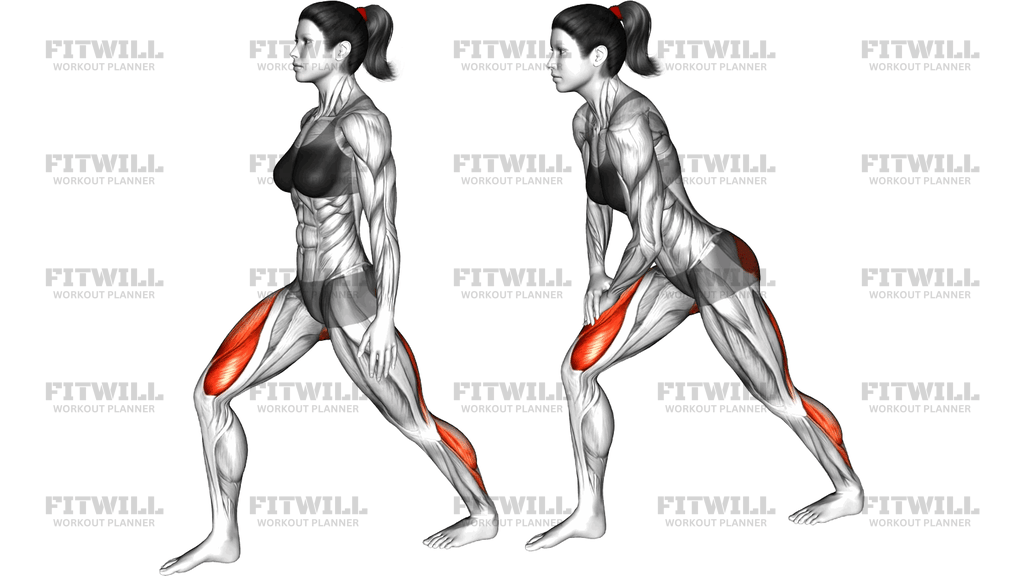
Instructions
- Stand tall with your feet together, then step one foot forward into a long split stance, roughly two to three of your own foot lengths, keeping both feet pointing generally ahead.
- Place both hands on the front thigh just above the knee, fingers relaxed, and keep a soft bend in the elbows so your arms can support your torso without locking out.
- Bend the front knee until it sits directly over the ankle, shin close to vertical, and slide the rear foot back until the rear leg is fully straight.
- Brace your abdominal muscles lightly and keep your chest lifted so your spine stays long rather than rounding forward.
- Push your hips forward and down toward the floor while pressing the rear heel toward the ground; if the heel will not reach, keep the rear foot flat and let the stretch sit in the calf and hamstring.
- Hold the end position where you feel a firm but tolerable stretch along the front thigh, rear hamstring, and rear calf, breathing slowly through your nose.
- To release, ease the hips back toward center, then push gently off the front foot and step forward to bring your feet together.
- Reset your stance and repeat on the other side, matching the time and depth on both legs.
- For a warm-up version, move in and out of the stretch with slow hip pulses for eight to ten reps per side instead of holding statically.
Tips & Tricks
- The most common fault is a stance that is too short, which turns the stretch into a front-knee-dominant squat. If you feel nothing in the rear leg, step the back foot farther away until the rear leg is genuinely straight.
- If your front heel lifts off the floor, your stance is too long for your current ankle mobility. Shorten it slightly rather than letting the knee travel past the toes with the heel floating.
- Avoid letting the front knee drift inward toward the big toe; actively think about spreading the floor with the front foot to keep the knee tracking over the second toe.
- Keep the weight in your hands light. Pressing hard into the front thigh lets you cheat the hips back and reduces the stretch you are trying to create.
- If the rear calf cramps, soften the ankle by lifting the heel an inch or bending the rear knee very slightly, then rebuild the stretch gradually.
- Keep your neck in line with your spine. Many people jut the chin forward during the lean, which tightens the upper traps and distracts from the lower-body stretch.
- Exhale as you sink deeper into each repetition; exhaling tends to drop the hips a little further than forcing the position with tension.
- On hard floor surfaces, place a folded towel under the rear forefoot or ball of the foot if the pressure becomes uncomfortable.
- Expect the two sides to feel different, often noticeably so. Match your time on each leg to the tighter side rather than to the looser one.
Frequently Asked Questions
Which muscles does the Runners Stretch (Version 2) target?
It primarily stretches the quadriceps of the bent front leg along with the hamstrings and calves of the straight rear leg, while the hip flexors of the trailing side lengthen as the hips shift forward. The glutes and ankle stabilizers work to hold the split stance.
How is Version 2 different from the standard Runners Stretch?
This version uses a longer split stance with the rear leg kept fully straight and the hands resting on the front thigh, which shifts more of the stretch into the rear hamstring and calf. More upright versions emphasize the hip flexors of the back leg instead.
Is the Runners Stretch (Version 2) better before or after a workout?
Use short, moving repetitions before running or leg training to prepare the hips, and longer static holds of twenty to forty seconds after training to work on range. Long static holds immediately before explosive efforts can temporarily reduce power output.
Why does my rear calf cramp during this stretch?
The straight rear leg with the heel pressing down loads the calf in a lengthened position, which can cramp if the muscle is tight or fatigued. Lift the heel slightly or bend the rear knee a touch, and build up the depth over several sessions.
My front knee hurts when I do this stretch. What should I change?
Check that the knee stays stacked over the ankle rather than past the toes and does not collapse inward. Shorten the stance and reduce the forward lean of the hips until the knee is comfortable, and stop if sharp pain persists.
How long should I hold the Runners Stretch (Version 2)?
For flexibility work, hold twenty to forty seconds per side and repeat two to three rounds. As a warm-up, use eight to ten slow pulses in and out of the position instead of a static hold.
Can beginners do this stretch safely?
Yes. Start with a shorter stance, keep the hands on the front thigh for support, and aim for a mild stretch rather than maximum depth. The position is self-limiting because your own balance and front-leg strength control the range.
What can I use instead if I cannot balance in the split stance?
Hold onto a wall, chair, or rack on the same side as the front leg, or perform the stretch with the rear knee lowered to a mat, which shortens the lever and reduces the demand on the rear hamstring and calf.
Should the rear foot point straight ahead or turn outward?
Start with the rear foot square to the front for a balanced calf and hamstring stretch. Turning the toes out slightly reduces calf tension and can help if the ankle feels pinched, so adjust based on where you want to feel it most.