Kneeling Quadriceps Stretch
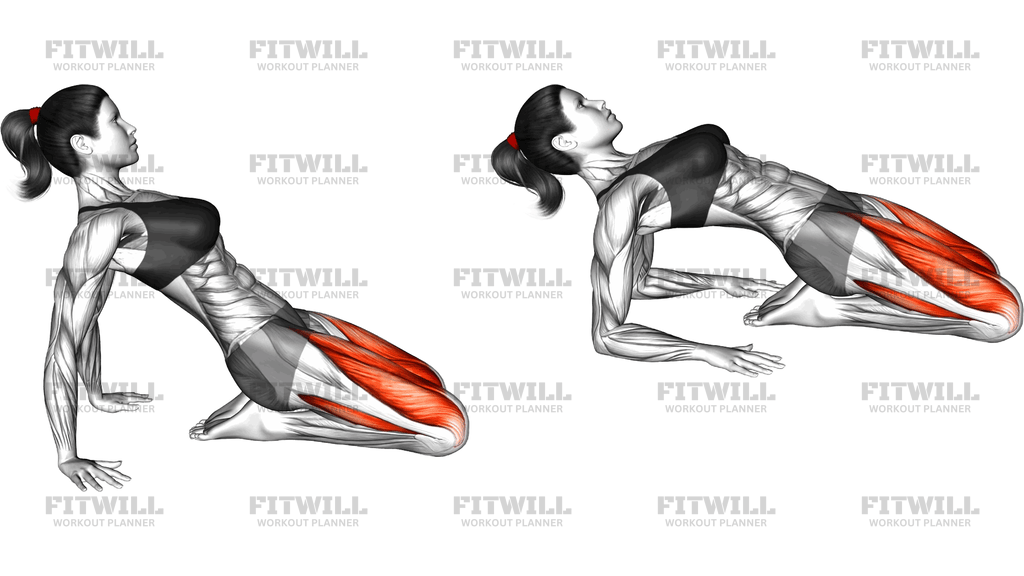
The Kneeling Quadriceps Stretch is a body weight flexibility drill performed from a tall kneeling position. You sit your glutes down toward your heels, place your hands on the floor behind you for support, and gradually lean your torso back while pressing your hips forward. This combination of hip extension and knee flexion lengthens the quadriceps group along the front of the thigh, with particular emphasis on the rectus femoris, the one quad muscle that crosses both the hip and the knee joint.
This stretch is especially valuable for runners, cyclists, and anyone who spends long hours sitting, because tight hip flexors and shortened quads tend to develop together when the hips are kept in a folded position all day. It is also a common inclusion in lower-body cooldowns after squatting, lunging, or sprinting sessions, and it appears frequently in yoga-style mobility work in variations of the camel or reclining hero position.
The setup matters because the intensity of the stretch is controlled entirely by how far you sit back and how far behind you place your hands. Keeping the hands close to your body limits the stretch, while walking them further back and lowering your torso toward the floor deepens it. Because the knees are fully bent in this position, you should ease into the range gradually rather than dropping straight into the end position.
To execute it well, kneel with your knees roughly hip-width apart and the tops of your feet flat on the floor. Sit back toward your heels, then place your palms on the floor behind your hips with your fingers pointing away from or slightly out to the sides. Brace your trunk lightly, push your hips forward and up, and allow your shoulders to travel back as your arms straighten. You should feel a firm but tolerable stretch across both thighs and the front of the hips, not sharp pain in the knees or lower back.
A folded mat under the knees makes a real difference in comfort, especially on hard floors, and lets you hold the position longer without distraction. Because this stretch places significant load on the knee joint at end range, anyone recovering from a knee injury should keep the torso more upright, reduce the depth, or use a standing quad stretch instead until the knee tolerates deeper flexion.
[ Workout Log & Planner ]
Put your next workout in Fitwill
Keep your plan and training log ready when you are.


Instructions
- Place an exercise mat on the floor and kneel onto both knees with them about hip-width apart, the tops of your feet flat against the mat and toes pointing straight back.
- Sit your glutes down toward your heels and rest your hands on the floor directly behind your hips, fingers pointing backward, so your arms can support part of your weight.
- Tighten your trunk lightly and tuck your tailbone slightly so your lower back is not arching to create the stretch.
- Press your hips forward and up while keeping your glutes heavy toward your heels, letting your arms straighten behind you.
- Continue leaning your torso back until you feel a strong stretch along the front of both thighs and hips, allowing your head to drop back only as far as stays comfortable.
- Hold the end position for 20 to 30 seconds, breathing slowly and deeply through your nose.
- To release, walk your hands back toward your hips, bring your torso upright, and let your hips settle back onto your heels.
- Rest for a few seconds, shake out your legs if needed, then repeat for a second hold if you are using this as part of a cooldown.
Tips & Tricks
- If the tops of your feet or ankles complain before your quads do, tuck a rolled towel under your shins or slightly separate your knees until the ankle tissues adapt.
- The most common mistake is arching the lower back instead of extending the hips, which fakes extra range; keep the tailbone tucked so the thigh does the stretching.
- Do not bounce at the end position. The deep knee bend makes the quads vulnerable to aggressive pulsing, so hold still and let the tissue lengthen passively.
- If one thigh feels significantly tighter, shift your weight subtly toward the looser side or work each leg with a slightly staggered kneel before returning to the symmetric version.
- Walking your hands further behind you intensifies the stretch; move them back only a few centimeters at a time so you can control the progression.
- Keep your shoulders soft and avoid sinking into the shoulder joints as your arms straighten; think of pushing the floor away rather than collapsing into your arms.
- If you feel pinching at the front of the hip, reduce how far you lean back and focus on squeezing the glutes to open the hip instead.
- Never force the knees flat to the floor or tolerate sharp knee pain; back off immediately and choose a less deep quad stretch if the sensation does not settle.
Frequently Asked Questions
Which muscles does the Kneeling Quadriceps Stretch target?
It primarily lengthens the quadriceps on the front of the thigh, with strong emphasis on the rectus femoris because the hip is extended at the same time the knee is bent. The hip flexors along the front of the hip also receive a substantial stretch.
Is the Kneeling Quadriceps Stretch safe for beginners?
Yes, as long as beginners keep their torso more upright and hands closer to their hips so the knee stays at a tolerable depth. Starting with shorter holds of 15 to 20 seconds is a sensible way to learn the position.
Why do I feel the Kneeling Quadriceps Stretch in my knees instead of my thighs?
Sharp knee sensations usually mean you are leaning back too far or your lower back is arching to compensate. Come up slightly, tuck your tailbone, cushion the knees with a mat, and rebuild the depth gradually.
How does the Kneeling Quadriceps Stretch differ from a standing quad stretch?
The kneeling version places both legs in the stretch at once and puts the knees into deep flexion, which reaches the quad group at a longer range than the standing variation. The standing stretch is easier to control and gentler on the knee joint.
When is the best time to use the Kneeling Quadriceps Stretch?
It works best as part of a cooldown after leg training, running, or cycling, when the muscles are warm. It can also be used in evening mobility sessions to offset long periods of sitting.
How long should I hold the Kneeling Quadriceps Stretch?
Hold the end position for 20 to 30 seconds and repeat for one to three sets. For long-term flexibility improvements, consistency across weeks matters more than extending any single hold.
Can I do the Kneeling Quadriceps Stretch every day?
Yes, gentle daily stretching of the quads is generally well tolerated if you stay within a comfortable range. Skip the deep version on days when the knees feel irritated and use a lighter variation instead.
What can I use instead of the Kneeling Quadriceps Stretch if kneeling hurts my knees?
A side-lying or standing quad stretch with a hand or strap pulling the ankle toward the glutes targets the same muscles without loading the knees. A prone quad stretch on a bench is another option.
Should my knees stay together or apart in the Kneeling Quadriceps Stretch?
Keeping them about hip-width apart is the neutral choice and usually the most comfortable. Bringing the knees wider reduces intensity slightly, while squeezing them together deepens the stretch on the inner thigh and should be added only if the basic position feels easy.
Why does my lower back take over during the Kneeling Quadriceps Stretch?
When the hips and quads are tight, the torso tends to extend through the lumbar spine instead of the hip joint. Brace the trunk lightly, squeeze the glutes, and shorten the range so the stretch stays in the thighs.