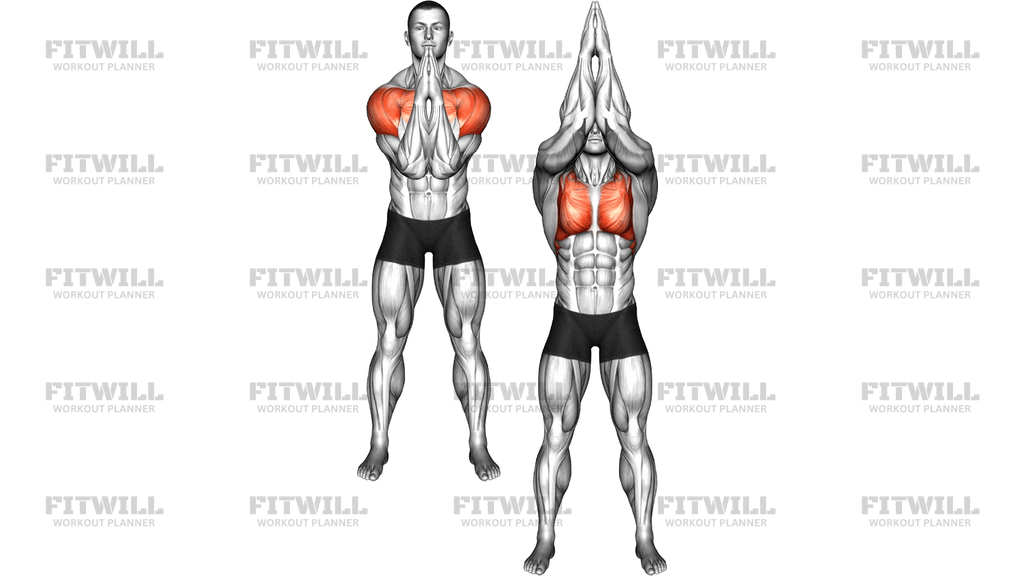
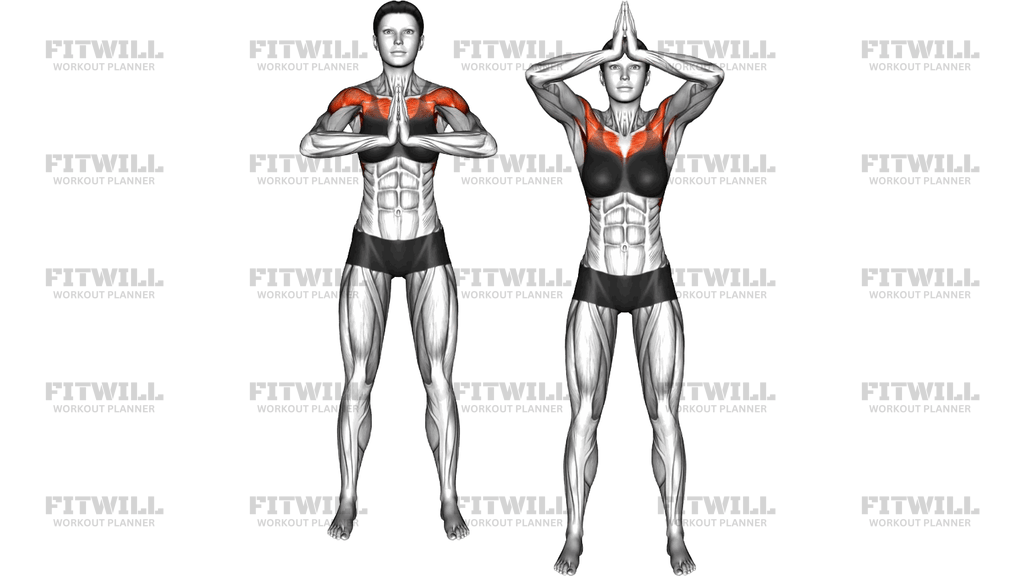
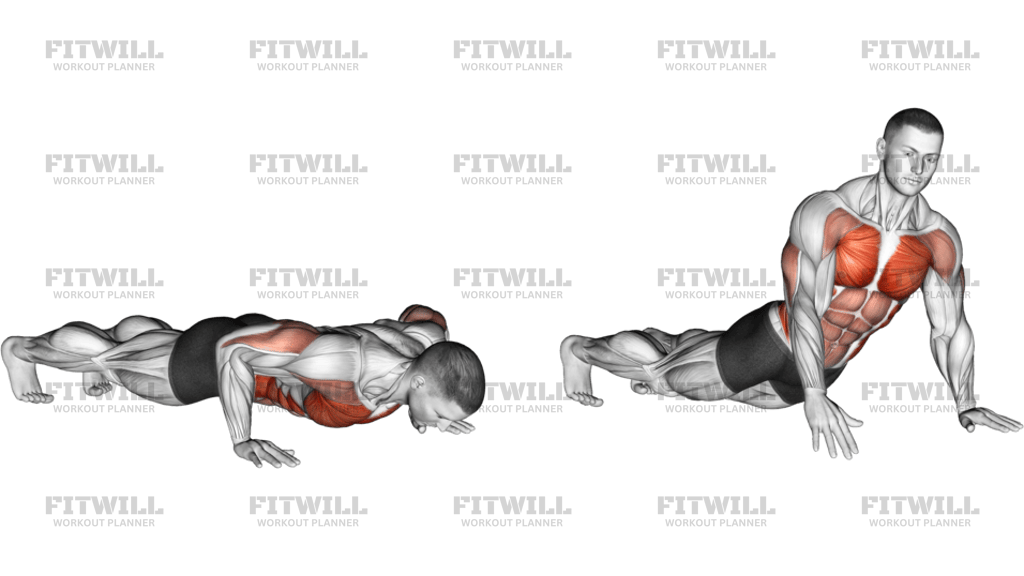
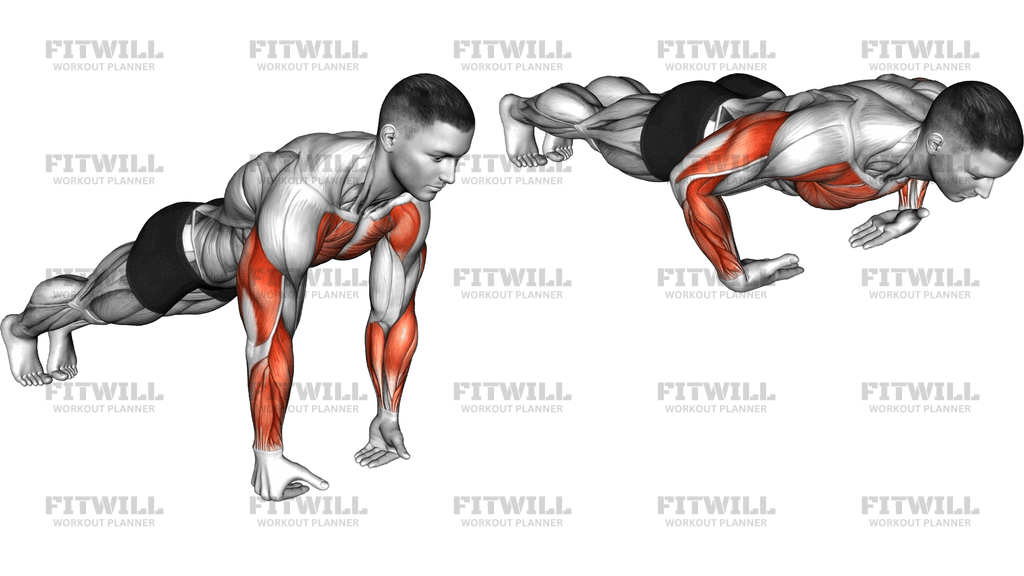
Kneeling Backwards Reach
The Kneeling Backwards Reach is a body-weight mobility drill performed from an upright tall-kneeling position, where you start with your arms rounded in front of your chest and then sweep them out wide and behind you as your chest lifts and your shoulder blades draw together. The movement opens the front of the torso — mainly the chest and front shoulders — while the kneeling base keeps your hips stacked and your torso honest, so you cannot cheat the stretch by arching your lower back or hiking your ribs.
Because you kneel rather than stand, the exercise removes most of the balance demands and locks the pelvis into a tall, neutral position. That makes it easier to feel the stretch exactly where it is intended: across the pectorals, through the front of the shoulders, and along the front of the abs as the chest expands. At the same time, the muscles between the shoulder blades — the rhomboids and mid traps — work isometrically to pull the arms back, and the quads and hip flexors on the kneeling side stay active to hold the posture.
This drill is especially useful for anyone who spends long hours sitting, typing, or driving. Those habits pull the shoulders forward and shorten the chest muscles, and the Kneeling Backwards Reach directly reverses that folded position. It also works well as a warm-up before pressing exercises like bench presses or push-ups, as a reset between sets of heavy pulling work, or as part of a cool-down focused on restoring an open, upright posture.
Setup matters more than most people expect. Kneel with your knees roughly hip-width apart, the tops of your feet on the floor, and your torso tall enough that your ears, shoulders, and hips line up. If your knees are sensitive, place a folded mat or towel under them. Starting with the arms in front of the chest gives you a reference point — the reach backward should feel like unwrapping from that rounded position, not like throwing the arms behind you.
To execute it well, move slowly and breathe steadily. Sweep the arms out to the sides at about shoulder height, then let them travel behind your body as far as your shoulders allow without your ribs flaring or your lower back arching. Squeeze the shoulder blades gently together, hold the open position for a beat, then bring the arms back to the front with the same control. Two to three sets of eight to ten slow repetitions, or a few 20- to 30-second holds, is a practical starting dose.
The most common error is chasing range. If the hands race behind you while the ribs jut forward, you are stretching the lower back instead of opening the chest. Keep the movement smaller, keep the abs lightly braced, and let the range grow over weeks rather than in a single session. If kneeling bothers your knees or the position feels unstable, the same arm pattern can be done standing or seated, though you will lose some of the postural feedback the kneeling base provides.
[ Workout Log & Planner ]
Put your next workout in Fitwill
Keep your plan and training log ready when you are.


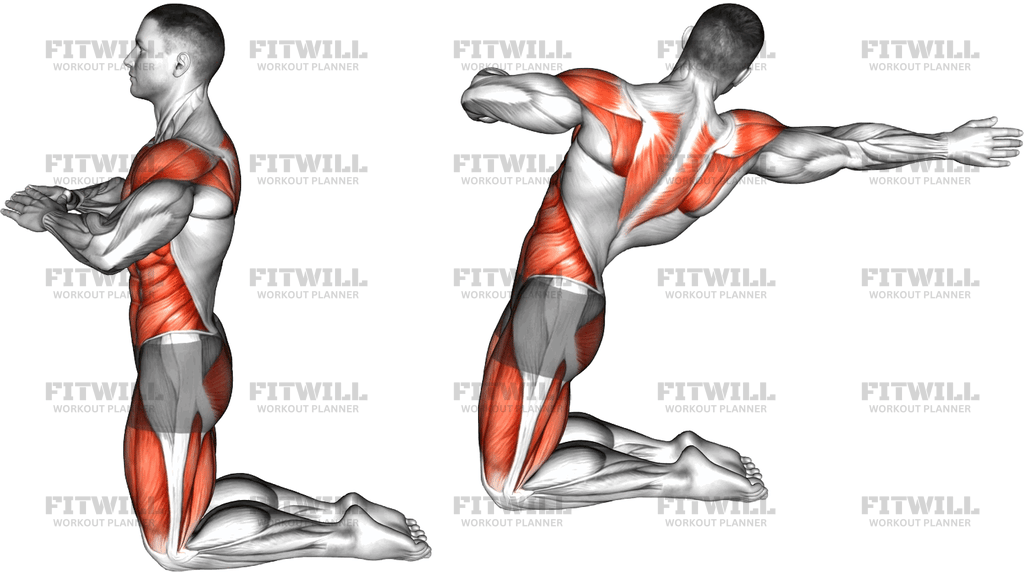
Instructions
- Kneel on the floor with your knees about hip-width apart and the tops of your feet flat on the mat behind you, placing a folded mat or towel under your knees if the floor is hard.
- Sit tall so your hips stack directly over your knees and your ears, shoulders, and hips line up in one vertical line; let your hands rest on your thighs briefly to find this position.
- Bring both arms up and round them in front of your chest with your hands close together, as if hugging a large ball, and let your upper back round slightly to set the starting position.
- Lightly brace your abs and squeeze your glutes to lock your pelvis in neutral so your lower back cannot take over the movement.
- Inhale, then sweep both arms out to the sides at roughly shoulder height, keeping them mostly straight with soft elbows.
- Continue the arc backward until you feel a stretch across your chest and the front of your shoulders, drawing your shoulder blades toward each other without letting your ribs push forward.
- Pause in the open position for one to two seconds, keeping your neck relaxed and your gaze forward.
- Exhale and bring your arms back around to the rounded position in front of your chest under control, reversing the exact path you used to open.
- Complete 8-10 slow, smooth repetitions, or hold the open position for 20-30 seconds if you prefer a static stretch, then lower your arms and stand up or shift your weight off your knees to reset.
Tips & Tricks
- If your ribs flare forward as your arms go back, you have gone past your true shoulder range — reduce the distance and keep a light brace in your abs so the stretch stays in the chest.
- Keep the elbows just short of locked; completely straight arms can pinch the front of the shoulder and shift tension away from the pectorals.
- Do not let your hips drift backward toward your heels as you reach — staying tall over your knees is what keeps the front of the torso lengthened.
- Think about pushing your sternum up and forward rather than forcing your hands back; the arms are the outcome of the chest opening, not the cause.
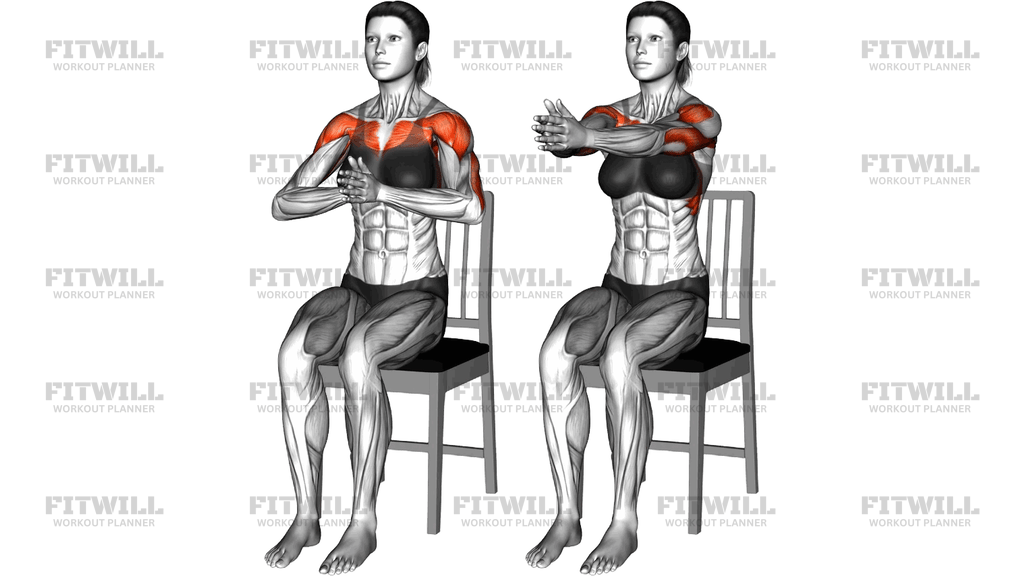
- If your knees complain in the tall-kneeling position, pad them generously or perform the same arm sweep seated on a bench with your feet flat.
- Move at the speed of a slow breath — rushing the sweep turns this into a momentum-driven swing and steals most of the benefit.
- Stop the arm path at shoulder height or slightly below; reaching toward the floor behind you usually means the shoulders have rolled forward and the stretch quality drops.
- Use this drill before bench pressing, push-ups, or overhead work to restore shoulder range, and again after long sitting sessions as a posture reset.
- Expect a mild stretch, not pain — sharp discomfort at the front of the shoulder means back off the range immediately.
Frequently Asked Questions
What muscles does the Kneeling Backwards Reach target?
It primarily stretches the chest and the front of the shoulders, with the abs lengthening as the chest lifts. The muscles between the shoulder blades, such as the rhomboids and mid traps, work to pull the arms back.
Why is the Kneeling Backwards Reach done from a kneeling position instead of standing?
Kneeling removes balance demands and pins the hips under the shoulders, making it much harder to cheat with an arched lower back. The stretch therefore lands on the chest and front shoulders instead of the spine.
Is the Kneeling Backwards Reach suitable for beginners?
Yes, it requires no equipment and the range is self-limited by your own shoulders. Beginners should simply start with a smaller backward sweep and focus on staying tall through the torso.
Should I hold the end position or keep moving?
Both options work. Moving through 8-10 slow repetitions suits a warm-up, while holding the open position for 20-30 seconds works better as a cool-down or posture break.
Why do my lower back and ribs take over when my arms go behind me?
That is the most common fault — the lumbar spine extends to fake extra shoulder range. Brace your abs lightly, squeeze your glutes, and shorten the reach until the movement comes only from the shoulders.
Can I do the Kneeling Backwards Reach if kneeling hurts my knees?
Place a folded mat or towel under your knees, or perform the same arm sweep seated upright on a bench. The key is keeping the torso tall so the chest still gets the stretch.
How is this different from a standing chest stretch in a doorway?
A doorway stretch pins the arms and is a static hold, while the Kneeling Backwards Reach is an active sweep that trains the shoulder blades to retract through a path. The kneeling base also adds a postural challenge for the hips and core.
How often should I perform the Kneeling Backwards Reach?
It is gentle enough for daily use, especially if you sit for long periods. Two to three sets of 8-10 slow reps before upper-body training, or as a midday reset, is a practical routine.
Is a sharp pinch at the front of the shoulder during the reach a problem?
A mild stretch is expected, but a pinching sensation is a signal to stop and adjust. Soften the elbows, lower the arm path to shoulder height, and reduce how far the hands travel behind you.