Bodyweight Bench Squat
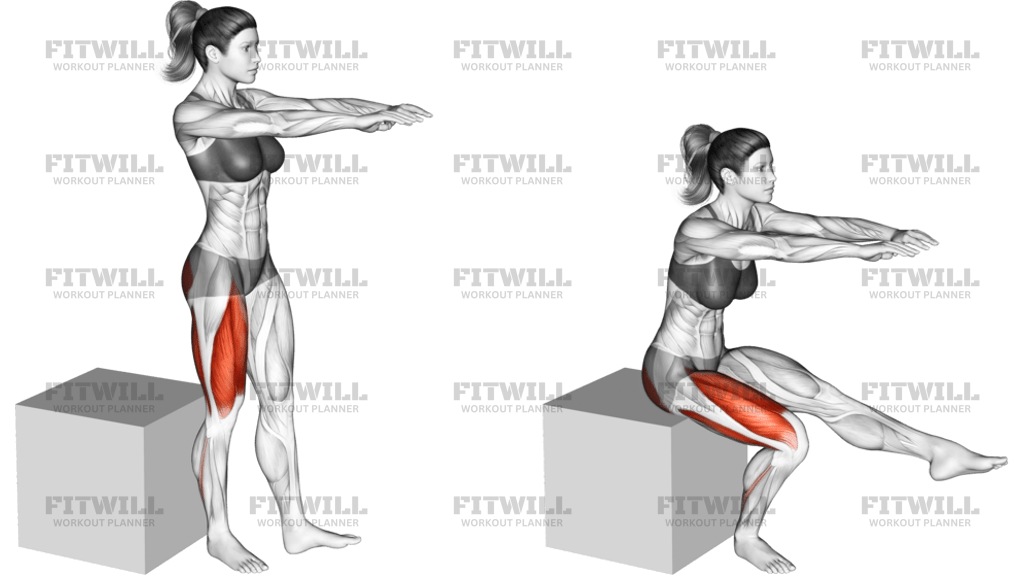
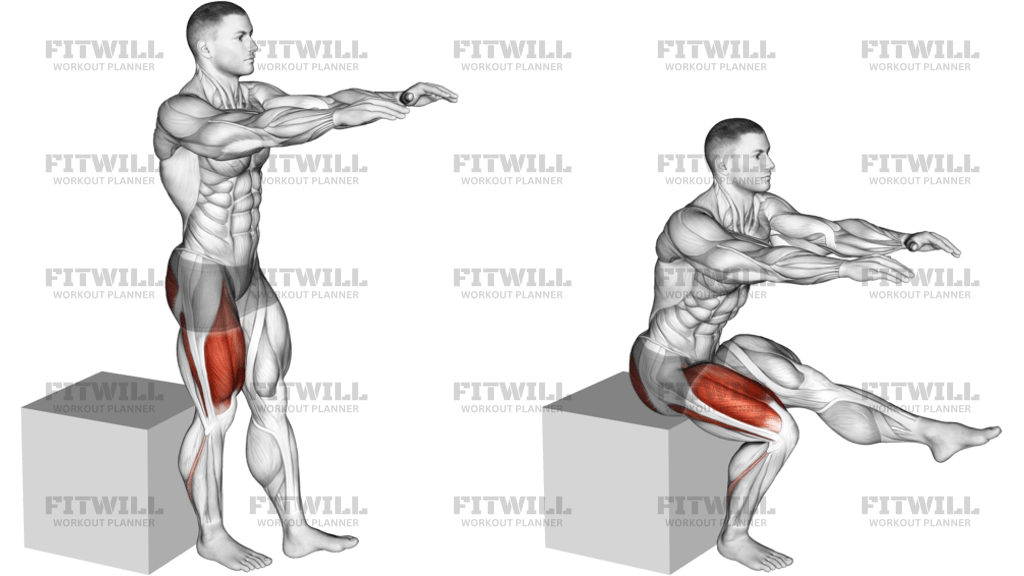
Bodyweight Bench Squat is a bodyweight squat variation performed to a bench or box behind you. The bench gives you a clear depth target so each rep can be controlled, repeated, and stopped before form breaks down. It is useful when you want a squat pattern that teaches hip hinge, knee tracking, and balance without adding external load.
The exercise mainly trains the thighs and glutes, with the core and upper back working to keep the torso upright and steady. Because you lower until you lightly contact the bench, the movement is easy to measure and easier to standardize than a free squat. That makes it a practical option for beginners, warm-ups, technique work, and lower-body conditioning when you want clean reps instead of maximal load.
Setup matters more than speed here. Stand in front of the bench with your feet about hip- to shoulder-width apart, toes slightly turned out, and enough space to sit back without falling onto the pad. Keep your chest open, ribs stacked over the pelvis, and your weight balanced through the midfoot and heels. The descent should be controlled enough that you could pause on the bench without collapsing backward.
On the way down, send the hips back first and let the knees bend as the thighs lower toward the bench. Keep the knees tracking in line with the toes instead of caving inward. Touch the bench lightly, then stand back up by driving through the floor and squeezing the glutes as you return to full standing. If the bench is too high, the squat will be shallow; if it is too low, the bottom position may force the pelvis to tuck or the lower back to round.
Use this movement when you want a squat pattern that is joint-friendly, easy to coach, and simple to progress by changing stance width, bench height, or tempo. It works well as an entry point to squat training or as a controlled accessory on leg days. The best reps look the same from start to finish: stable feet, quiet torso, light bench contact, and a smooth stand without bouncing or rocking.
Fitwill
Log Workouts, Track Progress & Build Strength.
Achieve more with Fitwill: explore over 9600 exercises with images and videos, access built-in and custom workouts, perfect for both gym and home sessions, and see real results.
Start your journey. Download today!




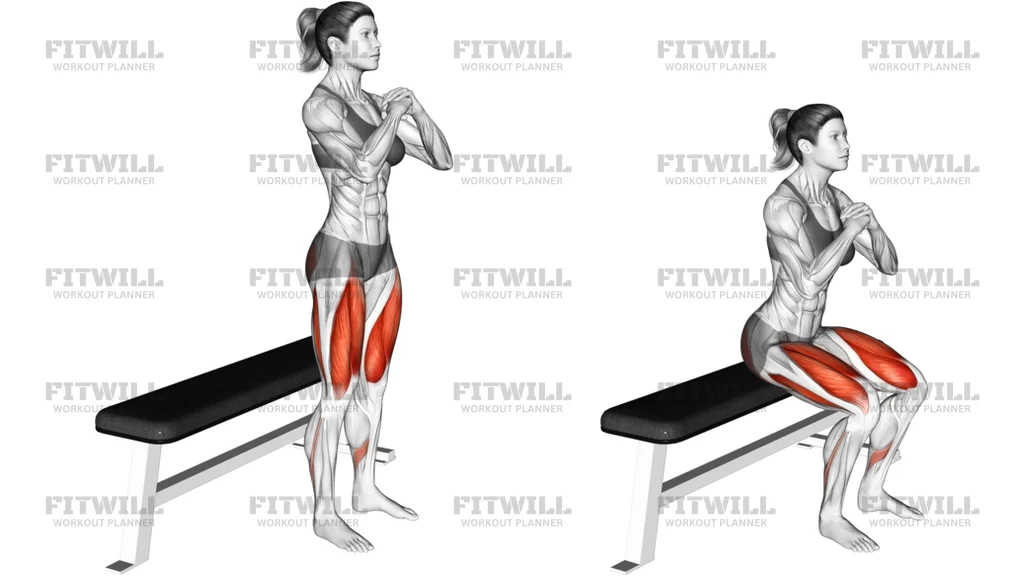
Instructions
- Place a bench or box behind you and stand facing away from it with your feet about hip- to shoulder-width apart.
- Turn your toes slightly out and stand far enough forward that you can sit back to the bench without losing balance.
- Lift your chest, brace your midsection, and keep your weight centered over your midfoot and heels.
- Push your hips back and bend your knees to lower under control toward the bench.
- Keep your knees tracking in the same direction as your toes as you descend.
- Touch the bench lightly with your glutes without relaxing onto it or bouncing off it.
- Drive through your feet and stand back up by extending the hips and knees at the same time.
- Finish tall with the glutes squeezed and the torso stacked before starting the next rep.
Tips & Tricks
- Choose a bench height that lets you reach the target depth without tucking your pelvis under at the bottom.
- Keep the descent slow enough that the tap on the bench is controlled, not a drop.
- Let the shins tilt forward naturally, but do not let the knees collapse inward as you stand.
- Think about sitting back to the bench rather than falling straight down onto it.
- Keep your heels down if you want the thighs and glutes to do most of the work.
- If the torso leans forward too much, move the feet slightly farther from the bench and reset your stance.
- Exhale as you drive up, then reset your brace before the next rep.
- Stop the set if you start rocking, bouncing, or missing the same bench touch from rep to rep.
Frequently Asked Questions
What muscles does Bodyweight Bench Squat work?
It mainly trains the thighs and glutes, with the core and upper back helping you stay balanced and upright.
Why use a bench for this squat instead of free squatting?
The bench gives you a clear depth target, which makes it easier to learn control, keep reps consistent, and avoid sinking too deep.
How should my feet be positioned before I sit back to the bench?
Stand about hip- to shoulder-width apart with toes slightly turned out so you can lower with stable knees and balanced pressure through the feet.
Should I sit fully on the bench at the bottom?
No. Lightly touch the bench and stand back up. Relaxing onto it turns the squat into a sit-down and can break tension and rhythm.
Can beginners use Bodyweight Bench Squat?
Yes. It is one of the easiest squat variations to learn because the bench controls depth and gives a clear stopping point.
What is the most common mistake with this movement?
The usual error is dropping onto the bench or letting the knees cave inward instead of controlling the descent and the stand.
How low should the bench be?
Use a height that lets you reach a comfortable squat depth while keeping your lower back neutral and your heels planted.
How can I make this exercise harder without adding weight?
Use a slower lowering phase, pause briefly on the bench, or choose a lower bench only if you can keep the same clean body position.