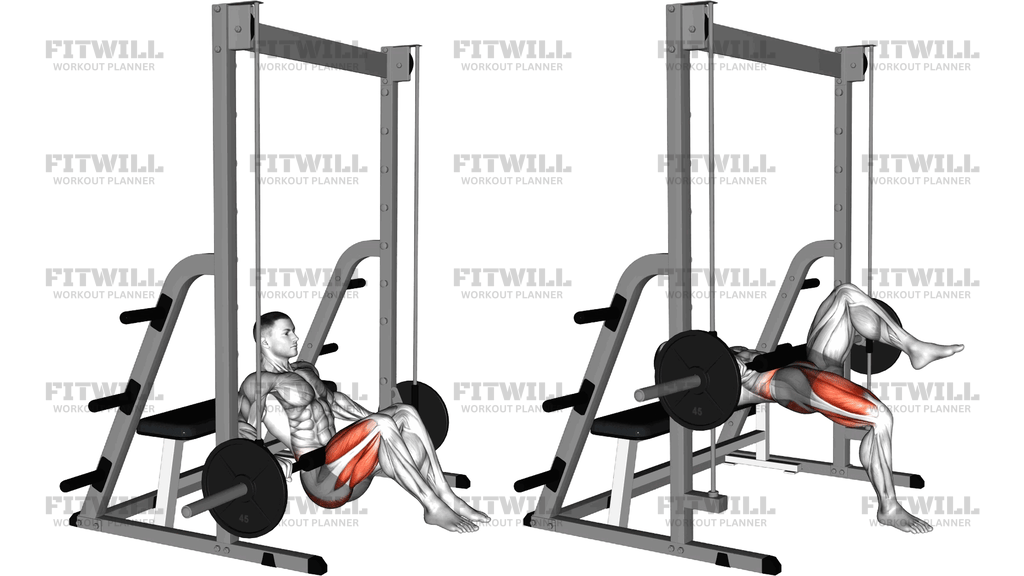
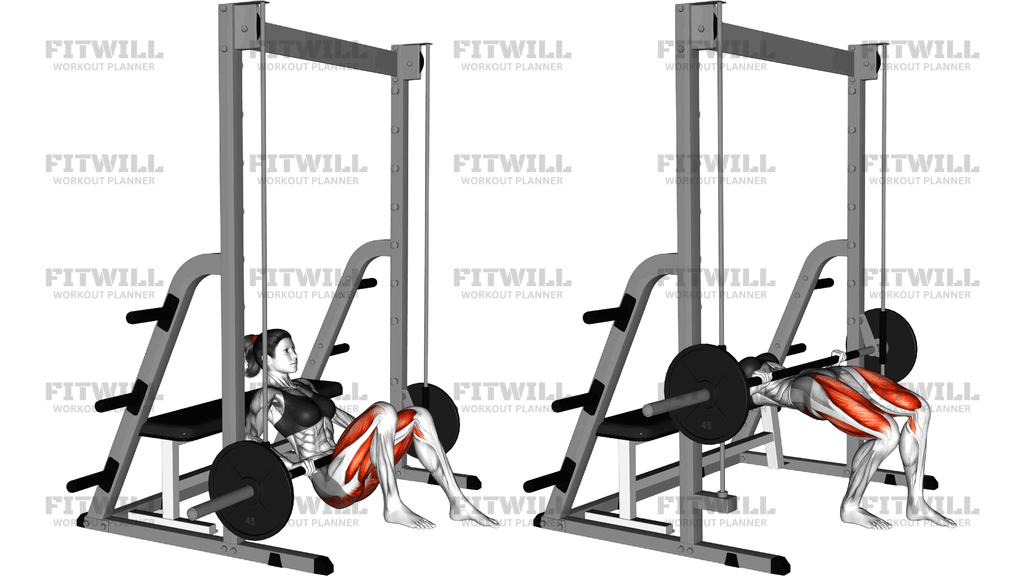
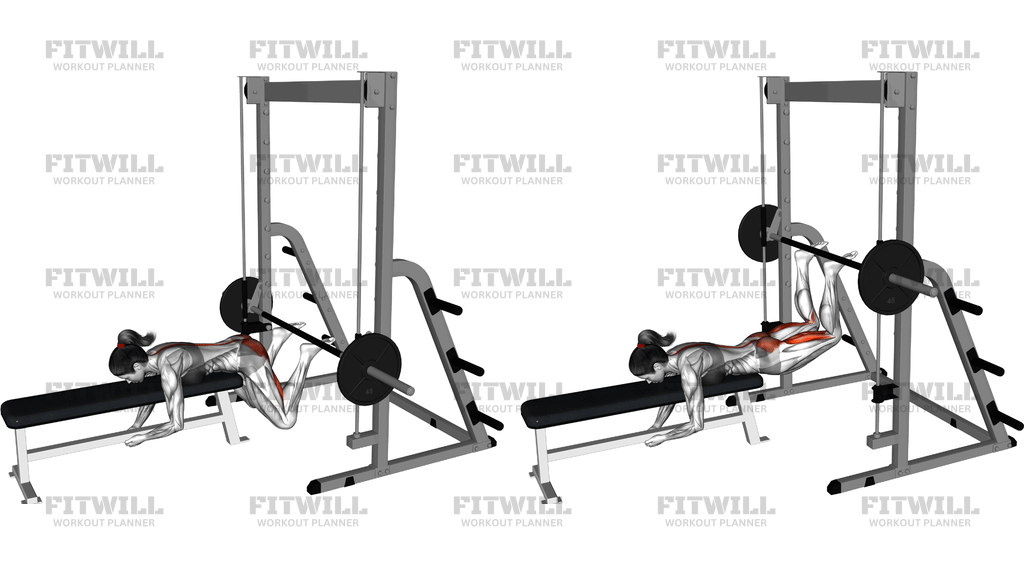
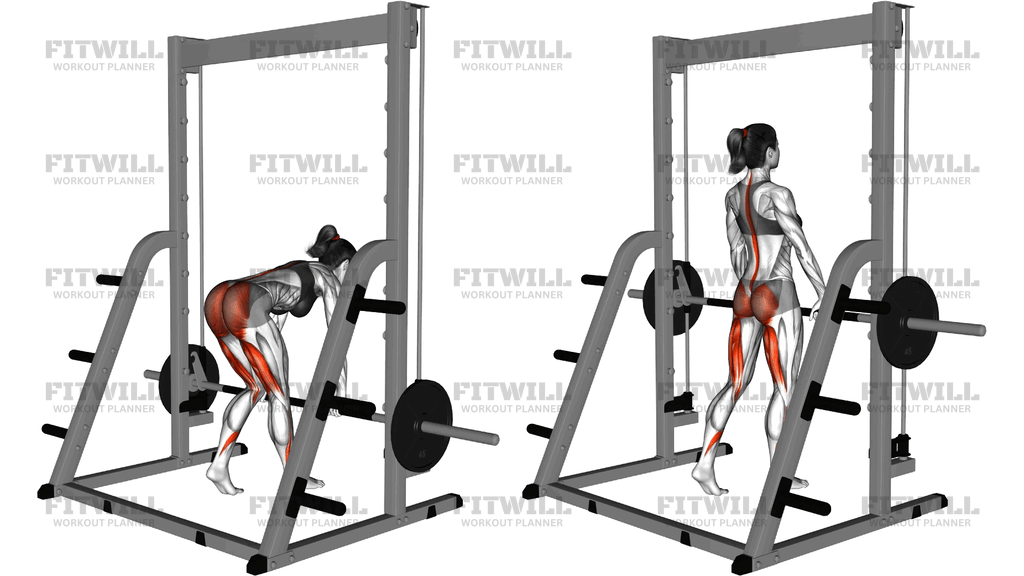
Smith Sumo Deadlift
Smith Sumo Deadlift is a lower-body hinge performed on a Smith machine with a wide sumo stance, toes turned out, and the bar traveling in the machine's fixed vertical path. The setup changes the feel of the deadlift immediately: because the bar stays guided, you can focus on foot pressure, hip position, and a strong lockout instead of balancing the bar in free space. That makes this variation especially useful when you want targeted work for the glutes, adductors, hamstrings, and hip extensors with a very repeatable path.
The wide stance shifts emphasis away from a narrow deadlift pattern and toward the inner thighs and glutes, while the torso stays more upright than in many conventional deadlift styles. The hands grip the bar inside the legs, the knees track out over the toes, and the hips start low enough to feel tension without collapsing into the bottom. The goal is not to yank the bar off the floor. The goal is to create tension before the lift, then drive the floor apart and stand tall until the hips and knees finish together.
Because the Smith bar does not drift forward or backward, the exercise rewards a consistent foot setup and punish sloppy alignment. If the feet are too close, the knees can crowd the bar. If the stance is too wide, the pelvis may tuck or the torso may fold. A good rep begins with the bar close to the shins, the spine long, the chest open, and the lats engaged so the bar stays under control from the first inch of the pull through the lockout.
At the top, squeeze the glutes and stand fully upright without leaning back. The bar should finish close to the body, not drifting in front of it. On the way down, push the hips back, let the knees bend in a controlled way, and lower the bar along the same line until the plates return to the floor or the chosen stopping point. Smooth lowering matters here because it teaches the same hinge pattern on every rep and keeps the tension where the exercise is meant to work.
Use Smith Sumo Deadlift when you want a loaded lower-body strength movement that is easier to repeat than a barbell deadlift and often simpler to learn for controlled hypertrophy work. It fits well in leg sessions, posterior-chain blocks, or accessory work after your main lift. Keep the load honest, keep the stance consistent, and stop the set if your hips shoot up faster than your chest or the bar starts feeling disconnected from your center of mass.
[ Workout Log & Planner ]
Put your next workout in Fitwill
Keep your plan and training log ready when you are.


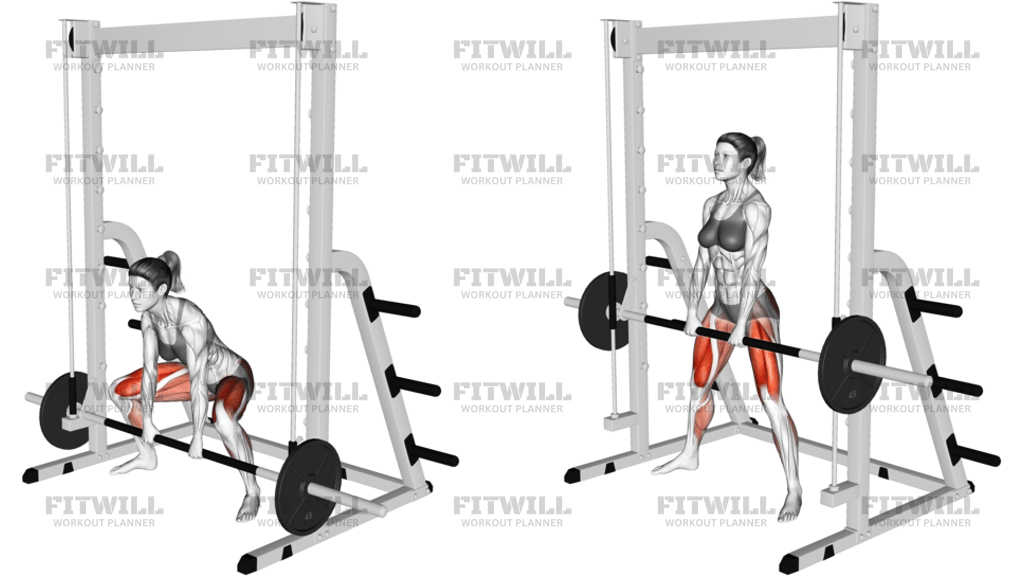
Instructions
- Set the Smith bar at mid-shin height, step under it with a wide sumo stance, and turn your toes out so your knees can track in line with them.
- Grab the bar with your hands inside your legs, set your shins close to the bar, and keep the bar over the midfoot before you lift.
- Sink your hips until you feel your inner thighs and glutes load, then brace your trunk and keep your chest open.
- Drive the floor apart and push through your whole foot as you stand, letting the bar travel straight up the Smith rails.
- Keep the bar close to your body and let the knees extend as the hips rise, finishing with the hips and knees together.
- Squeeze the glutes at the top without leaning back or drifting the bar forward.
- Lower the bar by hinging the hips back first, then bending the knees as the bar returns along the same vertical path.
- Reset your stance and breathing at the bottom before the next rep if the bar settles on the stops or the floor.
- Repeat for the planned reps with the same foot position and bar path on every repetition.
Tips & Tricks
- A stance that is too narrow turns this into a cramped deadlift; start wide enough that your hands can hang between your thighs without the knees collapsing inward.
- Turn the toes out enough that the knees can open with the feet instead of caving toward the bar.
- Keep the bar close to the shins before you pull so the Smith rails do not force the load away from your center of mass.
- Think about pushing the floor apart rather than simply pulling up; that cue helps the glutes and adductors stay active through the first half of the lift.
- Do not finish by leaning back. The lockout should be a tall stand with the ribs stacked over the pelvis.
- If you feel the lower back taking over, lower the load and start each rep with a little more hip bend and a tighter brace.
- Use a controlled eccentric because dropping fast can yank the hips out of position and make the next rep harder to set up.
- A small pause at the bottom can help you keep the same stance and bar position on every rep.
- Stop the set when the bar starts drifting forward or your knees no longer track over the toes.
Frequently Asked Questions
What muscles does the Smith sumo deadlift work?
It primarily trains the glutes, adductors, hamstrings, and other hip extensors, with the core and upper back helping you keep position.
Why use a Smith machine for a sumo deadlift?
The fixed bar path makes the lift easier to repeat and lets you focus on stance, hip drive, and lockout instead of bar balance.
How wide should my feet be on the bar?
Start wider than shoulder width, then adjust until your hands can hang inside your legs and your knees can track over your toes without crowding the bar.
Where should the bar sit at the start?
Set the bar close to your shins with your weight balanced over the midfoot so the first pull stays vertical and controlled.
Should I feel this more in my hips or lower back?
You should feel the hips and inner thighs doing most of the work. If the lower back is dominating, the stance or brace is usually off.
Can beginners learn this exercise safely?
Yes, as long as the load is light enough to keep the bar close, the knees tracking out, and the spine neutral through the whole set.
What is the biggest form mistake with this version?
Letting the knees cave in or finishing by leaning back are two common problems because they break the sumo hip path and shift stress away from the glutes.
How is this different from a regular deadlift?
The wide stance and turned-out feet bias the hips and inner thighs more, while the Smith rails keep the bar on a fixed path.