Cable Seated Foot Inversion
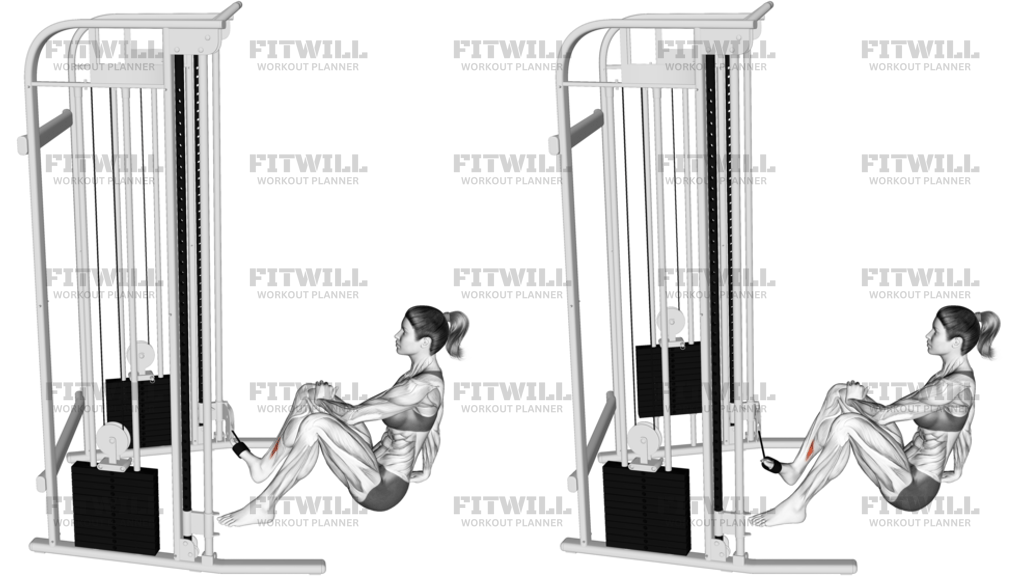
Cable Seated Foot Inversion is a seated ankle exercise that uses a low cable and a handle or strap attachment to train inward rotation of the foot against resistance. The movement is small, but it is very specific: you are not trying to swing the whole leg or twist the torso, you are turning the foot from the ankle while the shin and thigh stay quiet. That makes it useful for building ankle control, improving lower-leg stability, and giving the invertors a clean, isolated load.
The setup matters because the cable should pull from the outside of the working foot so the resistance tries to pull the foot back outward. Sit close enough to the tower that the cable stays taut in the start position, then bend the knee and keep the working leg relaxed while the heel stays near the floor. The non-working leg can be bent for balance, and the torso should stay tall instead of leaning away from the stack. If the line of pull is wrong, the exercise stops feeling like foot inversion and turns into a messy hip or knee movement.
A good repetition starts from a neutral foot position. From there, rotate the sole inward against the cable, as if you were trying to bring the big-toe side of the foot closer to the opposite leg. The motion should come from the ankle with the heel and lower leg staying as still as possible. Squeeze briefly at the end of the range, then let the foot return slowly until the cable has pulled it back to neutral. Breathe smoothly and keep the rep tidy rather than chasing a larger range than your ankle can own.
This movement is usually best used as accessory work, rehab-style control work, or a low-load finisher for the lower leg. It is not about brute force; it is about precision and repeatability. Light to moderate resistance is usually enough to make the invertors work hard, because the range is short and the muscles are small. If the pelvis rocks, the knee follows the foot, or the cable jerks the ankle off line, the load is too heavy or the setup is off.
Cable Seated Foot Inversion is also useful when you want to compare side to side or build tolerance after long periods of standing, running, or court work. The exercise is most effective when the ankle can move freely and pain remains low. If the foot cramps, the shin twists, or the movement becomes hard to isolate, shorten the range and reduce the stack until the ankle can turn cleanly through each rep.
[ Workout Log & Planner ]
Put your next workout in Fitwill
Keep your plan and training log ready when you are.


Instructions
- Set the cable pulley at floor height and attach the handle or ankle strap to the outside of the working foot so the cable can pull the foot outward.
- Sit on the floor beside the tower with the working knee bent, the heel near the ground, and the cable already taut in the neutral starting position.
- Place the non-working leg out of the way and sit tall so your torso does not lean away from the stack.
- Keep the shin mostly still and rotate the sole of the foot inward from the ankle.
- Move only as far as you can without the knee rolling, the hip shifting, or the heel lifting.
- Pause for a moment at the end of the inward turn and feel the inside of the lower leg take the load.
- Lower the foot back to neutral slowly and let the cable guide the return without snapping it open.
- Repeat for the planned reps, then relax the foot and reset before the next set.
Tips & Tricks
- Keep the cable line slightly across the outside of the forefoot so the resistance challenges true inversion instead of pulling straight backward.
- Use a very light stack first; this movement becomes sloppy fast if the weight is heavy enough to rotate the whole leg.
- If the knee starts drifting inward, slide farther from the tower or reduce the load until the ankle does the work alone.
- Think about turning the sole inward rather than curling the toes, which helps keep the motion at the ankle.
- A short pause at peak inversion makes the small invertor muscles work harder without needing more weight.
- Do not let the heel pop up or the arch collapse; both usually mean the foot is compensating for a load that is too high.
- Match the return speed to the pull of the stack so the eccentric phase stays controlled and centered.
- Stop the set if you feel sharp pain on the outside of the ankle or a cramp that changes the foot position.
Frequently Asked Questions
What does Cable Seated Foot Inversion train?
It trains the muscles that turn the foot inward at the ankle and helps build control in the lower leg and foot.
Where should the cable attach on this exercise?
The cable should pull from the outside of the working foot so the stack resists the inward turn.
Should my knee move during the rep?
No. The knee should stay mostly quiet while the ankle turns the foot inward.
Can I do this if I am a beginner?
Yes. It is usually beginner-friendly because the load can be kept very light and the range is easy to control.
What is the most common mistake?
The biggest mistake is twisting the whole leg or hip instead of isolating the foot at the ankle.
What should I feel working?
You should feel the inside and lower side of the lower leg doing the work, not the hip or low back.
How heavy should the cable be?
Use the lightest load that still makes the last few reps feel deliberate and controlled.
Can I use this for rehab or ankle prep?
Often yes, because the movement is small and controlled, but pain should stay low and a clinician's guidance should be followed if you are rehabbing an injury.