Kneeling Single Hamstring Curl
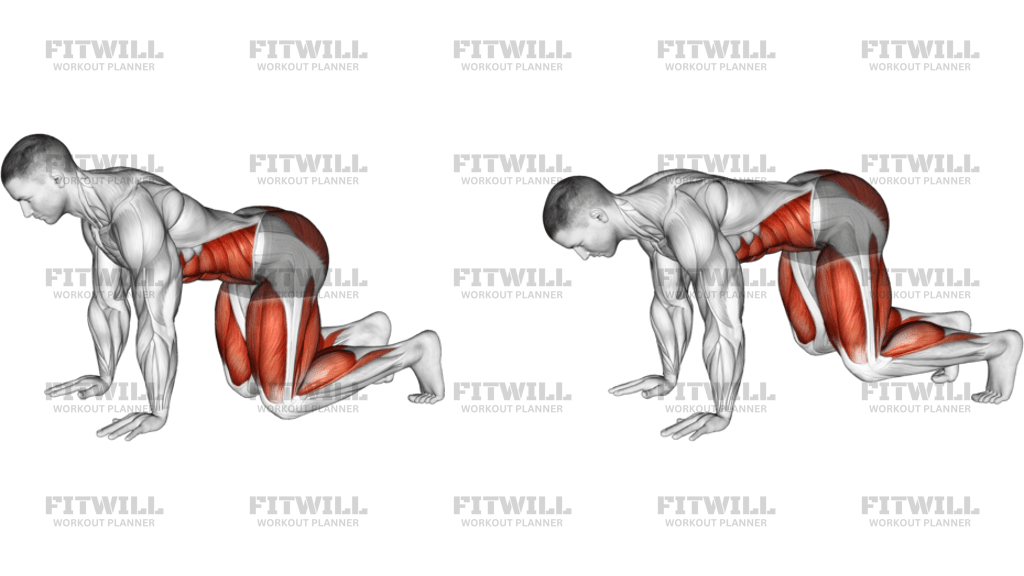
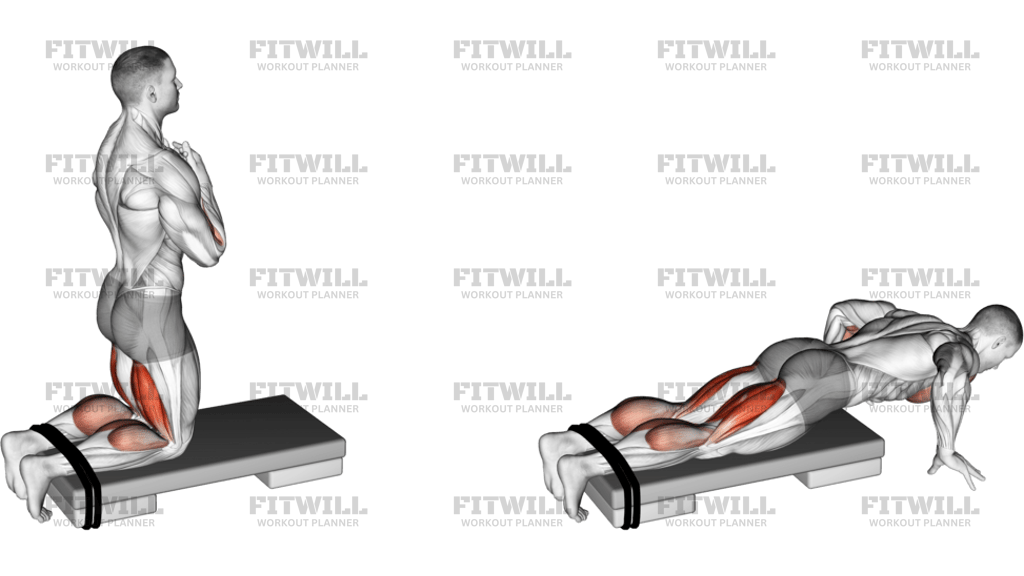
Kneeling Single Hamstring Curl is a bodyweight posterior-chain exercise that trains one hamstring at a time from a hands-and-knee support position. One leg stays bent and loaded while the other leg moves through knee flexion, so the working hamstring has to control both the curl and the return without help from momentum. It is useful when you want to build hamstring awareness, unilateral control, and low-impact leg training without needing machines or heavy loading.
The setup matters because the exercise only works well when the hips stay square and the torso stays quiet. Place both hands under the shoulders and one knee under the hip on a mat or other cushioned surface. Extend the working leg behind you, then keep the thigh roughly in line with the torso as you bend the knee and draw the heel toward the glute. The support leg, shoulders, and trunk should stay stable so the hamstring does the work instead of the lower back or hip rotators.
Use a smooth curl on the way in and a controlled lengthening on the way out. Stop the rep when the heel comes in close without letting the hips twist, the lumbar spine sag, or the working thigh drift upward. The return phase is important: lower the foot slowly until the leg is almost straight again, keeping tension on the hamstring and avoiding a dropped, passive reset. Breathing should stay regular, with a steady exhale during the curl and an inhale as you extend.
This movement is a strong fit for warm-ups, accessory lower-body work, rehab-style conditioning, or bodyweight circuits when you want a targeted hamstring challenge with minimal equipment. It can be scaled by shortening the range, slowing the tempo, adding an ankle weight, or pairing it with other unilateral leg work. If the knee or low back starts to take over, reduce range, pad the support knee, and keep the ribs stacked over the pelvis before each rep.
[ Workout Log & Planner ]
Put your next workout in Fitwill
Keep your plan and training log ready when you are.


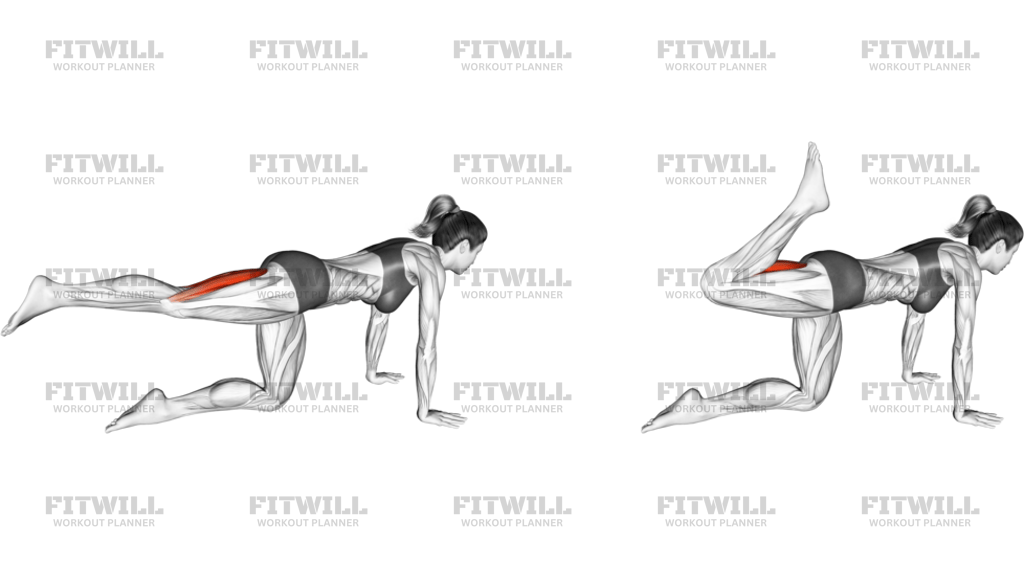
Instructions
- Kneel on a mat on one knee and place both hands under your shoulders.
- Square your hips and keep your chest long so your torso stays level.
- Extend the working leg straight behind you with the knee hovering off the floor.
- Keep the support knee under the hip and the pelvis facing the ground.
- Bend the working knee and curl the heel toward your glute without shifting your hips.
- Squeeze the hamstring briefly at the top while the thigh stays mostly still.
- Lower the foot slowly until the leg is almost straight again.
- Repeat on the same side for the planned reps, then switch legs if needed.
Tips & Tricks
- Pad the support knee so you can keep pressure on the hamstring instead of shifting off the joint.
- Keep both hip bones aimed at the floor; opening the pelvis turns the rep into a hip rotation drill.
- Think heel to glute rather than lift the foot; that cue keeps the curl centered in the hamstring.
- Stop the curl before your lower back arches or your ribs flare.
- Use a slower lowering phase than the curl phase to make the hamstring control the return.
- If the working thigh drifts up, shorten the range and keep it closer to hip height.
- Exhale as you curl and inhale as you lengthen so the trunk stays braced without holding your breath.
- Add load only after you can keep the torso quiet for every rep.
Frequently Asked Questions
What muscles does Kneeling Single Hamstring Curl work?
It primarily targets the hamstrings on the working leg, with the glutes, core, shoulders, and support knee helping you stay stable.
Is this a beginner-friendly hamstring exercise?
Yes, because it uses bodyweight and a small range of motion, but beginners should start slowly and keep the hips square.
Where should I feel the exercise?
Most of the effort should be in the back of the working thigh, not the lower back or the hip on the support side.
Why do I need to keep my hips level?
If the pelvis twists or lifts, the hamstring loses tension and the rep becomes easier for the wrong reasons.
Can I make this harder without changing the exercise?
Yes, you can slow the lowering phase, pause at the top, or add ankle resistance once your form is consistent.
What is the most common mistake?
The biggest mistake is arching the lower back and swinging the leg instead of controlling the knee bend.
Can I do this if my knees are sensitive?
Usually yes if you use a thick mat or pad, but any sharp kneeling pain is a reason to reduce time on the floor or choose a different hamstring drill.
How do I progress this movement over time?
Increase range, tempo control, or resistance gradually while keeping the trunk, hips, and shoulders steady.