Kneeling Iliopsoas Stretch
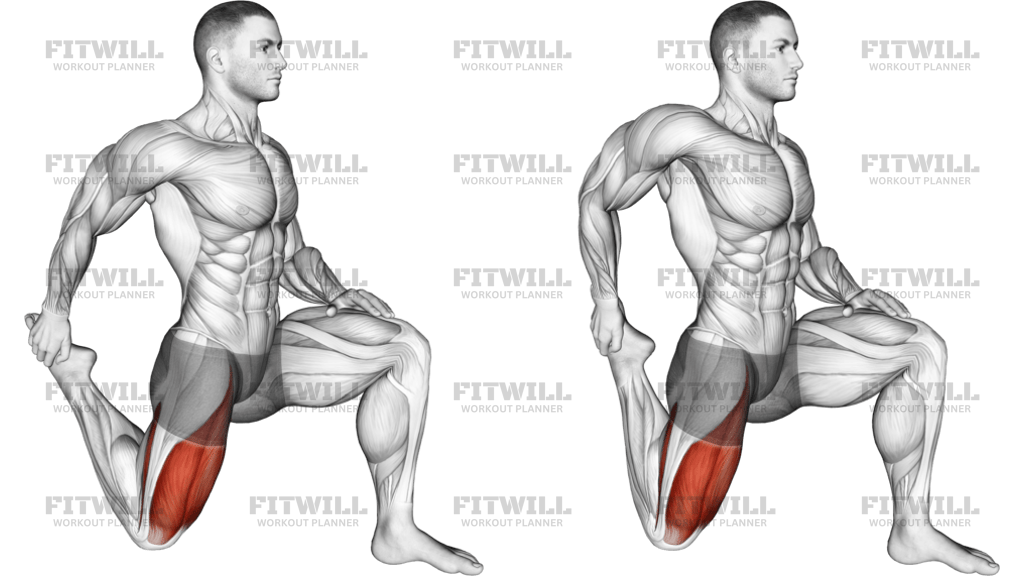
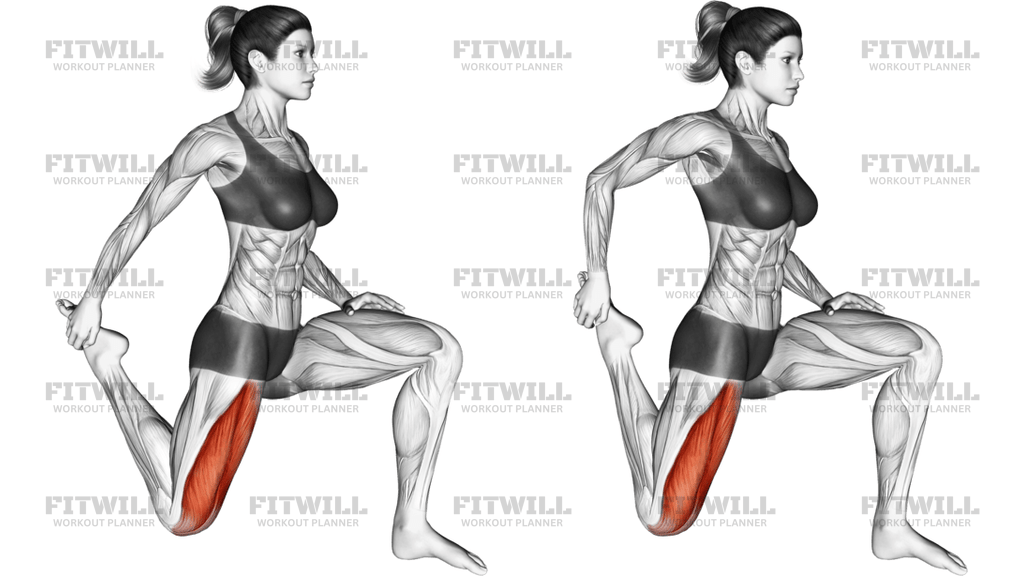
Kneeling Iliopsoas Stretch is a half-kneeling hip-flexor stretch performed on an exercise mat with body weight. It opens the front of the hip on the kneeling side, with the iliopsoas doing most of the work and the glute, abs, and upper body helping you hold a clean position. The goal is not to force a bigger lunge; it is to keep the pelvis organized so the stretch stays in the front of the hip instead of leaking into the low back.
The kneeling setup matters because the rear knee, front foot, and pelvis decide where the stretch lands. When the front foot is planted and the back knee is cushioned, you can stack the ribs over the pelvis, lightly tuck the tailbone, and shift forward without collapsing. That small posterior pelvic tilt is what makes this an iliopsoas stretch rather than just a low-back arch or a generic lunge.
To perform it well, settle into the half-kneeling stance, brace gently, and drive the hips forward a few inches at a time until you feel a firm stretch along the front of the kneeling-side hip and thigh. Keep the torso tall, breathe out as you move into range, and pause before the lower back starts to pinch or the front knee drifts too far forward. A controlled hold is usually more useful than chasing extra depth.
This stretch is commonly used after running, leg training, long sitting, or any session where the hip flexors feel tight and the pelvis wants to tip forward. It works well as part of a warm-up, cooldown, or mobility block because it teaches hip extension with control. If the knee is sensitive, add padding under it and reduce the range. If you feel the stretch mostly in the low back, reset your pelvis and shorten the stance until the front of the hip takes over.
Fitwill
Log Workouts, Track Progress & Build Strength.
Achieve more with Fitwill: explore over 9600 exercises with images and videos, access built-in and custom workouts, perfect for both gym and home sessions, and see real results.
Start your journey. Download today!




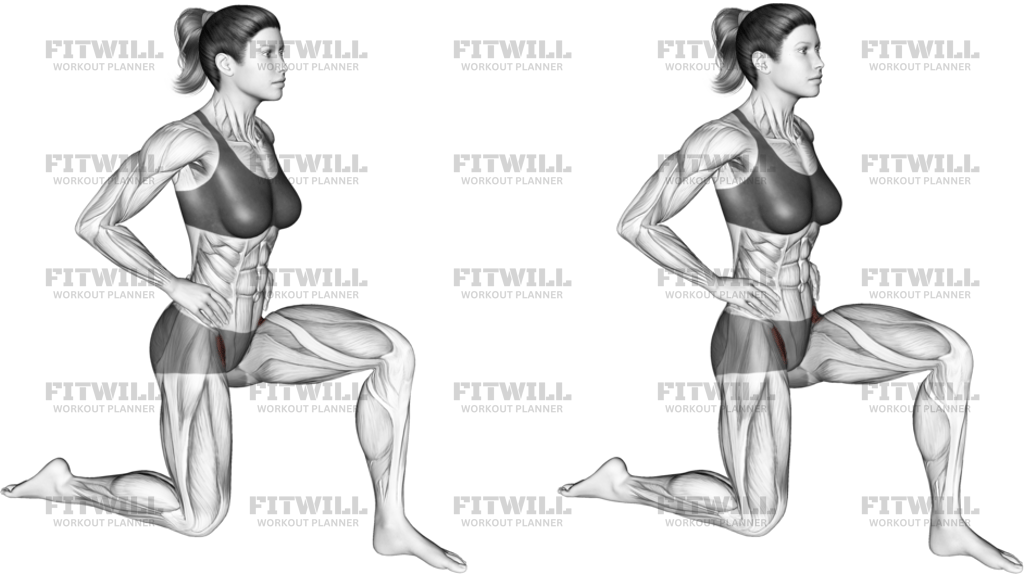
Instructions
- Place one knee on the mat and set the other foot flat in front, with both hips facing forward.
- Keep the kneeling knee cushioned directly under the hip and position the front foot far enough ahead to stay balanced.
- Stack your ribs over your pelvis and lightly tuck the tailbone before you move.
- Squeeze the glute on the kneeling side so the front of that hip stays active as you stretch.
- Shift the hips forward a few inches at a time until you feel a stretch across the front of the kneeling-side hip and thigh.
- Keep your torso tall and avoid leaning your chest over the front thigh.
- Breathe out slowly, then hold the end position without forcing into pain or pinching.
- Ease back slightly to reset, then repeat on the other side if needed.
Tips & Tricks
- Pad the kneeling knee well; a hard floor will make you cut the stretch short.
- Think of bringing the belt buckle up and back before you press the hips forward.
- The stretch should build in the front of the hip, not jam the low back.
- Keep the front foot planted so the pelvis can move forward without wobbling.
- A small shift is usually enough; large lunges often turn this into a spine arch.
- If the rear thigh feels cramped, shorten the stance and re-tuck the pelvis.
- Exhale as you settle into range to let the hip flexors relax a little more.
- Stop if you feel knee pressure, pinching at the front of the hip, or low-back pain.
Frequently Asked Questions
What does the Kneeling Iliopsoas Stretch target?
It mainly targets the iliopsoas and nearby hip flexors on the kneeling side.
How should I feel this stretch?
You should feel a steady stretch across the front of the kneeling-side hip and upper thigh, not a sharp pull in the low back.
Why do I need to tuck my pelvis?
The pelvic tuck keeps the stretch in the hip flexors instead of dumping the movement into lumbar extension.
Can I lean forward to deepen it?
A slight torso shift is fine, but if your chest drops toward the front thigh you usually lose the hip-flexor stretch and stress the back.
What if my kneeling knee hurts?
Add more padding, move to a softer surface, or reduce the time spent in the bottom position.
Is this good after running or leg day?
Yes. It is commonly used after running, squats, lunges, or long periods of sitting to restore hip extension.
How can I make the stretch stronger?
Increase the hold time, keep the glute squeezed, or reach the same-side arm overhead for a bigger line through the hip and torso.
Should I feel this on both sides equally?
Not always. Many people have one tighter hip flexor, so it is normal for one side to feel much more restrictive than the other.