Weighted Plate Standing Hands Torsion
Weighted Plate Standing Hands Torsion is a standing forearm rotation drill built around a light plate and a very strict grip. The exercise asks you to keep the torso quiet while the hands and forearms create the twist, so the work stays on the wrist flexors, grip, and the small stabilizers that control pronation and supination. It is useful when you want direct forearm tension without heavy elbow flexion or a lot of lower-body involvement.
The setup matters because the plate needs to sit in a position where the wrists can turn without the shoulders taking over. Stand tall with a stable stance, hold the plate in front of the torso, and keep the elbows close enough that the movement comes from the forearms instead of a swing through the body. The shoulders should stay down and quiet while the wrists and grip maintain a firm connection to the plate.
Each repetition should look deliberate: rotate the plate slowly to one side, control the return through center, then rotate to the other side without bouncing. The range should be large enough to challenge the forearms, but not so aggressive that the wrists collapse or the shoulders roll forward. A clean rep feels like controlled torsion, not like yanking the plate around with momentum.
This movement is usually best placed as accessory work, forearm conditioning, or a warm-up for pulling and gripping sessions. It can help build tolerance for barbell, dumbbell, climbing, or carrying work because it trains the forearm complex to stay organized under rotational stress. Start light, because the plate only needs to be heavy enough to create a clear twisting load.
Keep the motion pain-free and consistent. If the wrists feel pinched, shorten the range and slow the tempo. If the elbows drift or the torso twists, the load is too heavy or the setup is too loose. The goal is repeatable tension through the hands and forearms, not maximal weight.
Fitwill
Log Workouts, Track Progress & Build Strength.
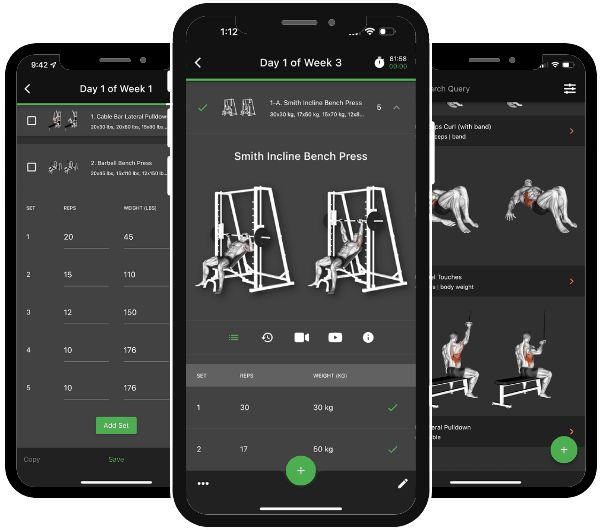
Achieve more with Fitwill: explore over 5000 exercises with images and videos, access built-in and custom workouts, perfect for both gym and home sessions, and see real results.
Start your journey. Download today!


Instructions
- Stand tall with your feet about hip-width apart and hold a light weight plate in front of your lower chest with both hands on the rim or handles.
- Keep your elbows close to your sides, wrists neutral, and shoulders relaxed so the plate starts steady instead of swinging.
- Brace your torso lightly and keep your ribcage stacked over your pelvis before you begin the twist.
- Rotate the plate slowly to one side using your forearms and wrists, not your shoulders or hips.
- Pause briefly at the end of the turn when the forearms are fully engaged and the plate is still under control.
- Reverse the motion through center and rotate to the opposite side with the same controlled tempo.
- Keep the elbows mostly fixed as you move so the torsion stays in the forearms and grip.
- Breathe out during the twisting phase, breathe in as you return to center, and keep the neck relaxed.
- Finish the set by lowering the plate carefully and resetting your stance before the next round.
Tips & Tricks
- Start lighter than you think you need; the exercise is about rotational control, not maximal loading.
- Keep the plate in front of the sternum, not drifting out in front of the shoulders, so the forearms stay loaded without extra sway.
- If your shoulders start rolling forward, shorten the range and reset the elbows closer to your sides.
- Turn the plate at a steady pace instead of snapping through the middle, because the midrange is where momentum usually takes over.
- Keep the wrists in line with the forearms as you twist; let the forearm rotate instead of cranking the hand backward.
- Use a plate with a secure rim or handles so the grip does not become the limiting factor too early.
- Stop the set when the plate starts wobbling or the torso begins to turn, since those are signs the load is too heavy.
- Use this exercise after bigger pulling work or as a forearm finisher when you want direct grip and wrist stress.
Frequently Asked Questions
What muscle does Weighted Plate Standing Hands Torsion target most?
The main emphasis is on the forearms, especially the wrist flexors and the muscles that control forearm rotation.
Can beginners perform this exercise?
Yes. Beginners should use a very light plate and keep the range small until they can twist without shrugging or swinging.
Where should I hold the plate during the movement?
Hold it in front of the lower chest or upper abdomen so the elbows can stay close and the forearms do the twisting work.
What is the most common form mistake?
The biggest error is using the shoulders, hips, or back to swing the plate instead of rotating it with the forearms.
Should my elbows move during the reps?
They should stay mostly fixed near the ribs. Small adjustments are fine, but the upper arms should not be driving the motion.
What if the rotation feels uncomfortable in my wrists?
Reduce the range, slow the tempo, and lower the load. The movement should challenge the forearms without causing joint pain.
What equipment variation can I use if I do not have the right plate?
A small plate with cutouts or a light disc-style weight is usually best. Anything that lets you grip securely without wobbling works better than a heavy, awkward load.
When should I put this exercise in my workout?
It fits well after rows, deadlifts, carries, or other grip-heavy work, or earlier in the session as a light forearm warm-up.