Resistance Band Plank Jack
Resistance Band Plank Jack is a plank-based conditioning exercise that combines a high plank with repeated jump-outs and jump-ins of the feet while a band around the ankles adds extra tension. It trains the trunk to stay steady while the hips and legs work against the band, so the set feels like a mix of core stability, shoulder support, and lower-body control rather than a simple cardio drill.
The band changes the demand in a useful way: every time the feet move apart, the hips have to resist the outward pull, and every time the feet come back together, the body has to stay square without twisting or dropping through the low back. That makes the exercise especially valuable when you want plank strength with an added hip and glute challenge. The main job is to keep the torso quiet while the legs move quickly and cleanly.
Good setup matters. Place the band around the ankles, then start in a strong high plank with hands under the shoulders, arms straight, feet together or nearly together, and the body in one long line from head to heels. If the band is too loose or the hands are too far in front of the shoulders, the movement gets sloppy fast. A clean plank position gives you a stable base so the feet can jump without collapsing the trunk.
Each repetition should look controlled even though the legs move explosively. Jump the feet apart to a comfortable width, then bring them back together under the hips without letting the pelvis bounce or the ribs flare. Keep the neck neutral, press the floor away, and breathe steadily enough that the shoulders and midsection do not tighten up. The goal is repeatable, rhythmic reps with the same plank shape from start to finish.
This exercise fits well in core circuits, warm-ups for athletic sessions, or conditioning blocks where you want plank stability plus faster footwork. It is also useful as a regression from more advanced plyometric plank drills, as long as the band resistance and jump size stay manageable. If the low back sags, the shoulders start shaking, or the landing gets loud, reduce the speed or remove the band before the quality of the plank disappears.
Fitwill
Log Workouts, Track Progress & Build Strength.
Achieve more with Fitwill: explore over 9600 exercises with images and videos, access built-in and custom workouts, perfect for both gym and home sessions, and see real results.
Start your journey. Download today!




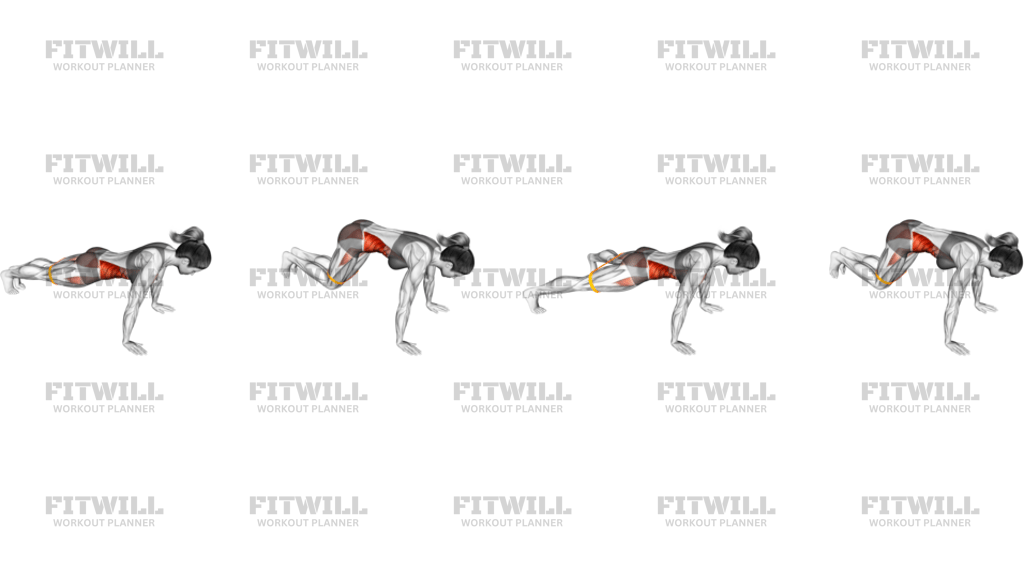
Instructions
- Place a resistance band around your ankles and come into a high plank with your hands under your shoulders.
- Stack your shoulders over your wrists, extend your legs behind you, and set your body in one straight line from head to heels.
- Brace your abdomen and squeeze your glutes so your lower back stays flat before the first jump.
- Start with your feet together or slightly apart, keeping the band just under light tension.
- Jump both feet out to the sides against the band while your hands stay planted and your torso stays level.
- Land softly with your feet wide enough to feel the band work, but not so wide that your hips twist.
- Jump the feet back together under your hips without letting your pelvis bounce upward or your chest drop.
- Repeat at a steady rhythm for the planned reps, then lower your knees to the floor to finish the set if needed.
Tips & Tricks
- Keep the band above the ankles if it rolls or pinches on the feet; that usually gives the cleanest line of pull.
- Use a small jump-out if your low back starts to arch, because a wider landing often turns this into a hip-dump instead of a plank.
- Press the floor away through your palms so the shoulders stay active and the chest does not sink between reps.
- Land quietly; loud foot contacts usually mean the jump is too large or the core is losing control.
- Keep your ribs down as the feet come together so the band work stays in the hips and not in a sagging lumbar spine.
- Think about squeezing the glutes before each jump, which helps hold the pelvis level when the legs move quickly.
- If the band is too heavy, the set turns into a fight against the hips and the plank quality drops quickly; choose a lighter loop first.
- Stop the set when the shoulders start drifting behind the wrists or the body begins to pike, because both signs usually mean fatigue has broken the plank.
Frequently Asked Questions
What does the resistance band change in a plank jack?
The band adds outward tension at the ankles, so the hips and glutes have to work harder to keep the legs controlled while the trunk stays rigid.
Where should I place the band for this exercise?
Around the ankles is usually the cleanest setup. If the band slides or feels awkward, move to a lighter loop before trying to widen the jump.
What muscles work hardest during a resistance band plank jack?
The core, shoulders, glutes, and hip stabilizers do most of the work, with the band making the outer hips and legs work harder during the jump-out.
Can beginners do this version of a plank jack?
Yes, but start with a very light band and a small jump-out. If the plank breaks down, shorten the range or remove the band first.
What is the most common form mistake?
Letting the low back sag or the hips twist as the feet move apart. The torso should stay quiet and level the whole time.
Should my feet jump very wide?
No. Use only as much width as you can control without shifting the pelvis or losing the straight plank line.
Is this more of a core exercise or a cardio exercise?
It is both. The plank position trains core stability, while the repeated jumps raise the heart rate and add a conditioning effect.
How can I make it harder without changing the movement?
Use a firmer band, slow the return slightly, or extend the set while keeping the same plank shape and soft landings.