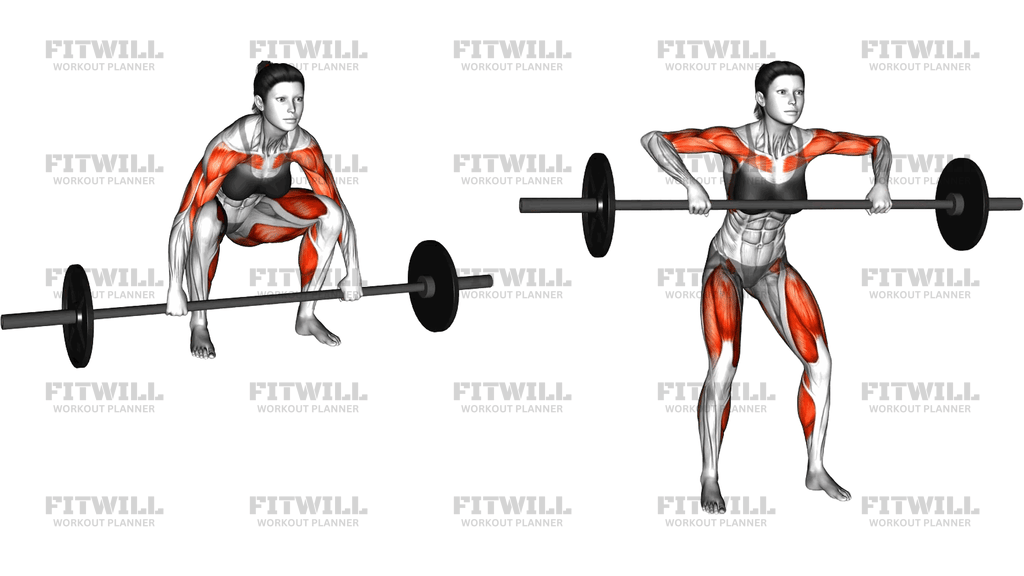
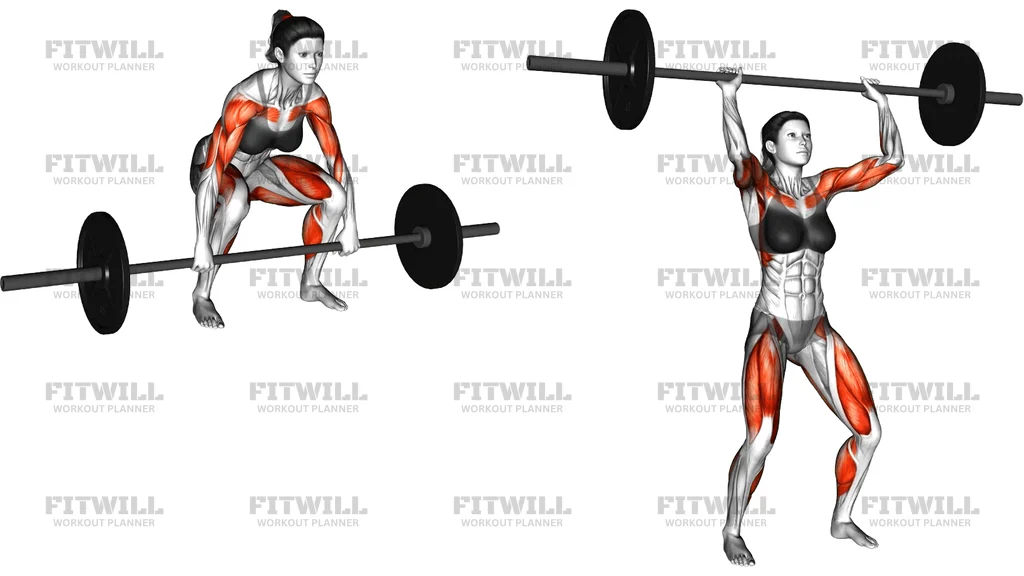
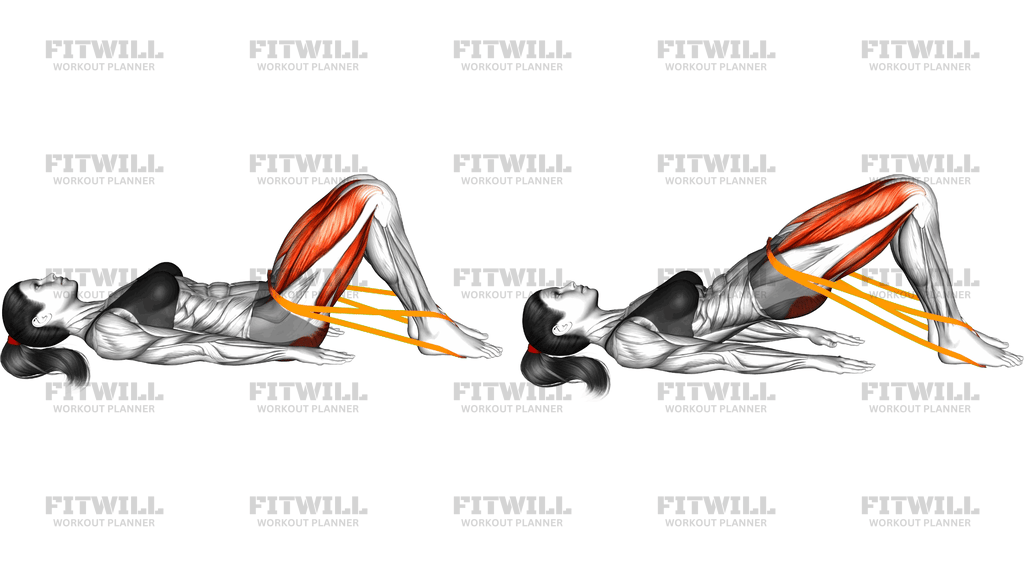
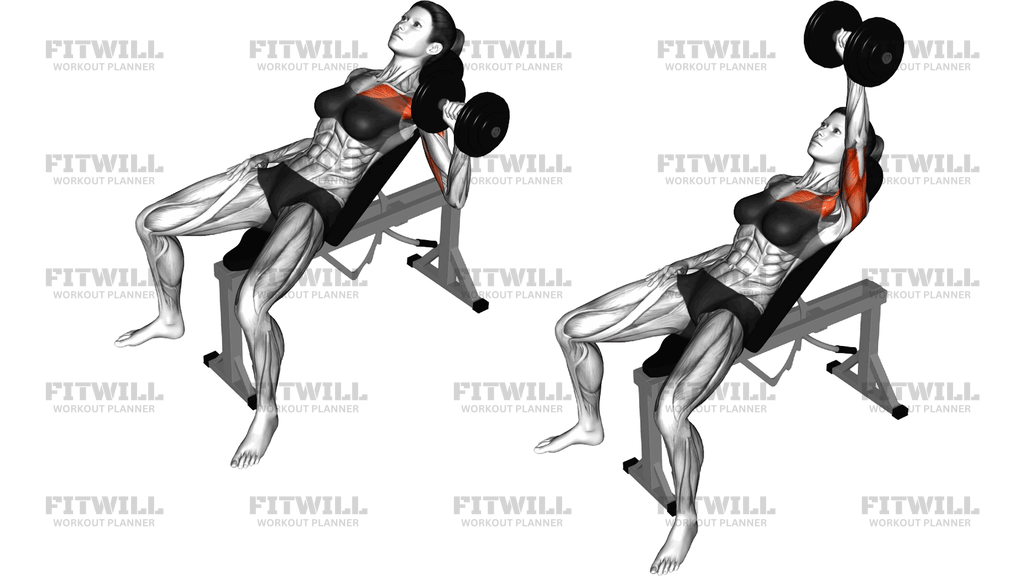
Barbell Mixed-Grip Deadlift
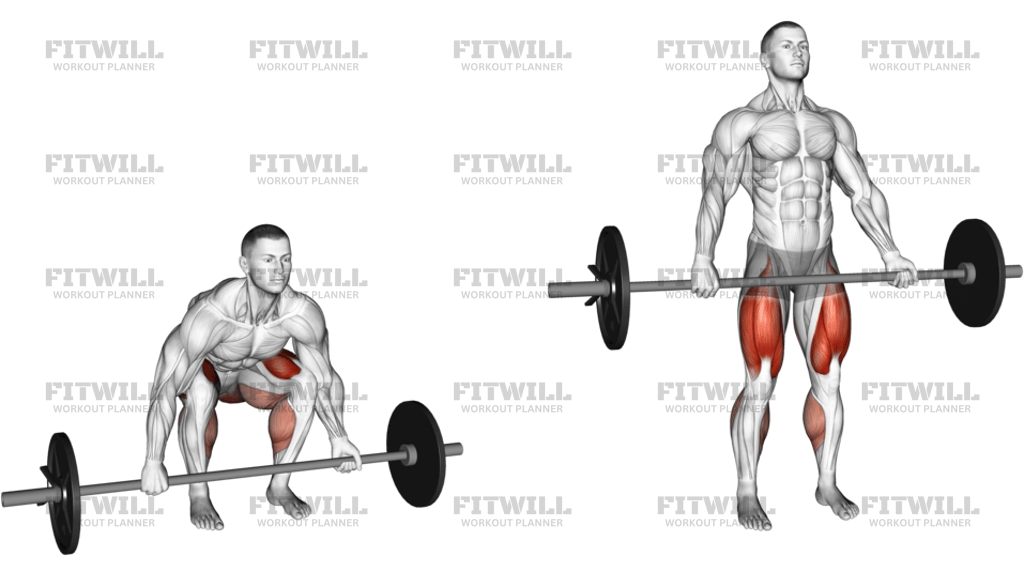
Barbell Mixed-Grip Deadlift is a floor-based hip hinge that uses one overhand and one underhand grip to help keep the bar secure as the load gets heavier. The movement trains the hips, glutes, hamstrings, back, and trunk together, so it is useful for building full-body pulling strength and learning how to keep the spine organized while the bar leaves the floor.
The mixed grip changes how the bar feels in the hands, but it does not change the job of the lift: set your torso angle, keep the bar close, and drive the floor away until you finish tall with the hips and knees fully extended. Because one hand is supinated, grip setup matters more here than it does on a double-overhand deadlift, and switching sides between sets helps avoid a long-term imbalance.
A good Barbell Mixed-Grip Deadlift starts with the bar over the midfoot, shins close enough that the bar can rise straight up, and the chest set before the pull begins. The bar should stay in contact with the legs or travel just in front of them, not loop forward away from the body. That close bar path keeps the lift efficient and reduces stress on the lower back.
This variation is often used when the load outgrows a standard overhand grip, especially in strength-focused programs. It is effective for posterior-chain development, but it asks for more attention than a simple barbell pull because the asymmetrical hand position can tempt you to twist, shrug, or yank the bar off the floor. The cleanest reps look deliberate from the first setup breath to the last lockout.
Safety and balance are the main tradeoffs. Keep the supinated arm straight and the elbow locked so the biceps is not asked to help the lift, and do not rebound the bar off the floor with a rounded setup. If the mixed grip feels uneven or your lower back takes over early, reduce the load, reset the bar closer to the shins, or use straps for some training blocks so both sides can still practice a more symmetrical pull.
[ Workout Log & Planner ]
Put your next workout in Fitwill
Keep your plan and training log ready when you are.


Instructions
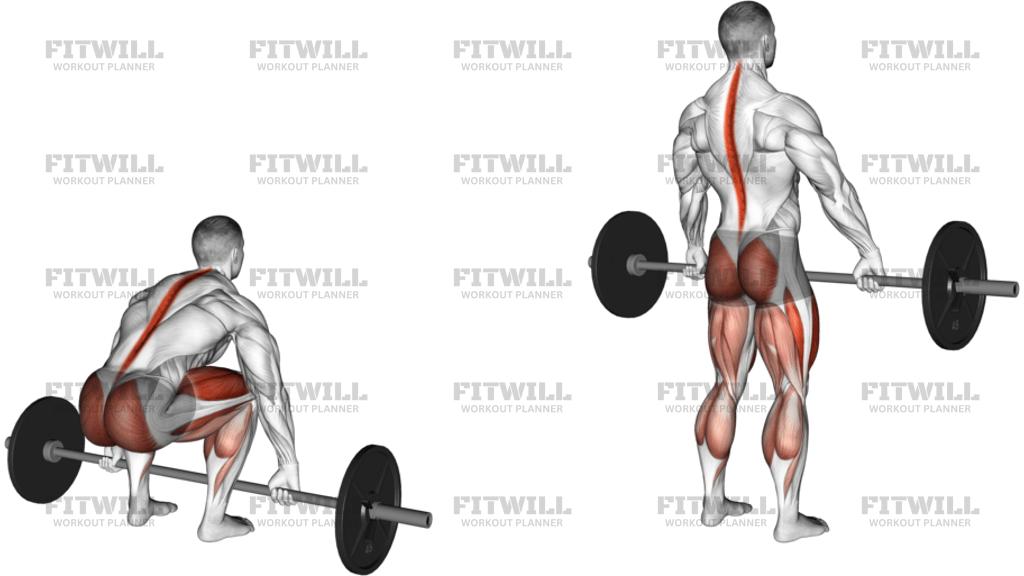
- Stand with the barbell over the middle of your feet, feet about hip-width apart, and set one hand overhand and the other underhand outside your legs.
- Hinge at the hips, bend your knees until your shins touch or nearly touch the bar, and keep your shoulders slightly in front of the bar before you pull.
- Grip the bar firmly, flatten your back, lift your chest, and take a breath to brace your trunk before the bar leaves the floor.
- Drive your feet into the floor and pull the bar straight up your shins and thighs without letting it drift forward.
- Keep both arms long and level as the bar passes your knees, then bring your hips through to finish standing tall.
- Squeeze your glutes at lockout without leaning back or shrugging the bar higher.
- Lower the bar by pushing your hips back first, then bending your knees once the bar clears them, keeping it close to your legs.
- Set the plates back on the floor under control, reset your brace, and repeat for the planned reps.
- Switch the underhand and overhand sides between sets.
Tips & Tricks
- Keep the bar against your shins and thighs; if it swings forward, the load is too far from your center of mass.
- Lock the mixed-grip elbow straight on the underhand side so the biceps is not trying to help the pull.
- Set the lats before the bar breaks the floor by thinking about squeezing your armpits toward your back pockets.
- If your hips shoot up first, start with less weight and bring your chest up before you pull.
- Do not finish by leaning back; standing tall with the glutes squeezed is enough for the top position.
- Use chalk or straps on lighter warm-up sets if your grip is the limiting factor rather than your hip drive.
- Alternate which hand is underhand from set to set so one side is not always taking the supinated stress.
- Lower the bar under control instead of dropping it, because a clean reset makes the next rep more repeatable.
- Keep the head in line with the spine instead of cranking the neck up to chase the finish position.
Frequently Asked Questions
What muscles does the Barbell Mixed-Grip Deadlift work?
It mainly trains the glutes, hamstrings, and back while the trunk and grip work hard to keep the bar close to the body.
Why use a mixed grip on the Barbell Mixed-Grip Deadlift?
The mixed grip helps the bar stay secure when the load is heavy and double-overhand grip starts to slip.
Should I keep the underhand arm bent to help the lift?
No. Keep that elbow straight the whole time so the biceps does not take load during the pull.
How do I set up the bar for the Barbell Mixed-Grip Deadlift?
Place the bar over your midfoot, hinge down until your shins are close to it, then brace with your chest set before you pull.
Is the Barbell Mixed-Grip Deadlift safe for beginners?
Yes, if the load is light and the setup is controlled, but beginners should first learn a clean hip hinge and neutral spine.
Do I need to switch grip sides on the Barbell Mixed-Grip Deadlift?
Yes. Alternate the overhand and underhand sides between sets so one arm is not always taking the supinated position.
What is the most common mistake in this deadlift?
Letting the bar drift forward or the hips rise too fast usually makes the lift feel heavier and shifts stress to the lower back.
Can I use straps instead of a mixed grip?
Yes, straps can be useful for some training blocks if you want a more symmetrical setup or need extra grip support.