Bodyweight Standing Straight Arm Chest Fly
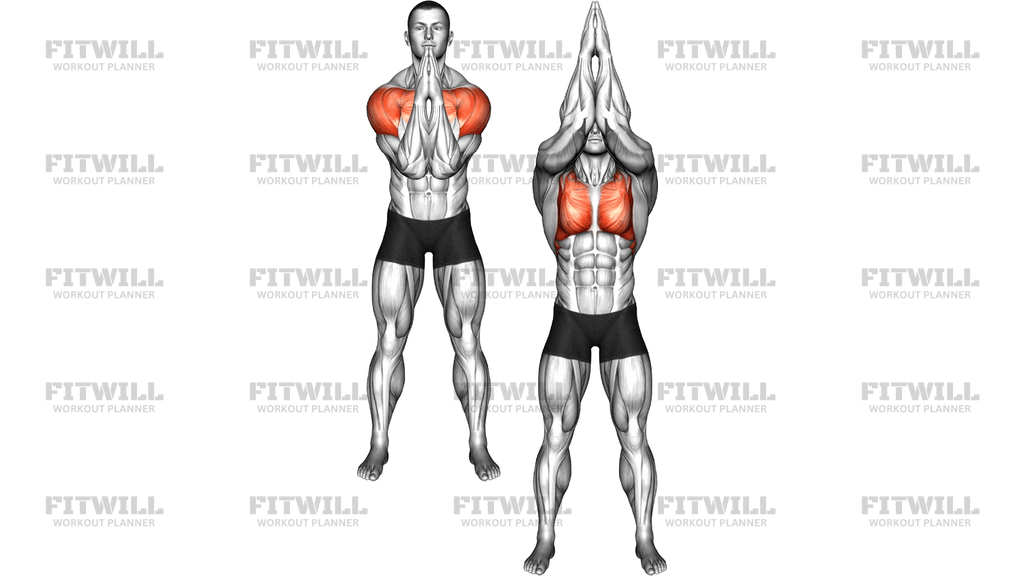
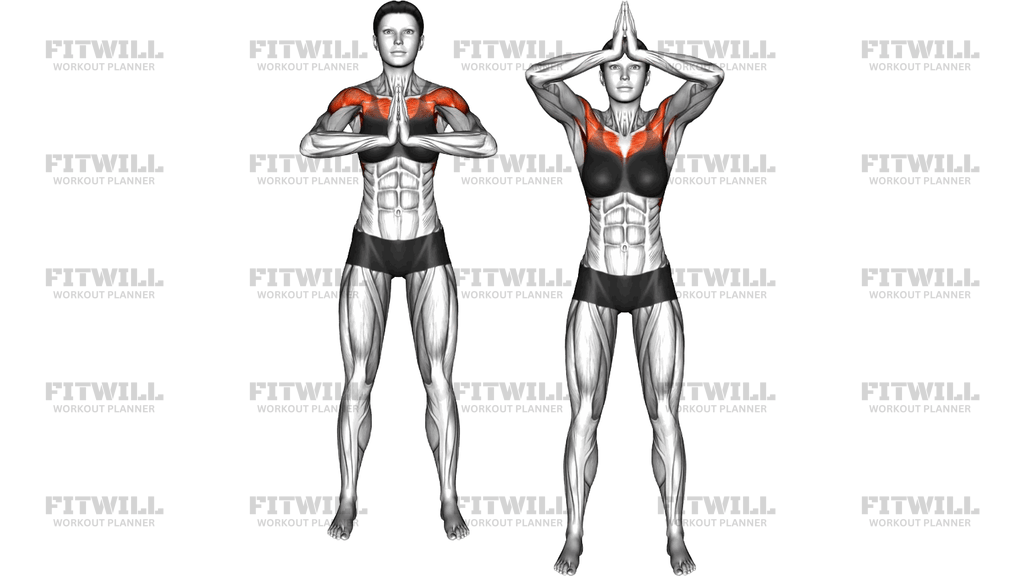
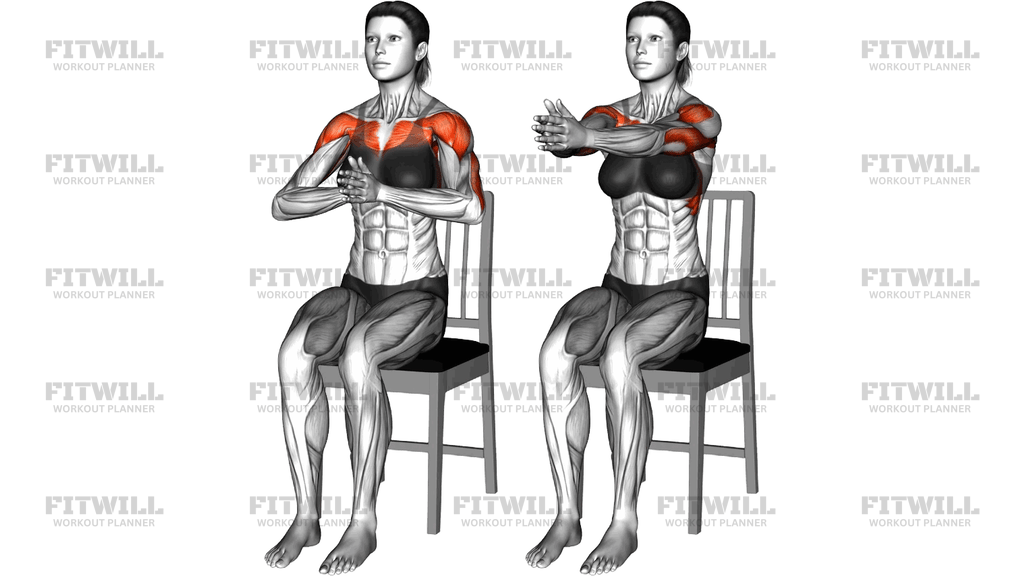
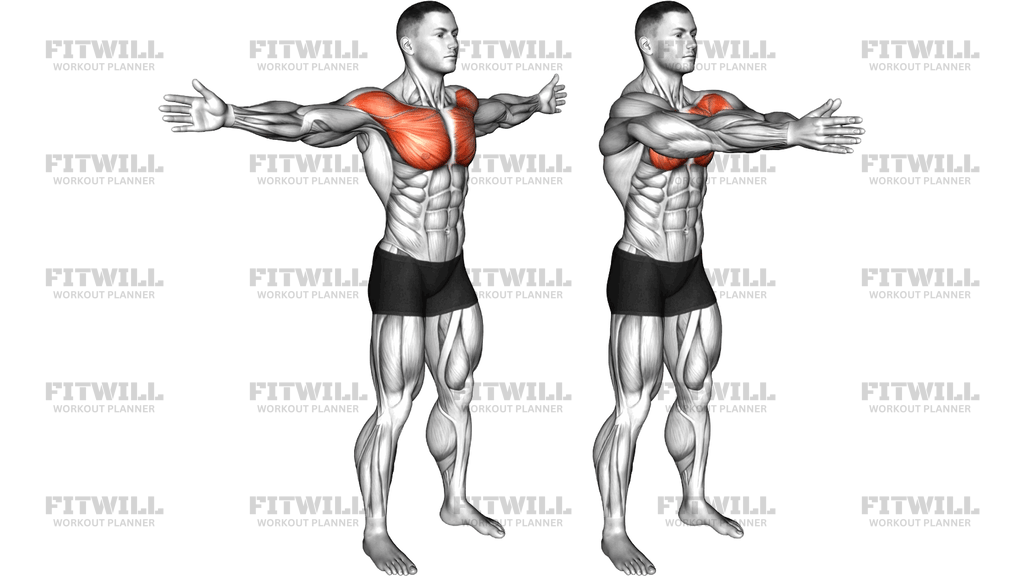
The Bodyweight Standing Straight Arm Chest Fly is a simple, equipment-free chest exercise performed standing upright. You hold both arms straight out to your sides at shoulder height, then sweep them forward in a wide arc until your hands come together in front of your chest, as if wrapping your arms around a large barrel. Because there is no external load, the movement relies on deliberate muscle tension and a full, controlled arc rather than weight, making it a pure bodyweight exercise.
This movement is most useful as a chest activation drill before pressing work, a warm-up for the shoulder joints, or a high-rep finisher when you have no equipment available. It also works well for beginners learning to feel their chest muscles contract, since the arm path isolates horizontal adduction — the exact action the chest is responsible for — without the complexity of holding a dumbbell or cable handle. Travelers, home trainees, and anyone rehabbing back into upper body training will find it easy to slot in anywhere.
The primary muscles worked are the chest, with the front shoulders assisting as the arms travel forward. Keeping the arms fully straight and the shoulder blades stable forces the pecs to drive the motion instead of letting the arms or momentum do the work. The standing position also quietly challenges your posture: your core, upper back, and shoulder stabilizers hold you tall and controlled while the arms sweep through the arc.
Setup matters more than it looks. Stand with feet about hip-width apart, a tall spine, and ribs stacked over the pelvis. Raise both arms straight out to the sides so they form a T with your torso, palms facing forward and elbows locked but not strained. If your shoulders shrug toward your ears or your torso leans back to lift the arms higher, drop the arm height slightly — the fly works at any point between shoulder and chest height as long as your posture stays clean.
Execution is about the arc and the squeeze. From the wide T position, sweep your arms forward along a wide circular path until your palms meet or slightly overlap in front of your chest, consciously squeezing your pecs at the front of the movement. Then reverse the exact same arc back out wide, resisting the urge to let gravity snap your arms open. Slow tempos, pauses at the front squeeze, and higher rep ranges are the main ways to create enough tension for this to feel like real training rather than empty movement.
The main safety points are modest but real. Do not force the arms behind your midline at the start position, and keep the sweep pain-free through the shoulder — this movement uses straight elbows, so any pinching means narrow the arc slightly. Because the resistance is low, common mistakes are rushing the reps, bending the elbows to make it easier, and arching the lower back to exaggerate the chest position. Stay honest with the tempo and the Bodyweight Standing Straight Arm Chest Fly becomes a surprisingly effective tool for chest control, shoulder health, and upper body readiness.
[ Workout Log & Planner ]
Put your next workout in Fitwill
Keep your plan and training log ready when you are.


Instructions
- Stand upright with your feet about hip-width apart, weight spread evenly across both feet, and your spine tall with ribs stacked over your hips.
- Raise both arms straight out to your sides until they form a T with your torso at roughly shoulder height, palms facing forward and elbows fully straight.
- Pull your shoulder blades slightly down and together so your shoulders stay away from your ears, and brace your core to keep your torso from swaying.
- Inhale as you open the arms, then begin sweeping them forward in a wide, circular arc toward the front of your body.
- Continue the sweep until your hands meet or slightly overlap in front of your chest, keeping the elbows locked and the arms at the same height throughout.
- At the front position, deliberately squeeze your chest and hold the contraction for one to two seconds.
- Exhale as you reverse the exact same wide arc, opening your arms back out to the starting T position with control instead of letting them drop back.
- Pause briefly at the wide position, then begin the next rep, maintaining the same arm path and tempo on every repetition.
- Breathe steadily throughout — inhale on the way out wide, exhale as you sweep forward and squeeze.
- Complete your set, then lower your arms to your sides and roll or shake out the shoulders before moving on.
Tips & Tricks
- The most common mistake is bending the elbows as the arms come forward, which turns the fly into a partial hug and shifts work off the chest — check yourself in a mirror and keep the arms locked straight from start to finish.
- If your shoulders shrug up toward your ears during the sweep, lower your arm height a few inches; the fly works just as well slightly below shoulder level with far less neck tension.
- Do not let your torso rock backward or your ribs flare as your arms come forward — the chest should meet the hands, not lean into them.
- Create tension that bodyweight alone doesn't provide by imagining you're pushing your palms through wet sand on the way in; actively driving the hands toward each other lights up the pecs far more than a passive swing.
- Slow the opening phase down and treat it as the work — many people snap their arms back wide and lose the entire second half of the movement.
- If you feel a pinch at the front of the shoulder when the arms go fully wide, shorten the starting arc to slightly in front of your body rather than forcing the full T position.
- Squeezing the hands together hard against each other at the front of each rep adds isometric chest tension and makes even a short set feel productive.
- This drill pairs well before bench presses, push-ups, or dumbbell flies — use 15 to 20 controlled reps as a warm-up to establish the chest squeeze you want during loaded sets.
- Keep the palms facing forward as the arms sweep; turning them inward early changes the arm path and reduces the chest's involvement.
Frequently Asked Questions
What muscles does the Bodyweight Standing Straight Arm Chest Fly work?
The chest is the primary muscle, working through horizontal adduction as the arms sweep forward. The front shoulders assist the movement, and the core and upper back stabilize your torso in the standing position.
Is the Bodyweight Standing Straight Arm Chest Fly effective without any added resistance?
It provides low external resistance, so it won't build maximum strength the way pressing does, but it is genuinely useful for chest activation, warm-ups, muscular endurance, and learning to contract the pecs deliberately. Slow tempos, pauses at the squeeze, and high reps make it meaningfully harder.
How can a beginner make the Bodyweight Standing Straight Arm Chest Fly harder?
Slow each rep down to a 3-4 second sweep in each direction, add a 2-3 second isometric squeeze with the hands pressing hard against each other at the front, or increase the total reps. You can also hold the arms slightly lower than shoulder height to keep tension through a longer arc.
Should my elbows stay completely straight during this exercise?
Yes, the straight-arm position is what defines this movement and keeps the emphasis on the chest through the wide arc. Lock the elbows without straining them — if your elbows complain, a very slight soft bend is acceptable, but do not bend them further as the hands come forward.
Why do I feel my shoulders shrugging when my arms are out wide?
That usually means your upper traps are taking over because the shoulder stabilizers fatigue or the arm height is too high for your current mobility. Relax the shoulders down, lower the arms a few inches, and shorten the arc until the shrugging disappears.
Can I use the Bodyweight Standing Straight Arm Chest Fly as a warm-up?
It is an excellent warm-up before any chest pressing or fly variation. Fifteen to twenty controlled reps prime the pecs and front shoulders and establish the mind-muscle connection for the squeeze you want during loaded work.
What can I substitute if standing straight-arm flies hurt my shoulders?
Try floor slides lying on your back, a wall slide with the arms in the same wide position, or a resistance band chest fly with light tension, all of which support the arm and reduce the load at the shoulder's widest range. If pinching persists, shorten the arc and keep the hands slightly in front of your body.
Where exactly should my hands finish at the front of the movement?
Your palms should meet or slightly overlap in front of your chest at roughly nipple height, not down by your waist or up by your face. Finishing at chest height keeps the arc aligned with the fibers of the pecs.
How many reps and sets should I do?
For a warm-up, one to two sets of 15-20 smooth reps works well. As a standalone bodyweight set or finisher, aim for 2-3 sets of 20-30 reps with slow tempo and a hard squeeze at the front of each rep.
Is this movement safe for daily practice?
For most people, yes — the load is low and the joint is taken through a natural, pain-free arc. Stop or narrow the range if you feel sharp pain, pinching, or numbness in the shoulder, and avoid forcing the arms behind your midline at the start.