Prayer Push Hold
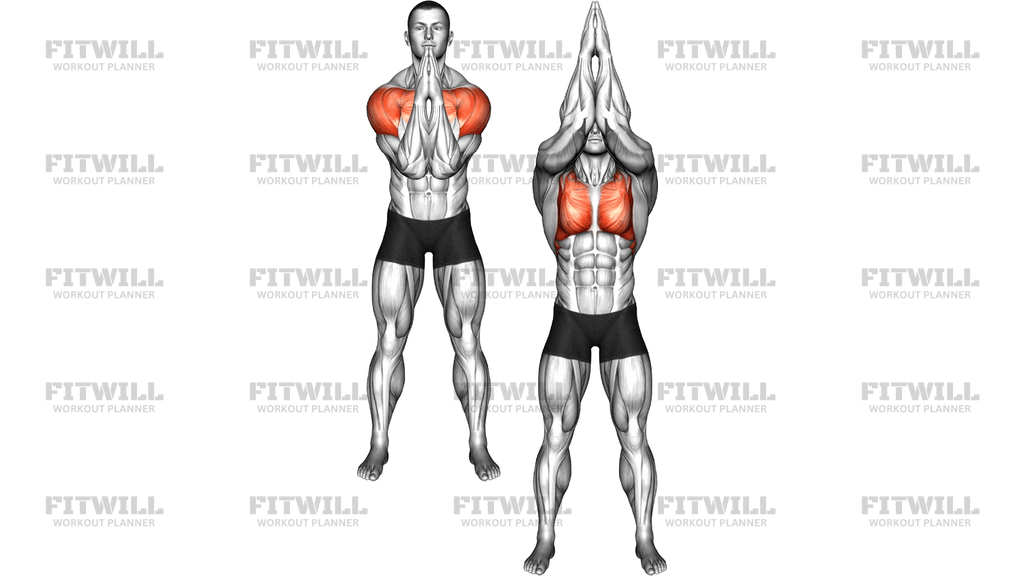
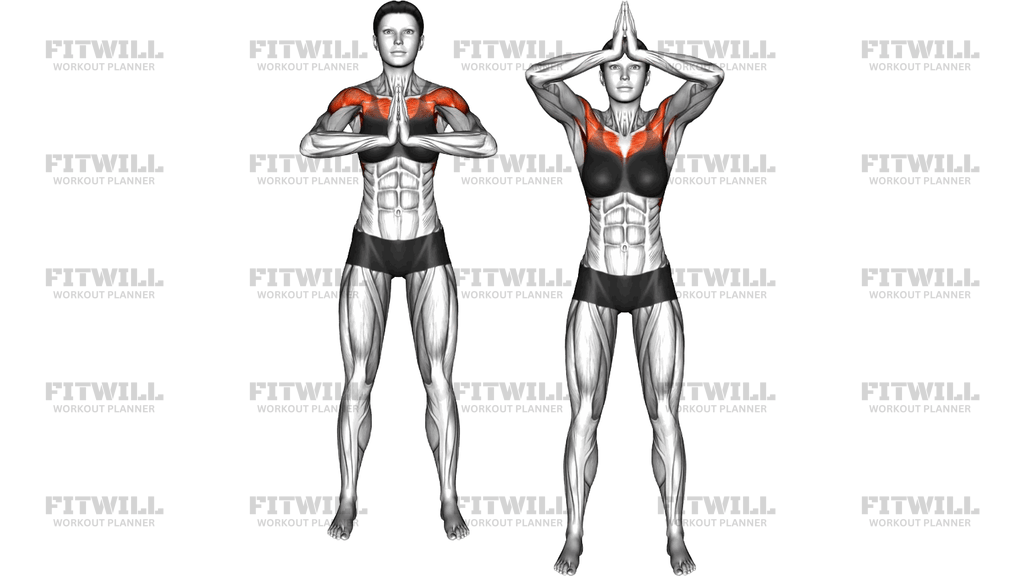
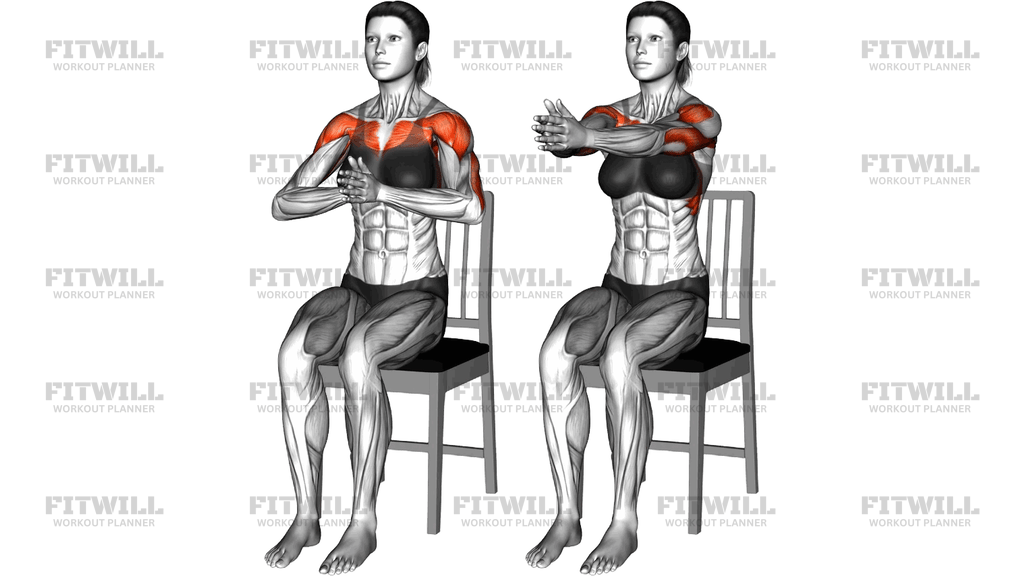
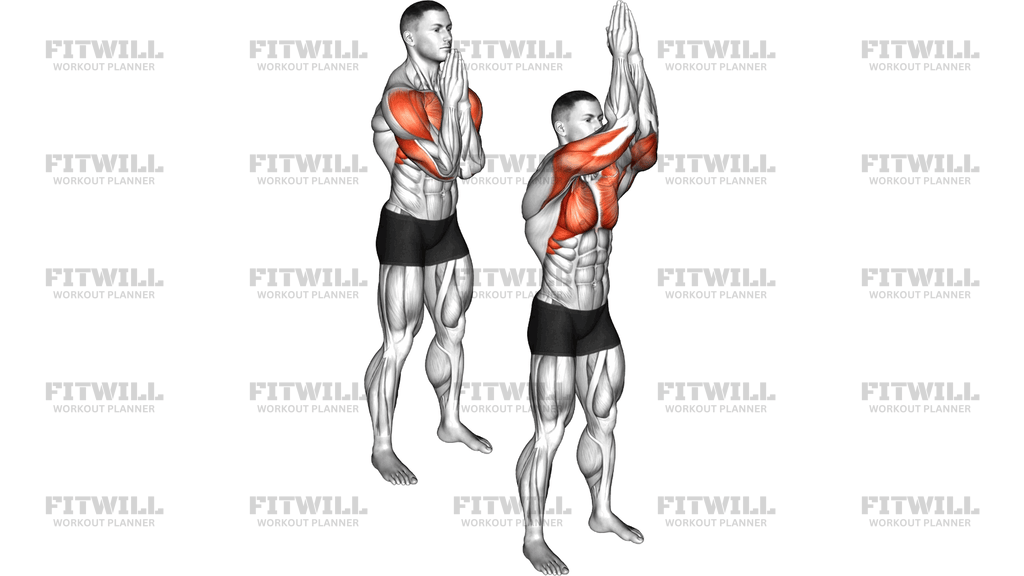
The Prayer Push Hold is a bodyweight isometric exercise where you press your palms firmly together in a prayer position and hold that inward pressure, either at chest height or as you extend your arms overhead. Because you generate the resistance yourself, the challenge comes entirely from how hard you squeeze, making this one of the few chest exercises you can perform anywhere with no equipment at all.
The pressing action drives your arms inward against each other, which strongly recruits the pectorals — particularly the sternal head — through horizontal adduction. The front delts assist the press, the triceps work to keep the elbows extended as the arms travel up, and the core braces to keep your torso upright and still. Holding the squeeze continuously turns this into a sustained contraction rather than a rep-based movement, which many lifters find gives a deep, flushed feeling through the chest.
This exercise is useful for several situations. Travelers and home trainees can use it as a no-equipment chest stimulus. Lifters can use it as a warm-up to activate the chest before pressing, or as a finisher to fatigue the pecs after bench or push-up work. It is also a common rehabilitation-style drill because the load is self-regulated — you can press as gently or as hard as your current capacity allows.
Setup matters more than it looks. Stand tall with feet about hip-width apart, elbows lifted so the forearms point upward, and place your palms flat against each other at chest height with fingers pointing up. If your palms sit too low or your elbows drop, the press shifts away from the chest and into the shoulders and neck. Keep your ribs stacked over your pelvis rather than arching your lower back as the arms rise.
To execute it well, press your palms together hard — imagine trying to crush a ball between them — and hold that pressure without letting it fade. From there, keep the squeeze constant as you slowly raise your hands straight up until your arms are fully extended overhead, pause at the top, then lower back to chest height while maintaining the same pressure. Breathe steadily throughout rather than holding your breath, and keep your shoulders relaxed away from your ears so the upper traps don't take over.
The most common fault is letting the pressure bleed off as the arms rise, which turns the hold into a plain shoulder raise. Another is shrugging or jutting the chin forward at the top. Keep the squeeze as the priority and treat the overhead reach as secondary, and this simple drill becomes a surprisingly demanding chest exercise.
[ Workout Log & Planner ]
Put your next workout in Fitwill
Keep your plan and training log ready when you are.


Instructions
- Stand upright with your feet hip-width apart and your weight evenly distributed across both feet.
- Bring your palms together in front of your chest in a prayer position, fingers pointing up, with your elbows lifted so your forearms are roughly vertical.
- Brace your core and keep your ribs stacked over your hips with a neutral spine.
- Press your palms into each other firmly, as if trying to squeeze a ball between them, and feel the tension build across your chest.
- Maintaining that constant palm pressure, slowly raise your hands straight up in front of your body until your arms are fully extended overhead.
- Pause at the top for a moment with your elbows locked out and the squeeze still active.
- Lower your hands back down to chest height in a slow, controlled manner without letting the pressure between your palms fade.
- Breathe steadily throughout the hold — inhale on the way up, exhale on the way down — and never hold your breath.
- Release the press only once your hands return to the starting position, then reset your posture before the next repetition.
- Repeat for the desired number of reps or timed holds, keeping the effort level consistent from start to finish.
Tips & Tricks
- The press is the exercise, not the raise — if your palms drift apart as your arms go overhead, you've turned it into a shoulder raise, so refocus on squeezing throughout.
- Keep your elbows high and pointing forward at the start; letting them drop toward your sides shifts tension away from the chest.
- If you feel it mainly in your neck or traps, consciously pull your shoulder blades down and relax your shoulders before pressing again.
- Avoid arching your lower back as your arms extend overhead — squeeze your glutes lightly and keep your ribs down to stay upright.
- Scale the difficulty by pressing harder or holding the top position longer, not by moving faster; this drill responds to sustained tension.
- For a stronger chest squeeze, think of pulling your elbows toward each other as you press, rather than just pushing palms together.
- A slight bend in the knees helps some people stay balanced during the overhead portion, especially if they tend to sway backward.
- Use this as a pre-press activation with 2–3 light holds before bench press or push-ups, or as a finisher with maximum-effort squeezes at the end of a session.
- If pressing palms flat bothers your wrists, interlace nothing — instead press the heels of your hands and fingers together with a small gap at the palm center.
Frequently Asked Questions
Which muscles does the Prayer Push Hold work?
The primary muscle is the chest, which contracts hard to press the arms inward through adduction. The front shoulders and triceps assist, and the core stabilizes your torso as the arms extend overhead.
Is the Prayer Push Hold effective without any weight or equipment?
Yes — you create the resistance yourself by pressing your palms together, so the intensity depends on how forcefully you squeeze. A genuinely hard press can be demanding even for experienced lifters, though it won't fully replace loaded pressing for building maximum strength.
Should I hold at chest level or raise my arms overhead?
Both versions work the chest through the same squeezing action. The overhead raise adds a triceps and shoulder stabilization component, so start with the basic chest-level hold and add the raise once you can maintain constant palm pressure.
How long should I hold the Prayer Push?
Aim for 15–40 seconds per hold, or 8–12 slow controlled repetitions with the raise if you prefer a rep-based approach. The key is that the pressure between your palms never drops below a firm, deliberate squeeze.
Why do I feel the Prayer Push Hold in my shoulders instead of my chest?
This usually means your palms are separating slightly or your elbows are dropping, which shifts the work to the front delts. Lift your elbows so the forearms stay vertical and refocus on actively squeezing your elbows toward each other.
Can beginners do the Prayer Push Hold?
Absolutely — it is one of the safest chest exercises for beginners because the load is entirely self-controlled and there is no external weight or joint stress. Start with a moderate press for 15 seconds and build intensity gradually.
Is the Prayer Push Hold a good warm-up before bench pressing?
Yes, it works well as an activation drill because it pre-contracts the pecs without fatigue. Two or three submaximal holds of about 15 seconds before pressing helps you feel the chest engage once the barbell or push-ups begin.
Can I use the Prayer Push Hold for chest pain or injury recovery?
Because you regulate the pressure, it is often tolerated when heavier pressing is not, but you should follow the guidance of a physical therapist or medical professional before using it during rehab. Never push into pain with this drill.
What can I substitute if pressing my palms together bothers my wrists?
Press the heels of your hands together with fingers relaxed, or hold a light medicine ball or towel loop between your palms and squeeze that instead — the chest contraction pattern stays essentially the same.