Pull Up (Negative)
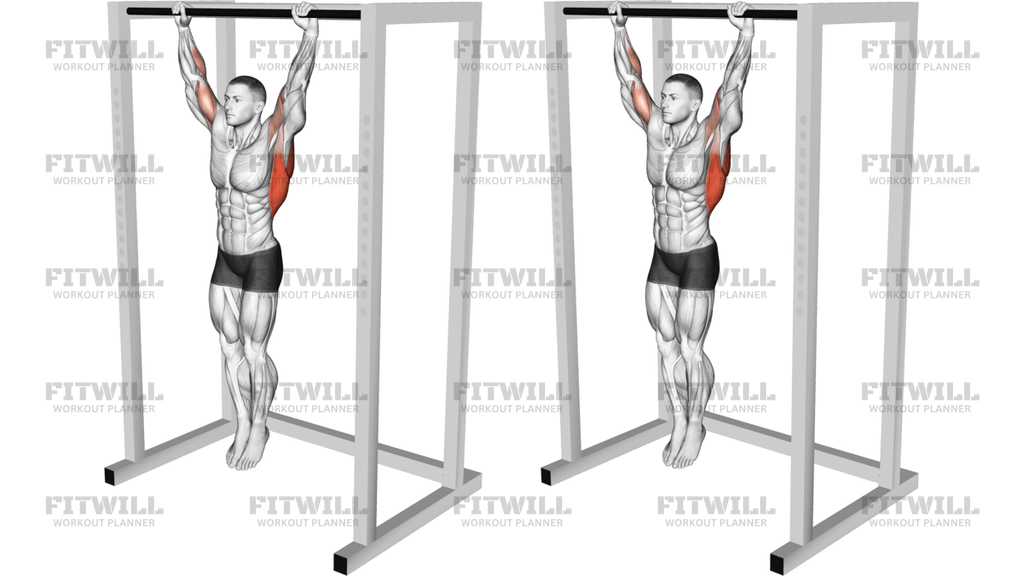
The Pull Up (Negative) is the lowering half of the pull-up performed on its own. Instead of pulling yourself up from a dead hang, you start at the top position — chin over the bar — and resist gravity as you lower your body down as slowly as you can. You can step up to the bar from a box or bench, or jump to the top, then spend three to six seconds fighting the descent until your arms are fully extended.
This is one of the most effective ways to build toward your first unassisted pull-up. Muscles produce significantly more force during a controlled lowering phase than during a pulling phase, which means most people who cannot yet perform a full pull-up can still load their lats, biceps, and upper back heavily with negatives. It bridges the gap between assisted variations and the real thing better than almost any other drill.
The exercise primarily trains the lats, with strong contributions from the biceps, lower traps, rhomboids, and forearms. Because you are lowering under tension, the grip and scapular stabilizers work hard to keep your shoulders packed and your body from free-falling. The core also engages to stop you from swinging as you descend.
Setup matters because you need a safe, repeatable way to reach the top position without wasting energy. Using a sturdy box or bench set beside the bar lets you step up to chin-over-bar height, control the negative, then step back up for the next rep. Gripping the bar slightly wider than shoulder width with palms facing away keeps the movement consistent with a standard pull-up.
Execution quality comes down to lowering speed and shoulder position. Aim for a descent that takes at least three seconds, keep your shoulders pulled down away from your ears rather than letting them creep up toward the bar, and finish each rep at a full hang with arms extended. If you find yourself dropping in the last few inches, that is a sign the set is done — end the rep rather than crashing into the bottom.
Use Pull Up (Negative) as a main strength builder early in a session when you are fresh, typically three to five sets of three to six reps. It also works as a finisher after regular pull-ups to add extra volume for the back. People rehabbing toward full pulling strength and lifters who want extra eccentric work for lat development both benefit, but anyone with shoulder discomfort should keep the range pain-free and stop if irritation appears.
[ Workout Log & Planner ]
Put your next workout in Fitwill
Keep your plan and training log ready when you are.


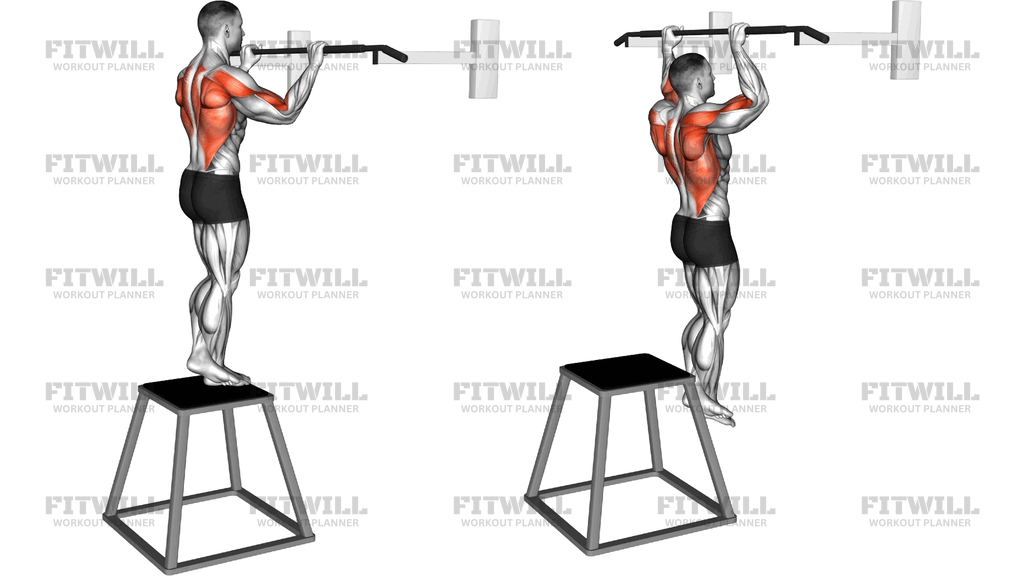
Instructions
- Place a sturdy box or bench next to a wall-mounted pull-up bar, high enough that standing on it brings your chin to bar level.
- Grip the bar with an overhand grip, hands slightly wider than shoulder width, thumbs wrapped around the bar.
- Step up onto the box and pull or press yourself until your chin is clearly above the bar and your chest is close to it.
- Lift your feet off the box and let them hang, crossing your ankles behind you or holding them slightly in front of your body.
- Brace your core and pull your shoulders down away from your ears before you begin lowering.
- Lower yourself slowly and evenly, aiming for three to six seconds, keeping your elbows tracking down toward your ribs rather than flaring wide.
- Continue descending under control until your arms are fully extended and you are hanging straight from the bar.
- Breathe in at the top and exhale steadily through the descent; avoid holding your breath.
- Place one foot back on the box, step up, reset your grip and shoulder position, and prepare for the next rep.
- Step down fully to dismount rather than dropping from the hang, especially as fatigue sets in.
Tips & Tricks
- If you are plummeting through the bottom third of the descent, your set is over — ending early with clean reps builds more strength than grinding out sloppy ones.
- Actively try to 'pull the bar down' as you lower; this keeps the lats engaged instead of letting the shoulders ride up into your ears.
- Do not let your legs swing behind you and kick — a small amount of forward lean with the ankles crossed behind keeps the body quiet.
- Rushing the descent is the most common mistake; count out loud or have a timer running to keep every rep at three seconds or longer.
- If your grip fails before your back does, use chalk or switch to a bar with textured handles, since a slipping grip turns the negative into a drop.
- Keep the chest angled slightly toward the bar rather than leaning back; this preserves the vertical pulling path of a regular pull-up.
- Progress by adding time under tension — move from three-second negatives to five-second ones before adding extra reps.
- Avoid fully relaxing at the bottom of the hang between reps; stay lightly engaged to protect the shoulder joint before stepping back up.
Frequently Asked Questions
Which muscles does the Pull Up (Negative) work?
The lats are the primary muscle, supported heavily by the biceps, lower traps, rhomboids, and forearms. The grip and core also work to keep you controlled and stable throughout the descent.
Can beginners use the Pull Up (Negative) if they cannot do a single pull-up yet?
Yes — it is one of the best progressions for a first pull-up, because you can lower yourself slowly even if you cannot yet pull yourself up. Start with three-second negatives and lengthen them as you get stronger.
How long should each negative take?
Aim for three to six seconds per rep. If you cannot control the last third of the descent, the negative is too long or the set is too fatigued, so shorten the count or end the set.
How do I get to the top position without a partner?
Use a sturdy box or bench set beside the bar and step up until your chin clears it, or jump to the top if the bar height allows. The box is more repeatable and saves energy for the lowering phase.
Why do my shoulders shrug up toward the bar during the descent?
This happens when the lats relax and the upper traps take over. Reset by pulling your shoulder blades down before each rep and thinking about keeping your neck long as you lower.
Should I use an overhand or underhand grip?
An overhand grip slightly wider than shoulder width matches the standard pull-up you are training toward. An underhand grip is fine occasionally, but it shifts more work to the biceps and changes the movement pattern.
How does the Pull Up (Negative) compare to assisted pull-ups with a band?
Negatives load the muscles harder than most band-assisted reps because the eccentric phase tolerates more force, and the movement pattern is identical to a real pull-up. Many people progress faster using negatives, though combining both works well.
How many sets and reps should I do?
Three to five sets of three to six reps works well, done early in the session while you are fresh. Quality matters more than volume — stop the set when you can no longer control a slow descent.
Is it safe to drop from the bar at the bottom of the rep?
No — step down onto the box or bench instead of dropping from a full hang. Landing from repeated drops hammers your joints and, if the box is positioned under the bar, it is an easy safe dismount.