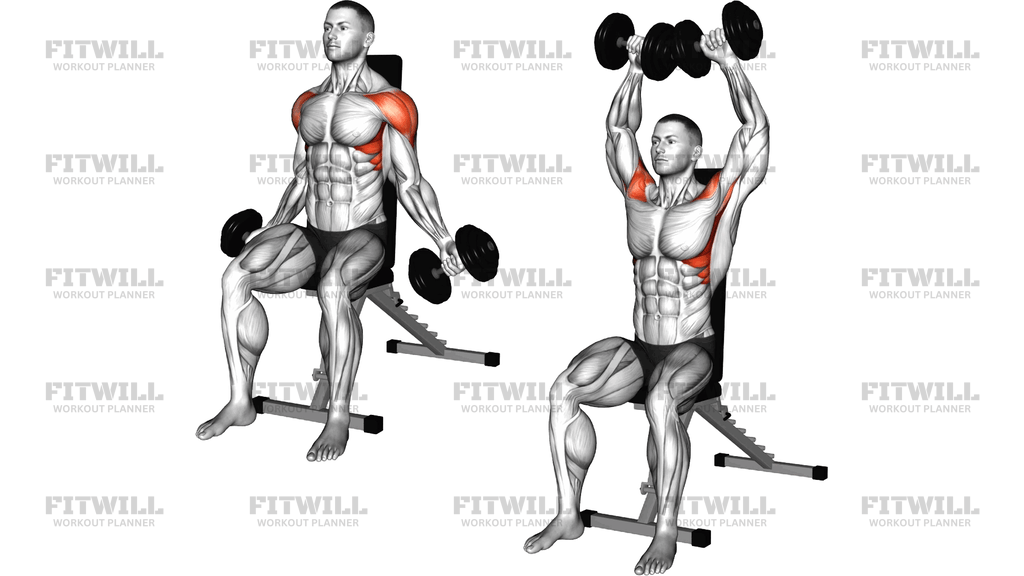
Dumbbell Seated Lateral Raise
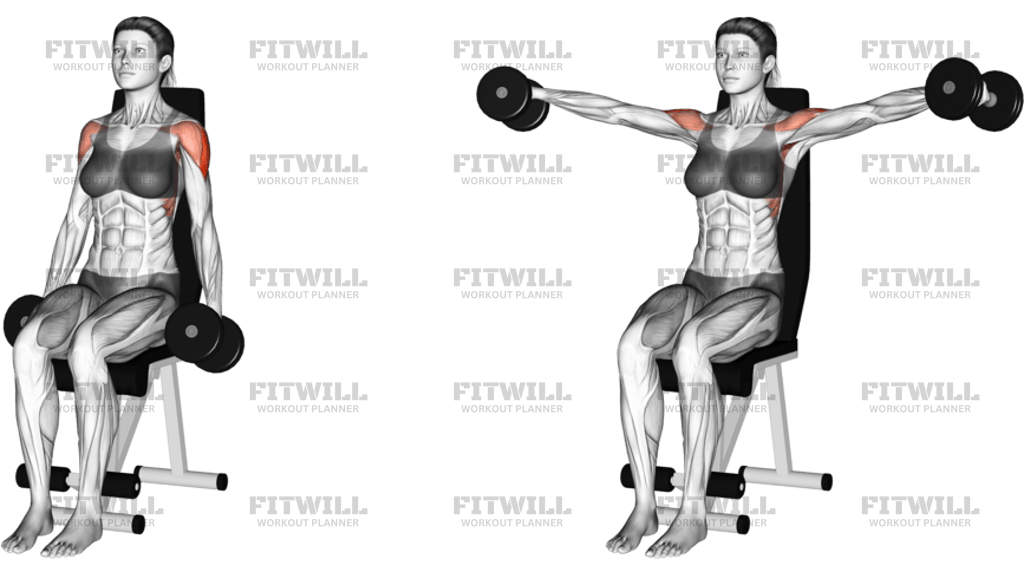
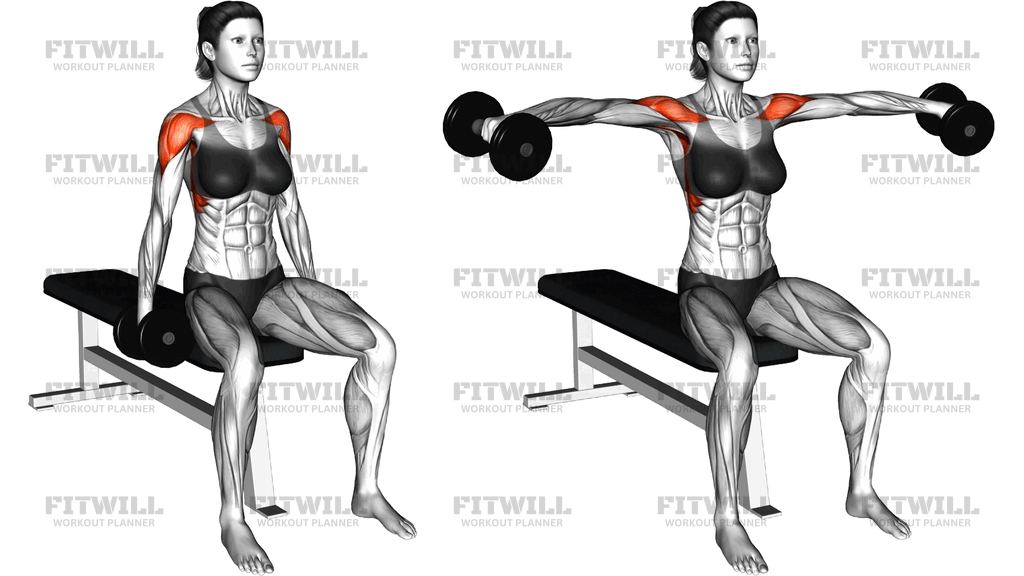
The Dumbbell Seated Lateral Raise is a shoulder isolation exercise performed while sitting upright on a flat bench, raising a pair of dumbbells out to your sides until your arms reach shoulder height. Unlike the standing version, sitting removes momentum from your legs and hips, which forces the side delts to do the lifting on their own. It is one of the most reliable ways to build width through the middle of the shoulders.
This movement suits almost anyone with basic dumbbell access. Beginners benefit because the bench gives them a stable, repeatable position to learn the arm path, while more experienced lifters use it as a dedicated isolation slot after pressing work. If your goal is broader-looking shoulders, fuller upper arms in a t-shirt, or balanced shoulder development that overhead pressing alone does not provide, this exercise belongs in your routine.
The primary muscles worked are the lateral deltoids, the muscle fibers running along the outside of each shoulder. The front delts and upper traps assist, especially near the top of the lift, and the forearm and grip muscles work isometrically to hold the dumbbells. Because the load is light relative to pressing exercises, the value here comes from precise control rather than heavy weight.
The seated setup matters more than it might seem. With your back upright, feet planted, and torso fixed against nothing but your own posture, swinging and body english are largely taken off the table. That is exactly the point: standing lateral raises are easy to cheat with a hip drive or lean, while the seated position exposes any attempt to toss the weights up. Keep your ribs stacked over your pelvis and let the shoulders move.
Execution is simple but demanding. Let the dumbbells hang at your sides with a slight bend in your elbows, then sweep them out along a wide arc, leading with the elbows rather than the hands. Stop at or just below shoulder height, pause briefly, and lower slowly back to your sides. The lowering phase is where much of the muscle-building stimulus lives, so resist the urge to drop the weights back down.
A few practical points keep the exercise safe and effective. Choose lighter dumbbells than you think you need, since the side delts are a small muscle group. Keep your neck relaxed and avoid shrugging the weights up, and stop just below shoulder height if you feel pinching at the top. Two to four sets of 10 to 15 controlled reps fits most programs well.
[ Workout Log & Planner ]
Put your next workout in Fitwill
Keep your plan and training log ready when you are.


Instructions
- Sit on a flat bench with your feet flat on the floor about hip-width apart and your torso upright.
- Hold a dumbbell in each hand with a neutral grip, palms facing your body, and let your arms hang straight down at your sides.
- Brace your core lightly, keep your chest tall, and pull your shoulder blades down so you are not already shrugging before you move.
- With a small bend fixed in both elbows, raise the dumbbells out to your sides in a wide arc, leading with the elbows.
- Continue lifting until your upper arms are at or just below shoulder height and roughly parallel to the floor.
- Pause for a beat at the top without letting the dumbbells drift forward or behind your body.
- Lower the dumbbells slowly along the same arc, taking two to three seconds, until they are back at your sides.
- Exhale as you raise the weights and inhale as you lower them, keeping your breathing steady throughout the set.
- At the end of each rep, let your arms settle briefly at your sides before starting the next repetition so the muscles reset under control.
Tips & Tricks
- Lead with your elbows, not your hands. If the dumbbells climb higher than your elbows, you are turning the raise into a partial front raise and shifting work away from the side delts.
- Stop just below shoulder level if you feel a pinch at the very top. Raising slightly above parallel is fine for some people, but the top inch is where impingement discomfort most often shows up in this movement.
- Do not let the bench turn you into a shrug machine. If your shoulders creep up toward your ears at the top of each rep, the weight is too heavy or the set is too long.
- Keep the elbow bend constant. Straightening the arms at the bottom and bending them more as you lift turns the exercise into a moving-lever problem and makes the resistance inconsistent.
- Resist the downward phase deliberately. Two to three seconds of controlled lowering is what separates a productive seated lateral raise from a set of quick, bouncy swings.
- Tilt your pinkies slightly upward, as if pouring water from a jug, at the top. This small rotation keeps tension on the side delts rather than letting the front delts take over.
- Sit at the front edge of the bench with a tall spine rather than slumping back. A rounded, leaned-back torso shortens the arc and lets your chest angle do part of the lifting.
- Pick dumbbells you can raise for at least 10 clean reps. Seated lateral raises respond poorly to ego weights, and jumps of even 2 kg often break form completely.
Frequently Asked Questions
Which muscles does the Dumbbell Seated Lateral Raise work?
The lateral deltoids on the outside of each shoulder do most of the work. The front delts and upper traps assist near the top, and your forearms and grip hold the dumbbells throughout.
Why do the lateral raise seated instead of standing?
Sitting removes the leg and hip drive that lets you swing the weights up while standing. That keeps the tension on the side delts and makes it much harder to cheat.
How high should I raise the dumbbells?
Raise until your upper arms are at or just below shoulder height. Going a little higher is fine if it is pain-free, but stopping at parallel keeps the tension where you want it.
Is the Dumbbell Seated Lateral Raise good for beginners?
Yes. The bench provides a stable position and the arm path is easy to learn, so it is a common first isolation exercise for new lifters. Start with very light dumbbells and focus on a smooth arc.
Why do I feel this in my traps instead of my shoulders?
Your upper traps take over when you shrug or use too much weight. Pull your shoulder blades down before each set, lead with the elbows, and reduce the load until the effort sits on the sides of your shoulders.
What can I use if I do not have a bench?
Any sturdy chair or box that lets you sit upright with feet flat on the floor works. You can also do the movement standing, but expect to use slightly lighter weights and stricter control to avoid swinging.
How heavy should the dumbbells be for this exercise?
Much lighter than for presses. Most people progress best with a weight they can control for 10 to 15 reps with a two-second lowering phase and no shrugging or swinging.
Can the Dumbbell Seated Lateral Raise cause shoulder pain?
It should not if the weight and range are appropriate. If you feel pinching at the top, stop just below shoulder height, slow the tempo down, and use a lighter dumbbell. Persistent pain deserves assessment before continuing.
Should my palms face down or stay facing my body?
Start with palms facing your body in a neutral grip, which is the natural position at your sides. A slight tilt of the pinkies upward at the top is fine, but fully rotating to palms-down early increases front delt involvement.
How many sets and reps should I do?
Two to four sets of 10 to 15 controlled reps works well, either after pressing exercises or as part of a dedicated shoulder day. Rest about 60 to 90 seconds between sets.