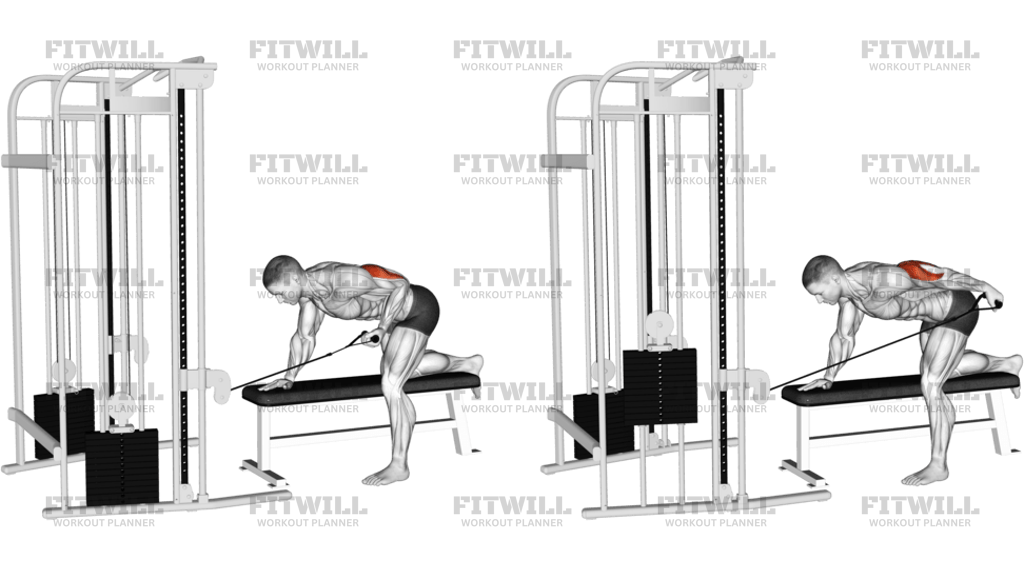
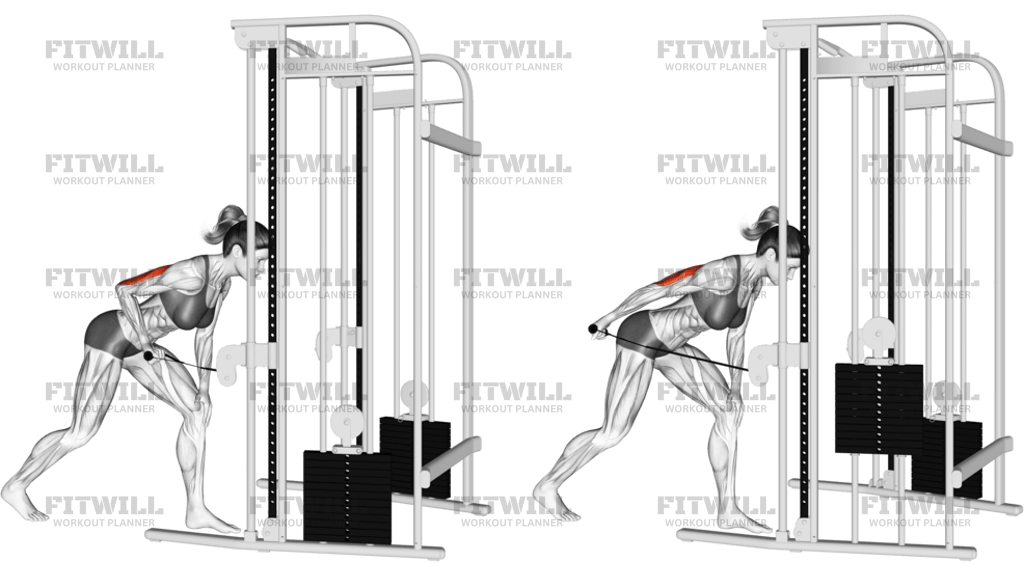
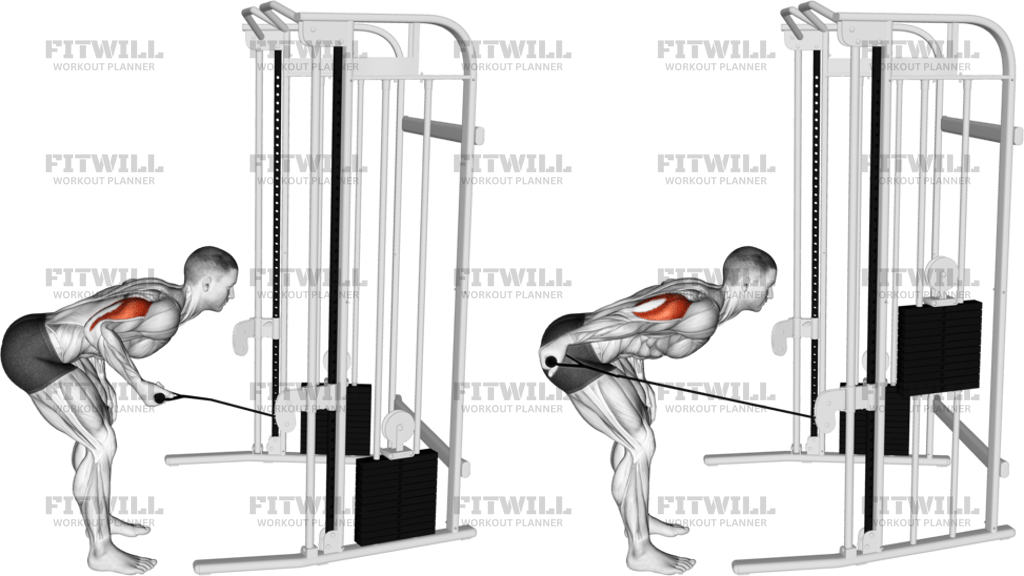
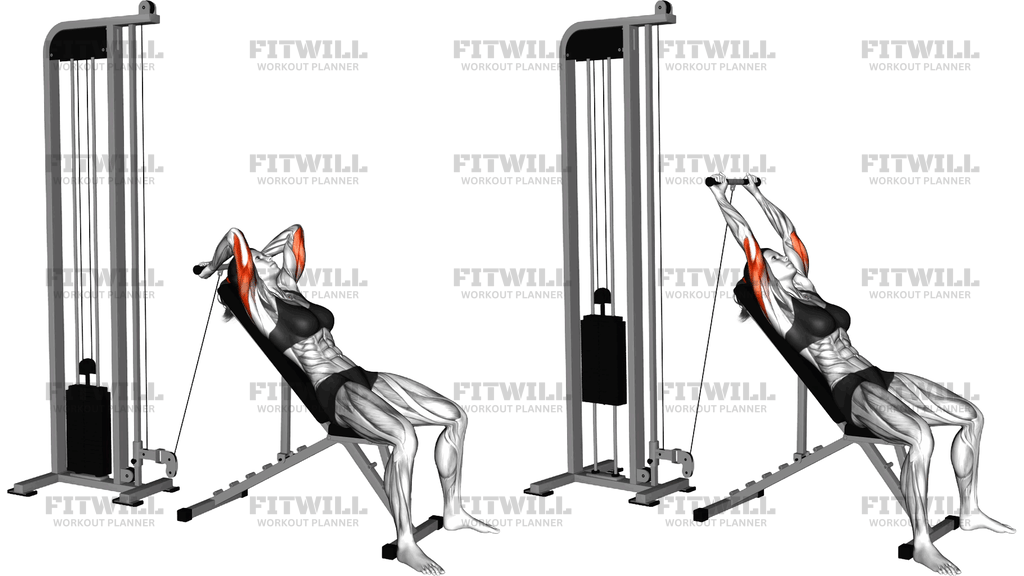
Cable One Arm Tricep Pushdown
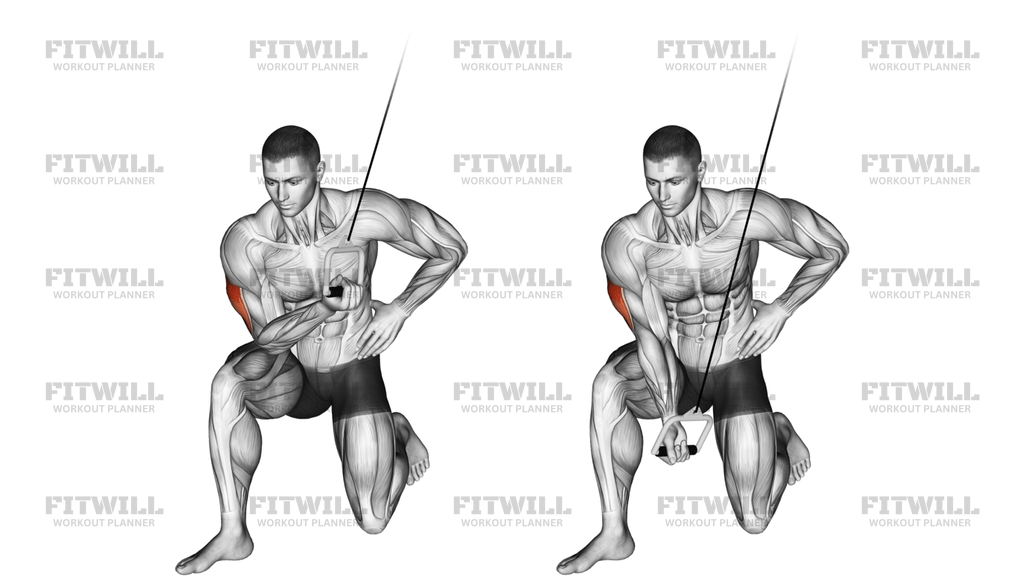
The Cable One Arm Tricep Pushdown is a single-arm isolation exercise performed at a cable station with a high pulley and a single handle attachment. Standing side-on to the machine, you press the handle down from shoulder height until the arm is fully extended at your side, then resist the weight on the way back up. Because each arm works on its own, the cable's constant tension stays on the triceps through the entire range of motion, something that free-weight pressdowns and dips cannot match at the bottom of the rep.
This movement is especially useful for lifters who want to even out differences in size or strength between their left and right arms. When both arms push down together on a bar, the stronger side quietly takes over a portion of the load. Working one arm at a time removes that escape route, forcing the working triceps to do all of the work. It is also a joint-friendly option: the cable provides smooth resistance, and you can adjust the stack in small increments, which makes it approachable for beginners and easy to progress for experienced lifters.
The triceps brachii is the prime mover, with all three heads engaged as the elbow extends against resistance. The one-arm setup also makes it easier to feel the long head working as the arm travels down and slightly back past the hip. Your core and shoulder stabilizers work isometrically to keep the torso square and the upper arm pinned in place, but they should never take over the movement.
Setup matters more than most people realize. Set the pulley at the top, stand close enough to the machine that the cable runs nearly vertical, and split your stance so the body stays balanced as the handle moves. Keep the upper arm glued to your side and let only the elbow joint move. If the shoulder starts drifting forward or the torso starts twisting toward the machine, the weight is too heavy or the cable position needs adjusting.
To execute well, grab the handle with a neutral grip, tuck the elbow, and press down in a smooth arc until the arm is straight and the triceps is fully contracted. Pause briefly at the bottom, then let the handle rise under control until the forearm is close to vertical or just past it. Exhale on the press, inhale on the return. Complete all reps on one side before switching hands so fatigue does not compromise the first set on the weaker arm.
You will see this exercise used as a finishing movement on arm days, as a corrective tool for side-to-side imbalances, and as a higher-rep pump movement at the end of a pressing session. Keep the loads moderate and the reps controlled; this is a shaping and detailing exercise, not a maximum-effort lift, and the elbow will thank you for respecting that.
[ Workout Log & Planner ]
Put your next workout in Fitwill
Keep your plan and training log ready when you are.


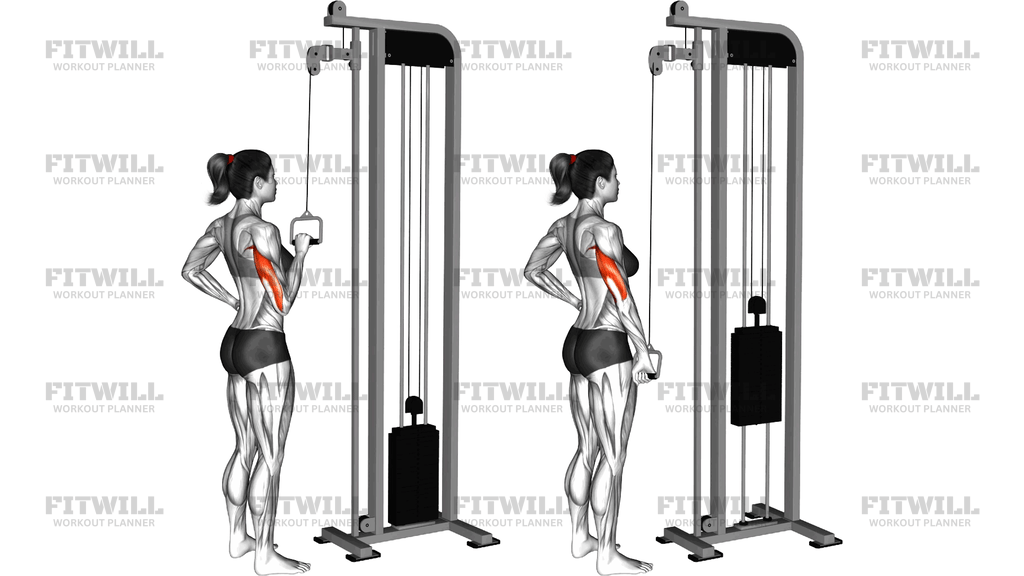
Instructions
- Attach a single handle to the highest pulley of a cable machine and select a light starting weight on the stack.
- Stand with your right side toward the machine, feet about hip-width apart in a comfortable split stance, and grip the handle with your left hand using a neutral, palm-down grip.
- Place your free hand on your hip or behind your back, pull the handle in until your upper arm is pinned against your side, and bend the elbow to roughly 90 degrees to reach the starting position.
- Brace your core, keep your chest tall, and square your shoulders so your torso does not twist toward the machine.
- Exhale and press the handle down in a smooth arc, straightening the elbow fully until the arm hangs at your side and slightly behind your hip.
- Squeeze the triceps hard for a one-second pause at the bottom with the arm completely straight.
- Inhale and let the handle travel back up under control until the forearm is just past vertical, stopping before the upper arm lifts away from your side.
- Keep the cable close to your body throughout the set so the tension stays directed down along the working arm.
- Finish all planned reps with the left arm, then turn around, switch your grip and stance, and complete the same number of reps with the right arm.
- When the set is done, guide the handle back to the stack slowly rather than letting the weight drop and yank your arm upward.
Tips & Tricks
- The most common mistake on this exercise is letting the elbow flare away from the body or drift forward as fatigue builds. If you cannot keep the upper arm pinned to your side, drop the weight one plate.
- Stop the upward phase when your forearm is roughly parallel to the floor or just past it. Letting the handle fly all the way up releases tension and lets the shoulder take over the reset.
- Avoid leaning your torso over the working arm to help press the weight down. If your chest starts rotating toward the machine, the load has exceeded what the triceps can handle alone.
- Use a full lockout at the bottom rather than stopping just short. The final few degrees of elbow extension are where the triceps contraction peaks, and the cable keeps resistance there the whole time.
- Start your sets with your weaker or smaller arm. That way the stronger side never sets a rep count the weaker side cannot match.
- A neutral grip with the knuckles facing forward usually feels most natural on the single handle, but rotating the palm slightly as you press down can help you find the groove that feels strongest on your elbow.
- Keep your wrist straight and neutral rather than flexing it under the handle. Bending the wrist shifts tension into the forearm and away from the triceps.
- Because each arm rests while the other works, this movement tolerates shorter rest periods well; 30 to 60 seconds between sides is usually enough.
- If your shoulder pinches at the top of the rep, reduce the stretch slightly or stand a step closer to the machine so the cable angle is more vertical.
Frequently Asked Questions
Which muscles does the Cable One Arm Tricep Pushdown work?
The triceps brachii on the working arm is the prime mover, with all three heads engaged as the elbow extends. The core and shoulder stabilizers hold the torso still, but they should not contribute to the pressing itself.
Why do this exercise one arm at a time instead of using a straight bar?
Single-arm work prevents your stronger side from compensating for the weaker one, which helps correct imbalances in strength and size. The single handle also lets each arm find its own natural pressing path without being locked to a bar.
Is the Cable One Arm Tricep Pushdown good for beginners?
Yes. The cable stack allows small weight increases, the standing position is stable, and the one-arm setup makes it easy to feel the triceps working. Beginners should start with a light weight and focus on keeping the elbow pinned to the side.
How far up should I let the handle travel between reps?
Let it rise until your forearm is just past vertical, roughly when the elbow reaches a little over 90 degrees. Going higher releases tension on the triceps and lets the shoulder and momentum restart each rep.
Where should my free hand go during the set?
Placing it on your hip or behind your back, as shown in the standard setup, keeps your torso square and gives you a physical cue not to twist toward the machine. Avoid bracing the free hand against the machine frame, which encourages leaning.
My elbow drifts forward as the weight gets heavy. What should I change?
That drift means the load is too heavy or you are pulling with the shoulder instead of extending the elbow. Reduce the weight, re-tuck the upper arm against your ribs, and focus on a smooth arc where only the forearm moves.
Can I substitute this with a two-arm rope pushdown?
Yes, a rope or straight-bar pushdown trains the same movement pattern, but you lose the unilateral correction and the individual arm path. They work well together: use the bar version for heavier loading and the one-arm version for balance work.
How many reps and sets should I do?
This exercise responds well to moderate loads in the 10 to 15 rep range per arm for 2 to 4 sets. Because it is an isolation movement with constant cable tension, prioritize controlled reps over maximal weight.
Is it safe for people with elbow discomfort?
Cable pushdowns are generally elbow-friendly because the resistance is smooth and the arm is supported against the body, but anyone with existing elbow pain should use a light weight, avoid sudden lockouts, and stop if discomfort sharpens during the set.