Mid Air Lateral Raises With Switching Palms
Mid Air Lateral Raises With Switching Palms is a bodyweight shoulder exercise performed standing, where you raise both arms out to your sides until they hover at shoulder height, then rotate your palms from a neutral position to face the ceiling while holding your arms in mid air. Instead of letting the arms drop between reps like a standard lateral raise, you keep them elevated and work the shoulder through repeated palm switches in that held position. The image shows the full setup: feet about hip-width apart, a tall upright torso, and arms extended straight out to the sides in line with the shoulders, palms turned upward at the top.
Because there is no external load, the resistance comes entirely from holding your own arms against gravity at that long lever length. That makes the lateral deltoids and the small stabilizing muscles around the shoulder joint work hard isometrically, while the repeated supination and pronation of the forearms adds rotational work through the shoulder and elbow. The upper traps, rotator cuff, and forearm muscles all contribute to keeping the arms steady while the hands turn over.
This movement suits beginners who want to build shoulder endurance without equipment, lifters looking for a burnout finisher after dumbbell lateral raises, and anyone rehabbing back into overhead work who needs a controlled, load-free option. It is also a practical travel or desk-break exercise, since it needs nothing but a small patch of floor and enough arm room to spread wide.
The setup matters more than it looks. Standing tall with the ribs stacked over the pelvis keeps the work in the shoulders instead of the lower back, and raising the arms only to shoulder height keeps the tension on the side delts rather than shrugging it up into the neck. Letting the hands drift behind the body or in front of it changes the line of pull on the shoulder, so keeping the arms in the frontal plane, directly out from the shoulders, is what makes the palm switch feel sharp and targeted.
To execute it well, lift the arms smoothly to shoulder height, pause long enough to feel the shoulders holding, then rotate the forearms so the palms face up, rotate back down, and only then lower the arms to finish the rep. The switching should be deliberate and controlled rather than fast flicking of the wrists. If your shoulders burn and your arms start to tremble before you finish a set, that is the intended stimulus working, not a sign you need to add speed.
The most common faults are shrugging the shoulders toward the ears, bending the elbows to shorten the lever, and dropping the arms the moment the palms start to tire. All three quietly remove the challenge. Keep the elbows straight but not locked, the shoulder blades pulled gently down the back, and the arms parked at shoulder height for the whole switching phase, and you will get far more out of far fewer reps.
[ Workout Log & Planner ]
Put your next workout in Fitwill
Keep your plan and training log ready when you are.


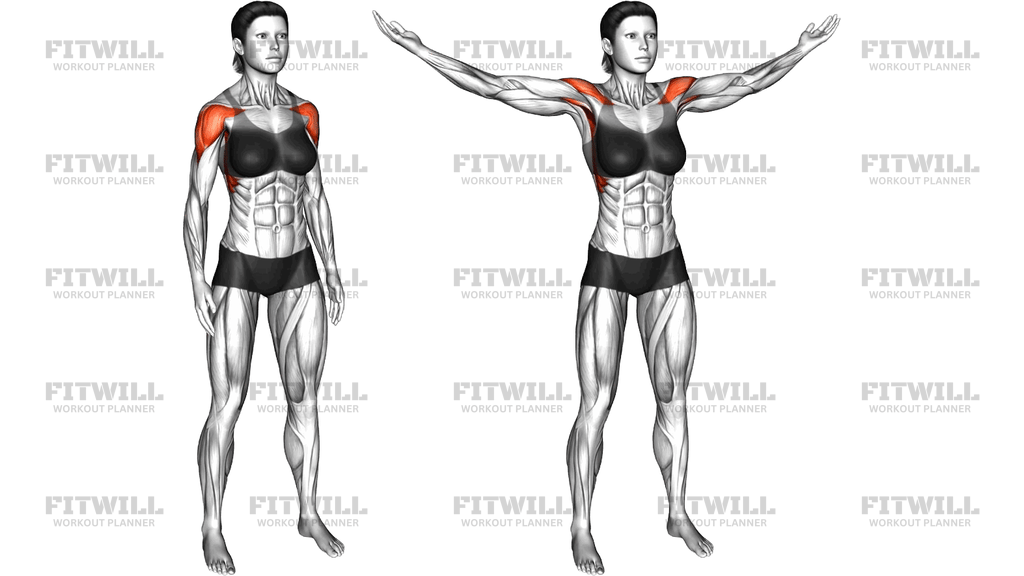
Instructions
- Stand with your feet about hip-width apart, weight spread evenly across both feet, and your spine tall with the ribs stacked over the pelvis.
- Let both arms hang at your sides with a relaxed neutral grip, palms facing your thighs, and pull your shoulder blades gently down and back.
- Brace your core lightly and lift your chest without leaning backward, so your torso stays vertical and still.
- Raise both arms straight out to the sides through a wide arc until they are level with your shoulders, forming a T shape with your body.
- Pause in that mid air position with your palms facing the floor and feel your side shoulders holding the weight of your arms.
- Rotate your forearms slowly so both palms turn to face the ceiling, keeping the arms at exactly shoulder height and in line with the shoulders.
- Hold the palms-up position for a beat, then rotate the forearms back down until the palms face the floor again.
- Lower both arms back to your sides with control, resisting the drop rather than letting gravity take them.
- Exhale as you raise the arms and switch the palms up, inhale as you rotate back and lower down.
- Reset your posture at your sides, then begin the next repetition.
Tips & Tricks
- If you feel the work climbing into your neck, your upper traps are taking over. Pull the shoulder blades down before each rep and lift the arms only to shoulder height, never above.
- A soft elbow bend that grows as you fatigue is the most common cheat. Check that your elbows stay extended without locking, since every centimeter of bend shortens the lever and unloads the shoulders.
- The palm switch should come from rotating the whole forearm, not just flicking the wrist. Turn the arm from the shoulder and elbow so the rotator cuff and forearm share the work.
- Keep the hands in your side-on line of sight. If your arms drift forward in front of the shoulders, the front delts take over and the side shoulder emphasis fades.
- Slower is harder here. Try a two-second switch up, a one-second hold, and a two-second switch down before each set of arms drops.
- Your shoulders will fatigue faster than you expect because you are holding your arms at full length. Start with short sets of 8 to 10 switches and build up rather than grinding to failure with sloppy form.
- Stop the set the moment you cannot hold shoulder height. Completing reps with drooping arms trains nothing and teaches a shrugged, hunched position.
- If your wrists feel strained during the rotation, reduce the range of the palm turn slightly and work within a comfortable arc before rotating fully palm-up.
Frequently Asked Questions
Which muscles does Mid Air Lateral Raises With Switching Palms work?
The primary muscles are the side shoulders, specifically the lateral deltoids, which hold the arms out at shoulder height. The upper traps, rotator cuff, and forearm muscles assist, especially during the palm switching phase.
Why do the palms switch during the raise instead of just holding the arms up?
Rotating the palms from facing down to facing up adds forearm rotation and challenges the shoulder stabilizers in a mid air hold. It keeps the exercise interesting and shifts some emphasis through the rotator cuff and forearms while the side delts work isometrically.
Is this a good shoulder exercise for beginners?
Yes, it is very beginner friendly because there is no external weight and the resistance scales naturally with your arm length and control. Start with fewer repetitions and focus on holding the arms level with the shoulders without shrugging.
How high should I raise my arms during Mid Air Lateral Raises With Switching Palms?
Raise them only to shoulder height, forming a straight line from one hand to the other. Going higher shifts the work into the upper traps and reduces the tension on the side shoulders.
My shoulders burn quickly and my arms shake. Is that normal?
Yes, that trembling and burning is the intended effect of holding your arms at full length against gravity. When you can no longer keep the arms at shoulder height with straight elbows, end the set and rest.
Can I do Mid Air Lateral Raises With Switching Palms if dumbbell lateral raises hurt my shoulders?
Many people tolerate this bodyweight version better because there is no load and the rotation is self-paced, but discomfort patterns vary. Move within a pain-free range, slow the palm switch down, and stop if any movement causes sharp pain.
What can I use instead if I want more resistance?
Hold very light dumbbells or small water bottles with a neutral grip and perform the same mid air hold and palm switching, keeping the weight light so the rotation stays controlled. Resistance bands held at shoulder height are another option, though the switching element is harder to preserve.
How many repetitions should I do?
Because this is an endurance-focused bodyweight exercise, higher repetitions work well. Aim for sets of 10 to 15 full raise-and-switch cycles, resting when your arms can no longer stay level with the shoulders.
Should my elbows be straight or bent during the movement?
Keep the elbows extended but not locked. Bending them even slightly shortens the lever, makes the hold much easier, and takes work away from the side shoulders, which defeats the purpose of the exercise.