Ring Maltese Cross
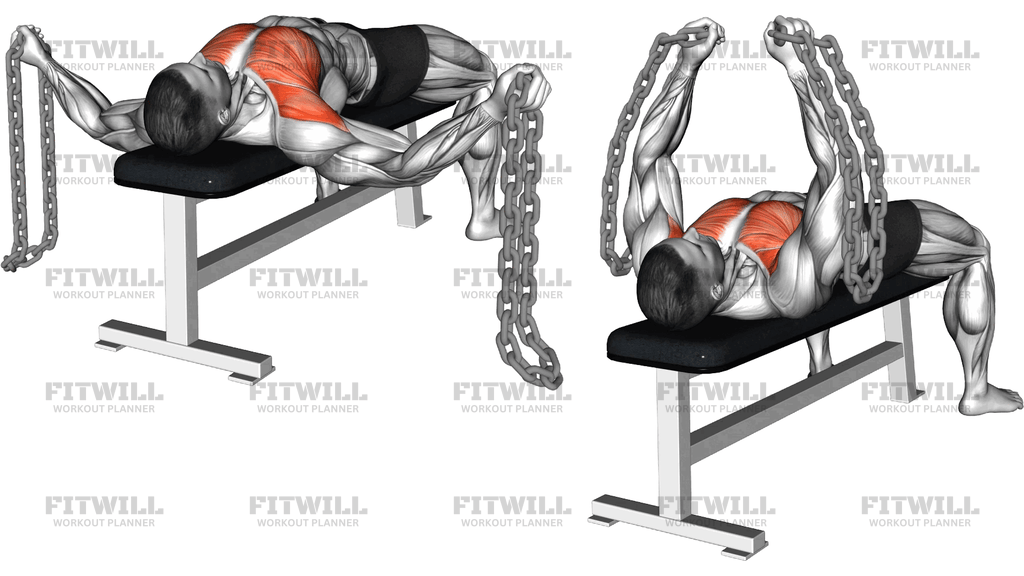
The Ring Maltese Cross is one of the most demanding static holds in all of gymnastics strength training. Performed on still rings, it involves supporting your full body weight on straight arms held wide out to the sides, with your body held horizontally in a face-down position, hovering above the ground. It is classified as a strength element in elite gymnastics, and even among high-level athletes it typically takes years of progressive preparation to hold cleanly.
The dominant muscles at work are the chest, particularly the sternal portion, which must generate enormous horizontal adduction force to keep the arms from drifting back toward the body. The front and side shoulders, triceps, and upper back stabilize the elbow and shoulder joints in an extremely disadvantaged position, while the entire trunk stays rigid to keep the body aligned like a plank. Because the rings are unstable, every stabilizer from the wrists to the rotator cuff is also working continuously.
This hold is useful for advanced calisthenics and gymnastics athletes who want to build peak horizontal pressing strength and control. It also serves as a long-term benchmark for ring work, sitting well beyond moves like the ring dip, back lever, and planche progressions in difficulty. Most people train it through regression drills such as maltese push-ups on rings or floor, wide ring support holds, and isometric holds at partial angles rather than attempting the full position directly.
Setup and body position are critical for safety. The rings should hang at a height that lets you hold the position with your body parallel to the floor and your hands roughly at hip height, far out to your sides. The grip is neutral, fingers spread over the rings, with the rings turned slightly outward so you can press through the heels of the hands. Any collapse of the shoulder blades, bending of the elbows, or sagging of the hips dramatically changes the load and increases stress on the shoulder joint.
To execute it, you press the rings down and outward until your arms are locked straight and wide, your shoulders sit directly above your hands in the horizontal plane, and your whole body forms one rigid line. A common strategy is to enter the hold from a support position by slowly lowering the body backward and spreading the arms, or to build up using spots, bands, or a low ring height where your feet can catch you.
Because of the extreme leverage, this is not an exercise for beginners. Work on it only after you have a solid foundation of ring support holds, ring dips, planche and back lever work, and straight-arm pressing strength. Always train it over a safe fall zone, warm the shoulders thoroughly, and stop any attempt the moment you feel joint strain rather than muscular effort.
[ Workout Log & Planner ]
Put your next workout in Fitwill
Keep your plan and training log ready when you are.


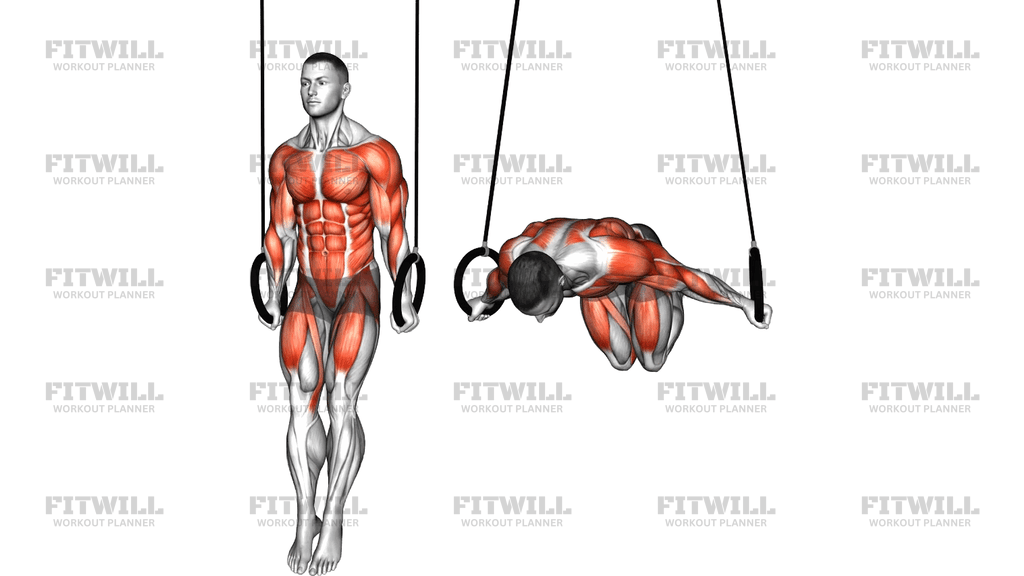
Instructions
- Hang the still rings so that, when you hold the maltese position, your body will sit parallel to the floor with your hands at about hip height; set them lower rather than higher while learning.
- Grip the rings with a neutral grip, fingers wrapped over the top, and turn the rings slightly outward so the backs of your hands face the floor in the hold.
- Start from a ring support position or from a lowered entry with your feet lightly touching or skimming the floor, and squeeze your legs and glutes together.
- Brace your trunk hard, pull your ribs down, and lock your elbows completely straight before any spreading begins.
- Press the rings down and drive your arms outward to the sides until your hands are wide of your body and your shoulders travel backward past your hands.
- Keep pressing the rings toward each other isometrically while your arms stay straight and wide, so your chest holds the body horizontal above the floor.
- Hold the position with your head neutral, hips in line with your shoulders and heels, and breathe in small, controlled breaths rather than holding your breath entirely.
- Exit by pulling the rings back in toward your hips and lifting your shoulders up and forward until you return to a stable support position or your feet return to the floor.
- Rest fully between attempts and reset your grip and brace before every rep, since the maltese punishes sloppy entries immediately.
Tips & Tricks
- Do not try to learn the full hold from scratch; earn it with maltese push-ups, wide ring support holds, and partial maltese holds with feet on the floor or a spotter.
- The most common failure is the elbows bending as you spread the arms. If your elbows bend, the leverage changes and the shoulder takes the strain; film yourself from the side to catch this.
- Watch for the rings turning inward during the hold. If the rings rotate so your palms face backward, re-set your grip with the rings turned slightly outward before each attempt.
- Keep the press directed down and slightly inward the entire time. Athletes who only push down lose the horizontal squeeze that actually holds the body up.
- Sagging hips are a giveaway that the trunk has stopped working. Squeeze the glutes and quads before you spread the arms so the body enters the hold already rigid.
- Shoulder pain, especially at the front of the joint, means the load has moved from muscle to passive structures. Back off to an easier regression instead of pushing through it.
- Train the maltese early in a session when the shoulders are fresh, and keep attempts short with long rests, since fatigue causes form breakdown fast at this leverage.
- Build straight-arm pressing strength separately with ring work like back levers and pseudo planche push-ups; the maltese depends on that base more than on any single drill.
Frequently Asked Questions
What muscles does the Ring Maltese Cross work?
The chest is the primary mover, generating the horizontal pressing force that keeps the arms wide. The front and side shoulders, triceps, upper back, and deep core stabilize the position, and the grip and wrist stabilizers work continuously because the rings are unstable.
Can beginners train the Ring Maltese Cross?
The full hold is an elite-level gymnastics element and is not appropriate for beginners. Beginners can build toward it with regressions like wide ring support holds, maltese push-ups with feet on the floor, and band-assisted partial holds.
How high should the rings be set for the Ring Maltese Cross?
Set the rings so that in the horizontal hold your hands sit at roughly hip height with your body clear of the floor. While learning, a lower setting is safer because your feet can catch you if you lose the hold.
Why do my elbows keep bending in the Maltese Cross?
Bending the elbows is the body's way of shortening the leverage when the straight-arm position is too strong a demand. Regress to a partial hold or a maltese push-up variation and rebuild the straight-arm pressing strength before attempting the full position again.
How is the Ring Maltese Cross different from a planche?
In a planche the hands stay beside the hips and the shoulder works mostly in extension, while in the maltese the arms are spread wide and the chest must press the rings inward against extreme horizontal leverage. Most athletes find the maltese harder on the chest and shoulders in a different pattern than the planche.
How long should I hold the Ring Maltese Cross?
Short, high-quality holds of two to five seconds with full recovery between attempts work best. Because the position is so close to the body's structural limits, long fatigued holds increase the risk of form breakdown and shoulder strain.
What can I use instead of rings to train for the Maltese Cross?
Parallettes or floor work for maltese push-ups, and band-assisted or partner-spotted holds, all build relevant strength. Rings remain the best tool because their instability trains the control the full hold demands.
Is the Ring Maltese Cross safe for the shoulders?
It places very high stress on the shoulder joint, so it should only be attempted after years of progressive ring and straight-arm training, with a thorough warm-up. Any sharp or pinching pain at the shoulder is a signal to stop and move to an easier regression.
Should my legs be straight in the Ring Maltese Cross?
In the formal gymnastics element the legs are straight and together with pointed toes, which maximizes the leverage demand. Some trainees practice with a slight knee bend or a tucked variation early on, but the goal is a fully straight, rigid line from shoulders to heels.