Aztec Push Up
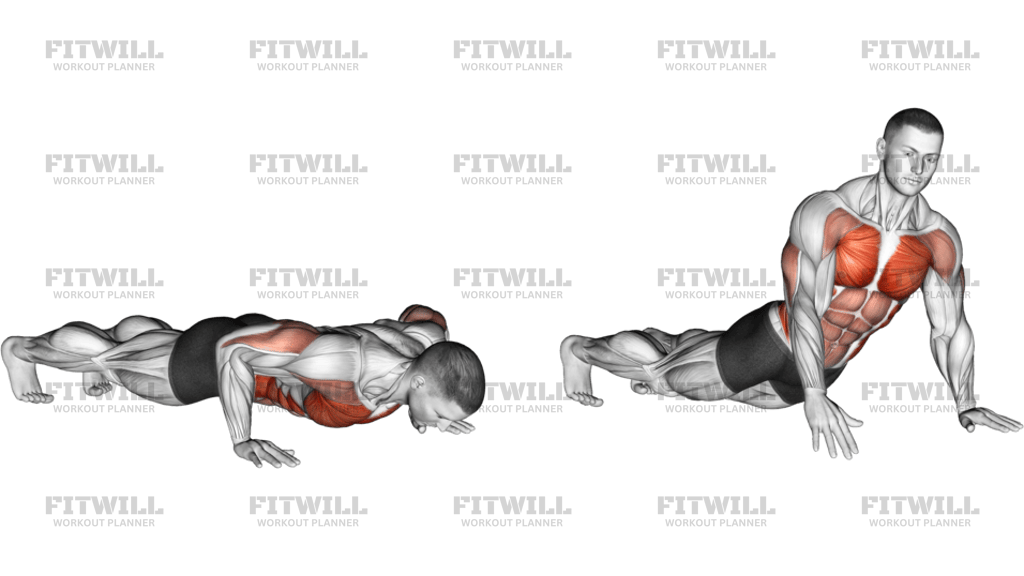
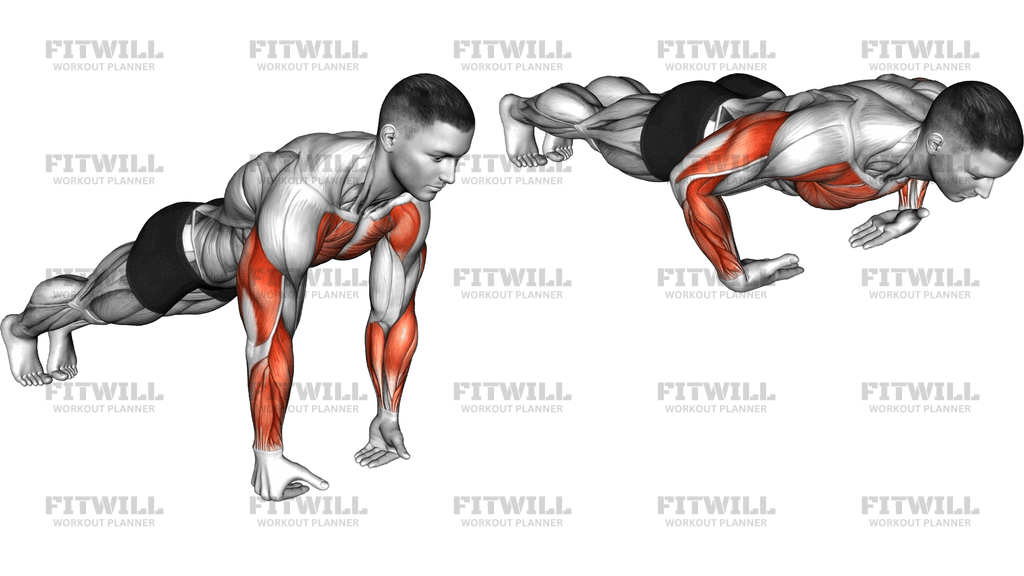
The Aztec Push Up is one of the most demanding plyometric push-up variations you can attempt. From a standard push-up position, you lower your chest toward the floor, then explode upward so hard that your entire body leaves the ground. At the peak of that jump, you fold your body in mid-air and touch your hands to your toes, then quickly extend back out and land with soft elbows back in push-up position. It takes the familiar push-up and adds an explosive hip hinge and a toe touch at the top, which is where the movement gets its reputation.
This is an advanced bodyweight drill best suited to people who already have a solid pressing and plyometric base. If you can comfortably perform clapping push-ups and pike jump touches, and you can hold a rigid plank under fatigue, you are in the territory where the Aztec Push Up becomes trainable. It appears in calisthenics circuits, martial arts conditioning, and athletic training programs where upper-body power and fast hip flexion matter.
In terms of what it trains, the push-up portion loads the chest, triceps, and front of the shoulders, while the explosive jump adds a power demand that slow push-ups never touch. The mid-air fold is driven by the abs and hip flexors snapping your hips toward your hands, and landing and re-extending under control challenges the core, shoulders, and wrists to absorb force and redirect it. Very few bodyweight exercises combine upper-body pressing power with trunk speed in one repetition.
Setup and body position matter more here than in almost any other push-up variation. Your hands sit slightly wider than shoulder width, your body forms one straight line from head to heels, and your feet stay together so the jump and fold stay tight. A wide or soft setup turns the fold into a sloppy sprawl and puts extra stress on the lower back and wrists.
To execute it well, think of the rep as three beats: sink, explode, fold. Lower with control so your shoulders and arms are loaded like springs, drive the floor away hard enough that your hips rise to meet your hands, tap your toes, then shoot your legs back out before you land. The landing is not a crash — your elbows should bend immediately to absorb the impact, exactly like the catch phase of a jump squat but on your hands.
Because the impact on the wrists, elbows, and shoulders is significant, treat this as a peak-skill movement rather than high-volume filler. Train it early in a session while fresh, on a firm but forgiving surface, and keep the reps low and crisp. Missing a rep usually means landing stiff or failing to re-extend in time, so build up through easier progressions like clapping push-ups and tuck jumps into a toe touch before committing to the full Aztec Push Up.
[ Workout Log & Planner ]
Put your next workout in Fitwill
Keep your plan and training log ready when you are.


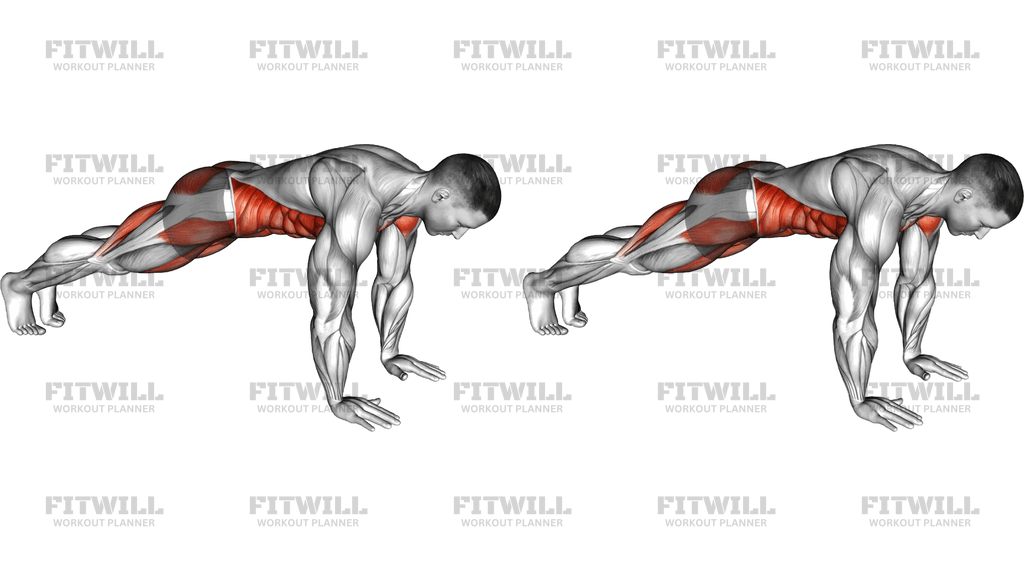
Instructions
- Place your hands on the floor slightly wider than shoulder width with your fingers spread, and set your feet together behind you so your body forms one straight line from head to heels.
- Brace your core and squeeze your glutes so your hips and lower back are locked in before you attempt any explosive work.
- Bend your elbows and lower your chest toward the floor in a controlled push-up, keeping your elbows at roughly 45 degrees to your torso rather than flared straight out.
- From the bottom position, press explosively and drive the floor away so your palms leave the ground and your whole body lifts.
- As you rise, snap your hips upward and reach your hands forward and down to touch your toes in a pike position at the peak of the jump.
- Immediately shoot your legs back out behind you and bring your hands back under your shoulders while still airborne.
- Land with your hands flat and your elbows already bending, catching your bodyweight softly instead of locking out into a stiff arm landing.
- Exhale forcefully as you explode up, and inhale as you lower into the next repetition.
- Reset your plank position completely between reps — if your hips sag or your hands drift, stop and re-establish the setup rather than grinding out a messy rep.
Tips & Tricks
- If your toes never reach your hands, the problem is usually an underpowered press, not slow hip flexion — build your explosive push-up first with clapping push-ups until your hands clearly leave the floor.
- Common mistake: folding at the hips while your chest is still low, which turns the rep into a sprawl. Wait until you feel weightless at the top of the jump before piking.
- Keep your feet together throughout. A wide foot stance makes the toe touch easier but kills the hip speed this drill is meant to train.
- Warm up your wrists thoroughly with circles and gradual weight bearing, because they take the full landing impact every rep.
- Do these on grass, a rubber floor, or a mat rather than bare concrete to reduce the shock through your elbows and shoulders.
- Quality cue: land like a cat, not like a plank falling over. If your elbows lock out at impact with a thud, lower the jump height and relearn the catch.
- Stop the set the moment your fold gets slow. A half-fold followed by a hard landing is where wrists and elbows usually get irritated.
- Program low reps — 3 to 6 per set — with full recovery between sets, since this is a power movement and fatigue destroys the explosive quality you are training.
- Film yourself from the side once in a while. From above or behind, a shallow fold can look complete when your hands are actually just slapping your shins.
Frequently Asked Questions
What muscles does the Aztec Push Up work?
The chest, triceps, and front shoulders drive the press and absorb the landing, while the abs and hip flexors power the mid-air fold toward the toe touch. The shoulders and core also work hard to stabilize your body on every landing.
Is the Aztec Push Up suitable for beginners?
No — it is an advanced plyometric variation. Build a foundation with regular push-ups, then clapping push-ups, and practice fast pike toe touches on the floor before combining them into the full movement.
Why can't I touch my toes during the Aztec Push Up?
The toe touch happens at the peak of the jump, so if your press isn't explosive enough to lift your hips, your hands and toes never meet. Improve your explosive pressing power and snap your hips up harder rather than reaching with your arms alone.
How is the Aztec Push Up different from a clapping push-up?
A clapping push-up is a straight-body vertical explosion with a hand clap, while the Aztec Push Up adds a full hip fold and toe touch at the top before re-extending in mid-air. That makes it significantly harder on the hip flexors, abs, and landing control.
What is the most common mistake in the Aztec Push Up?
Landing with stiff, locked elbows after a rushed or incomplete fold. This sends the impact straight into the joints, so always land with your elbows already bending and your hands under your shoulders.
What can I use as a substitute for the Aztec Push Up?
Clapping push-ups train the explosive press, and standing toe-touch jumps or fast pike ups train the fold. Combining those two separately is the standard progression path toward the full Aztec Push Up.
How many reps of the Aztec Push Up should I do?
Keep sets low, around 3 to 6 clean reps, and rest fully between sets. The goal is crisp, explosive folds — once the toe touch gets slow, the set is over.
Is the Aztec Push Up safe for your wrists and shoulders?
It places high impact loads on the wrists, elbows, and shoulders, so it should only be attempted with a solid pressing base and adequate warm-up. Use a forgiving surface like a mat or rubber flooring and stop if you feel joint pain rather than muscle effort.
Should I do the Aztec Push Up before or after regular push-ups?
Do it first, while you are fresh and explosive. Plyometric quality collapses quickly under fatigue, and grinding an Aztec Push Up at the end of a pressing session greatly increases the risk of a hard, uncontrolled landing.