Dumbbell Bent Over Reverse Fly To Hammer Curl
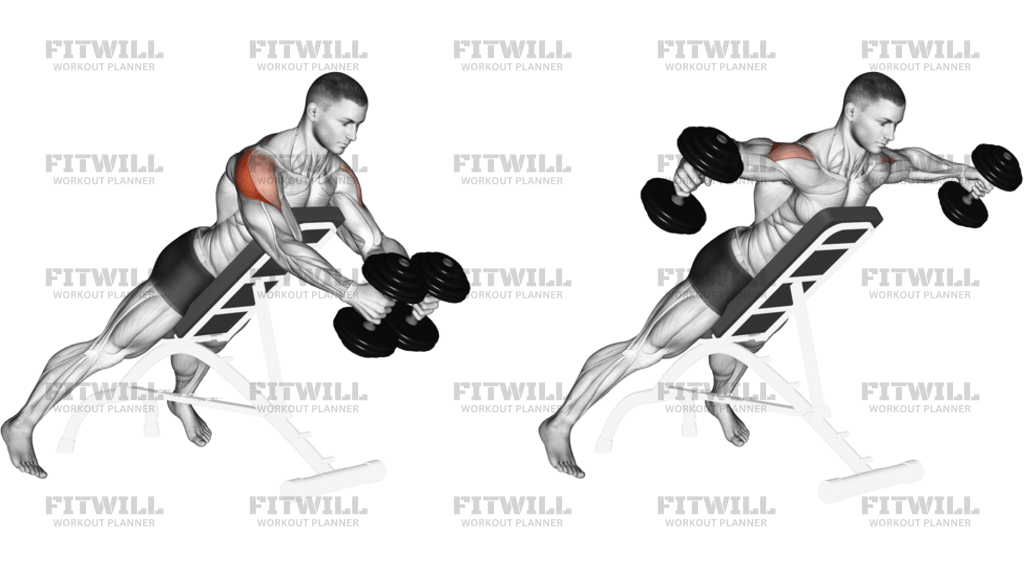
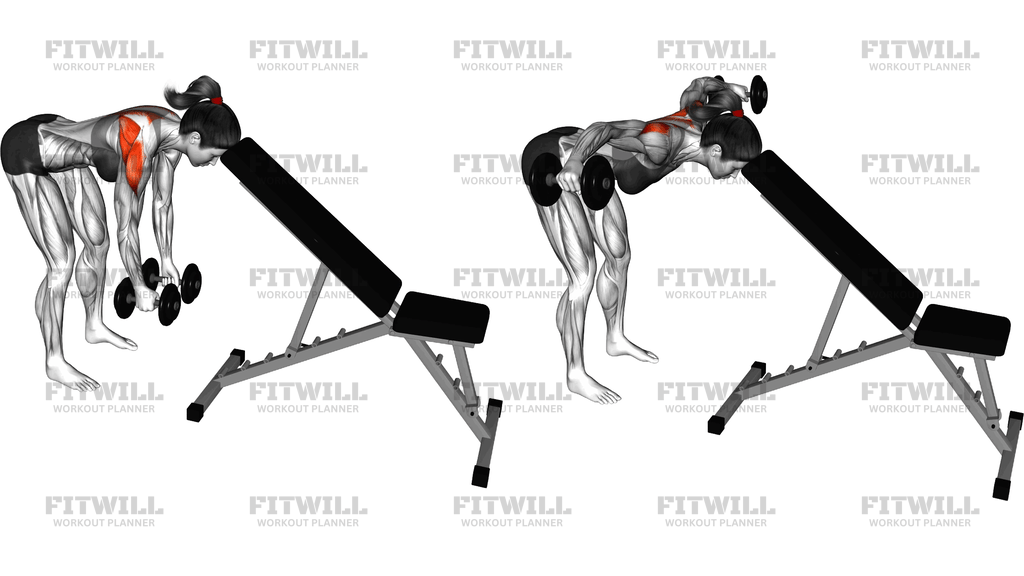
The Dumbbell Bent Over Reverse Fly To Hammer Curl is a two-part compound movement that combines a rear delt fly with a hammer curl, all performed from a hinged, bent-over stance. You hold a dumbbell in each hand, hinge forward at the hips until your torso is angled well past parallel-ish territory toward the floor, first sweep your arms out and back to hit the rear shoulders and upper back, then pull the dumbbells up in a neutral-grip curl to load the biceps and forearms. Because both phases happen with your torso hinged, your lower back, glutes, and hamstrings work isometrically the entire time to hold your position.
This exercise earns its place in a program for a simple reason: the rear shoulders are the most commonly undertrained muscle in typical push-heavy routines, and this movement attacks them directly while also giving the biceps and brachioradialis meaningful work in the same set. The hammer-style, neutral-grip curl is easier on the elbow joint than a fully supinated curl for many lifters, and it shifts emphasis toward the brachioradialis and brachialis, which add thickness to the upper arm.
Setup matters more here than in most arm or shoulder work. The quality of both the fly and the curl depends on how well you hinge. If you round your lower back or let your chest rise as the set gets hard, the rear delt fly turns into a sloppy shrug and the curl loses its line of pull. Set your hinge first, brace your core, and only then pick up the weights. A torso angle somewhere between 45 degrees and just above parallel to the floor works; what matters is that you can hold it without straining.
Execution should feel deliberate rather than fast. The reverse fly is a small-range movement driven by the shoulder blades pulling together, not by momentum from your torso. The hammer curl that follows is a straightforward elbow bend with the palms facing in, dumbbells traveling up along the front of your body. Resist the urge to swing; if your torso moves, the weight is too heavy. Lifters who keep their torso pinned to one angle get dramatically more out of this than those who turn it into a rowing motion.
You will see this movement used in shoulder-day finishers, arm-focused sessions, and upper-body circuits where training efficiency matters. It is especially useful for people who sit at a desk all day, since the hinged reverse fly position directly counters the rounded-shoulder posture that comes from hours of typing and driving. Because it demands both hip-hinge endurance and upper-body control, it also doubles as light posterior-chain training.
Start lighter than you think you need. The fly portion of this movement is humbling with even modest dumbbells, and the curl portion usually allows more weight than the fly does, which means the fly should dictate your load. Choose a weight you can fly with strict form, accept that the curl will feel easier, and treat the combination as one controlled sequence rather than two maximal efforts stitched together.
[ Workout Log & Planner ]
Put your next workout in Fitwill
Keep your plan and training log ready when you are.


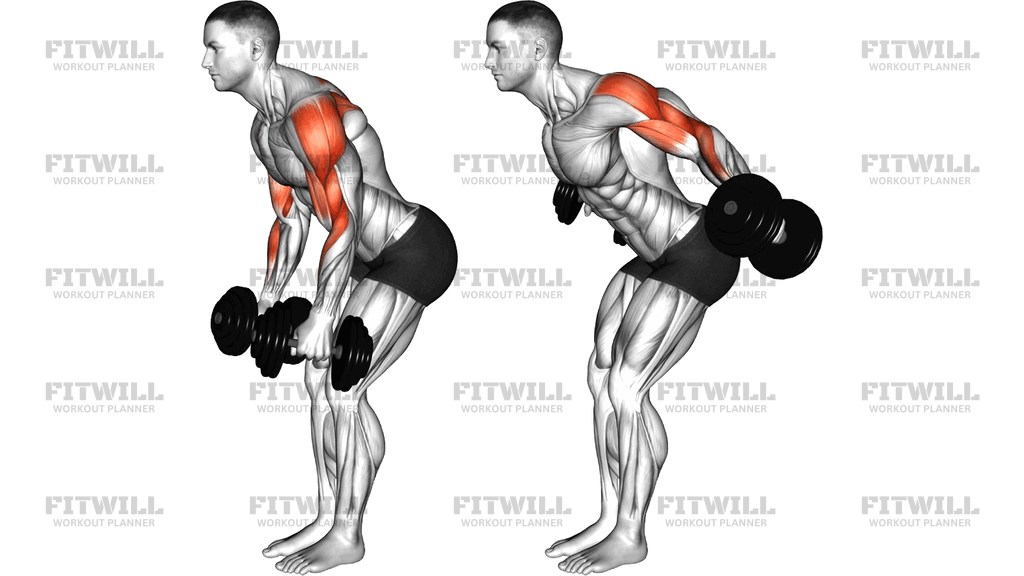
Instructions
- Stand with your feet about hip-width apart, holding a dumbbell in each hand with a neutral grip, palms facing your body.
- Hinge forward at the hips, pushing your glutes back and softening your knees, until your torso is angled between 45 degrees and near-parallel to the floor. Let the dumbbells hang straight down under your shoulders.
- Draw your shoulder blades down and back, brace your core, and keep a flat lower back with your neck in line with your spine.
- Exhale and raise both arms out to the sides in a wide arc, leading with your elbows and keeping a slight bend in them, until the dumbbells reach roughly shoulder height.
- Pause briefly at the top of the fly, squeezing your rear shoulders and shoulder blades together.
- From that raised position, bend your elbows and curl the dumbbells up toward your shoulders in a hammer-curl arc, palms staying facing each other throughout.
- Squeeze at the top of the curl, then lower the dumbbells slowly back out to the wide fly position with control.
- Inhale as you lower your arms back down to the hanging start position to complete one rep.
- Reset your hinge before each rep if your torso angle has drifted, and keep your hips and torso completely still while your arms do the moving.
Tips & Tricks
- Pick your weight based on the reverse fly, not the curl. Most lifters can curl far more than they can fly, so a load chosen for the curl will wreck the fly portion and turn it into a shrug.
- If your chest lifts toward the ceiling as the set progresses, your hips have drifted forward. Push your glutes further back and think about pointing your chest at the floor to restore the hinge.
- Lead the fly with your elbows, not your hands. Raising the dumbbells with straight, hand-driven arms shifts tension toward the traps and away from the rear shoulders.
- Keep the curl strictly at the elbow joint. If your elbows travel forward and up during the curl, you are turning it into a row and stealing work from the biceps.
- Stop the fly at shoulder height. Lifting the dumbbells higher than that usually involves pinching the traps and arching the lower back rather than moving the rear delts through more range.
- A slight elbow bend held throughout the fly protects the elbow joint; just keep that bend constant. Straightening and re-bending the arms each rep turns the fly into a partial rear-delt row.
- If holding the hinge becomes the limiting factor before your shoulders fatigue, rest one hand on a bench or your thigh for support and work one arm at a time.
- Squeeze your glutes while hinged. It sounds unrelated, but glute engagement stabilizes your pelvis and makes it much easier to keep your lower back flat under fatigue.
- Tempo is your friend here: a one-second pause at the top of the fly and a slow two-second lowering phase expose weak rear delts quickly and build them reliably.
Frequently Asked Questions
Which muscles does the Dumbbell Bent Over Reverse Fly To Hammer Curl work?
The primary target is the rear shoulders, with the rhomboids and middle traps assisting during the fly. The hammer curl portion then loads the biceps, brachialis, and brachioradialis, while the lower back, glutes, and hamstrings hold the bent-over position isometrically.
Why is the curl done with a hammer grip instead of palms-up?
The neutral, hammer-style grip keeps the forearms in a strong position while bent over and shifts more work to the brachioradialis and brachialis, which add width and thickness to the upper arm. It is also generally more comfortable on the wrists and elbows in a hinged position.
Can beginners do the Dumbbell Bent Over Reverse Fly To Hammer Curl?
Yes, but beginners should start with very light dumbbells and may want to practice the hinge and the reverse fly separately before combining them. If holding the bent-over position is difficult, support one hand on a bench and work one arm at a time.
How far forward should I hinge during this exercise?
Aim for a torso angle between 45 degrees and near-parallel to the floor. The closer you get to parallel, the more the rear shoulders and upper back are targeted, but only go as far as you can hold with a flat lower back and no strain.
What is the most common mistake with this movement?
Using too much weight and turning the reverse fly into a torso-swinging row. The fly portion should come from the shoulder blades pulling together with almost no body movement; if your torso rocks, reduce the load.
Should the fly and curl be done as one fluid motion or as separate phases?
Treat them as two distinct phases with a brief pause between them: fly to shoulder height, pause and squeeze, then curl, pause, lower back through the fly position. Blending them into one continuous swing costs you tension on both the rear delts and the biceps.
What can I substitute if I do not have dumbbells?
A reverse cable fly combined with a cable hammer curl is the closest substitute and keeps constant tension. Resistance bands anchored low can also work, though the resistance profile differs from free weights.
My lower back fatigues before my shoulders do. Is that normal?
Some lower back engagement is expected since it holds the hinge, but if it fails first, shorten your sets, lighten the load, or support one hand on a bench for single-arm sets. Building hinge endurance through deadlifts and hip hinges over time will also help.
How high should I raise the dumbbells during the fly phase?
Raise them to about shoulder height in a wide arc. Going higher typically recruits the upper traps and arches the lower back without adding meaningful rear delt work.
Is the Dumbbell Bent Over Reverse Fly To Hammer Curl safe for the shoulders?
For healthy shoulders, it is generally well tolerated because the fly uses a natural scapular retraction pattern and the neutral-grip curl keeps the elbows comfortable. Keep the weight modest, avoid jerky reps, and stop if you feel pinching at the front or top of the shoulder.