Side Step Reverse Fly
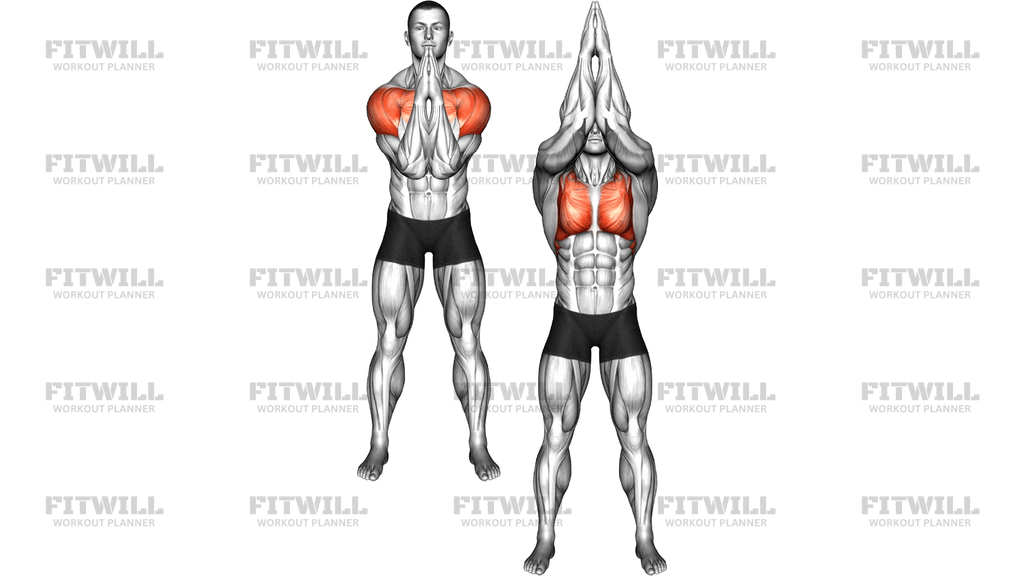
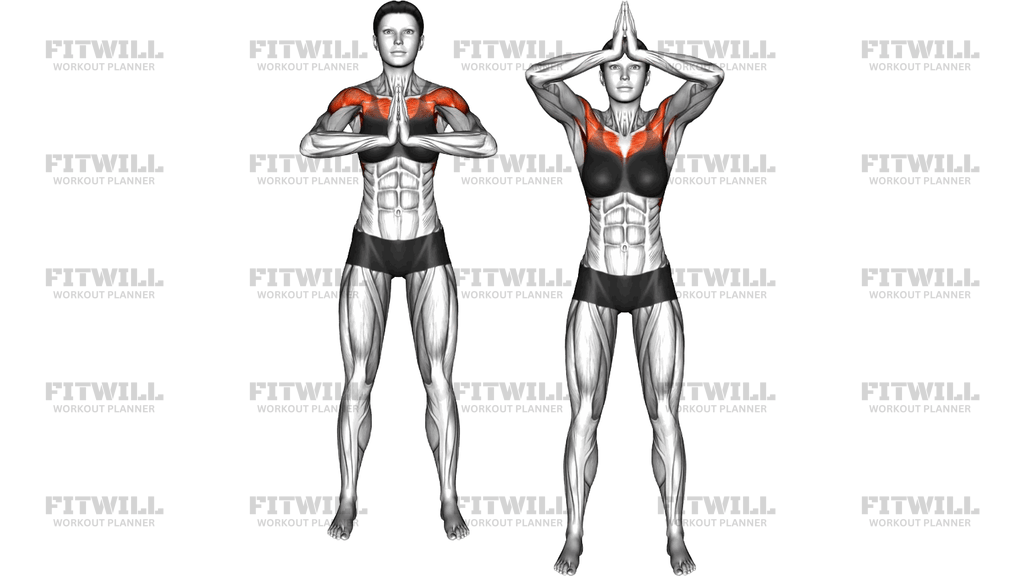
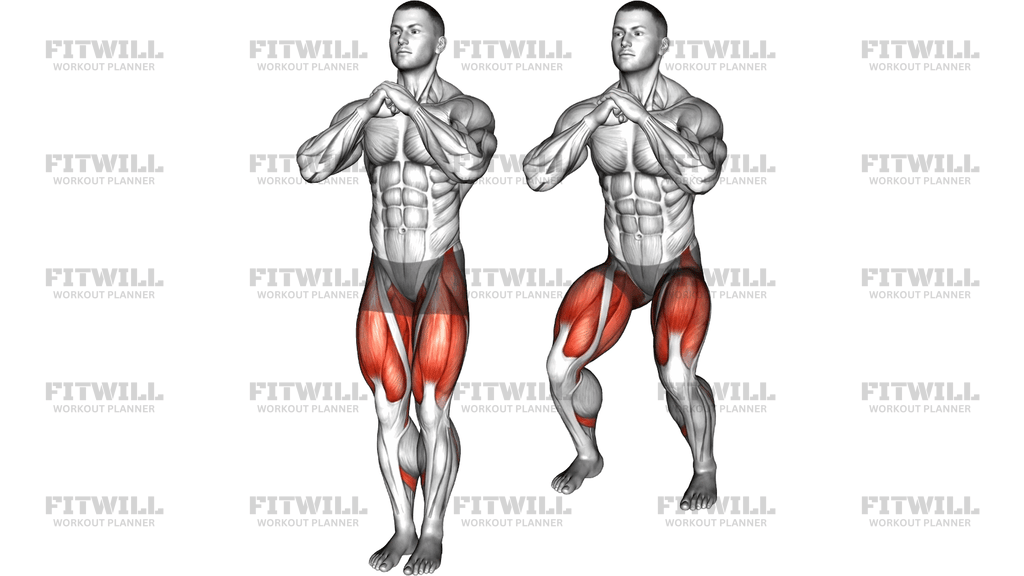
The Side Step Reverse Fly is a standing bodyweight movement that pairs a lateral step with a wide, sweeping arm arc. You begin with your hands together in front of your chest, then step one foot out to the side into a wider stance while your arms open out to the sides at shoulder height, as if performing a reverse fly without any weight. You then bring the stepping foot back in and your hands back together, repeating the cycle on alternating sides.
Because no equipment is needed, this drill fits easily into warm-ups, circuit training, or active recovery days. The arm sweep works the chest and front shoulders through a broad horizontal arc, while the side-step trains the quads, inner thighs, and calves as they absorb and produce force with each step. It also raises your heart rate quickly, which is why many coaches use it as a movement prep exercise before upper body pressing work or full-body sessions.
The setup matters more than it looks. Standing tall with a soft bend in the knees and the hands gently touching in front of the sternum gives you a clear starting reference. From there, the arms should travel in a wide, controlled arc rather than a sloppy swing, and the step should land with the whole foot on the floor, not a slapping heel strike. Keeping the arc at chest height keeps the tension on the chest and shoulders instead of letting the shoulders shrug up toward the ears.
Execution comes down to rhythm and control. Think of the step and the arm sweep happening together: foot goes out, arms open; foot comes in, arms close. Breathe in as you open, breathe out as you return. Most people rush the return, which turns the drill into a flailing motion, so treat the closing phase with the same attention as the opening phase.
This exercise suits beginners learning to coordinate upper and lower body movement, lifters warming up the chest and shoulders before pressing, and anyone training at home without equipment. Because the load is only your body weight, it is easy to adjust the pace: slower reps emphasize control and muscle engagement, while quicker, continuous reps make it a light conditioning drill. Stop if you feel any pinching in the shoulders, and shorten the arm arc until the movement feels smooth.
[ Workout Log & Planner ]
Put your next workout in Fitwill
Keep your plan and training log ready when you are.


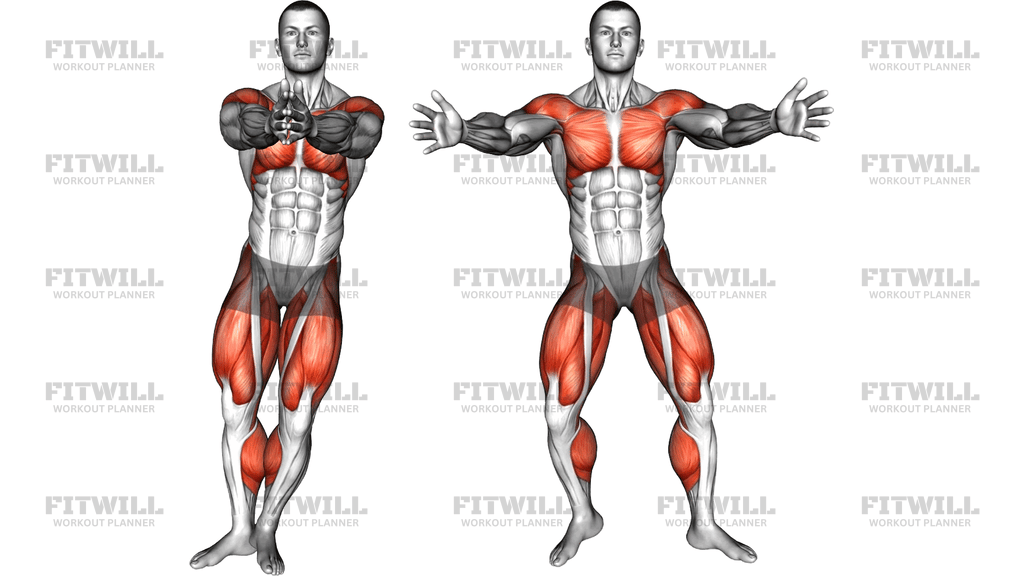
Instructions
- Stand tall with your feet together and a soft bend in your knees, arms extended in front of your chest with your hands gently touching or clasped.
- Brace your core lightly, pull your shoulders down away from your ears, and keep your gaze forward.
- Step your right foot out to the side into a stance slightly wider than shoulder width, letting both knees bend a little as you land.
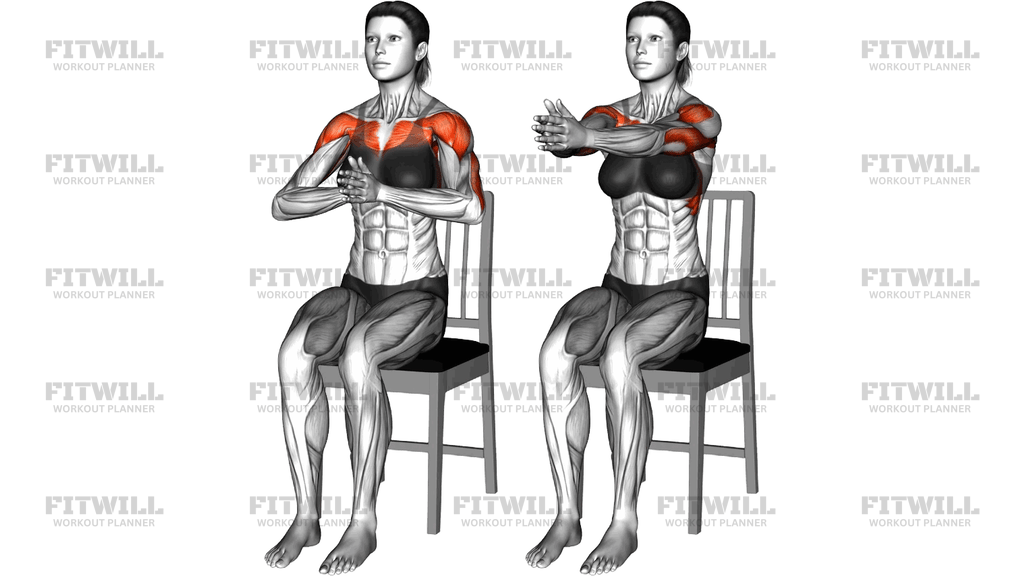
- As you step, sweep both arms out to the sides in a wide arc until they are straight and roughly at chest height, palms facing forward.
- Pause briefly in the open position with your arms level and your chest tall rather than leaning back.
- Bring your right foot back to the starting position while drawing your arms back together in front of your chest.
- Exhale as you close, then inhale as you begin the next repetition stepping out with your left foot.
- Continue alternating sides for your target number of repetitions, keeping the same rhythm on both sides.
- Finish the set by standing fully upright, shaking out the shoulders, and resetting your posture before the next set.
Tips & Tricks
- Keep the arm arc at chest height; letting the hands drift overhead shifts the work toward the traps and away from the chest and front shoulders.
- Squeeze the chest slightly as the hands meet in front of you each rep so the closing phase stays active instead of becoming a passive swing.
- Land each side step with your whole foot flat to avoid rolling onto the outer edge, which irritates the ankles over long sets.
- If your shoulders pinch at full extension, shorten the arc so your hands stop just short of a straight line out to the sides.
- Do not lean your torso backward as the arms open; the movement should come from the shoulders and hips, not an arch in the lower back.
- Match the step and the sweep so they finish together—staggered timing usually means the load is too fast or the arms are too loose.
- Keep the knees soft throughout; locking them out on each step turns the drill into a jolting, low-quality movement.
- Start with a slower tempo for the first set to groove the coordination, then increase pace only once both sides feel identical.
Frequently Asked Questions
What muscles does the Side Step Reverse Fly work?
The main muscles are the chest and front shoulders, which drive the wide arm arc. The side step also engages the quads, inner thighs, and calves with each repetition.
Is the Side Step Reverse Fly suitable for beginners?
Yes. It requires no equipment and the load is simply your body weight, so beginners can start slow and use a smaller arm arc until the coordination feels natural.
Why do my hands start together in front of my chest?
The hands-together start gives you a repeatable reference point and lets the arms open through a full, symmetric arc on every rep. It also adds a gentle squeeze of the chest as the hands come back together.
Should my arms be straight or bent during the sweep?
Keep them nearly straight with a soft elbow rather than rigidly locked. This protects the elbow joint and keeps the arc smooth from start to finish.
Can I use the Side Step Reverse Fly as a warm-up before bench pressing?
Yes, it is a good choice because it takes the chest and front shoulders through a wide arc and raises your heart rate without fatigue. Two or three sets of ten to fifteen reps per side works well before pressing.
How is this different from a regular standing reverse fly?
A standing reverse fly usually involves dumbbells or bands and targets the rear shoulders, while this version is bodyweight, sweeps the arms forward-to-out in front of the body, and adds a lateral step that brings the legs into the movement.
My lower back arches when my arms open wide. How do I fix that?
Brace your core, tuck your ribs down slightly, and reduce the width of the arm arc. Most arching comes from opening the arms faster than you can control them.
What can I substitute if stepping side to side bothers my knees?
Keep both feet planted and perform only the arm sweep, or make the step much smaller. Both options keep the shoulder and chest work while reducing demand on the legs.
How many repetitions should I do?
For warm-up or activation, 10 to 15 reps per side at a controlled pace is typical. For a light conditioning effect, work continuously for 30 to 60 seconds while keeping the arc clean.