Lying Single To Double Toe Tap
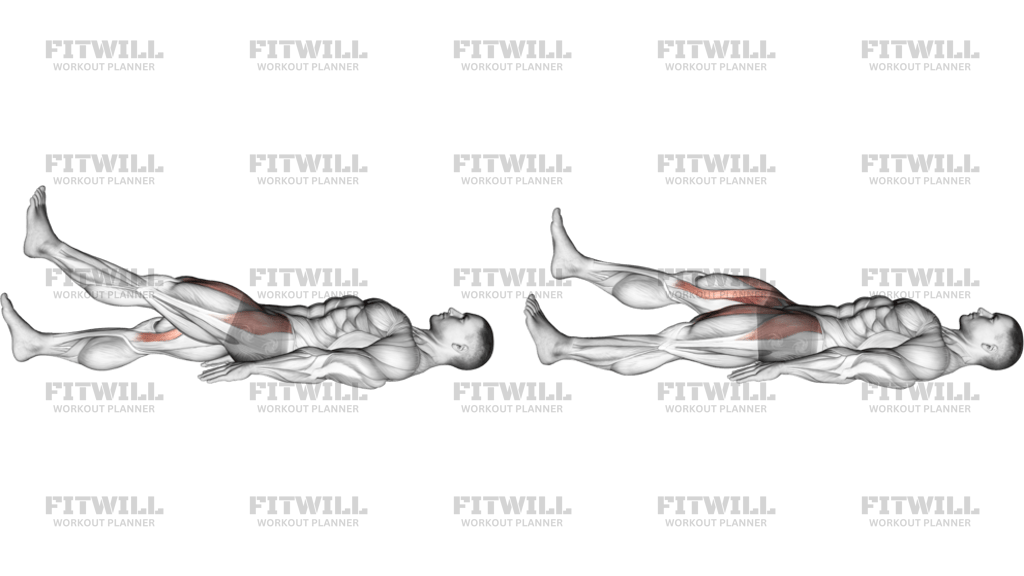
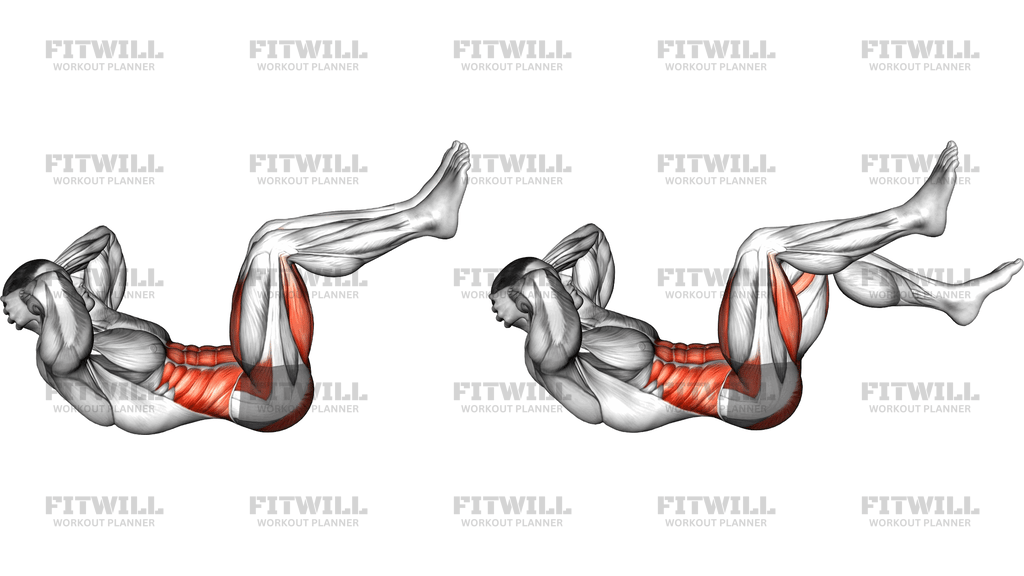
The Lying Single To Double Toe Tap is a controlled core exercise performed on your back with your head and shoulders curled slightly off the mat and both legs held in a tabletop position. From there, you lower one foot at a time to lightly tap the floor with your toes, return it to tabletop, and then progress to lowering both feet together. It is essentially a tiered version of the classic toe tap, and the single-leg phase lets you groove the hip hinge pattern before demanding more from your trunk with the double-leg version.
This movement is especially useful for people who find full double-leg lowers too aggressive early on. Because you start with one leg, your pelvis only has to resist asymmetrical loading, which is a more manageable challenge than controlling both limbs at once. Once the single taps feel solid, the double tap raises the demand on the lower abs and deep core to keep your lower back from arching off the floor. The curled torso position also keeps the abdominal wall under constant tension, so you get work through the whole trunk rather than just the hip area.
The main muscles working are the abdominals, with a strong emphasis on the lower abs and the deep stabilizers that control the position of your pelvis. The hip flexors contribute as they lower and lift the legs, but the goal is for your trunk, not your hip flexors, to do the stabilizing. If you feel the front of your hips gripping or your lower back taking over, that is a sign the abs are being outmatched and you should reduce the range.
Setup matters more than speed here. Lie on your back with your hands supporting the back of your head, lift into a small chest lift so your ribs draw down toward your hips, and raise both legs to 90-degree angles at the hips and knees. Press your lumbar spine gently toward the mat so your pelvis sits neutral or slightly tucked. That starting relationship between ribs, pelvis, and floor is what determines whether the exercise trains your abs or just strains your back.
Execution should be slow and quiet. Lower one leg until the toes just graze the floor, exhale, and lift it back to tabletop without letting the opposite hip shift. Alternate sides for your chosen reps, then attempt the double version: both feet descend together, tap lightly, and rise together. The common failure points are losing the chest lift halfway through, letting the lower back arch as the legs descend, and rushing the tap so momentum replaces control.
Use this exercise in core warm-ups, Pilates-style sessions, or as a stepping stone toward harder floor leg work. It requires no equipment beyond a mat, makes very little noise, and scales naturally: shorten the range if the pelvis moves, lengthen it once it stays still. Stop any set where you can no longer keep your ribs down and your back flat, because continuing past that point trains the wrong pattern.
Fitwill
Log Workouts, Track Progress & Build Strength.
Achieve more with Fitwill: explore over 9600 exercises with images and videos, access built-in and custom workouts, perfect for both gym and home sessions, and see real results.
Start your journey. Download today!




Instructions
- Lie on your back on an exercise mat with your knees bent and feet flat on the floor.
- Place your hands lightly behind your head to support your neck, elbows open to the sides, and curl your head and shoulders a few inches off the mat so your ribs draw down toward your hips.
- Lift both legs into tabletop: knees stacked over hips and shins parallel to the floor, toes gently pointed.
- Brace your trunk and press your lower back gently toward the mat before anything moves; this pelvis-to-floor contact is your reference point for the whole set.
- Inhale to prepare, then exhale as you hinge at the hip and lower one foot until the toes just touch the floor, keeping the knee bent at roughly the same angle.
- Tap the floor lightly rather than resting the foot, then lift that leg back to tabletop without letting your hips rock or your lower back lift.
- Repeat on the other side, alternating legs for the planned number of reps while keeping the chest lift held.
- To progress to the double version, lower both feet together on the exhale, tap both sets of toes down at the same time, then raise both legs back to tabletop.
- Keep breathing steadily throughout; avoid holding your breath as both legs descend.
- When the set is finished, lower your torso and legs back to the mat and rest before the next set.
Tips & Tricks
- If your lower back arches as the legs descend, the legs are traveling too far. Stop the descent at the angle where your back still touches the mat, even if that means your toes never reach the floor.
- Keep the tap light. If your foot rests or plants on the floor, you lose tension in the abs and turn the exercise into a leg press against nothing.
- Your elbows should stay open rather than pulling forward. Tugging on your neck means your torso has dropped or fatigue has set in, so end the set instead.
- Watch for the opposite hip hiking when one leg lowers. If the pelvis tips, imagine a cup of water balanced on your hip bones and keep the surface level.
- Start every session with single taps even if double taps feel easy. It reconfirms the pelvic control before the heavier double-leg demand.
- The curl is small. Lift only until the shoulder blades clear the mat; yanking yourself high turns it into a crunch and steals work from the leg control.
- Slow the lowering phase to a two- or three-count. Most of the abdominal work in this exercise happens on the way down, not on the lift back up.
- If your hip flexors cramp near the front of the pelvis, reduce the hold time and reset your pelvis to a slightly tucked position between reps.
- Exhale as the leg or legs go down and inhale on the lift back to tabletop. Matching breath to movement helps keep the trunk braced during the hardest part.
Frequently Asked Questions
What muscles does the Lying Single To Double Toe Tap work?
The abdominals do the primary work, especially the lower abs and the deep trunk stabilizers that keep your pelvis still while the legs move. The hip flexors assist with lowering and lifting the legs, but they should not dominate the movement.
Why does the exercise start with single-leg taps instead of both legs at once?
Lowering one leg challenges the trunk asymmetrically, which is easier to control than both legs descending together. Mastering the single tap first teaches you exactly where your pelvis starts to tip so the double version can be progressed safely.
Should my head and shoulders stay lifted the whole time?
Yes, the small chest lift is part of the setup and keeps the abdominal wall under continuous tension. If your torso drops, either rest or finish the set early rather than continuing with only the legs moving.
How far should I lower my legs during the tap?
Only as far as you can keep your lower back in contact with the mat and your pelvis motionless. For many people that means the toes stop short of the floor, which is a perfectly good working range.
My lower back arches when both legs lower together. What should I change?
Return to single-leg taps and shorten the descent on each rep until your back stays flat. You can also bend the knees slightly more, which shortens the lever and reduces the load on the trunk.
Can beginners do the Lying Single To Double Toe Tap?
Yes, as long as they stay with the single-leg version and a small range at first. It is actually a good beginner introduction to leg-lowering work because the light tap and bent knee keep the demand moderate.
Is it a problem if I feel this more in my hip flexors than my abs?
Some hip flexor involvement is normal because they move the legs, but sharp gripping means the abs are not controlling the pelvis. Tuck the pelvis slightly, slow the descent, and shorten the range until the trunk does more of the work.
What can I use instead if floor work is uncomfortable?
The closest substitute is a standing or supported knee-tap drill against a wall, where you lift one knee to hip height and lower it slowly while keeping your ribs down. It trains the same pelvic control with far less spinal flexion.
How do I know when I am ready for the double-leg tap?
When you can complete all your single taps with the chest lift held, the pelvis still, and your lower back flat on every rep, add the double version for a few reps at the end of the set.
Is it safe for my lower back?
For most people it is a back-friendly way to train the trunk because the movement is slow and the range is self-limiting. If you have a current back issue, keep the knees more bent, limit the descent, and stop if you feel pain rather than muscular effort.