Ring Russian Dip
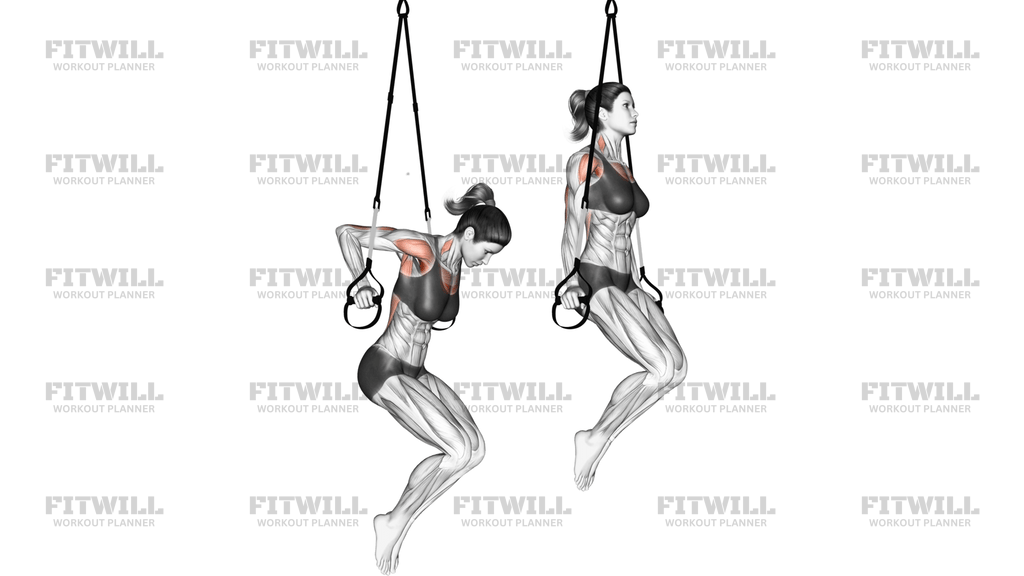
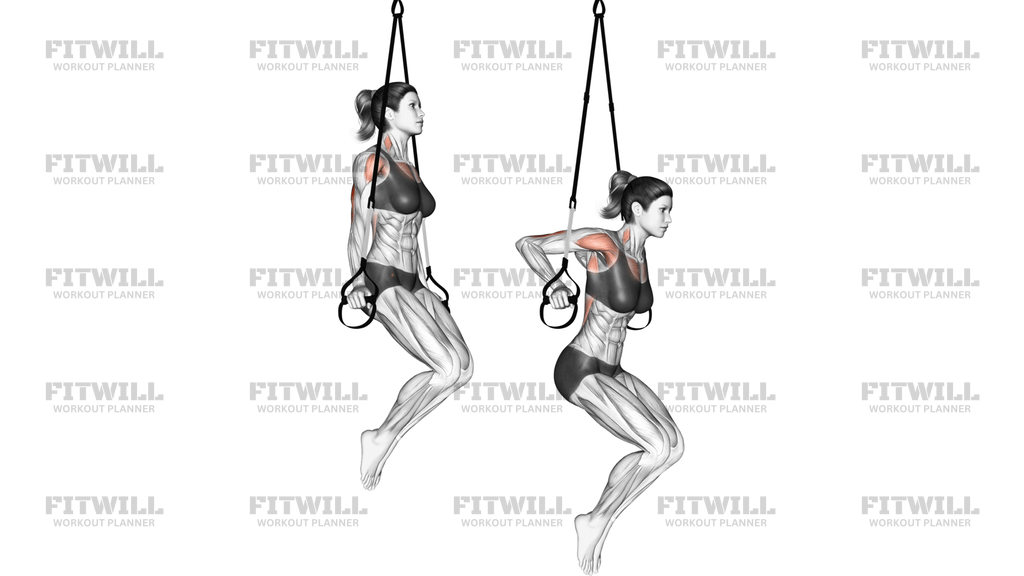
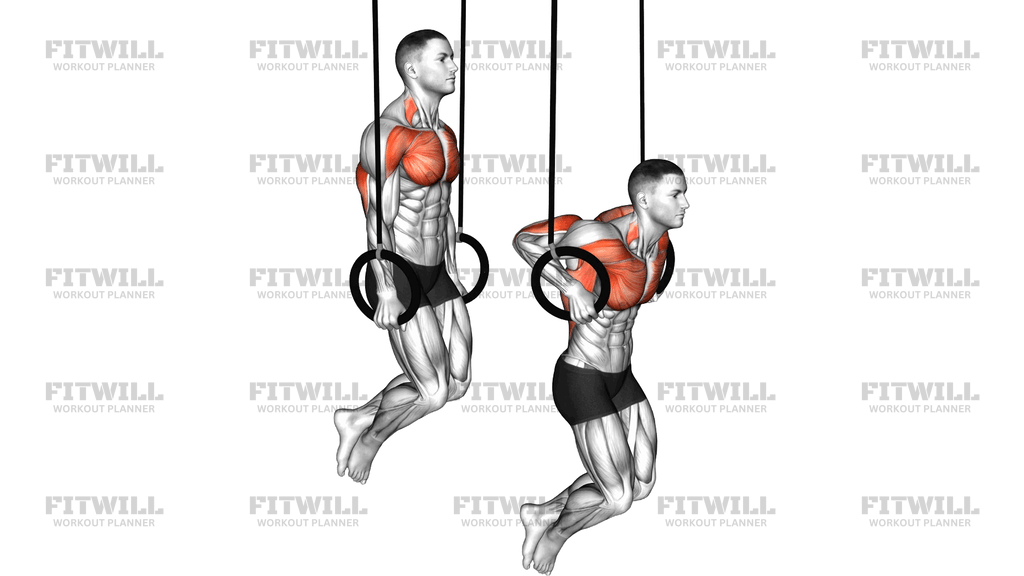
The Ring Russian Dip is one of the most demanding upper body pressing variations you can do on gymnastic rings. From a ring support hold, you lower into an extremely deep position where your shoulders drop below your hands and your elbows track backward behind your torso, letting the forearms slide along the rings as the straps rotate. From that bottom position, you press back up to a locked-out support. Compared to a standard ring dip, the Russian version extends the range of motion dramatically at the bottom, which is exactly where most pressing strength runs out.
This movement builds serious triceps strength, along with the chest and front shoulders, and it hammers the stabilizing work around the shoulder girdle in a way that bar dips simply cannot. Because the rings move and rotate, your arms, upper back, and core are constantly adjusting to keep you balanced. The end result is pressing strength that transfers well to harder ring skills, weighted dips, and even handstand push-up work.
The Ring Russian Dip is best suited to people who already own a solid ring support hold and can perform several clean ring dips through a full range. If you train calisthenics, gymnastics strength, or you want to break through a pressing plateau, this is a high-value skill-strength exercise. It is not a beginner movement, and jumping into it before your shoulders and elbows are ready is the most common way people get hurt.
Setup matters more here than in almost any other dip variation. The rings should hang at an even height with the straps secured, and your grip should sit on top of the rings with wrists stacked over your elbows at the top. As you descend, the rings rotate slightly outward and backward, and your forearms come to rest against them at the bottom. If your grip or strap length is inconsistent between reps, the movement path changes and the exercise becomes unpredictable.
Execute it by shifting your weight slightly forward, bending the elbows and letting them travel behind your body as your torso lowers between and past the rings. At the bottom, the backs of your upper arms or forearms rest on the rings with your shoulders well below your hands. Pause briefly, then drive the rings down and forward through the palm to climb back to the support position. Keep the rings pulled toward each other the entire time to stop them from flying apart.
Because of the extreme shoulder extension at the bottom, progress cautiously. Start with partial ranges, control every rep, and only lower as deep as you can press out of smoothly. Do this movement early in a session when you are fresh, and treat elbow and shoulder discomfort as a signal to reduce range or volume, not something to push through.
[ Workout Log & Planner ]
Put your next workout in Fitwill
Keep your plan and training log ready when you are.


Instructions
- Set the rings to an even height with the straps securely buckled, and grip the top of each ring with your fingers wrapped over the edge.
- Press into a solid support hold: arms straight, rings turned slightly outward, shoulders pressed down away from your ears, legs together with toes pointed.
- Brace your core and squeeze your glutes so your body hangs as one rigid line with only a slight forward lean.
- Begin the descent by bending your elbows and letting them travel backward behind your torso while your chest lowers toward and past the rings.
- Keep pulling the rings inward toward your midline the whole way down so the straps stay under tension and the rings do not drift apart.
- At the bottom, allow the rings to rotate back so your forearms or the backs of your upper arms rest along the rings, with your shoulders below your hands.
- Pause for a beat in the bottom position, then press down hard through the rings, driving them forward and down as you extend the elbows.
- Finish the rep back in the top support hold with the elbows fully locked and shoulders repressed down.
- Exhale as you press out of the bottom, and inhale during the descent.
- Reset your support hold between reps, then repeat, keeping every rep controlled rather than bouncing out of the bottom.
Tips & Tricks
- The most common failure point is the rings splitting apart in the bottom position, which dumps you forward off the rings. Actively pull them together throughout the rep.
- Do not let your elbows flare straight out to the sides; they should track backward past your ribs, which is what separates the Russian dip from a regular dip.
- If you cannot press out of the full bottom position, cut the depth in half and build up gradually instead of relying on a bounce.
- Keep your wrists on top of the rings and stacked over your forearms; letting the wrists collapse back changes the leverage and loads the joint awkwardly.
- A slight forward lean over the hands is necessary, but leaning too far turns the movement into an uncontrolled fall toward the straps.
- Keep the straps short and rigid if possible. Long, swinging straps turn every rep into a balance problem on top of a strength problem.
- Film yourself from the side to check that your shoulders actually drop below your hands at the bottom, since it is hard to judge depth from feel alone.
- Do Ring Russian Dips before fatiguing grip or triceps work; practicing these tired makes the bottom position sloppy and risky.
- If your elbows complain during the descent, slow the lowering phase down even more. Speed is what usually irritates the joints, not the range itself.
Frequently Asked Questions
What muscles does the Ring Russian Dip work?
The triceps are the primary movers, with strong contributions from the chest and front shoulders. The upper back, forearms, and core work continuously to stabilize the moving rings.
How is the Ring Russian Dip different from a regular ring dip?
In a regular dip your upper arms stay roughly parallel to the rings at the bottom, while in the Russian version your elbows travel behind your torso and the rings rotate back so your forearms rest on them. This makes the range of motion much deeper and significantly harder.
Can beginners do Ring Russian Dips?
Not usually as a starting point. You should first be comfortable with a stable ring support hold and several full-range ring dips before attempting the Russian variation, even with reduced depth.
Why do my rings keep separating at the bottom?
This usually means you are not actively pulling the rings toward each other during the descent. Squeeze them inward through the whole rep, and make sure your grip stays on top of the rings rather than letting the wrists roll back.
What can I use as a substitute for Ring Russian Dips?
Standard ring dips, weighted parallel bar dips, and deep push-up variations all build the pressing base. Lowering slowly through only the top half of the Russian dip is also a good way to work toward the full version.
How deep should I go in the Ring Russian Dip?
Only as deep as you can press out of under control with the forearms resting on the rings. If you have to bounce or jerk to escape the bottom, reduce the depth until the full range is strong.
Is the Ring Russian Dip safe for the shoulders and elbows?
It places the shoulders in a deep extended position and loads the elbows heavily, so it demands preparation. Build range gradually, warm up thoroughly, and back off if you feel joint pain rather than muscular effort.
How many reps should I do?
Because this is a strength and skill movement, keep the reps low, around 3 to 6 per set, and stop the set before your bottom position quality breaks down.
How long are the straps supposed to be for this exercise?
Shorter, more rigid straps are generally better, since they reduce swinging and make the support position easier to control. Just make sure both straps are set to exactly the same length before you start.