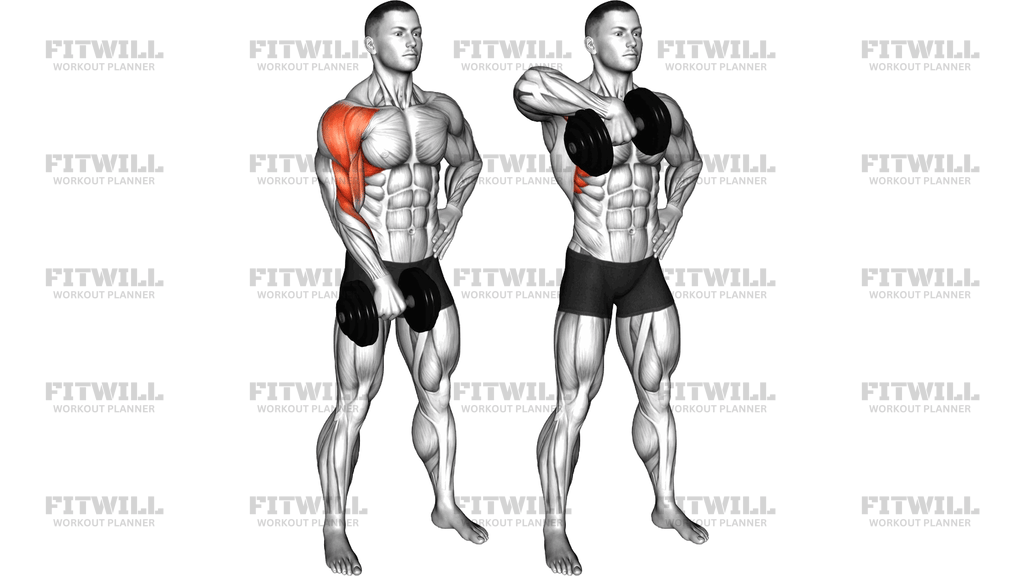
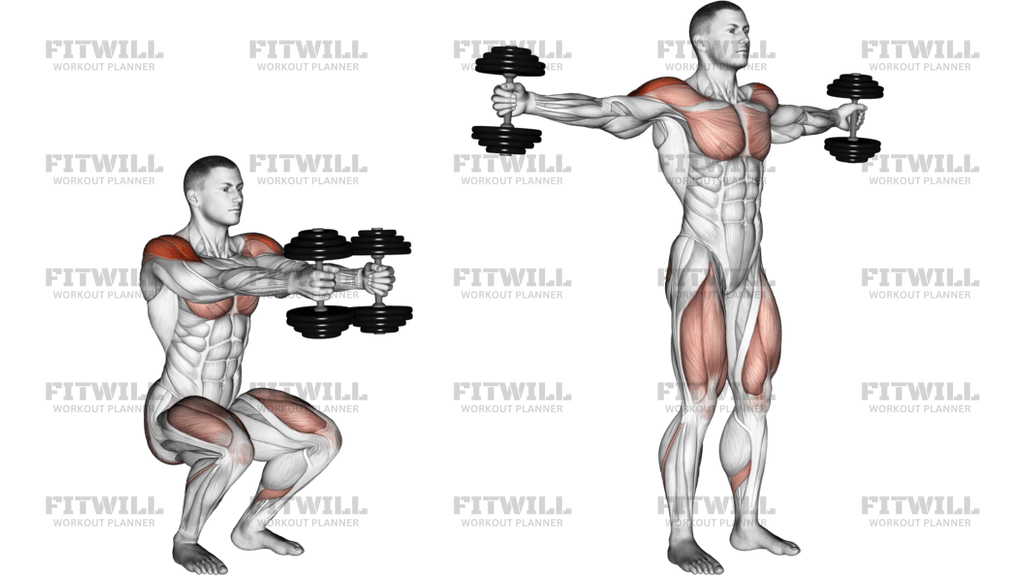
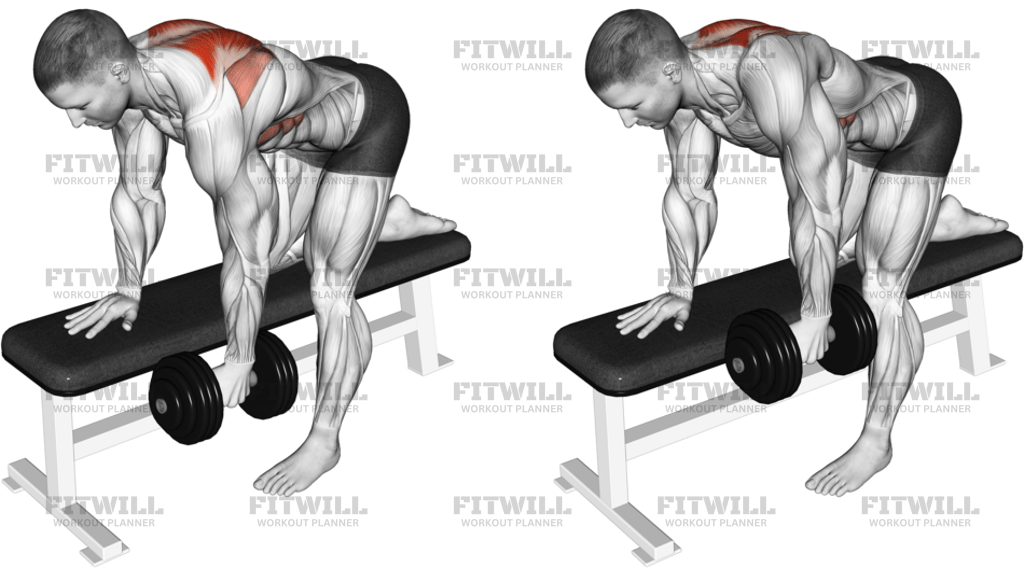
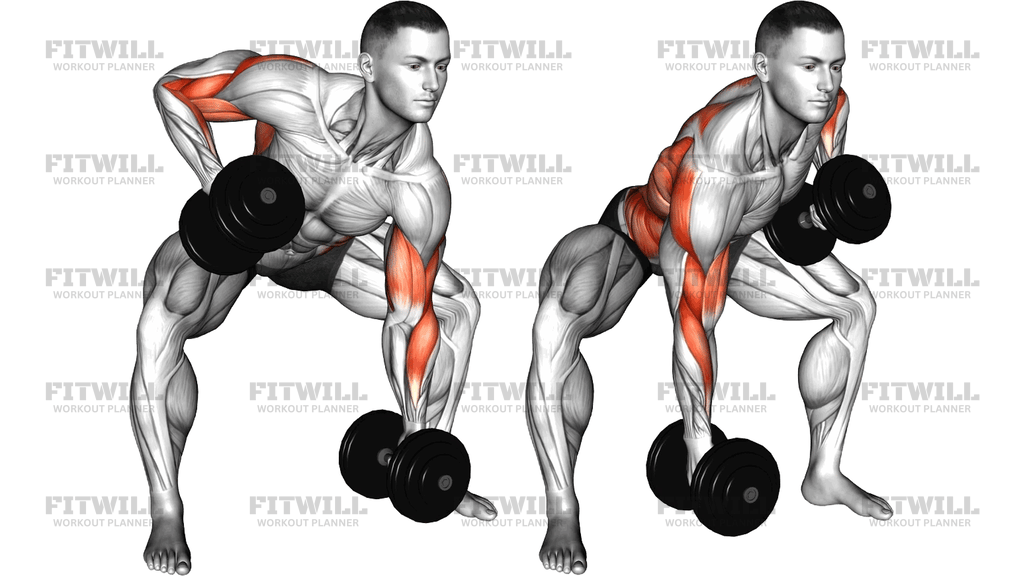
Dumbbell Decline Shrug
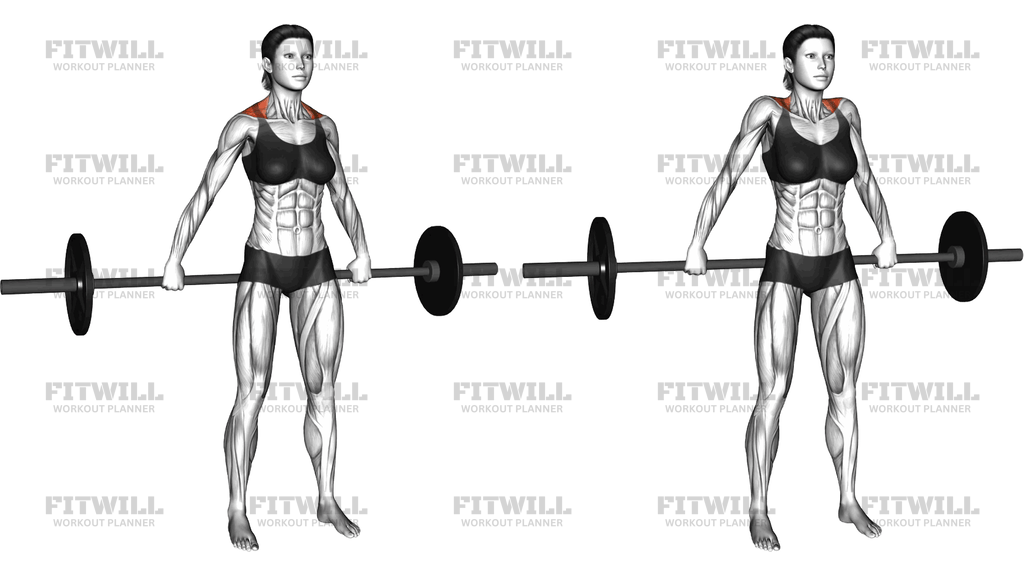
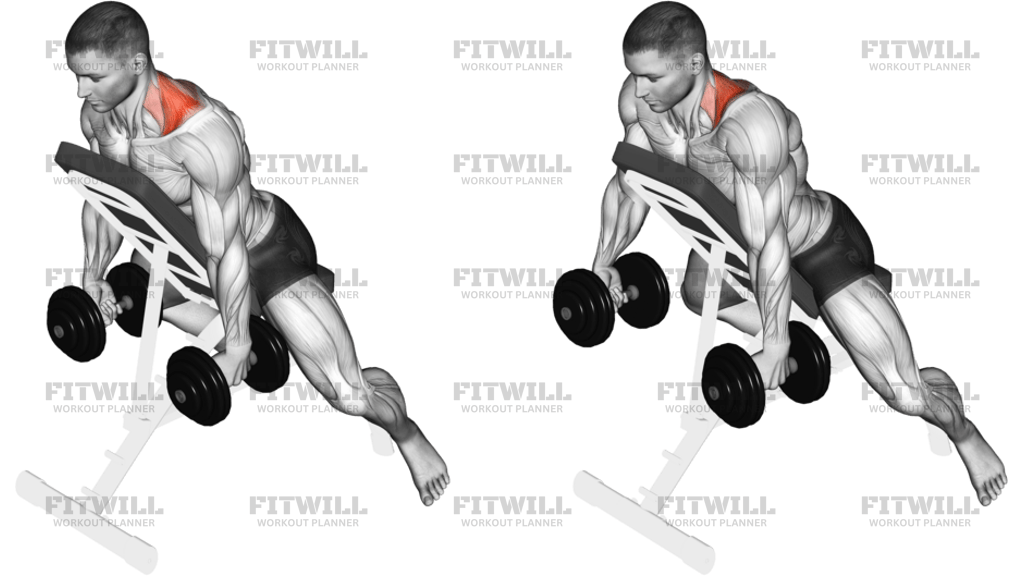
Dumbbell Decline Shrug is a chest-supported trap exercise performed on a decline bench with a dumbbell in each hand. The setup removes most of the body English that can creep into standing shrugs, so the movement stays focused on shoulder elevation rather than swinging the torso or turning it into a row.
The main target is the upper traps, with the rhomboids, levator scapulae, rear shoulders, and forearms helping to stabilize the position. Because your chest is supported, the bench angle also makes it easier to keep the neck long and the ribs from flaring while the shoulders move through a clean shrug.
The setup matters more here than in many dumbbell movements. Lie face down on the decline bench with your chest and upper torso firmly supported, your arms hanging straight under the shoulders, and the dumbbells resting below you with a neutral grip. The body should stay still from the waist down while the shoulder girdle does the work.
Each rep is a short but deliberate lift of the shoulders straight toward the ears. At the top, the traps should feel fully contracted without the elbows bending, the hands curling, or the torso shifting. Lower the dumbbells under control until the shoulders are stretched again, then repeat with the same smooth path and tempo.
Dumbbell Decline Shrug is useful as an accessory lift when you want to build upper-trap size, improve scapular control, or add direct trap work without loading the spine heavily. It fits well near the end of a back, shoulder, or upper-body session, especially when you want a strict shrug that stays honest through every rep.
[ Workout Log & Planner ]
Put your next workout in Fitwill
Keep your plan and training log ready when you are.


Instructions
- Lie face down on a decline bench with your chest supported and your feet braced so your body stays stable.
- Hold a dumbbell in each hand with a neutral grip and let both arms hang straight under your shoulders.
- Set your neck long, draw your chin slightly back, and keep your rib cage pressed into the pad.
- Brace your midsection so your torso does not lift as the shrug starts.
- Raise both shoulders straight up toward your ears without bending your elbows or curling the dumbbells.
- Squeeze the traps briefly at the top while keeping the head and chest quiet.
- Lower the dumbbells slowly until the shoulders drop into a controlled stretch.
- Reset the shoulders at the bottom and repeat with the same straight-up, straight-down path.
Tips & Tricks
- Think 'up and down,' not 'back and around.' Rolling the shoulders turns this into a different movement and reduces upper-trap tension.
- Let the dumbbells hang fully before each rep so the traps work through a clear bottom stretch.
- Use a load that lets you pause at the top without the elbows bending or the chest peeling off the pad.
- Keep the chin tucked lightly; looking forward or craning the neck usually makes the neck do too much of the work.
- If the bench angle is too steep, the body tends to slide and the shrug becomes sloppy; lower the angle until the chest stays planted.
- Do not squeeze the dumbbells so hard that the forearms take over the set.
- A one-second squeeze at the top is more useful here than chasing faster reps.
- Stop the set if you feel the movement shifting into a row or if your low back starts arching to finish the shrug.
Frequently Asked Questions
What muscles does Dumbbell Decline Shrug work?
Dumbbell Decline Shrug mainly works the upper traps. The rhomboids, levator scapulae, rear shoulders, and forearms help stabilize the position and control the dumbbells.
Is Dumbbell Decline Shrug good for beginners?
Yes, if you can set up comfortably on the decline bench and keep the shoulders moving without swinging. Start light and learn the shrug path before adding load.
Should I bend my elbows during Dumbbell Decline Shrug?
No. Keep the arms straight and let the shoulders do the lifting. Bending the elbows usually turns the set into a partial row.
How high should the shoulders go in Dumbbell Decline Shrug?
Lift the shoulders as high as you can without moving the torso or curling the dumbbells. The rep should feel like a vertical shrug, not a full-body heave.
What is the most common mistake in Dumbbell Decline Shrug?
The biggest mistake is turning the shrug into a rolling motion or using momentum from the chest and hips. Keep the chest pinned to the bench and move only the shoulder girdle.
Why use a decline bench for Dumbbell Decline Shrug?
The decline bench supports the torso and makes it harder to cheat with body swing. That keeps the traps under cleaner tension than a loose standing shrug for many lifters.
How heavy should I go on Dumbbell Decline Shrug?
Use a weight that lets you pause at the top and lower each rep smoothly. If the dumbbells start bouncing or your neck tenses up, the load is too heavy.
Can I substitute this for standing shrugs?
Yes, if you want stricter trap work with less torso momentum. Standing shrugs can use more load, but Dumbbell Decline Shrug often gives you better control.
Should Dumbbell Decline Shrug hurt my neck?
No. You should feel the upper traps working, not pinching or pain in the neck. Reduce the load or check your head position if the neck takes over.