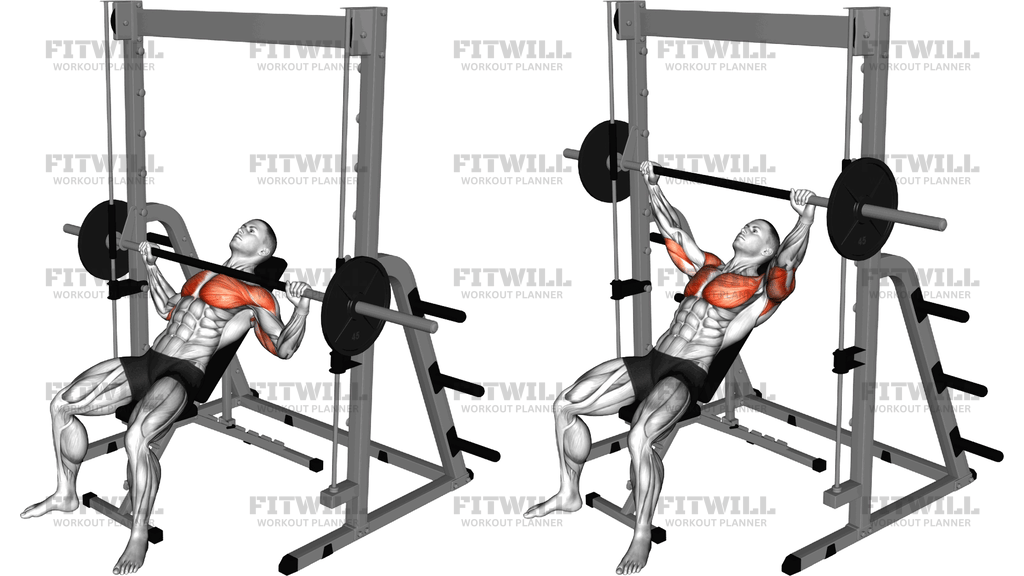
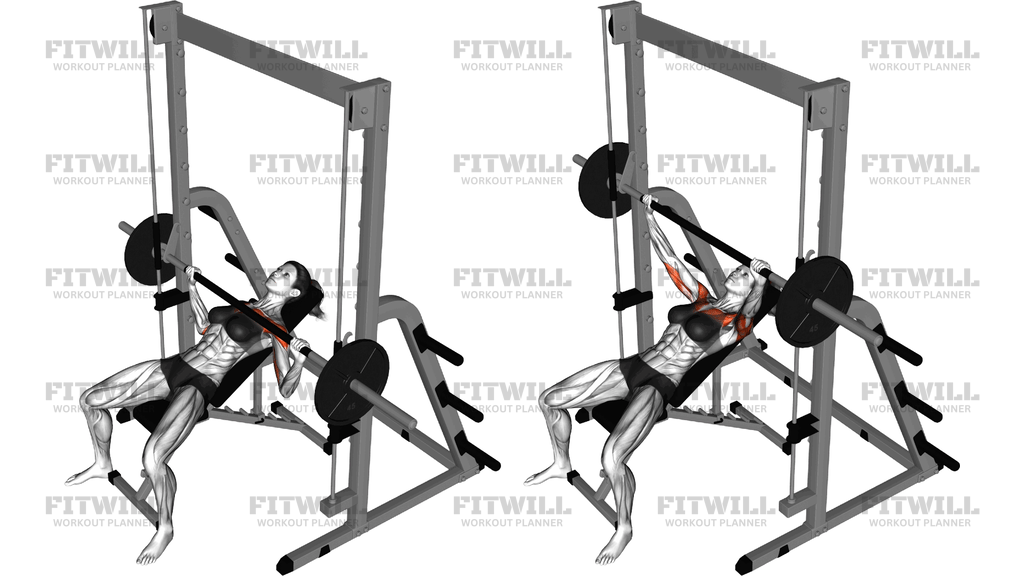
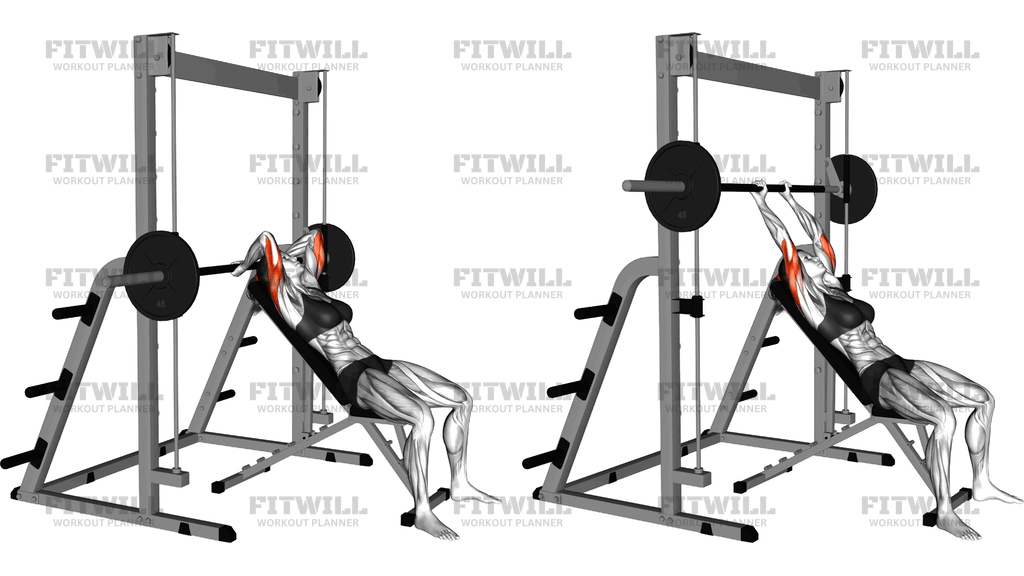
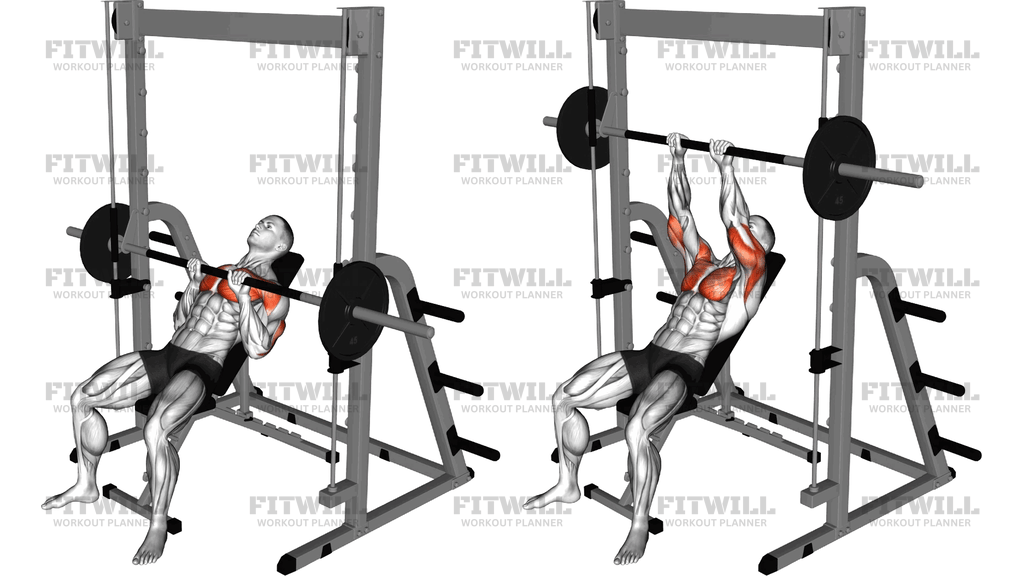
Smith Machine Decline Close-Grip Bench Press
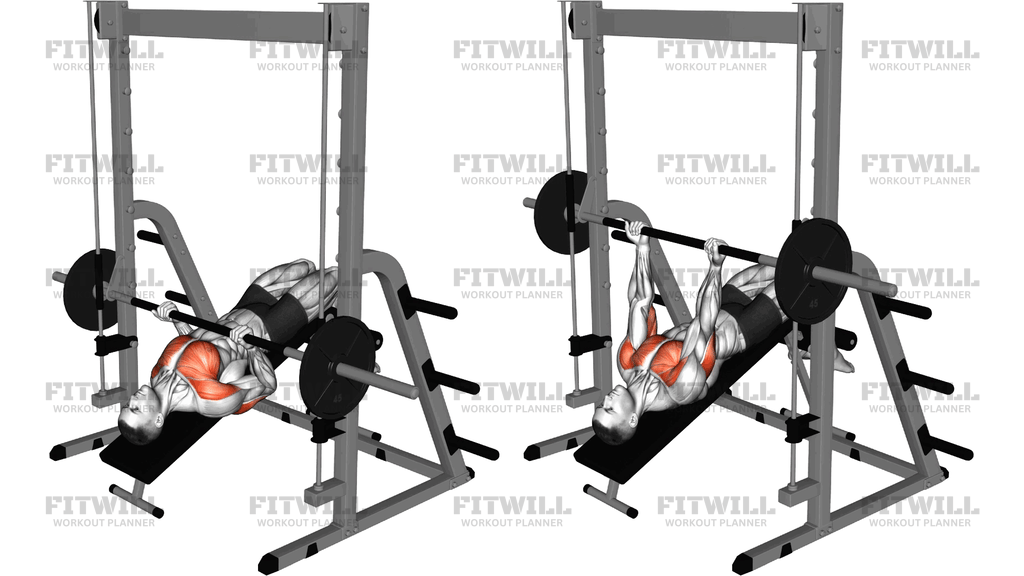
Smith Machine Decline Close-Grip Bench Press is a guided pressing exercise built around a decline bench and a narrow hand position. The Smith machine fixes the bar path, which makes the movement easier to repeat than a free barbell bench press and lets you focus more on pressing mechanics, triceps output, and clean control through each rep.
The decline angle shifts some emphasis away from the shoulders and helps many lifters press in a strong, stable groove. With the hands set close together, the triceps do more of the finishing work while the chest and front shoulders still contribute. That combination makes the exercise useful for building lockout strength, adding close-grip pressing volume, or practicing a controlled pressing pattern with less balance demand than a free-weight version.
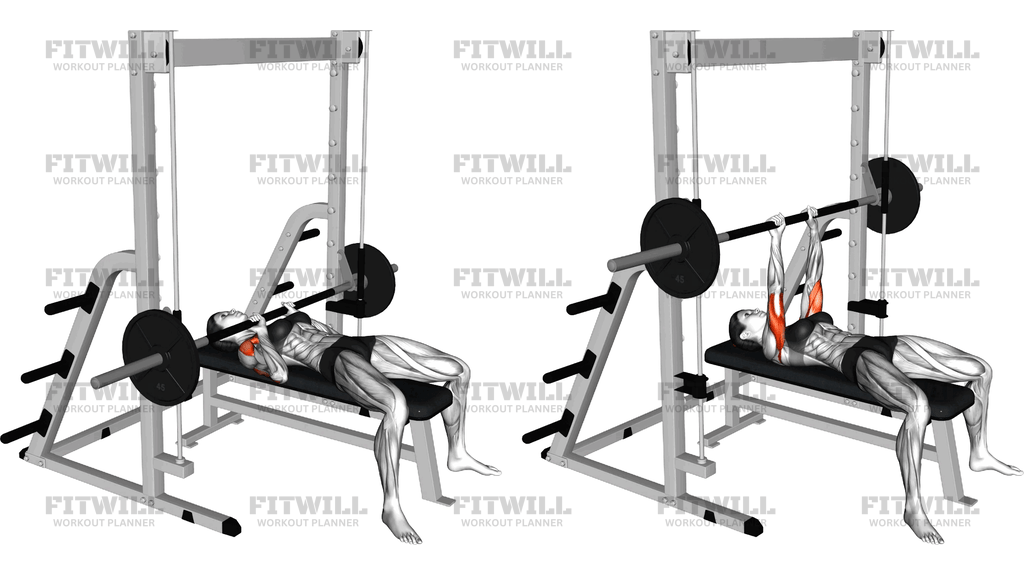
The setup matters more than people expect. Lie back so your eyes are under the bar, plant or secure your feet as the bench allows, and keep your upper back pinned to the pad. Pull your shoulder blades back and down before you unrack the bar so the chest stays lifted and the shoulders do not roll forward as the weight comes down.
On each repetition, lower the bar in a controlled line until it reaches the lower chest or upper sternum area, depending on your bench angle and arm length. Keep the elbows tucked closer to your sides than a standard bench press, then press up by driving the bar through the same path until the elbows finish extended without bouncing off the chest or losing upper-back position.
Because the bar path is fixed, this lift rewards consistent technique and punishes sloppy setup. A grip that is too narrow can irritate the wrists, while a grip that is too wide turns it into more of a regular decline press. Use a width that keeps the forearms close to vertical at the bottom and choose a load that lets you pause, control the descent, and finish every rep without the shoulders drifting forward.
This is a strong accessory lift for lifters who want extra triceps work in a pressing day without the instability of dumbbells or a free bar. It can also be a practical choice for beginners learning how to press with control, provided the load stays moderate and the bench, bar height, and hand spacing are set before the first rep. Treat it as a strength exercise, not a rushed chest-bounce movement.
[ Workout Log & Planner ]
Put your next workout in Fitwill
Keep your plan and training log ready when you are.


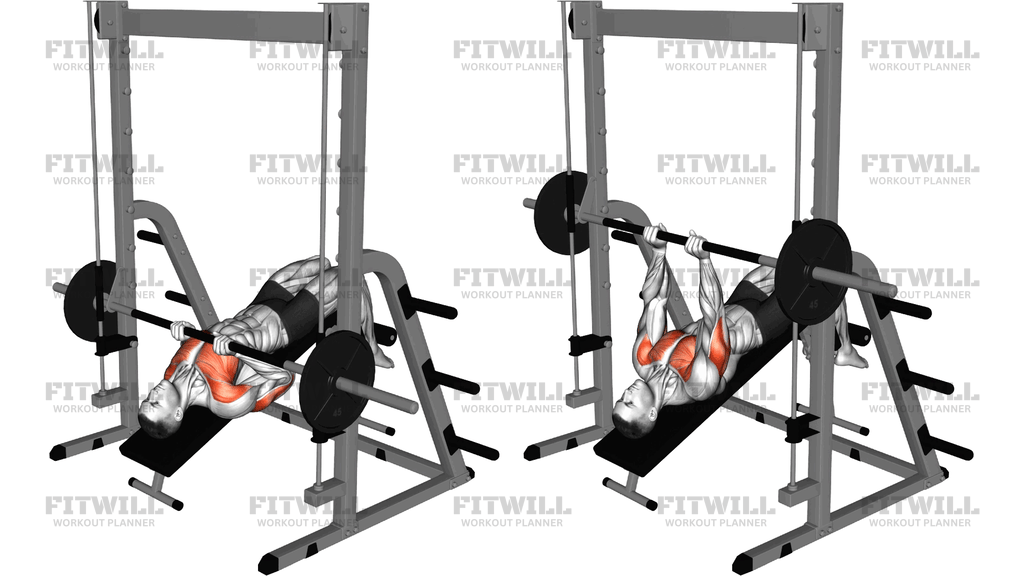
Instructions
- Set a decline bench under the Smith machine bar and lie back with your head lower than your hips and your feet anchored on the bench rollers or foot support.
- Grip the bar slightly inside shoulder width, wrap your thumbs around it, and stack your wrists over your forearms before you unrack.
- Pin your shoulder blades back and down, then slide the bar out so it sits over your lower chest with your elbows extended.
- Keep your chest lifted and your upper back pressed into the pad as you inhale and brace before the first rep.
- Lower the bar under control toward the lower chest or upper sternum, letting the elbows track close to your sides instead of flaring wide.
- Pause briefly when the bar reaches the bottom position without bouncing it off your chest or losing tightness in your shoulders.
- Press the bar back up along the same Smith machine path until your elbows are straight and the triceps finish the rep.
- Keep your wrists stacked, your neck relaxed, and your feet anchored while you repeat for the planned number of reps.
- When the set is done, guide the bar fully back into the hooks before relaxing your upper back or lifting your head.
Tips & Tricks
- A close grip is helpful here, but if your wrists bend back, move the hands a little wider and keep the forearms vertical at the bottom.
- Touching too high on the chest usually turns this into a shoulder-dominant press; aim lower on the chest so the triceps stay involved.
- If your elbows flare toward the sides, the bar usually drifts toward a regular bench press and the shoulders take over sooner.
- Do not bounce the bar off the chest on the decline bench; the Smith machine makes cheating easy, so the pause should stay controlled.
- Keep your shoulder blades pinned back and down for the whole set so the front of the shoulders do not roll forward as fatigue builds.
- Use a load you can unrack, lower, and re-rack without losing your grip or arching harder to rescue the final reps.
- A slight pause near the bottom makes this exercise much more honest and gives the triceps a harder start from the stretched position.
- If the decline angle or bar path bothers your shoulders, shorten the range slightly before the bar reaches the chest and keep the press smooth.
Frequently Asked Questions
What does Smith Machine Decline Close-Grip Bench Press work most?
It mainly targets the triceps, with the chest and front shoulders helping through the press.
Why use a decline bench for Smith Machine Decline Close-Grip Bench Press?
The decline angle gives many lifters a strong pressing position and can make the triceps feel more involved during the lockout.
How close should my hands be on the bar?
Keep them just inside shoulder width or slightly narrower, as long as your wrists stay stacked and the forearms look vertical near the bottom.
Where should the bar touch on this exercise?
Aim for the lower chest or upper sternum area rather than high on the chest, so the press stays aligned with the close-grip path.
Is Smith Machine Decline Close-Grip Bench Press beginner friendly?
Yes, if the load is light and the setup is correct. The fixed bar path removes some balance demands, but you still need controlled lowering and a solid unrack.
What are the most common mistakes on the Smith machine version?
A grip that is too narrow, elbows flaring out, bouncing off the chest, and losing shoulder-blade position are the main ones to watch.
Can I use this instead of a flat close-grip bench press?
Yes, if you want a more guided decline press that usually feels a bit easier to control through the same triceps-focused pattern.
Should I lock my elbows hard at the top?
Finish each rep with straight elbows, but do not slam into the lockout or let the shoulders roll forward before the next descent.