Cable One-Arm Decline Chest Fly
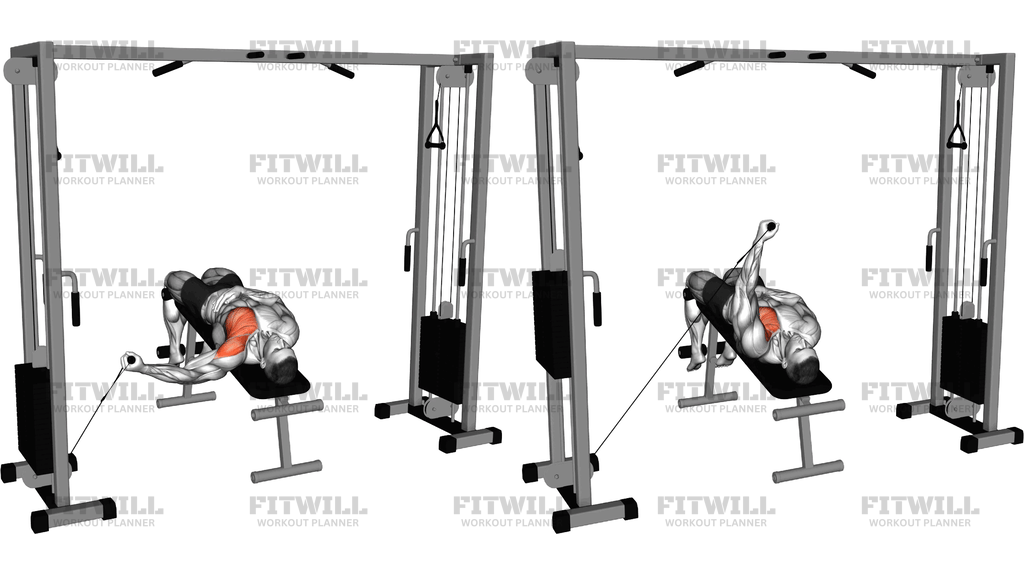
Cable One-Arm Decline Chest Fly is a single-arm cable isolation exercise that lets you train the pecs through a long, smooth arc while the decline bench and unilateral setup add a strong stability demand. The decline angle changes the line of pull so the chest stays under tension from the stretched position to the squeeze, and the free side of the torso has to resist rotation the whole time.
This movement is useful when you want chest work that feels more precise than a press and less joint-dominant than a heavy compound lift. The primary work goes to the pectoralis major, while the front shoulder, triceps, and deep trunk muscles help keep the arm path and torso position clean. Because it is one-sided, Cable One-Arm Decline Chest Fly can also expose side-to-side differences in range, control, and shoulder comfort.
The setup matters more here than in many chest exercises. Lie back on a decline bench with your feet anchored, set the working side closest to a low pulley, and take a handle with the elbow softly bent rather than locked out. The cable should pull from low and slightly outside the shoulder so the first part of the rep begins with the chest already under tension, not with slack in the line.
During each rep, keep the shoulder blade set without pinning it so hard that the arm cannot move freely. Sweep the hand in a wide arc toward the midline of the body, then stop when the chest is fully shortened and the shoulder still feels stacked instead of jammed forward. The return should be slow enough that you feel the chest lengthen while the rib cage stays down and the torso stays flat on the bench.
Cable One-Arm Decline Chest Fly works well as an accessory after pressing, as a unilateral chest builder, or as a lighter high-tension finisher when you want controlled reps and a strong squeeze. It is not a movement to load aggressively just to move more weight. Use a smooth tempo, a stable bench position, and a range that keeps the shoulder comfortable from the first rep to the last.
[ Workout Log & Planner ]
Put your next workout in Fitwill
Keep your plan and training log ready when you are.


Instructions
- Set a decline bench beside a low cable pulley, then sit back and secure your feet under the pads before taking the handle in one hand.
- Lie back so your head is lower than your hips, keep your torso centered on the bench, and line the working shoulder up with the cable path.
- Hold the handle with a soft bend in the elbow, wrist stacked over the forearm, and the arm opened slightly out to the side with tension already on the cable.
- Set your shoulder blade down and back without flattening the chest hard enough to lose the natural rib position.
- Brace your midsection so the trunk stays square to the bench and does not twist toward the working arm.
- Sweep the hand in a wide arc across the body until it finishes over the lower chest or sternum area, keeping the elbow angle almost fixed.
- Squeeze the pec at the top for a brief pause, then reverse the path slowly until you feel a controlled stretch across the chest and front shoulder.
- Inhale on the lowering phase, exhale as you bring the handle across, and stop the set if the shoulder rolls forward or the torso starts to rotate.
Tips & Tricks
- Place the bench far enough from the stack that the cable is already taut when your arm opens out to the side.
- Keep the elbow softly bent and nearly fixed; turning the movement into a press changes the feel and usually shifts stress into the front shoulder.
- Let the hand travel in an arc, not straight up and down, so the pec stays loaded through the whole sweep.
- If your shoulder drifts forward at the top, shorten the finish and stop the handle over the chest instead of reaching farther.
- Keep the rib cage from flaring off the bench; that usually means the rep got too heavy or too fast.
- Use the non-working hand to help you set up on the bench, but do not pull on the frame to twist into the rep.
- A slower return usually improves this exercise more than adding weight, because the stretched position is where control matters most.
- Choose a load that lets you keep the cable line smooth without jerking the handle off the stack.
Frequently Asked Questions
What does Cable One-Arm Decline Chest Fly work most?
It primarily trains the pecs, especially through the sweeping fly motion across the chest. The front shoulder and triceps assist, but they should not take over the rep.
How do I set up the cable and decline bench for Cable One-Arm Decline Chest Fly?
Place the decline bench beside a low pulley so the handle pulls from low and slightly out to the side. Your feet should be locked in and your shoulder should line up with the cable path before you start the first rep.
Should my arm stay straight during Cable One-Arm Decline Chest Fly?
No. Keep a soft bend in the elbow and hold that bend nearly constant so the chest does the moving. If the elbow opens and closes a lot, the rep turns into a press or a triceps-dominant movement.
How far should I bring the handle across my body?
Bring it across until the hand finishes over the lower chest or sternum and the pec is fully shortened, but stop before the shoulder rolls forward. The top position should feel squeezed, not jammed.
Can beginners use Cable One-Arm Decline Chest Fly?
Yes, if the load is light and the bench position feels stable. Beginners should focus on the cable path and shoulder position first, because this exercise exposes poor control very quickly.
Why does my torso twist during the rep?
That usually means the load is too heavy or the cable is pulling you off the bench. Keep the rib cage square, brace the midsection, and lower the resistance until the handle moves without rotation.
What is a good way to program Cable One-Arm Decline Chest Fly?
It works well after pressing work or as a lighter chest accessory for 8-15 controlled reps. The exercise usually responds better to tension and control than to very heavy loading.
What if the stretch in the bottom position feels rough on my shoulder?
Shorten the opening range and keep the hand slightly closer to the torso at the start. You can also move the bench a little farther from the pulley so the cable line feels smoother instead of yanking the shoulder.