Doorway Chest Stretch
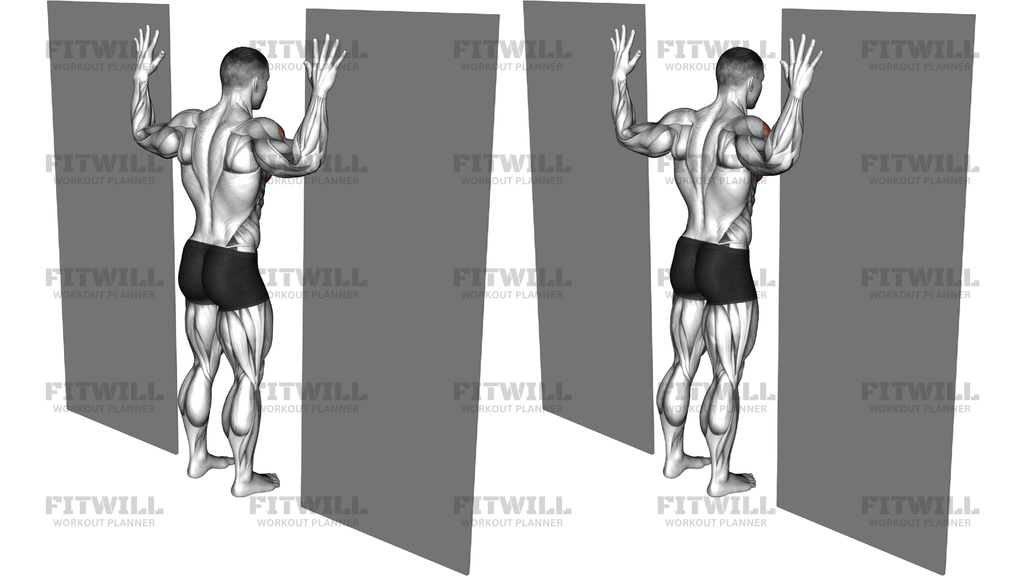
The Doorway Chest Stretch is a simple static stretch performed by placing your forearms or hands on both sides of a doorway and stepping forward so your chest passes through the frame. As you lean in, the frame gently pulls your shoulders back and opens the chest, creating a steady stretch across the pectoral muscles and the front of the shoulders. It requires no equipment beyond a standard door frame, which makes it one of the most convenient stretches you can do almost anywhere.
This stretch is especially valuable for people who spend long hours sitting at a desk, driving, or looking down at a phone. Those habits round the shoulders forward and shorten the chest muscles over time, contributing to a slouched upper body posture. Office workers, lifters who bench press or do a lot of pressing work, and anyone starting a posture-correction routine will get noticeable benefit from holding this position regularly.
The primary target is the pectoralis major, the large fan-shaped muscle across the front of the chest. Adjusting the height of your arms on the frame lets you bias different fibers: hands at shoulder height emphasize the mid-chest, while placing them slightly higher shifts more of the stretch toward the upper chest and the pectoralis minor, the smaller deep muscle that often gets tight from slouched sitting. The anterior deltoids and, to a lesser degree, the biceps also lengthen in this position.
Setup matters more than most people realize. Your forearm should rest flat against the frame from elbow to hand, with the elbow bent to roughly ninety degrees and positioned at or just below shoulder height. If the elbow drifts too high, the stretch moves into the shoulder joint and can pinch; if it drops too low, the chest barely lengthens. Standing too far from the frame turns the movement into a shoulder strain instead of a chest stretch, so keep the lean controlled and incremental.
To execute it well, place both forearms on the frame, brace your torso lightly, and step one foot forward through the doorway while keeping your ribs down. Lean your chest forward only until you feel a moderate stretch across both pecs — the sensation should be strong but never sharp. Hold for twenty to thirty seconds, breathe steadily, then ease back out of the lean before releasing your arms.
Common use cases include pre-workout mobility prep, post-workout recovery after pressing sessions, and short posture breaks during the workday. Because the doorway fixes your hand position, it also gives you a consistent reference point, making it easy to track progress as your range improves over weeks of regular practice.
Fitwill
Log Workouts, Track Progress & Build Strength.
Achieve more with Fitwill: explore over 9600 exercises with images and videos, access built-in and custom workouts, perfect for both gym and home sessions, and see real results.
Start your journey. Download today!




Instructions
- Stand facing an open doorway with your feet about hip-width apart, positioned roughly in the middle of the frame.
- Raise both arms and place your forearms flat against the door frame, elbows bent to about ninety degrees and at shoulder height or slightly below.
- Stand tall with a soft brace through your core and keep your ribs from flaring upward before you begin the lean.
- Step one foot forward through the doorway and shift your body weight onto that front leg.
- Lean your chest and torso forward through the frame, letting the door frame pull your shoulders back until you feel a moderate stretch across both sides of your chest.
- Keep your neck relaxed and your head in line with your spine — avoid jutting the chin forward as you lean.
- Hold the end position for twenty to thirty seconds, breathing slowly and evenly, letting the stretch settle deeper on each exhale.
- Ease your weight back onto the rear leg to reduce the stretch before removing your forearms from the frame.
- Shake out your shoulders and arms, then reset your stance if you plan to repeat the hold or adjust arm height.
Tips & Tricks
- Start with your forearms rather than straight arms — the bent-elbow position keeps tension on the chest instead of overloading the shoulder capsule.
- The most common mistake is walking too far through the doorway and forcing the lean; step forward in small increments until you just feel the pecs lengthen.
- If you feel pinching at the front of the shoulder, lower your elbow slightly and reduce the depth of the lean rather than pushing through the discomfort.
- Keep your lower back from arching as you lean in — think of drawing your belly button slightly in so the stretch stays in the chest and not the lumbar spine.
- To bias the upper chest and the deep pec minor, slide your forearms a few inches higher on the frame; to target the lower fibers, bring them just below nipple line.
- Lean into the stretch on an exhale rather than forcing it with a held breath — tension in the breath tends to show up as tension in the shoulders.
- Keep both sides loaded evenly; if one shoulder sits higher than the other on the frame, you will stretch one pec more than the other.
- Warm muscles stretch more comfortably, so this works well after a workout, a short walk, or a warm shower rather than first thing in the morning.
- If your doorway is narrow, use one arm at a time with the elbow on the frame and rotate your torso away to keep the same chest-opening effect.
Frequently Asked Questions
What muscles does the Doorway Chest Stretch target?
The main target is the pectoralis major across the front of the chest, with supporting stretch through the pectoralis minor and the front of the shoulders. Raising your arm height shifts emphasis toward the upper chest fibers.
Should my elbows be bent or straight in the Doorway Chest Stretch?
Bend your elbows to roughly ninety degrees and rest your forearms flat on the frame. Straight arms push the stretch into the front of the shoulders and biceps and can strain the shoulder joint.
Is the Doorway Chest Stretch good for rounded shoulders from desk work?
Yes, it is one of the most practical tools for that pattern, since sitting with rounded shoulders shortens the chest muscles. Regular holds help restore length in the pecs and make it easier to keep the shoulders back during the day.
How long should I hold the Doorway Chest Stretch?
Twenty to thirty seconds per hold works well for most people, repeated two to three times. If you are doing it after a heavy pressing workout, shorter holds of fifteen to twenty seconds taken more frequently also work.
Why do I feel the Doorway Chest Stretch in my shoulder instead of my chest?
This usually means your elbow is positioned above shoulder height or you are leaning in too aggressively. Lower the elbow to shoulder level, reduce the forward lean, and make sure the forearm sits flat against the frame.
Can beginners do the Doorway Chest Stretch?
It is very beginner friendly because the door frame fixes your hand position and you control the depth with a simple foot step. Start with a shallow lean and only increase the range as the stretch sensation becomes comfortable.
How high should I place my arms on the door frame?
Begin with the elbows at shoulder height or just below, which suits the mid-chest fibers. Sliding the forearms a few inches higher biases the upper chest and pec minor, while a lower position shifts toward the lower fibers.
What can I use instead of a doorway for this stretch?
Any stable vertical surface at the right height works, such as two corners of a wall, the uprights of a power rack, or a sturdy fixed frame. You can also do a single-arm version on one wall corner and rotate your torso away.
Is it safe to do the Doorway Chest Stretch every day?
For most people, yes — a moderate daily hold is gentle on the tissues as long as you never stretch into sharp pain. If you have a current shoulder injury or recent surgery, check with a qualified professional before adding it to your routine.
Should I do the Doorway Chest Stretch before or after a workout?
It fits well before upper-body pressing as a short mobility prep, and after training as part of a longer cool-down. Before a workout keep the holds brief and moderate; after training you can hold longer and relax into the position.