Cable Neutral Grip Lat Pulldown
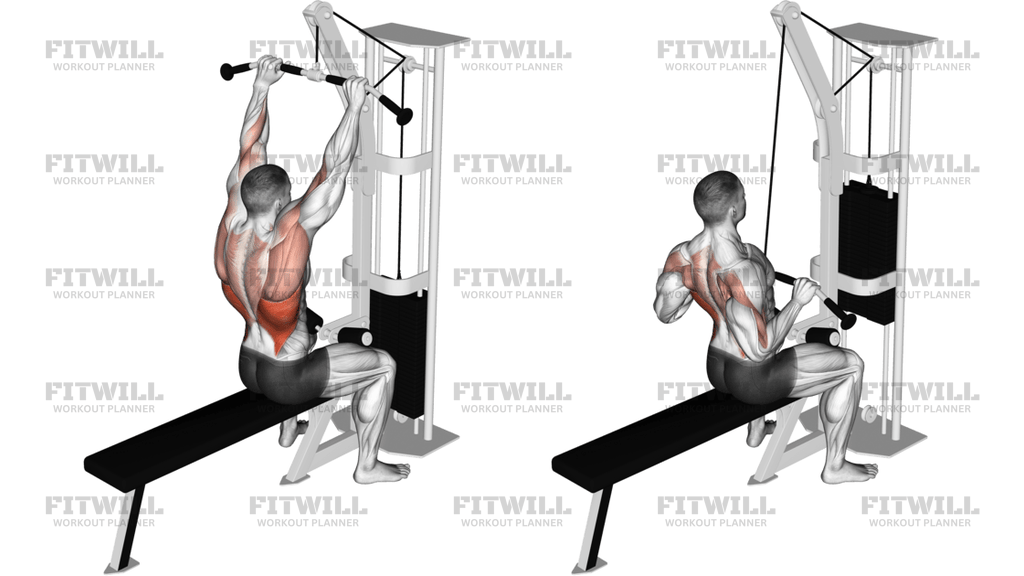
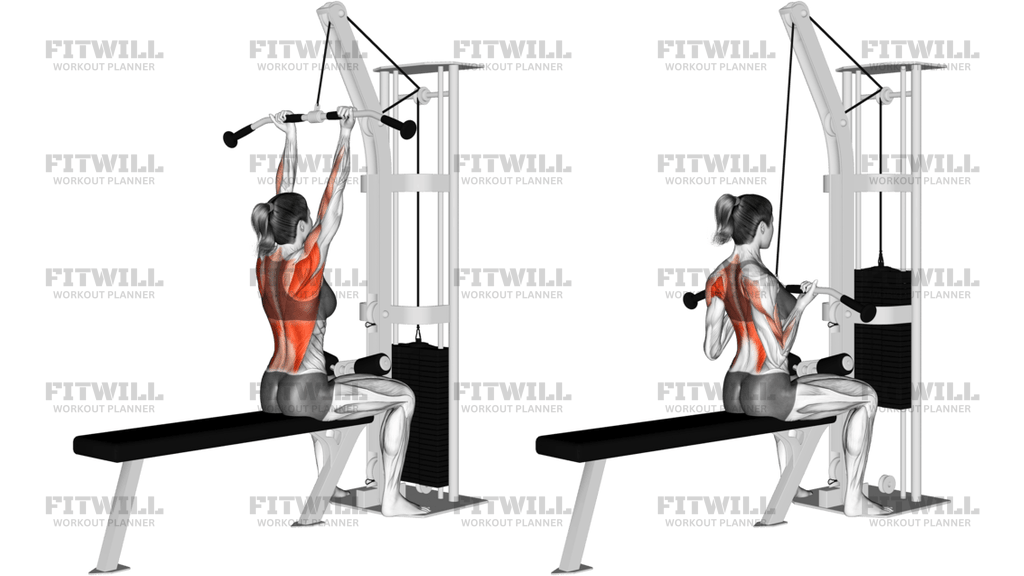
The Cable Neutral Grip Lat Pulldown is a seated vertical pulling exercise performed on a lat pulldown machine using an angled or cambered bar that lets your hands face each other in a neutral position. Compared with a wide overhand grip, this hand position keeps your shoulders in a more natural line and lets your elbows travel close to your sides as you pull, which many lifters find more comfortable on the shoulder joints while still loading the lats hard.
The main target is the latissimus dorsi, the large muscle that gives the back its width, with strong assistance from the biceps, teres major, and mid-back muscles like the rhomboids and lower trapezius that pull the shoulder blades down and together. Because the machine stabilizes your lower body and the cable provides constant tension through the whole arc, it is one of the most reliable ways to train vertical pulling without needing to do pull-ups first.
This variation suits beginners building pulling strength for their first pull-up, intermediate lifters adding back volume with a joint-friendly grip, and anyone whose shoulders complain about wide straight-bar pulldowns. It is also a useful fixture in a pull-day routine because the weight can be adjusted in small increments, letting you progress steadily or use drop sets near the end of a session.
Setup matters more than most lifters realize. Adjust the thigh pads so your legs are locked snugly in place before you start, and set the seat height so your arm can reach the bar with a slight stretch at the top without shrugging your shoulders up to your ears. Your torso should stay mostly upright with a small, fixed backward lean from the hips; pulling too far back turns the movement into a row and takes work away from the lats.
Execution is straightforward but easy to rush. Lead the pull with your elbows, driving them down and slightly back toward your hips, and aim the bar toward your upper chest or collarbone area. Pause briefly at the bottom to feel the back muscles, then let the bar rise under control until your arms are fully extended and you feel a mild stretch through the lats before starting the next rep.
Keep the load honest. If you have to swing your torso or yank the bar down with your arms, the weight is too heavy and your elbows will stop driving back, which is exactly where momentum replaces muscle. Breathe out on the pull and in on the way up, keep your ribcage from flaring, and treat each rep as a chance to feel the lats rather than just move the stack.
[ Workout Log & Planner ]
Put your next workout in Fitwill
Keep your plan and training log ready when you are.


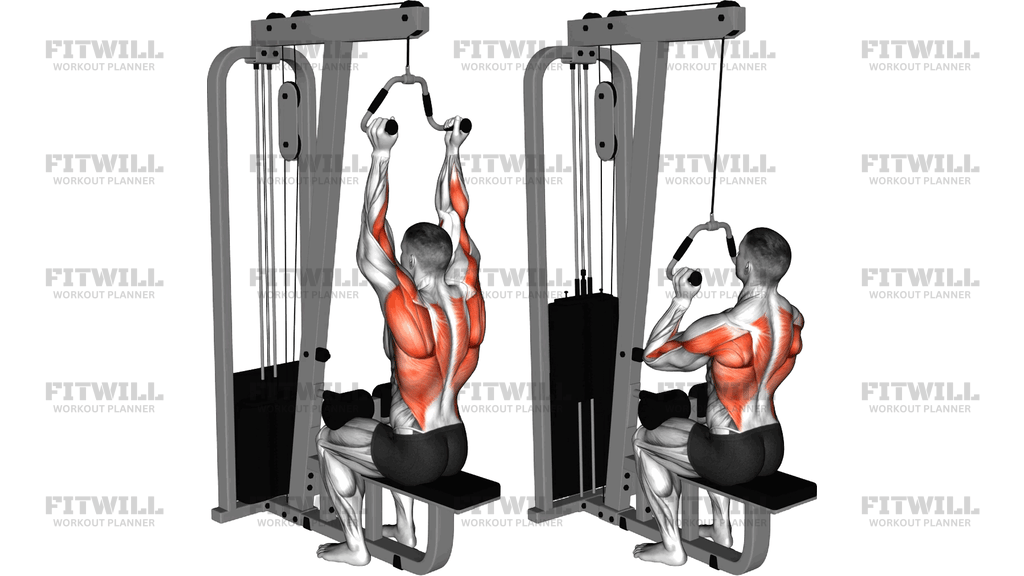
Instructions
- Set the thigh pads on the lat pulldown machine so your legs fit snugly underneath when seated, then adjust the seat height so you can reach the bar with your arms nearly straight and shoulders relaxed.
- Take a neutral grip on the angled handles, palms facing each other, with your hands roughly shoulder-width apart on the bar's angled sections.
- Sit down with your hips back on the seat, pin your thighs under the pads, and lean your torso back about 10 to 15 degrees from the hips while keeping your chest tall.
- Start with your arms fully extended and let your shoulders rise slightly with the bar to feel a stretch through the lats before the first pull.
- Brace your core, keep your ribs stacked over your pelvis, and initiate each rep by pulling your shoulder blades down before bending your elbows.
- Drive your elbows down and back toward your hips, keeping them angled close to your sides, and pull the bar down to your upper chest.
- Squeeze your back briefly at the bottom position without letting your torso rock backward or your shoulders roll forward.
- Let the bar travel back up in a slow, controlled motion until your elbows are fully locked out and the lats are stretched again.
- Exhale as you pull down and inhale as the bar rises, keeping your breathing steady through the set.
- Finish the set by standing up to return the bar gently rather than letting the stack slam down.
Tips & Tricks
- A common mistake on this variation is pulling the bar to the sternum or belly; the neutral grip favors bringing the bar to the upper chest so the elbows can finish behind the torso line.
- If your biceps burn out before your back, spend the first two reps of each set focusing only on driving your elbows down; the neutral grip already biases the arms less than a supinated grip, but cueing still helps.
- Do not let your torso swing back past roughly 15 degrees. If the weight pulls you forward on the way up or you lean back dramatically on each rep, drop the load by one plate.
- The thigh pads only work if you set them before you grab the bar. If your hips lift off the seat during heavy reps, tighten the pads or reduce the weight rather than muscling through.
- Let the bar rise all the way to full elbow lockout on every rep. Half reps at the top skip the lat stretch and turn the set into a short-range pump.
- Avoid shrugging your shoulders toward your ears at the start of the pull; think of pressing your shoulders down away from your neck as the bar begins to move.
- Grip the handles with your fingers hooked over them rather than squeezing with a white-knuckle grip, which unnecessarily fatigues the forearms.
- Because the neutral grip is usually the most shoulder-friendly pulldown option, use it on heavy days or when your shoulders feel beat up from pressing work.
- A brief one-second pause at the chest is worth more than extra weight; it forces the lats, not momentum, to finish each rep.
Frequently Asked Questions
Which muscles does the Cable Neutral Grip Lat Pulldown work?
The lats are the primary mover, supported by the teres major, rhomboids, lower trapezius, and rear deltoids. The biceps and forearm flexors assist throughout the pull.
How is the neutral grip different from a wide overhand pulldown?
With palms facing each other, your elbows stay closer to your sides and your shoulders sit in a less externally rotated position. Most lifters feel this in the lats with less shoulder discomfort, though the wide grip offers slightly more upper-back involvement.
Is the Cable Neutral Grip Lat Pulldown good for beginners?
Yes. The machine stabilizes your torso and lets you choose an exact resistance, making it one of the best first vertical pulls. It also builds the strength needed to progress toward assisted or bodyweight pull-ups.
How far back should I lean during the pull?
Keep a small, fixed lean of about 10 to 15 degrees from the hips. Leaning further back shifts the work toward your mid-back and turns the pulldown into a row.
Why do my arms finish the set before my back does?
This usually means you are pulling with your hands instead of leading with your elbows. Cue yourself to drive the elbows down toward your hips and lighten the load if needed so the lats, not the biceps, control the weight.
What can I use instead if my gym has no neutral grip pulldown bar?
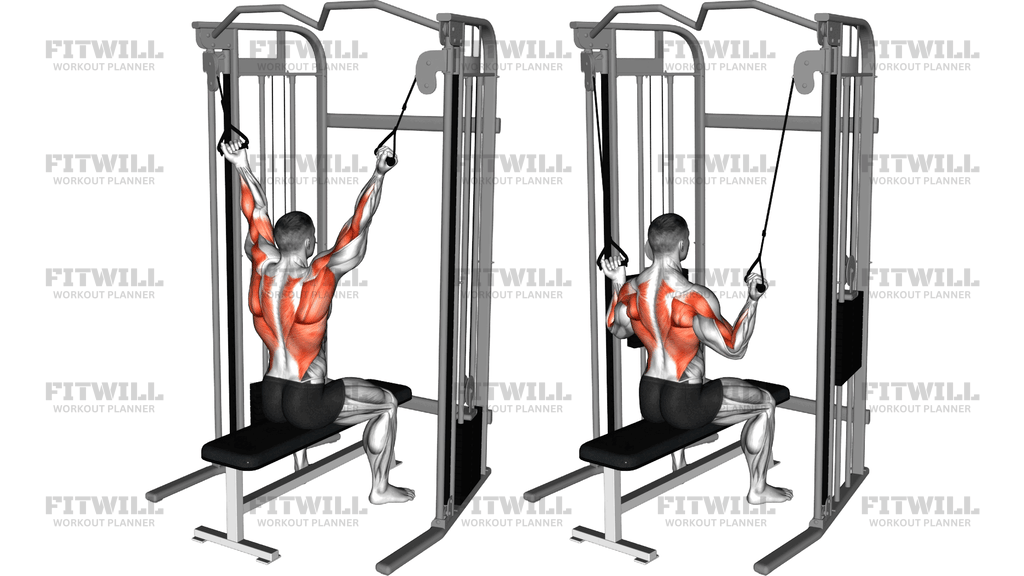
Two single handles on the cable attachment work as a close substitute, or you can use a close neutral-grip V-bar. Close-grip chin-ups and straight-arm pulldowns also train similar lat function.
Should the bar touch my chest at the bottom?
Aim for your upper chest or collarbone area without craning your neck forward. Contact is less important than getting your elbows down and back through a full range you can control.
Is it safe for someone with shoulder issues?
The neutral grip is generally the most comfortable hand position for pulldowns because it reduces shoulder rotation, but anyone with an existing shoulder problem should work in a pain-free range and consult a professional before loading the movement heavily.
How heavy should I go on this exercise?
Pick a weight you can pull to your upper chest for 8 to 12 reps without your torso swinging or your hips rising off the seat. When your form changes to move the stack, the weight has exceeded what your lats can handle.