Barbell Banded Bench Press
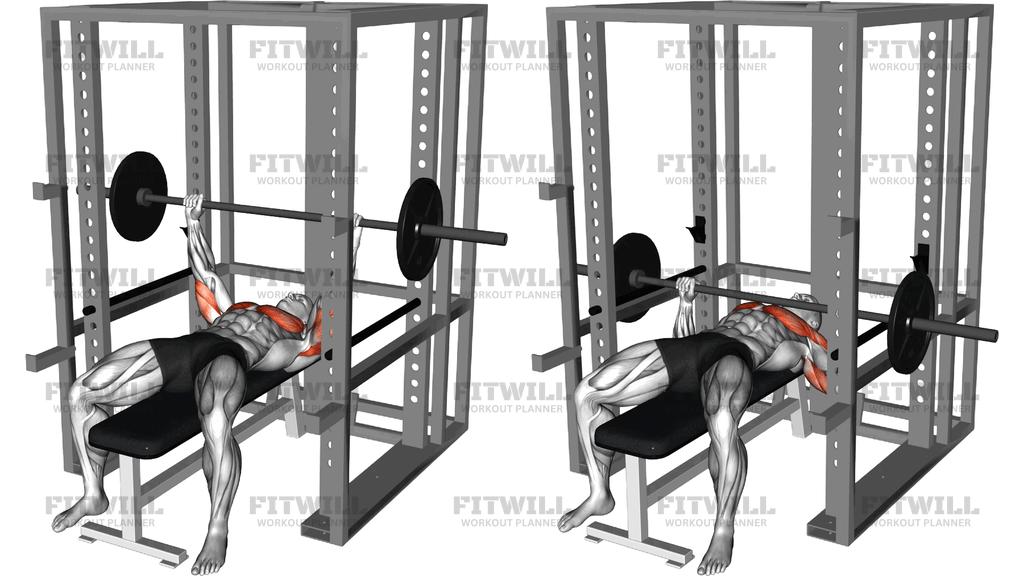
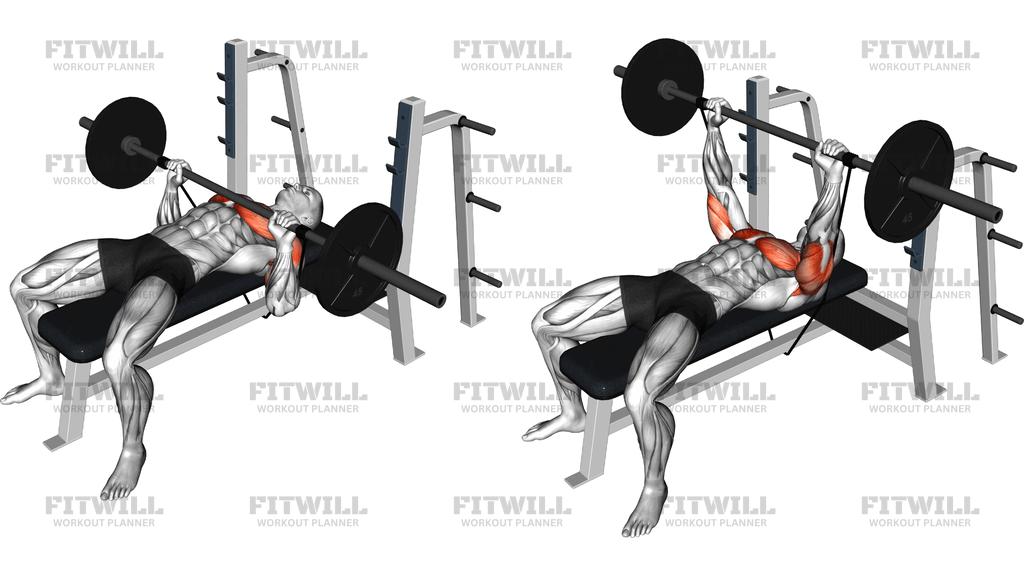
The Barbell Banded Bench Press is a standard barbell bench press with a resistance band looped around the bar and anchored beneath the bench or to the rack base. As you press the bar up, the band stretches and adds progressively more resistance, so the weight feels heaviest near lockout and lighter at the chest. This changing resistance profile is the whole point of the exercise: it matches the strength curve of the press, where you are weakest at the bottom and strongest at the top.
This variation works well for intermediate and advanced lifters who want to push through sticking points or learn to accelerate the bar all the way to lockout. Because the band pulls the bar downward at the top, you have to stay tight and finish every rep aggressively, which builds strong lockout mechanics and triceps involvement. Powerlifters use banded presses to improve bar speed, while general strength trainees use them to make a moderate weight feel harder without loading heavy plates on the bar.
The main muscles trained are the chest, with strong assistance from the front shoulders and triceps. The band setup also increases time under tension near the top of the press, where the triceps do most of the work. Your legs, upper back, and core stay active as stabilizers, since the band adds an element of instability that demands more control than a plain barbell press.
Setup matters more here than in a regular bench press. The band should be centered on the bar and anchored securely so it pulls straight down, not off to one side. An off-center or twisted band can tilt the bar and make the lift unsafe, especially as the band tension peaks near lockout. Check that the anchor point cannot slip before you unrack any weight.
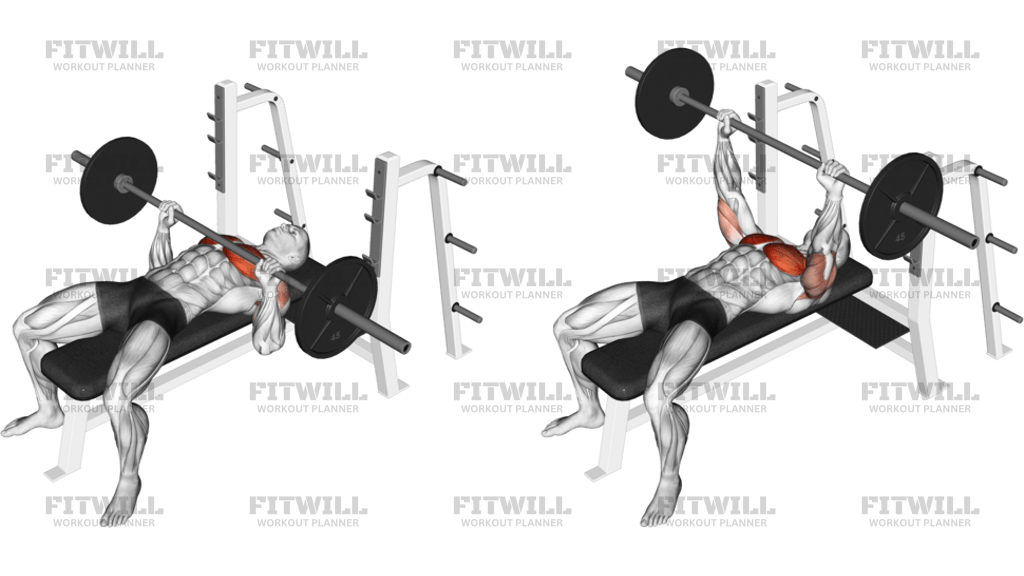
To perform the movement well, lie back with your eyes under the bar, plant your feet, set your shoulder blades down and back, and grip slightly wider than shoulder width. Lower the bar under control to your lower chest, touch lightly, then drive up fast and hard, knowing the resistance will climb as you rise. Exhale as you press, and never fight the band at lockout by letting the bar drift backward over your face.
A few practical safety points: always use a spotter or safety pins when bands are involved, because the added tension at the top makes a failed rep less predictable. Start with a lighter band and a bar load well below your normal bench press weight until you understand how the combined resistance feels, and stop the set if the bar starts to wobble or the band shifts position.
[ Workout Log & Planner ]
Put your next workout in Fitwill
Keep your plan and training log ready when you are.


Instructions
- Loop a resistance band around the center of the barbell and anchor the other end securely under the bench legs or to the base of the rack so the band pulls straight down.
- Set a flat bench in the rack, adjust the J-hooks to just below your reach height, and lie back with your eyes directly under the bar and your feet flat on the floor.
- Grip the bar slightly wider than shoulder width, squeeze the bar hard, and pull your shoulder blades down and back so your upper back is braced against the bench.
- Unrack the bar and bring it out over your lower chest, letting the band hang freely without twisting, then take a deep breath into your belly and brace your core.
- Lower the bar under control to your lower chest, keeping your elbows at roughly a 45 to 70 degree angle to your torso and your wrists stacked over your elbows.
- Touch the chest lightly without bouncing, then drive the bar up explosively, pushing the floor away with your legs as the band tension builds toward lockout.
- Press to full lockout with the bar directly over your shoulders, exhaling as you finish the press, but keep your elbows soft and under control against the band's pull.
- Inhale at the top, re-brace, and lower the bar again for the next repetition, maintaining the same bar path each rep.
- After your final rep, press to lockout, guide the bar back to the uprights, and confirm the bar is fully racked before releasing your grip or adjusting the band.
Tips & Tricks
- The most common mistake is loading your normal bench press weight plus a band, which makes the top half far heavier than expected; strip the bar down and treat the band as added load, not a free bonus.
- If the bar tilts during the press, the band has slid off center; re-center it on the knurling and confirm the anchor is directly under the midline of the bar before continuing.
- Do not let the band snap the bar down on the descent. The band offers no help lowering the weight, so the eccentric stays pure barbell and needs deliberate control.
- Keep pressing through the full range even when the bar feels slow near lockout. Bailing early because the band tension climbs defeats the purpose of the variation.
- Avoid flaring your elbows straight out to the sides as fatigue sets in. The band makes the lockout demanding, and tucked elbows keep the triceps doing the work instead of stressing the shoulders.
- Do not let your hips rise off the bench as you drive up. The instinct to push harder against the band often comes from the legs; keep your glutes planted and drive through your feet instead.
- Use a spotter who understands the setup, since a banded bar that tips or drifts behaves differently than a plain barbell in a failed rep.
- If your wrists bend backward at lockout, narrow your grip slightly or slow the final part of the press so the bar stacks over your forearms rather than hanging on the band.
- Start with a light band and progress tension before adding plates. It is easier to learn the accumulating resistance with a thin band than to recover from a top-end weight that runs you over.
Frequently Asked Questions
What muscles does the Barbell Banded Bench Press work?
The chest is the primary muscle, with the front shoulders and triceps assisting throughout. The band places extra demand on the triceps near lockout, where the resistance peaks.
Why add a band to a bench press instead of just using more plates?
Plates add the same resistance at every point of the lift, while the band gets heavier as you press up. This matches your natural strength curve and forces you to accelerate through the top of the movement.
Is the Barbell Banded Bench Press suitable for beginners?
It is better suited to lifters who already have solid technique on the regular bench press. Beginners should build proficiency with a standard barbell press before dealing with the changing tension and setup demands of the band.
Where should the resistance band be anchored during the Barbell Banded Bench Press?
Anchor it under the bench or to a secure point on the rack base directly beneath the middle of the bar. The band must pull straight down and stay centered, or it will tilt the bar as tension increases.
How much weight should I use compared to a regular bench press?
Start noticeably lighter, since the band adds its full tension at lockout on top of the plate load. A common starting point is a bar weight you could press for many reps, paired with a light band.
Can I do the Barbell Banded Bench Press without a spotter?
Use safety pins in a power rack if no spotter is available. The band's tension at the top makes a failed rep less predictable than a normal bench press, so an unprotected lift is not worth the risk.
Why does my bar feel unstable at lockout during this press?
The band reaches maximum stretch at the top and amplifies any imbalance between your arms. Slow your final push, keep your grip tight, and check that the band is centered and untwisted before adding load.
What can I substitute if I don't have bands for the Barbell Banded Bench Press?
A standard barbell bench press, a pause bench press, or a close-grip bench press all train similar muscles. Chains work as an alternative if your gym has them, since they also add accommodating resistance.
Should the band add tension at the bottom of the Barbell Banded Bench Press?
Tension at the bottom should be minimal, since that is your weakest position. If the band is already pulling hard when the bar touches your chest, it is too short or anchored too high, and you should adjust it so most of the stretch happens near lockout.